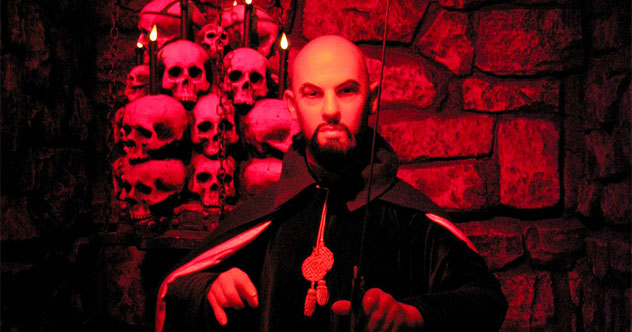
Mention the Church of Satan at a dinner party and watch the room perform a synchronized eyebrow lift. Most people instantly imagine red candles, thunder, haunted basements, and somebody named “Damien” dramatically refusing salad. The reality is stranger, quieter, and in many ways more surprising than the horror-movie version.
Founded by Anton Szandor LaVey in San Francisco in 1966, the Church of Satan helped define modern Satanism as a provocative religious philosophy centered on individualism, skepticism, self-responsibility, ritual symbolism, and theatrical rebellion against spiritual guilt. But here is the plot twist: it is not a devil-worship club, it does not operate like a Sunday church, and it is not the same organization as The Satanic Temple.
Below are ten ways the Church of Satan might surprise youespecially if everything you know about Satanism came from horror films, panicked talk shows, or that one cousin who thinks every heavy metal album is a portal.
1. They Do Not Worship Satan as a Literal Being
The biggest surprise is also the most misunderstood: the Church of Satan is atheistic. In LaVeyan Satanism, Satan is not treated as a supernatural red landlord of the underworld. Instead, Satan functions as a symbol of pride, independence, carnality, rebellion, and resistance to what members see as hypocritical moral systems.
In other words, the “Satan” in Church of Satan is closer to an archetype than an invisible boss. Members generally reject belief in God, the Devil, heaven, hell, angels, demons, and cosmic scorekeeping. Their philosophy starts with the material world and the individual self. No harp clouds. No pitchfork office. No infernal customer service department.
2. It Is More Philosophy Than Horror Movie
The Church of Satan is often classified as a new religious movement, but its core ideas read more like a dramatic blend of atheism, individualism, skepticism, ritual theater, and self-assertion. Anton LaVey’s 1969 book, The Satanic Bible, laid out much of the Church’s philosophy, including the famous Nine Satanic Statements.
Those statements emphasize indulgence over abstinence, vital existence over spiritual fantasy, and personal responsibility over blanket compassion. Whether readers admire or criticize those ideas, the point is clear: this is not a religion built around kneeling to invisible powers. It is built around the self as the central authority.
3. The Church of Satan and The Satanic Temple Are Not the Same
This mix-up happens constantly. The Church of Satan was founded in 1966 by Anton LaVey. The Satanic Temple, a separate non-theistic organization known for activism and legal challenges involving religious liberty, emerged decades later. They share some vocabulary and symbolic rebellion, but they differ sharply in style, priorities, and public mission.
The Church of Satan is generally not a protest organization. It does not define itself through courthouse campaigns, public monuments, or legislative activism. Its approach is more individualist and inward-facing. The Satanic Temple tends to use Satanic imagery in public battles over pluralism and secularism; the Church of Satan tends to say, in effect, “Handle your own life, and stop expecting a religious organization to do your homework.”
4. They Are Not Trying to Convert You
Many religions send missionaries. The Church of Satan does not operate that way. It does not present Satanism as a universal cure for humanity, nor does it claim everyone secretly needs it. In fact, its official posture is that Satanism is not for everybody.
That may be surprising in a world where groups often compete for attention like raccoons fighting over a shiny burrito wrapper. The Church of Satan’s attitude toward recruitment is unusually blunt: if the philosophy fits you, you may recognize yourself in it. If not, move along. No one is expected to knock on your door wearing a black suit and asking whether you have accepted dramatic individualism as your personal worldview.
5. It Does Not Have Local Church Buildings
Despite the word “church,” the organization does not function like a traditional congregation with weekly services, pews, hymnals, coffee hour, and someone quietly judging the casserole. The Church of Satan has said it does not maintain local chapters or church buildings in the ordinary sense.
Early rituals were associated with LaVey’s famous “Black House” in San Francisco, but the organization eventually moved away from regular physical gatherings. Today, the Church’s structure is administrative and membership-based, not congregational. Members may conduct rituals privately, socialize selectively, or do nothing public at all.
6. Ritual Is Treated as Psychodrama
Ritual in the Church of Satan is often misunderstood as supernatural spellcasting. In LaVeyan Satanism, ritual is better understood as controlled emotional theater. It is a way to focus desire, anger, grief, lust, confidence, or symbolic transformation through performance.
Think less “wizard accidentally opens a portal” and more “highly dramatic psychological release.” Ritual can function like a pressure valve. The candles, symbols, and formal language create mood and meaning, but the system is not based on asking a literal demon to update someone’s destiny file.
7. Its Rules Include Boundaries Many People Would Not Expect
Popular myths often paint Satanists as people who reject all rules. The Church of Satan’s own writings, however, include strict boundaries. The Eleven Satanic Rules of the Earth include ideas such as not giving advice unless asked, not making unwanted advances, not stealing, and not harming little children. They also prohibit killing non-human animals unless attacked or for food.
That does not make the philosophy warm and fuzzy in the greeting-card sense. It can be sharp, combative, and unapologetically selective about kindness. But it is not the cartoon version of chaos for chaos’s sake. It is more like: mind your business, respect territory, take responsibility, and do not confuse freedom with being an insufferable menace.
8. The “Satanic Panic” Got a Lot Wrong
During the 1980s and early 1990s, America experienced a wave of fear often called the Satanic Panic. Rumors spread about hidden cult networks, ritual abuse, secret ceremonies, and vast underground conspiracies. Law enforcement reviews and later scholarship found no credible evidence for the existence of a nationwide Satanic conspiracy conducting the lurid crimes described in many accusations.
That historical context matters because the Church of Satan was often dragged into the public imagination as if it were part of a criminal underworld. In reality, the organization rejected devil worship and denied involvement in the crimes people imagined. The panic says more about media hysteria, cultural anxiety, and fear of religious minorities than it does about the actual Church of Satan.
9. It Has a Surprisingly Formal Hierarchy
For a religion associated with radical individualism, the Church of Satan has a formal degree system. Its hierarchy includes Registered Member, Active Member, Witch or Warlock, Priestess or Priest, Magistra or Magister, and Maga or Magus. The top administrative offices are High Priest and High Priestess.
That structure may seem contradictory at first. A church of individualists with ranks? But the organization frames rank not as spiritual holiness, but as recognition of achievement, understanding, and contribution. Nobody is promoted because a cloud opened and dropped a certificate. Advancement is internal, selective, and not something members simply request like extra fries.
10. It Is Serious About Not Being a Community Hug Machine
Many modern spiritual groups emphasize community, healing circles, group identity, and shared belonging. The Church of Satan takes a colder approach. Its public materials often stress individualism over collective comfort. Satanism, in this view, is a tool for strong self-definition, not a group therapy subscription with spooky branding.
That does not mean members cannot form friendships or collaborate. But the organization resists the idea that Satanists must gather, march, vote alike, or behave as a single cultural tribe. In a strange way, that may be one of its most surprising features: the Church of Satan is famous for dramatic symbolism, yet its daily structure is often private, decentralized, and intentionally unsentimental.
Why the Church of Satan Still Fascinates People
The Church of Satan remains fascinating because it sits at the intersection of religion, theater, philosophy, pop culture, and American moral anxiety. It uses the most controversial symbol in Western religious imagination and then says, “Relax, this is about human nature.” That combination almost guarantees misunderstanding.
Its image is deliberately provocative. The black clothing, inverted symbols, ritual language, and theatrical darkness are not accidental. LaVey understood media. He knew that a shocking symbol could attract attention faster than a polite pamphlet about secular self-interest. The Church of Satan became a cultural lightning rod because it looked like the nightmare many Americans were trained to fear, while teaching something closer to self-centered materialism wrapped in ritual drama.
Critics argue that LaVeyan Satanism can be harsh, elitist, overly individualistic, or too comfortable with social Darwinist language. Supporters see it as honest, liberating, anti-hypocritical, and refreshingly free of supernatural guilt. Either way, it is more complex than the cheap caricature.
Common Misconceptions About the Church of Satan
Misconception: Satanists Believe in the Christian Devil
In the Church of Satan’s system, believing in a literal Devil would miss the point. Satan is symbolic, not supernatural.
Misconception: The Church of Satan Is the Same as Any Group Using Satanic Imagery
Many organizations and individuals use Satanic symbols, but the Church of Satan has a specific LaVeyan philosophy and history.
Misconception: Satanism Means “Do Anything You Want”
The Church emphasizes responsibility, consequences, boundaries, and self-control. Its version of indulgence is not the same as reckless self-destruction.
Misconception: It Is Mostly About Shock
Shock is part of the aesthetic, but the underlying system is philosophical. The theatrical darkness is the wrapping paper, not the entire package.
Experiences Related to the Topic: What Learning About the Church of Satan Feels Like
For many people, the first experience of learning about the Church of Satan feels like opening a door marked “DANGER” and finding a library inside. You expect smoke, chanting, and maybe a goat with excellent cheekbones. Instead, you encounter arguments about atheism, personal sovereignty, ritual symbolism, social conformity, and the psychology of taboo. It is less like stumbling into a monster movie and more like being trapped in a philosophy seminar where everyone has better capes.
One of the most common reactions is surprise at how ordinary many of the ideas sound once the horror packaging is removed. The Church of Satan talks about self-interest, independence, skepticism, pleasure, responsibility, and rejecting shame. Those themes are not rare in American culture. You can find versions of them in self-help books, business seminars, gym slogans, and motivational posters featuring eagles who look like they have excellent credit scores. The difference is that the Church of Satan attaches those ideas to the most alarming religious symbol available.
Another experience is realizing how powerful labels can be. The word “Satan” carries centuries of fear, theology, art, literature, and moral panic. When an organization uses that label intentionally, it forces people to confront their assumptions. Some react with curiosity. Others react with immediate rejection. Both reactions are understandable. Symbols do not arrive empty-handed; they bring luggage, and Satan’s luggage requires its own airport carousel.
Reading about the Church of Satan also creates an interesting contrast between image and administration. The image is theatrical: black masses, occult symbols, dramatic language, and a founder who understood showmanship. The administration is surprisingly practical: membership forms, central offices, internal hierarchy, written policies, and official explanations. That contrast can feel almost funny. The mind expects thunder. The reality includes paperwork.
People who approach the topic carefully often walk away with a more nuanced understanding, even if they strongly disagree with the philosophy. They may still dislike the symbolism, reject the ethics, or find the aesthetic intentionally offensive. But they also recognize that the Church of Satan is not accurately described by urban legends about devil worship or criminal conspiracies. It is a controversial religious-philosophical movement that uses Satan as a symbol of the self, not as a deity to obey.
The most useful experience, perhaps, is learning to separate moral discomfort from factual accuracy. Something can be provocative without being what rumors claim. Something can be legally religious without looking like traditional religion. Something can use dark imagery without literally believing in supernatural darkness. The Church of Satan surprises people because it exposes how quickly public imagination turns symbols into storiesand how often those stories are more dramatic than the truth.
Conclusion
The Church of Satan might surprise you because it is not the organization many people think it is. It is atheistic rather than devil-worshipping, philosophical rather than supernatural, individualist rather than congregational, and far more structured than its rebellious image suggests. Its history begins in 1960s San Francisco with Anton LaVey, but its cultural afterlife continues wherever Americans debate religion, freedom, taboo, media panic, and the meaning of personal autonomy.
You do not have to admire the Church of Satan to understand it accurately. In fact, accuracy is the whole point. Behind the horns, symbols, and headlines is a movement that uses Satan as a mirrornot for evil in the cartoon sense, but for pride, skepticism, appetite, rebellion, and the uncomfortable question of who gets to define morality in the first place.
Note: This article is based on publicly available historical, journalistic, academic, and official background information about the Church of Satan, LaVeyan Satanism, modern Satanism, religious freedom, and the Satanic Panic. Source links are intentionally not inserted in the body text for clean web publishing.