Some clothes come out of the laundry smelling like a meadow, a tropical waterfall, or a mysterious “spring breeze” that has never existed in nature. At first, that scent may feel clean and comforting. But when detergent or fabric softener fragrance lingers for days, clings to your closet, irritates your skin, or announces your arrival before you enter a room, it becomes less “fresh laundry” and more “perfume ambush.”
The good news: you can remove detergent smell from clothes without ruining the fabric, boiling your wardrobe, or starting a science experiment in the laundry room. The trick is understanding what you are actually removing. Strong laundry scents often come from fragrance compounds, detergent buildup, fabric softener residue, scent beads, dryer sheets, or an overloaded washer that could not rinse everything away. Once that residue settles into fibers, one normal wash may not be enough.
This guide explains how to get fabric softener smell out of clothes using safe, practical steps: airing, soaking, baking soda, white vinegar used carefully, extra rinsing, fragrance-free detergent, and smarter laundry habits going forward. Your clothes can smell clean again without smelling like they are trying to win a candle-store talent show.
Why Detergent and Fabric Softener Smells Stick to Clothing
Most laundry fragrance is designed to last. That is literally the sales pitch. Many detergents, scent boosters, dryer sheets, and fabric softeners use fragrance ingredients that cling to fabric fibers through washing, drying, folding, and storage. Fabric softeners can also leave a coating that makes clothes feel smoother, but that same coating may trap scent, body oils, minerals from hard water, and detergent residue.
When too much detergent is used, the washer may not rinse it all away. This is especially common in high-efficiency machines, where less water is used per cycle. The result can be clothing that feels stiff, looks dull, smells overly perfumed, or seems “clean” but still carries a heavy scent. Towels are frequent victims because their loops hold onto residue like tiny fabric hoarders.
Common reasons laundry fragrance lingers
- Too much detergent: More soap does not mean cleaner clothes. It can mean more buildup.
- Fabric softener residue: Liquid softener and dryer sheets can leave a scented coating on fibers.
- Scent boosters: These are designed to make fragrance last longer, so removal often takes more than one wash.
- Overloaded washer: Clothes need room to move and rinse properly.
- Hard water: Minerals can combine with detergent residue and make odors harder to release.
- Washer buildup: A machine with detergent, mildew, or softener residue can transfer odors back to clothes.
Before You Start: Read the Care Label
Before treating any garment, check the care label. Cotton T-shirts can usually handle more aggressive odor-removal methods than wool sweaters, silk blouses, leather pieces, embellished fabrics, or dry-clean-only clothing. If the label says “dry clean only,” do not soak it in a bucket because the internet made it sound heroic. Take it to a professional cleaner and explain that the problem is fragrance sensitivity or strong detergent odor.
For washable clothing, test any treatment on a hidden area first, especially with dark colors, delicate fabrics, athletic wear, elastic waistbands, and vintage garments. Odor removal works best when you are patient, not when you attack your favorite shirt like it owes you money.
Step 1: Air the Clothes Outside First
If the scent is annoying but not deeply embedded, start with the simplest method: fresh air. Hang the clothing outside on a clothesline, drying rack, balcony, or shaded porch. Moving air helps volatile fragrance compounds dissipate, and sunlight can help reduce some odors. For bright or dark clothing, use indirect sunlight to prevent fading.
Let the garments air out for several hours or even a full day. Turn them inside out halfway through. This method works especially well for thrifted clothes, new clothes with store fragrance, lightly scented sweaters, jackets, and items that should not be washed repeatedly.
Best for:
- Light detergent scent
- New clothing smell mixed with fragrance
- Thrift-store perfume odor
- Items that are clean but too strongly scented
Step 2: Rewash with No Detergent and an Extra Rinse
If your clothes smell like detergent because there is detergent still in them, adding more detergent is like trying to fix a traffic jam by adding more cars. Run the clothes through a wash cycle with no detergent at all. Choose the warmest water allowed by the care label, and select an extra rinse cycle.
This method helps flush out excess detergent and fabric softener residue. If you have a high-efficiency washer, avoid overloading it. Clothes should tumble, lift, and circulate freely. A stuffed washer cannot rinse properly, and trapped fragrance will remain trapped.
How to do a detergent-free rinse wash
- Place the scented clothes in the washer loosely.
- Do not add detergent, scent beads, dryer sheets, or fabric softener.
- Use warm water if the care label allows it.
- Select an extra rinse cycle.
- Smell the clothes before drying. Heat can set odors deeper into fabric.
If the fragrance is lighter after one cycle but still present, repeat the process. Strong scent boosters and fabric softener buildup may need two or three rinse-focused washes.
Step 3: Use Baking Soda to Neutralize Odors
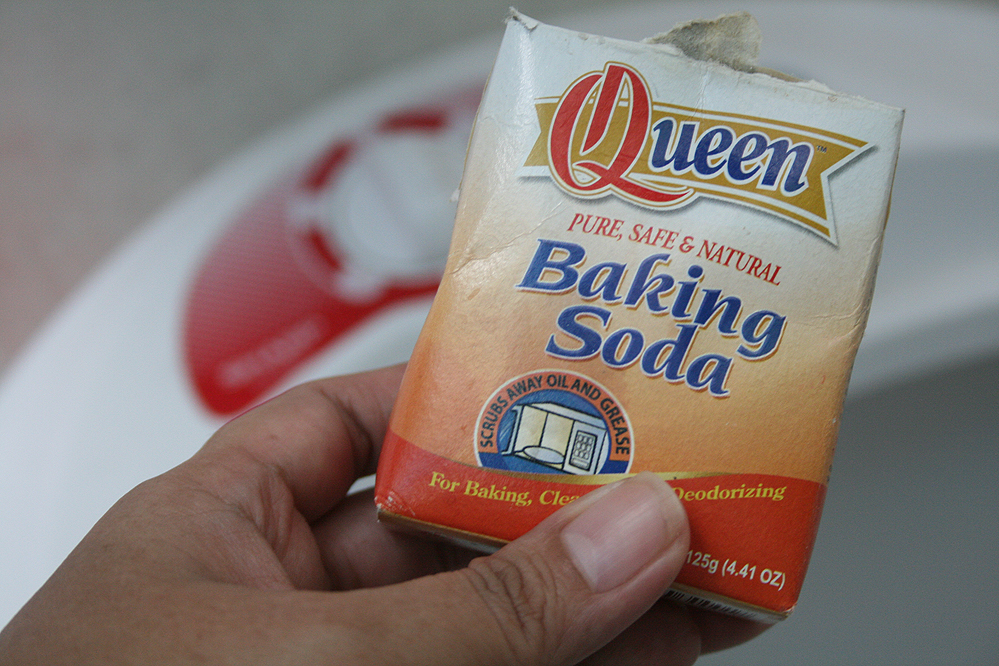
Baking soda is one of the most useful tools for removing laundry odors because it helps neutralize smells rather than covering them with another scent. It is especially helpful for cotton, polyester blends, towels, pajamas, sheets, and everyday washable clothing.
For a regular load, add about half a cup of baking soda directly to the washer drum, then wash with a small amount of fragrance-free detergent. If the clothing is very strongly scented, soak it first.
Baking soda soak for strong detergent smell
- Fill a sink, tub, or bucket with cool or warm water, depending on the care label.
- Add half a cup to one cup of baking soda.
- Stir until mostly dissolved.
- Submerge the clothing and let it soak for several hours or overnight.
- Wash with fragrance-free detergent and run an extra rinse.
For targeted areas, such as collars, underarms, or cuffs that hold both body odor and fragrance, make a paste with baking soda and water. Apply it to the area, let it sit for 20 to 30 minutes, then rinse before washing.
Step 4: Try a White Vinegar SoakCarefully
White distilled vinegar can help loosen residue and reduce odors, but it should be used thoughtfully. Vinegar is acidic, which is why it can help break down certain deposits, but frequent use in the washing machine may not be ideal for rubber parts and hoses. It is also not suitable for every fabric.
The safest approach is to use vinegar as a pre-soak outside the machine, then rinse the clothing before washing. Do not use vinegar on delicate fabrics such as silk, wool, leather, or items with fragile elastic. And never mix vinegar with bleach, ammonia, or other cleaners. Laundry day should not include a chemistry emergency.
Vinegar soak for fabric softener smell
- Mix one part white distilled vinegar with four parts cool water.
- Soak the clothing for 30 minutes.
- Rinse thoroughly with clean water.
- Wash with fragrance-free detergent.
- Use an extra rinse cycle.
For very strong odors, you can extend the soak if the fabric is sturdy, but avoid leaving delicate items in acidic solutions for long periods. If the garment has spandex or elastic, choose baking soda and extra rinsing instead.
Step 5: Wash with a Fragrance-Free Detergent
Once you are trying to remove fragrance, switch to a fragrance-free detergent. Look for words like “free and clear,” “fragrance-free,” or “unscented,” but read carefully. “Unscented” sometimes means a product may include masking agents to hide chemical smells, while “fragrance-free” generally means no fragrance materials have been added.
Use less detergent than you think you need. For many normal loads, one to two tablespoons of concentrated detergent is enough, especially in a high-efficiency washer. Follow the product label, but remember that detergent caps are often much larger than the amount needed for an average load. The cap is not a challenge. You do not need to fill it like a trophy.
Fragrance-free washing tips
- Use the smallest effective amount of detergent.
- Choose an extra rinse when removing old fragrance.
- Skip fabric softener, scent beads, and dryer sheets.
- Wash heavily scented items separately from fragrance-free laundry.
- Do not dry clothing until the smell is mostly gone.
Step 6: Avoid Heat Until the Scent Is Gone
Heat can make fragrance harder to remove. A hot dryer may lock scent into fibers, especially synthetic fabrics like polyester, nylon, and spandex blends. Before drying, smell the garment while it is damp. If the scent is still strong, repeat a rinse cycle or soak treatment.
Air drying is better during the odor-removal process. Hang the clothing in a breezy area. If you must use a dryer, use low heat or air fluff. Avoid dryer sheets, because they can add another layer of fragrance and residue. Wool dryer balls are a better option if you need help reducing static, but choose unscented ones.
Step 7: Deep Clean Towels, Sheets, and Workout Clothes Separately
Towels, sheets, and activewear often need special treatment because they hold onto residue differently. Towels are absorbent, so they trap fabric softener and detergent buildup easily. Workout clothing is often made from synthetic performance fabric, which can hold odors and fragrance in the fibers.
For towels
Wash towels separately with fragrance-free detergent and baking soda. Skip fabric softener completely because it can reduce absorbency. If towels still smell strongly perfumed, use a baking soda soak or a careful vinegar pre-soak, then rinse well and wash again.
For sheets
Sheets can hold detergent scent because they cover a large surface area and spend hours against skin. Wash them in smaller loads so they rinse thoroughly. Use warm water if allowed, fragrance-free detergent, and an extra rinse.
For workout clothes
Avoid vinegar on elastic-heavy garments if the care label warns against it. Use baking soda, cool water, and fragrance-free detergent. Do not use fabric softener on moisture-wicking fabrics because it can interfere with performance and trap odors.
Step 8: Clean the Washing Machine
If every load smells like detergent or fabric softener, the problem may not be the clothes. Your washing machine may have buildup in the drum, gasket, dispenser drawer, or hoses. Fabric softener residue can collect inside the dispenser, then release into future loads like a tiny fragrance villain living rent-free in your appliance.
Run a washer cleaning cycle using a washing machine cleaner or the method recommended in your appliance manual. Wipe the rubber gasket, clean the detergent drawer, and leave the washer door open after use so moisture can escape. If your machine has a removable dispenser tray, take it out and wash away old softener residue.
What Not to Do When Removing Laundry Fragrance
Some laundry hacks sound powerful but can damage clothing, irritate skin, or create safety risks. Keep the process boring and safe. Boring laundry is underrated. Boring laundry does not ruin your jeans.
- Do not mix vinegar with bleach. This can create dangerous fumes.
- Do not use more detergent to remove detergent smell. It usually makes buildup worse.
- Do not use fabric softener to “balance” the scent. It adds more residue.
- Do not dry strongly scented clothes on high heat. Heat can make odors harder to remove.
- Do not soak delicate fabrics without checking the label. Wool, silk, leather, and embellished pieces need special care.
- Do not add essential oils. They are still fragrance and may irritate sensitive skin or respiratory systems.
How to Prevent Detergent and Fabric Softener Smells in the Future
Once your clothes finally smell neutral, protect that victory like it is the last clean sock in the house. Prevention is much easier than removing built-up fragrance later.
Use less product
Measure detergent carefully. Many people use far more than needed. If clothes feel stiff, look dull, or smell heavily perfumed after washing, reduce the amount.
Skip fabric softener
Fabric softener is optional, not a laundry law. For softness, try dryer balls, lower dryer heat, shorter drying time, or simply washing with the right detergent amount.
Choose fragrance-free products
If you have sensitive skin, headaches from scent, allergies, asthma, eczema, or simply prefer neutral laundry, fragrance-free detergent is a practical choice.
Do not overload the washer
Clothes need space to rinse. A washer packed like a suitcase before vacation will not clean or rinse well.
Use extra rinse for sensitive skin
An extra rinse can help remove leftover detergent and fragrance, especially for bedding, underwear, baby clothes, towels, and anything worn close to the skin.
When Strong Laundry Scent May Be More Than an Annoyance
For some people, heavy fragrance is not just unpleasant. It can contribute to skin irritation, itching, headaches, coughing, or discomfort. Fragrances in personal care and cleaning products may bother people with sensitive skin, eczema, asthma, migraines, or fragrance sensitivity. If you notice rashes, breathing discomfort, or repeated irritation after wearing scented clothing, switch to fragrance-free laundry products and consider speaking with a healthcare professional.
Children, babies, and people with reactive skin may be especially sensitive to residue left in clothing and bedding. In these cases, simple is best: fragrance-free detergent, no softener, no scent beads, and an extra rinse. Your laundry does not need to smell like a botanical garden to be clean.
Quick Troubleshooting Guide
If clothes smell like detergent after washing
Run a detergent-free wash with an extra rinse. Use less detergent next time.
If clothes smell like fabric softener
Try a baking soda soak, then wash with fragrance-free detergent. Avoid dryer sheets.
If thrifted clothes smell perfumed
Air them outside first. Then use a baking soda soak or careful vinegar pre-soak before washing.
If towels smell scented and feel less absorbent
Wash towels separately, skip softener, add baking soda, and run an extra rinse.
If the smell returns every load
Clean your washer, especially the dispenser drawer and rubber gasket.
Personal Experience: What Actually Works in Real-Life Laundry Battles
Here is the honest truth from the laundry trenches: the strongest detergent and fabric softener smells rarely disappear in one heroic wash. They fade in layers. The first rinse removes the obvious scent. The second treatment loosens what is clinging to the fibers. The final air-dry finishes the job. It is less like flipping a switch and more like asking an overenthusiastic guest to leave the party politely, then firmly, then with a baking soda soak.
One of the most common situations is buying secondhand clothing online. The package arrives, the shirt looks great, and then the scent hits you like someone mailed a perfume counter. In that case, washing immediately is not always the best first move. Airing the garment outdoors for a full day often reduces the top layer of fragrance. After that, a long baking soda soak works better because the fabric is no longer fighting a fresh cloud of scent.
For cotton T-shirts, pajamas, and casual clothes, the most reliable routine is simple: soak overnight in water with baking soda, wash with a small amount of fragrance-free detergent, choose an extra rinse, and air dry. If the smell remains, repeat the process before using the dryer. The dryer is convenient, but it can make stubborn fragrance feel permanently installed, like bad wallpaper.
Towels require a different mindset. Many people use fabric softener because they want towels to feel fluffy, but over time the towels may become less absorbent and more heavily scented. The fix is to stop using softener for towels altogether. Wash them with fragrance-free detergent, do not overload the machine, and use baking soda when they smell stale or perfumed. After a few washes, towels often feel cleaner and more absorbent, even if they no longer have that artificial “mountain breeze” scent that somehow smells nothing like mountains or breezes.
Workout clothes can be tricky because synthetic fabrics hold odors differently. They may smell fine when dry, then release fragrance or body odor when warm. For these, avoid hot water unless the care label allows it, skip vinegar if the garment contains a lot of elastic, and use baking soda plus fragrance-free detergent. Wash workout clothes soon after wearing them, and let them dry before tossing them into a hamper. A damp gym shirt trapped under a towel is basically a tiny odor factory with sleeves.
Bedding is another place where fragrance matters. A heavily scented pillowcase may seem harmless until you are trying to sleep with your face pressed against it for eight hours. For sheets and pillowcases, use less detergent, run an extra rinse, and avoid scent boosters. If the bedding already smells too strong, wash it alone so it has room to rinse thoroughly. Air drying sheets outdoors can also help, and as a bonus, it makes you feel like you briefly have your life together.
The biggest lesson is not to replace one smell with another. Spraying clothing with perfume, adding essential oils, or using scented dryer sheets may hide the problem for a moment, but it does not remove residue. Truly clean clothing should smell like almost nothing. Maybe a little sunshine. Maybe a little cotton. Definitely not “Tropical Midnight Waterfall Explosion.”
Once you switch to fragrance-free detergent and stop using softener regularly, your nose adjusts. At first, neutral laundry may seem strange because we are trained to associate strong scent with cleanliness. But clean is not a smell. Clean is the absence of soil, residue, and odors. When clothes feel soft, rinse clean, and do not irritate your skin or take over your closet, that is the real fresh.
Conclusion
Removing the scent of detergent or fabric softener from clothing takes patience, but it is absolutely doable. Start with fresh air, then rewash with no detergent and an extra rinse. For stronger smells, use baking soda to neutralize odors or a careful white vinegar pre-soak when the fabric allows it. Switch to fragrance-free detergent, avoid fabric softener and dryer sheets, and keep scented items out of the dryer until the smell is mostly gone.
The secret is not stronger fragrance. It is better rinsing, less product, cleaner washer habits, and fabric-safe odor removal. Your clothes do not need to smell like a flower commercial to be clean. In fact, the cleanest laundry often smells like nothing at alland that is a beautiful thing.