Every now and then, the internet asks a question so simple it becomes weirdly powerful: “Send a pic of one of your fave works of are.” Yes, the last word looks like it took a tiny nap before becoming “art,” but honestly, that makes the prompt even better. Art is rarely tidy. It spills, smudges, shocks, comforts, argues, flirts, and occasionally looks like a banana having an existential crisis. So when someone asks you to share a favorite artwork, they are really asking for a tiny window into your taste, memory, mood, humor, and maybe your childhood wallpaper.
Sharing a favorite work of art online is more than posting a pretty image. It can start a conversation, introduce people to artists they have never heard of, help museums reach new audiences, and remind everyone that creativity is not locked inside quiet galleries guarded by people who can detect chewing gum from three rooms away. Today, thousands of public-domain images from major museum collections are available online, making it easier than ever to discover, discuss, and legally share art in a thoughtful way.
This article explores how to choose a favorite artwork, what makes people emotionally attached to certain images, how to share art pictures responsibly, and why a simple “send a pic” prompt can become a surprisingly meaningful cultural exchange.
Why Favorite Works of Art Matter
A favorite work of art is rarely just “the best” artwork. It is usually the one that follows you around. Maybe you saw Vincent van Gogh’s swirling skies during a school lesson and never recovered emotionally. Maybe Georgia O’Keeffe’s flowers made you look at ordinary petals like they were opera singers. Maybe a comic panel, street mural, family quilt, album cover, or digital illustration hit you harder than a museum masterpiece ever did.
That is the beauty of the question. It does not ask for the most expensive painting, the most academically important sculpture, or the artwork most likely to impress someone wearing black turtlenecks in July. It asks for your favorite. Personal taste matters because art is not a math test. There is no single correct answer, and nobody should lose points for loving a painting of a soup can, a glowing landscape, or a moody portrait that looks like it knows your passwords.
The Rise of Sharing Art Online
Digital access has changed how people discover art. Major institutions such as The Metropolitan Museum of Art, the National Gallery of Art, the Art Institute of Chicago, the Cleveland Museum of Art, the Smithsonian, MoMA, and the Whitney Museum have made enormous portions of their collections searchable online. Many museums also offer open-access or public-domain images that people can download, study, remix, or share without needing a permission slip the size of a dining table.
This matters because art used to feel distant for many people. If you did not live near a big museum, did not have time to travel, or felt intimidated by formal art spaces, your access could be limited. Now, a student in Kansas, a designer in California, a teacher in Texas, or a night-owl scrolling at 2:13 a.m. can browse centuries of paintings, sculptures, prints, photographs, textiles, and decorative objects from a laptop or phone.
Online art sharing also changes the mood of art appreciation. Instead of whispering in a gallery and pretending to understand every wall label, people can react naturally: “I love this,” “This reminds me of my grandma,” “Why is that horse judging me?” or “I would absolutely hang this in my kitchen.” That casual conversation does not cheapen art. It keeps it alive.
How to Choose a Favorite Work of Art to Share
Start With Feeling, Not Fame
The easiest way to choose a favorite artwork is to ignore the imaginary art professor living in your head. Pick the piece that makes you feel something first. It might be wonder, calm, sadness, curiosity, nostalgia, irritation, or laughter. Art that annoys you can still be interesting. Sometimes the artwork you keep complaining about is the one that has successfully moved into your brain rent-free.
Ask yourself: What image do I remember without trying? What artwork would I show a friend and say, “Look at this”? What piece makes me pause longer than expected? Museums often encourage slow looking because people tend to glance at art too quickly. Spending even a few extra moments with a piece can reveal color shifts, hidden figures, brushwork, texture, symbolism, and emotional details that a quick scroll would miss.
Look for a Personal Connection
Your favorite artwork might connect to a place you love, a period of life, a cultural background, a favorite book, a private joke, or a feeling you could never explain properly until an artist did it for you. A stormy seascape might remind someone of a coastal childhood. A vivid abstract painting might feel like music. A photograph of a city street might look exactly like the moment before rain, coffee, and bad decisions.
When sharing the picture, add one or two sentences about why you chose it. A caption like “I love the colors” is fine, but “I love how the blue makes the room feel quiet, like the world is holding its breath” gives people something to respond to. Specificity turns a post into a conversation.
Consider the Story Behind the Work
Sometimes the background makes an artwork more powerful. Learning about the artist, the time period, the materials, or the subject can deepen your appreciation. For example, a portrait may seem formal until you learn it challenged social expectations. A landscape may look peaceful until you understand it documents environmental change. A quilt, poster, photograph, or ceramic object may carry histories of labor, identity, migration, protest, or community.
Art history does not have to be stiff. Think of it as gossip with better footnotes. Who made this? Who paid for it? Who hated it? Who misunderstood it? Who preserved it? Who stole it? Who finally realized it was brilliant fifty years later? The story can be as compelling as the image itself.
Great Places to Find Art Images Online
If you want to send a picture of a favorite work of art, start with reputable museum and library collections. Many U.S. institutions provide high-quality images, detailed object pages, and educational notes. The Met’s Open Access program includes hundreds of thousands of public-domain artwork images. The National Gallery of Art provides downloadable images for many works in its collection. The Smithsonian Open Access platform offers millions of digital items from its museums, archives, libraries, research centers, and collections.
The Art Institute of Chicago and the Cleveland Museum of Art also offer large open-access collections, while MoMA and the Whitney provide rich online resources for modern and contemporary art. The Library of Congress has “Free to Use and Reuse” image sets, including historical photographs, posters, prints, and other visual materials. These collections are especially helpful if you want to share art legally, teach with images, create mood boards, or simply fall into a beautiful research rabbit hole and emerge three hours later knowing too much about 19th-century hats.
How to Share Art Pictures Responsibly
Check the Rights Information
Before posting an image, check whether it is public domain, open access, Creative Commons licensed, or copyrighted. Public-domain works and CC0 images are generally the easiest to reuse, but the rules can vary depending on the artwork, the photograph of the artwork, and the institution that provides the image. A painting from 1700 may be in the public domain, but a modern photograph, exhibition image, or copyrighted contemporary artwork may have restrictions.
When in doubt, link to the museum’s object page or share a small preview with commentary rather than copying a high-resolution image without permission. The U.S. Copyright Office explains that copyright protects original visual works, including paintings, photographs, sculptures, illustrations, and similar creative works. “I found it on Google” is not a license. It is just a confession with Wi-Fi.
Credit the Artist and Institution
Even when an image is free to use, credit is good manners. Include the artist’s name, title, date, medium, and collection when available. A helpful caption might look like this: “Claude Monet, Woman with a Parasol – Madame Monet and Her Son, 1875, National Gallery of Art.” That small amount of context helps others learn, search, and appreciate the work beyond the image itself.
For living artists, credit becomes even more important. Tag the artist when appropriate, follow their posting guidelines, and avoid reposting full-resolution images in ways that compete with their own sales or portfolio. Supporting artists means more than saying “love this.” It can mean buying prints, sharing official links, commissioning work, attending exhibitions, or simply not cropping out signatures like a digital raccoon.
Add Your Own Commentary
One of the safest and most meaningful ways to share art is to add original commentary. Explain what you notice, how the artwork makes you feel, what question it raises, or why it belongs in your imaginary personal museum. Your words transform the post from image copying into interpretation, discussion, and appreciation.
Examples of Favorite Works People Often Share
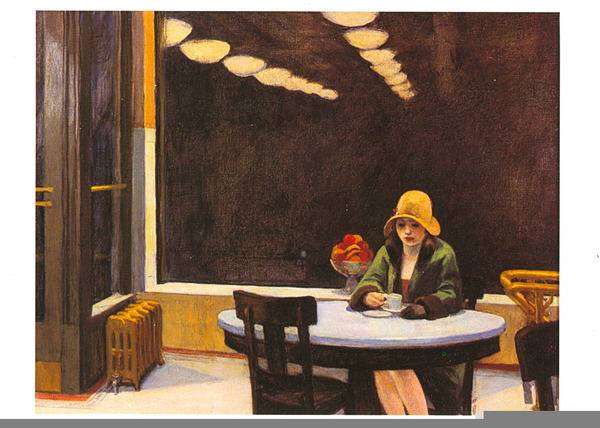
Some artworks become favorites because they are instantly recognizable. Van Gogh’s night skies, Monet’s light-filled gardens, Frida Kahlo’s self-portraits, Edward Hopper’s quiet urban scenes, Jean-Michel Basquiat’s energetic marks, Jacob Lawrence’s narrative panels, Mary Cassatt’s intimate domestic scenes, and Georgia O’Keeffe’s flowers all attract strong personal responses. People return to these works because they feel human, even when the style is highly stylized.
Other favorites are less famous but equally powerful: a Japanese woodblock print, a Harlem Renaissance photograph, a Pueblo ceramic vessel, a WPA-era mural study, a protest poster, a contemporary installation, or a digital painting shared by an independent artist. The best answer to “send a pic of one of your fave works of are” does not need to be canonical. It only needs to be honest.
What Your Favorite Artwork Says About You
Your favorite artwork can reveal your visual personality. If you love Impressionist paintings, you may be drawn to light, atmosphere, and fleeting moments. If you prefer Surrealism, perhaps you enjoy dream logic and strange juxtapositions. If abstract art attracts you, you might respond strongly to color, rhythm, movement, or mood. If portraiture is your thing, faces and stories may pull you in. If you love folk art, craft, comics, or street art, you may value directness, community, humor, and handmade energy.
Of course, these are playful clues, not personality tests. Loving a dramatic Baroque painting does not mean you personally enter every room with thunder and a velvet cape. But taste is still revealing. The art we love often reflects what we notice, what we value, and what kind of beauty we trust.
How to Write a Great Caption for an Art Post
A strong art caption should be short enough for people to read and specific enough to matter. Start with the basic information: artist, title, date, and museum or source. Then add your personal reaction. For example:
“This is one of my favorite paintings because the light feels like a memory instead of weather. The whole scene looks calm, but there is movement everywhere.”
That caption works because it invites conversation. It does not try to sound like a textbook swallowed a thesaurus. It simply explains what the viewer sees and feels. Another good approach is to ask a question: “What detail did you notice first?” or “Would you hang this in your home?” Questions help turn a passive post into a friendly discussion.
Why Art Prompts Build Better Online Communities
Community prompts like “send a pic of one of your fave works of are” work because they lower the pressure. Nobody has to write a dissertation. Nobody has to rank the entire history of human creativity before breakfast. People can simply share something they like.
That small act creates connection. One person posts a Renaissance portrait. Another shares a skateboard graphic. Someone else uploads a photo of a sculpture, a mural, a textile, or a painting made by their child. Suddenly the thread becomes a casual museum built by everyone. It is messy, surprising, democratic, and usually more fun than pretending to understand why one white square is worth more than a small island.
Art prompts also encourage visual literacy. People learn to describe what they see, compare styles, notice materials, and ask better questions. They may discover museums, artists, and movements they would never have searched for on their own. The prompt becomes an invitation: show me what you love, and I will try to see it through your eyes.
Tips for Making Your Art Share More Engaging
Use a Clear Image
Choose a high-quality image from a museum, archive, artist website, or reputable collection page. Avoid blurry screenshots, heavy filters, or cropped images that remove important details. If the artwork is three-dimensional, such as sculpture, ceramics, furniture, or installation art, consider sharing multiple angles when allowed.
Keep the Tone Human
You do not need to sound like an art critic. Say what you actually think. “This painting makes me feel peaceful” is better than “The chromatic structure interrogates post-industrial spatial anxiety” unless you are trying to scare a sandwich.
Invite Others to Join
End your post with a simple invitation: “What artwork would you send?” or “Show me a piece you never get tired of looking at.” The best art threads become collaborative. One person’s favorite leads to another person’s memory, recommendation, or hot take. The internet can be noisy, but a good art thread is one of its softer little miracles.
Common Mistakes to Avoid
The biggest mistake is treating every online image as free to reuse. Publicly visible does not mean public domain. Another mistake is posting art without context. A beautiful image becomes more valuable when people know who made it and where it comes from. Also, avoid mocking someone else’s favorite artwork just because it is not your style. You can dislike a piece without stomping through someone’s joy wearing muddy boots.
Finally, do not assume “real art” only means old paintings in gold frames. Art includes photography, design, textiles, ceramics, performance, printmaking, illustration, comics, digital art, murals, architecture, and objects of daily life made with extraordinary skill. If it moves people, carries meaning, and reflects creative intention, it belongs in the conversation.
Experience: What Happens When You Actually Share a Favorite Work of Art
The first time I remember sharing a favorite artwork online, I expected almost nothing. I posted it casually, the way people toss a pebble into a pond and then immediately check whether anyone saw the splash. The image was not trendy. It was not a meme. It did not feature a celebrity, a scandal, or a cat wearing emotional support sunglasses. It was simply a painting I loved because the colors felt warm and lonely at the same time.
What surprised me was how quickly people responded with their own associations. One person said it reminded them of visiting a museum with their mother. Another said the colors looked like late afternoon in their hometown. Someone else disagreed completely and said the painting felt cold, not warm. Instead of ruining the conversation, that disagreement made it better. We were looking at the same image but bringing different weather with us.
That is the special thing about sharing a favorite work of art. You are not only showing an object; you are revealing a way of seeing. A person who loves quiet interiors may notice shadows and chairs. A person who loves bold street art may notice movement and attitude. A person who loves ancient objects may notice hands, tools, survival, and time. The artwork becomes a mirror, but not the boring bathroom kind with toothpaste spots. It becomes a mirror with history inside it.
I also learned that captions matter. When I simply posted an artwork title, people liked it politely and moved on. When I wrote why it mattered to me, the comments became richer. People asked questions. They shared similar works. They admitted they did not “get” the artwork but wanted to understand it. That is when I realized art appreciation does not begin with expertise. It begins with attention.
Another memorable experience came from sharing a public-domain museum image in a group chat. Everyone reacted differently. One friend zoomed in on the brushstrokes. Another wanted to know whether the artist had a dramatic life, because apparently we are all secretly here for art-history soap opera. Someone else used the colors as inspiration for a room makeover. Within minutes, one artwork had become a design board, a history lesson, a mood check, and a comedy thread.
That experience changed how I think about online art prompts. They are not filler posts. They are tiny cultural exchanges. They allow people to say, “This is beautiful to me,” without needing to defend a thesis. They also encourage people to visit museum websites, learn about artists, check image rights, and discover collections that were previously hidden behind distance or intimidation.
The best part is that favorite artworks change. A piece you loved at sixteen may feel different at thirty. A painting you ignored for years may suddenly become important after a move, a loss, a relationship, a trip, or one weird Tuesday when your emotions decide to rearrange the furniture. Sending a picture of a favorite artwork is not a final statement. It is a snapshot of who you are while looking.
So yes, send the pic. Send the glowing landscape, the strange sculpture, the delicate drawing, the loud poster, the moody photograph, the ancient bowl, the digital illustration, the museum masterpiece, or the handmade object that nobody famous has ever reviewed. Add a sentence about why you love it. Give credit. Respect copyright. Then let the conversation unfold. Art has been traveling between people for thousands of years. The only difference now is that it sometimes arrives in a group chat with three emojis and a typo in the title.
Conclusion
“Send A Pic Of One Of Your Fave Works Of Are” may sound like a casual internet prompt, but it carries a bigger idea: art becomes more meaningful when people share it, discuss it, and connect it to their own lives. Thanks to museum open-access collections, digital archives, and online education resources, anyone can explore remarkable works of art from home. The key is to choose images thoughtfully, credit artists and institutions, respect copyright, and add your own honest response.
Your favorite artwork does not have to impress everyone. It only has to matter to you. Whether it is a famous painting, a contemporary photograph, a handmade textile, a mural, a sculpture, or a digital piece by an artist you follow online, sharing it can open a small door into beauty, memory, history, and conversation. And really, the internet could use more of that.
Note: The title is kept exactly as requested, including “Are,” while the article context naturally discusses favorite works of art for SEO clarity and reader understanding.