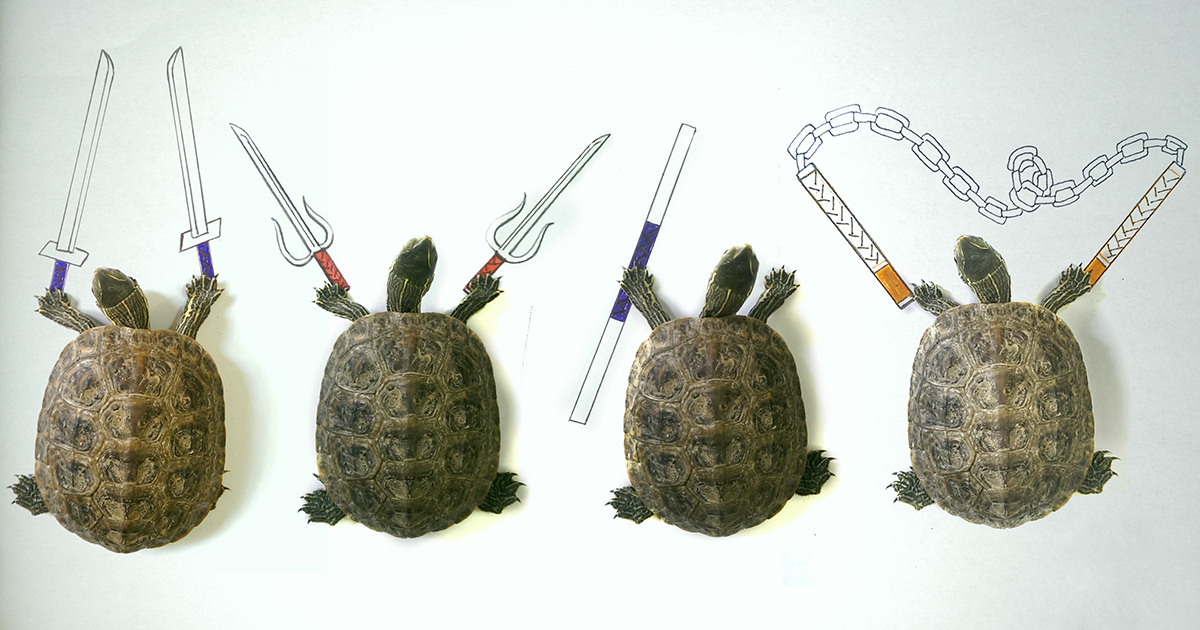
Some people look at a paper clip and see office supplies. Others see a tiny metal dragon, a gymnast, a fishing hook, or the world’s most emotionally unavailable swan. That is the magic behind interactive illustrations using everyday objects: ordinary things stop being ordinary the moment a drawing gives them a new job.
I Draw Interactive Illustrations Using Everyday Objects (Part 2) celebrates that playful collision between reality and imagination. It is the kind of art that does not require a marble studio, a suspiciously expensive brush set, or a dramatic window overlooking Paris. A pencil, a phone camera, a clean sheet of paper, and whatever is sitting on the tablekeys, coins, combs, snacks, headphones, buttons, screws, leaves, rubber bandscan become the starting point for a miniature visual joke, a sweet character, or a surprisingly clever story.
This article explores why everyday object art is so addictive, how interactive drawings work, what makes them powerful for artists and audiences, and how anyone can train their eyes to see a turtle in a walnut shell or a superhero cape in a sticky note. Welcome to the tiny universe where a comb can become a jail, a spoon can become a parachute, and creativity politely steals your lunch fork for the sake of art.
What Are Interactive Illustrations Using Everyday Objects?
Interactive illustrations are drawings that physically interact with real objects. Instead of drawing everything from scratch, the artist places an object on paper and builds a scene around it. The object becomes part of the image, not just a prop. A bottle cap might become a planet. A leaf might become a fish fin. A zipper might become a monster’s mouth. A pair of earbuds might turn into spaghetti, vines, or alien tentacles having a very dramatic Monday.
The style is closely related to found object art, mixed media drawing, visual puns, and conceptual illustration. It borrows from the long art tradition of transforming everyday materials into something unexpected. Museums and art educators often describe found objects as ordinary things repurposed in an artistic context. Interactive illustration takes that idea and makes it instantly readable, often humorous, and perfectly suited for social media.
The “interactive” part matters because the object is not merely shown; it participates. It changes the meaning of the drawing, and the drawing changes the meaning of the object. That two-way relationship is what makes the viewer pause. For one second, your brain says, “That is a pencil sharpener.” Then the drawing says, “Actually, it is now a tiny submarine.” Your brain, being dramatic but flexible, accepts the new reality.
Why Everyday Objects Make Such Great Art Materials
Everyday objects are powerful because they are familiar. We already understand their size, texture, use, and shape. When an artist transforms them, the surprise lands faster. A viewer does not need an art history degree to enjoy a drawing where a banana becomes a crescent moon or a button becomes a bicycle wheel. The humor and meaning are immediate.
They Create Instant Recognition
Good visual storytelling often starts with recognition. A viewer sees a comb, a coin, or a coffee stain and instantly knows what it is. When the illustration gives that object a new role, the contrast creates delight. This is the same reason visual jokes work so well: the setup is familiar, but the twist is unexpected.
They Make Creativity Feel Accessible
Interactive object drawings are democratic. You do not need rare materials. You do not need a giant budget. You do not even need a studio, although a table that is not covered in yesterday’s snack evidence is helpful. The entire process can begin with a question: “What else could this object be?”
That question opens a creative door. A safety pin becomes a bird beak. A USB cable becomes a road. A popcorn kernel becomes a sheep. Suddenly, the junk drawer looks less like chaos and more like a casting agency for tiny illustrated actors.
They Encourage Problem-Solving
Working with real objects creates constraints, and constraints can be surprisingly helpful. If an artist chooses a spoon, the spoon already has a size, curve, shine, and shadow. The challenge is not unlimited freedom; it is creative negotiation. The artist must ask: Should the spoon be a boat, a mirror, a slide, a shield, a rocket, or a fancy hat for a frog with expensive taste?
These limitations sharpen decision-making. The object suggests possibilities, but the artist must choose the strongest one. That is why interactive illustrations often feel clever rather than overworked. The best ideas look obvious after you see them, even though they were not obvious before.
The Charm of “Part 2”: Why This Series Works
The title I Draw Interactive Illustrations Using Everyday Objects (Part 2) suggests a continuing experiment rather than a one-time trick. That is important. Object-based illustration becomes more interesting when it grows as a series. One drawing may be cute; twenty drawings reveal a visual language.
In this kind of series, each object becomes a prompt. The artist does not simply decorate the object. Instead, the artist studies its physical personality. Is it round? Sharp? soft? flexible? shiny? Is it naturally funny? Does it resemble an animal, a tool, a vehicle, or a body part? Could it become part of a miniature scene?
A turtle might be suggested by a textured shell-like object. A parachute might appear from a fabric scrap or umbrella-shaped item. A tiny panda could be built around circular shapes. An ant might emerge from dots, seeds, or small black objects. A hamster could be formed from a rounded snack or a soft-looking household item. The joy comes from the transformation: something you ignored five minutes ago suddenly has a face, a job, and possibly rent to pay.
How Interactive Object Illustrations Tell Stories
A successful interactive illustration is usually more than a clever shape match. It tells a micro-story. The scene may be tiny, but it has a beginning, middle, and punchline. Consider how a simple object can support storytelling:
- A key can become a sword, a city skyline, a dragon’s spine, or the tool a tiny character is desperately trying to lift.
- A rubber band can become a jump rope, a lasso, a snake, a planet ring, or a spaghetti emergency.
- A leaf can become a boat sail, a bird wing, a dinosaur plate, or a blanket for a very cold mouse.
- A coin can become a moon, a shield, a wheel, a cookie, or the world’s least affordable pancake.
- A comb can become a fence, prison bars, a city, piano keys, or a monster with excellent dental structure.
The drawing around the object gives it motive. A coin is not just a moon; maybe a tiny astronaut is waving at it. A comb is not just a fence; maybe a cartoon prisoner is trying to escape between the teeth. A spoon is not just a boat; maybe a tiny sailor is fighting a soup storm. The more specific the story, the more memorable the image.
The Visual Principles Behind the Fun
Although interactive object drawings look simple, the best ones rely on strong visual design. The artist must think about composition, scale, balance, contrast, and where the viewer’s eye should go first. A poorly placed object can confuse the idea. A well-placed object makes the drawing feel inevitable.
Scale Creates the Joke
Scale is one of the funniest tools in everyday object art. A tiny paper clip can become a giant bridge if the drawn characters are small enough. A peanut can become a whale if the waterline and tail are drawn correctly. A thumbtack can become a mountain, a crown, or a UFO, depending on the world around it.
By changing the implied scale, the artist changes the object’s identity. That is why a single object can produce many ideas. A bottle cap viewed as life-size is just a cap. Viewed as gigantic, it becomes a stadium. Viewed as tiny, it becomes a button on a robot’s jacket. The object stays the same; the story changes everything.
Negative Space Does the Heavy Lifting
Interactive illustrations often use simple line work because the real object already adds texture and weight. Too many drawn details can make the scene crowded. Negative space gives the object room to breathe and allows the viewer to understand the concept quickly.
In many strong examples, the drawing is almost minimal: a few lines, a face, a pair of legs, a shadow, a tiny hand reaching for something. The restraint is what makes the object shine. The artist knows when to stop, which is a superpower rarely found in group chats or home renovation projects.
Contrast Makes the Object Pop
Because the real object has physical dimension, the drawing must support it visually. Contrast helps. A dark object may need clean white space. A shiny object may need simple lines. A colorful object may work best with black ink. The goal is not to hide the object but to make its transformation clear.
Why This Art Style Is Perfect for the Internet
Everyday object illustrations are highly shareable because they reward quick attention. A viewer scrolling on a phone can understand the image in seconds. There is an instant “aha” moment, followed by a second look to admire the cleverness. That is ideal for visual platforms where people move fast but still crave originality.
These artworks also invite participation. Viewers naturally start imagining their own versions. Someone sees a drawing made with a fork and thinks, “Wait, my kitchen has at least twelve potential dinosaurs.” The format encourages comments, remixes, challenges, and creative play. It turns art from something distant into something people can try at home.
Another reason the style works online is that it feels human. In a digital world full of polished graphics and hyper-perfect images, a hand-drawn line interacting with a real object feels warm and personal. You can see the artist’s thinking. You can almost imagine the moment of discovery: the object on the desk, the sudden idea, the quick sketch, the photo, the tiny victory.
How to Create Your Own Interactive Illustrations
The process is simple, but the best results come from patience and observation. Start by gathering a small group of everyday items. Choose objects with clear shapes: keys, leaves, clips, buttons, coins, pasta, candy wrappers, shells, screws, erasers, bottle caps, or small tools. Place one object on a blank sheet and rotate it slowly. Do not rush. Let your brain be weird for a minute; it has been training for this.
Step 1: Ask What the Shape Suggests
Look at the outline first. Is it long like a neck? Round like a head? Curved like a wave? Jagged like teeth? Sometimes the best idea comes from the silhouette, not the object’s original function.
Step 2: Add a Simple Story
Once you see a possible image, ask what is happening. A bottle cap as a wheel is fine. A bottle cap as the missing wheel on a tiny clown car is better. A leaf as a wing is fine. A leaf as the wing of a nervous baby dragon trying to fly for the first time is better. Story turns decoration into illustration.
Step 3: Keep the Drawing Clean
Use simple lines at first. The object should remain the star. Add only what helps the viewer understand the transformation. If the drawing becomes too complicated, the idea may get buried under details. Remember: the object came here to perform, not to be trapped under a thousand eyelashes and dramatic shading.
Step 4: Photograph from the Right Angle
Lighting and perspective matter. A flat overhead photo often works best, especially when the object sits directly on the paper. Natural light can reduce harsh shadows. A clean background keeps attention on the concept. If the shadow becomes part of the story, use it intentionally.
Step 5: Build a Series
One illustration is a fun exercise. A series builds style. Try creating ten drawings using only kitchen items, office supplies, snacks, or objects found during a walk. Series work forces you to keep solving new visual problems, and it helps audiences recognize your artistic voice.
Creative Examples Inspired by Everyday Object Art
Imagine a set of interactive illustrations built around common household objects:
A toothbrush becomes a street-cleaning vehicle operated by tiny workers in hard hats. The bristles are no longer bristles; they are industrial scrubbers saving a cartoon city from a suspicious toothpaste spill.
A cinnamon stick becomes a wooden raft. Two drawn mice stand on top wearing leaf hats, looking heroic despite having no clear navigation plan. A few ink waves and a tiny flag turn breakfast spice into a river adventure.
A cracked eggshell becomes a dinosaur egg. A baby dinosaur peeks out, confused by modern kitchen lighting and deeply unimpressed with the refrigerator.
A paper clip becomes a pair of glasses for a tiny professor. The professor is drawn with wild hair, a bow tie, and the expression of someone who has just discovered that the homework was eaten by the dog and also peer-reviewed.
A green leaf becomes a crocodile’s back. Add eyes, legs, a tail, and a nervous fish nearby, and suddenly the leaf is not botanicalit is tactical.
These examples show the heart of the technique: the artist does not need fancy materials. The humor comes from the gap between what the object is and what the drawing convinces us it could be.
Why Everyday Object Drawing Improves Creativity
Practicing with everyday objects trains flexible thinking. Instead of asking, “Can I draw this perfectly?” the artist asks, “What else could this become?” That shift is important. It moves creativity away from perfection and toward curiosity.
Many beginners freeze because they believe art must begin with a grand idea. Object-based illustration removes that pressure. The idea can begin with a crumb, a button, or a lonely screw sitting on the desk like it missed its bus. The object provides a starting point, and the artist responds.
This habit also strengthens observation. You begin noticing shapes everywhere: the curve of a banana, the holes in a cracker, the shadow of a charging cable, the texture of a sponge, the shine of a spoon. Daily life becomes a gallery of prompts. Even cleaning your room becomes slightly more dangerous because every piece of clutter now whispers, “Draw me as a pirate ship.”
Common Mistakes to Avoid
Forcing the Idea
Not every object wants to be a masterpiece today. If an idea feels forced, try rotating the object, changing the scale, or pairing it with another item. If nothing works, move on. The object may be saving its dramatic debut for later.
Overdrawing
Too much detail can weaken the interaction. The most effective illustrations often use just enough drawing to complete the illusion. Let the viewer participate by mentally filling in the scene.
Ignoring Shadows
Real objects cast shadows. Sometimes that adds charm; sometimes it creates confusion. Pay attention to lighting so the object looks intentionally placed rather than accidentally dropped during lunch.
Copying Instead of Reimagining
It is fine to study other artists for inspiration, but the goal is to develop your own visual thinking. Choose objects from your own environment. Your desk, kitchen, backpack, or sidewalk will give you ideas that feel personal and original.
The Bigger Meaning Behind Small Drawings
At first glance, interactive illustrations using everyday objects may seem like light entertainment. And yes, they are fun. They are also a reminder that creativity is not locked away in museums or expensive software. It is available in the small act of seeing differently.
A simple object can carry memory, humor, culture, and personality. A bottle cap may remind someone of childhood soda. A comb may carry the ritual of getting ready in the morning. A pencil shaving may look like a flower, but it also hints at study, work, and mistakes erased along the way. When artists use these objects, they are not only making clever images; they are turning ordinary life into visual poetry.
That is why this style keeps attracting viewers. It gives people permission to be playful. It says imagination is not a rare lightning strike. Sometimes it is just a coin on a table, waiting to become the moon.
Personal Experiences and Reflections on Drawing Interactive Illustrations
The first time you try making an interactive illustration with an everyday object, you may discover something both exciting and mildly embarrassing: your house is full of art supplies you have been rudely ignoring. The twist tie from a bread bag? Potential snake. A coffee stirrer? Tiny bridge. A crumpled receipt? Mountain range, ghost, sad flag, or evidence that you spent too much on snacks. Everyday object drawing changes the way you move through your space.
One of the most useful experiences is learning to slow down. Most of us look at objects only for their function. A spoon is for soup. A key is for doors. A rubber band is for launching across the room when nobody responsible is watching. But when you begin drawing around objects, function becomes only one layer. Shape, texture, shadow, and association become equally important. You start noticing that a spoon has the curve of a boat, the shine of a mirror, and the personality of a medieval shield if you draw the right knight beside it.
Another valuable experience is accepting that bad ideas are part of the process. For every charming object illustration, there may be five awkward sketches that look like a potato tried to join a theater group. That is normal. In fact, it is useful. The weak ideas teach you what the object does not want to be. A button may refuse to become a planet but work beautifully as a turtle shell. A piece of pasta may fail as a tree branch but become a fantastic mustache. The process rewards experimentation, not instant genius.
Photographing the finished work is its own lesson. A drawing that looks clever in person may look flat on camera if the angle is wrong. Lighting can make a coin look magical or like a suspicious stain. Shadows can add depth, but they can also hijack the composition like an uninvited guest at a birthday party. Over time, you learn to use natural light, keep the background clean, and position the object so the viewer understands the joke immediately.
The best part is the way this practice reconnects art with play. Many people stop drawing because they think drawing must be impressive. Interactive illustration lowers the pressure. It invites you to make something small, funny, and alive. You do not need to draw a perfect horse; you can draw four tiny legs under a clothespin and suddenly you have invented a very rectangular deer. You do not need to create a serious masterpiece; you can create a tiny penguin from a black button and let it emotionally support your afternoon.
Sharing these illustrations can also create surprising conversations. Viewers often respond with their own ideas: “That paper clip could be a fishing rod,” or “The leaf looks like a dragon wing,” or “Please do one with a taco.” This makes the art feel collaborative. The object becomes a shared puzzle, and everyone wants to solve it. That audience reaction is part of the charm. Interactive drawings do not simply display imagination; they activate it in other people.
In the end, the experience teaches a simple but powerful lesson: creativity is not only about making new things. Sometimes it is about making new relationships between things that already exist. A pencil line meets a real object, and suddenly both become more interesting. That is the quiet magic of everyday object art. It turns the ordinary into a playground, the desk into a stage, and the artist into someone who can look at a paper clip and say, with complete seriousness, “Today, you are a dragon.”
Conclusion
I Draw Interactive Illustrations Using Everyday Objects (Part 2) is more than a catchy art concept. It is a celebration of curiosity, visual humor, and the creative potential hiding in plain sight. By combining simple drawings with real objects, artists can transform familiar items into animals, machines, characters, landscapes, and tiny stories that make viewers smile.
The appeal of this style comes from its simplicity. Anyone can understand it, and almost anyone can try it. It encourages artists to observe more closely, think more flexibly, and embrace the playful side of making. Whether you are a professional illustrator, a student, a hobby artist, or someone who just found a suspiciously inspiring bottle cap, everyday object art offers a joyful reminder: imagination does not always need more materials. Sometimes it just needs a second look.
Note: This article is written as original, web-ready content based on real information about everyday object illustration, found-object art, visual storytelling, and creative drawing practices. It contains no copied source text, no raw source links, and no unnecessary citation placeholders.