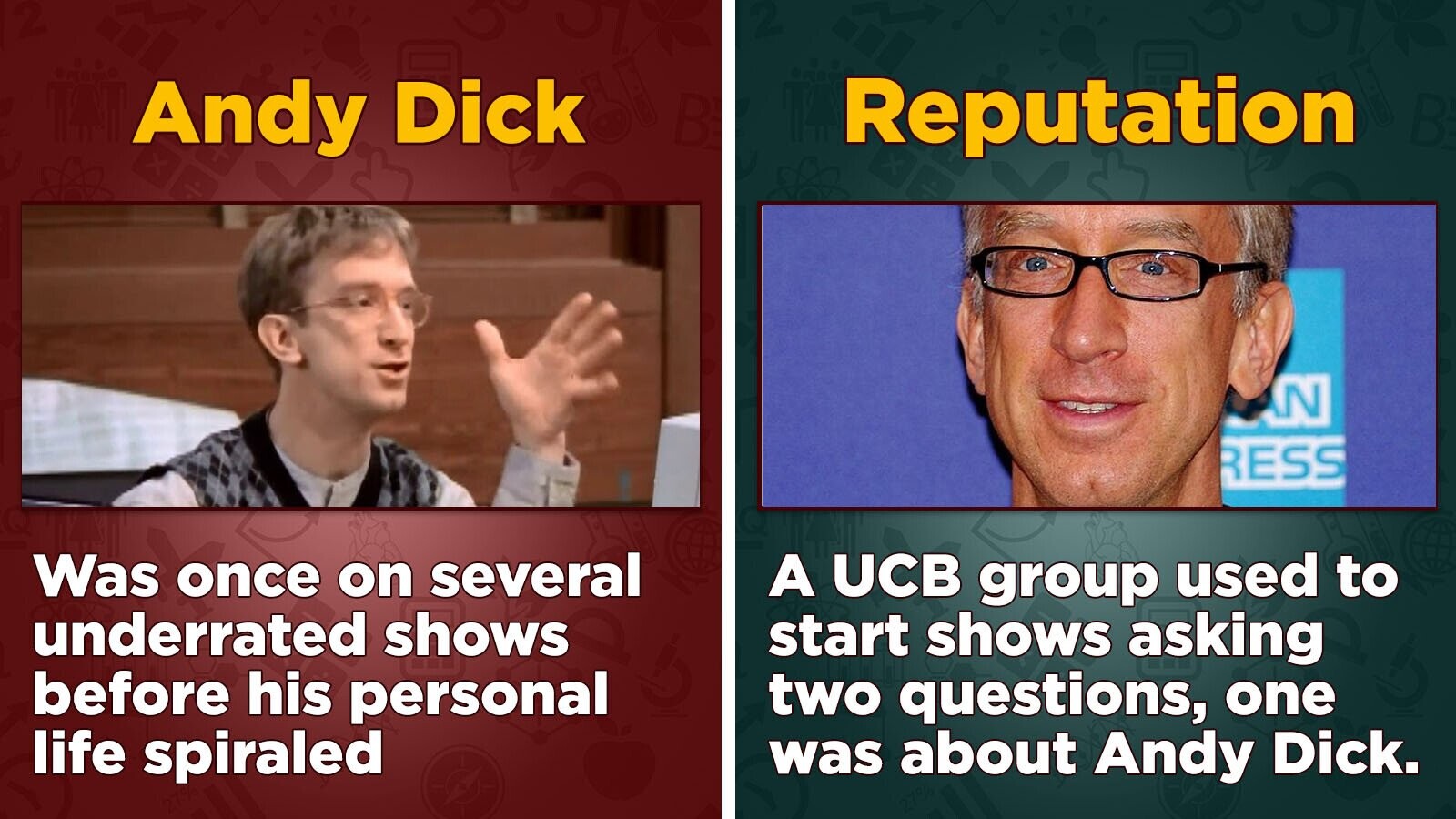
Andy Dick built a career on chaos. In the best possible version of that sentence, it means he was a wild-card comic with a rubbery face, a fearless improv style, and a gift for making a scene feel as if it had just escaped from a zoo with a microphone. In the less flattering version, it means that for decades his name has appeared in headlines involving arrests, accusations, public meltdowns, fired movie jobs, and behavior that many people would describe with one word: exhausting.
This article is not a trial, a pile-on, or a comedy-club whisper campaign. It is a plain-English look at the public record surrounding Andy Dick, the actor and comedian known for The Ben Stiller Show, NewsRadio, The Andy Dick Show, and a long list of incidents that have often overshadowed his work. Because some events involve allegations, charges, or arrests rather than final convictions, the wording matters. “Accused,” “alleged,” “arrested on suspicion,” and “reported” are not decorative legal confetti; they are important distinctions.
Still, when a celebrity’s offstage timeline becomes longer than the IMDb page, the public starts asking a fair question: how did a talented comic become better known for controversy than comedy?
Who Is Andy Dick?
Andy Dick, born Andrew Roane Dick, is an American actor, comedian, writer, and performer who came up through sketch comedy and improv. He became visible to television audiences in the early 1990s through The Ben Stiller Show, a cult sketch series that also included Ben Stiller, Janeane Garofalo, and Bob Odenkirk. The show did not run forever, but it became one of those “comedy nerds know” projects: short-lived, influential, and packed with future stars.
Dick’s biggest mainstream role came on NBC’s NewsRadio, where he played Matthew Brock, the strange, insecure, attention-hungry reporter in a radio newsroom full of sharp comic personalities. His nervous energy worked well in an ensemble. He could be annoying on purpose, which is useful in sitcoms and considerably less useful in restaurants, courtrooms, or workplaces.
He later appeared in films and television projects including Road Trip, Old School, Less than Perfect, The Andy Dick Show, Celebrity Rehab with Dr. Drew, and Dancing with the Stars. For a while, Andy Dick’s brand was “unpredictable but funny.” Over time, the public emphasis shifted from “unpredictable” to “please check the exits.”
The Career That Kept Getting Interrupted by Controversy
There are celebrities who have one bad night. Andy Dick has had a recurring franchise. His public controversies include drug-related legal trouble, allegations of unwanted touching, reported on-set misconduct, public intoxication arrests, and other cases that repeatedly returned his name to entertainment news for reasons unrelated to new comedy specials.
That pattern matters because celebrity culture often gives famous people more second chances than a printer gives paper jams. A regular employee accused of inappropriate touching at work is not usually offered another sitcom cameo and a podcast apology tour. Famous people, especially comedians, have sometimes been protected by the idea that “they are just being outrageous.” But when outrageous behavior affects coworkers, strangers, drivers, service workers, or fans, the joke stops being a joke and becomes somebody else’s bad day.
Early Legal Trouble: Drugs, Alcohol, and a Damaged Public Image
Public accounts of Andy Dick’s legal problems go back decades. In 1999, he pleaded guilty to felony cocaine possession and misdemeanor counts related to marijuana and a smoking device after a car crash incident. He was ordered into a drug treatment program, with the possibility that his record could be cleared if he completed court-ordered treatment.
That case helped establish an unfortunate theme: addiction, public incidents, and legal consequences would keep appearing around Dick’s career. Substance use does not excuse harmful behavior, but it does help explain why the same kind of chaos kept circling back. The tragedy is that there were many moments when a healthier, more stable path might have changed the story. The frustration is that the people around him often seemed to pay for the instability first.
Why the Phil Hartman Story Still Follows Him
No discussion of Andy Dick’s public reputation can ignore the Phil Hartman tragedy, although it must be handled carefully. Phil Hartman, Dick’s NewsRadio co-star, was murdered in 1998 by his wife, Brynn Hartman, who then died by suicide. Public reporting later noted that Brynn had alcohol and cocaine in her system. Actor Jon Lovitz, a friend of Hartman’s, publicly blamed Dick for allegedly reintroducing Brynn Hartman to cocaine before the tragedy. Dick has disputed responsibility and said he did not know the circumstances in the way Lovitz believed.
This is one of the darkest chapters connected to Dick’s name, not because a court found him responsible for Hartman’s death, but because the accusation became part of Hollywood lore. Lovitz and Dick’s feud later reportedly became physical at the Laugh Factory in Los Angeles. The story has lingered because it connects addiction, grief, comedy-world loyalty, and blame in a way that feels almost too grim for a sitcom cast.
For SEO readers searching “Andy Dick Phil Hartman,” the key point is this: Lovitz made serious accusations, Dick denied knowing the full context, and the public record does not make Dick legally responsible for Hartman’s murder. But the episode deeply damaged his reputation and remains a major reason many comedy fans view him with anger rather than nostalgia.
The Pattern of Unwanted Touching Allegations
One of the most repeated categories in Andy Dick’s controversy timeline involves allegations of unwanted physical contact. Reports over the years have described incidents involving groping, kissing, licking, inappropriate comments, and other behavior that people around him allegedly did not welcome.
In 2007, Dick was removed from the stage during an episode of Jimmy Kimmel Live! after repeatedly touching Ivanka Trump during an interview segment. The clip later resurfaced and was widely discussed because it showed behavior that looked uncomfortable in real time. What may once have been waved away as “crazy Andy being crazy Andy” aged about as well as milk in a glove compartment.
In 2008, Dick was arrested in Murrieta, California, on suspicion of sexual battery and drug possession after police responded to a disturbance outside a restaurant. Reports said the case involved an allegation that he pulled down part of a teenage girl’s top. He later pleaded guilty to misdemeanor battery and marijuana possession in connection with that case.
In 2010, he was arrested in West Virginia after allegations that he groped a bouncer and a patron at a bar. Later reports said criminal charges were dismissed after he completed a pretrial diversion program. Again, the public takeaway was less about one isolated case and more about repetition. A person can apologize once. A pattern asks for something stronger than apology: accountability, treatment, boundaries, and consequences.
2017: Fired From Film Projects After Misconduct Claims
In 2017, Andy Dick was dropped from the independent film Raising Buchanan after accusations of sexual harassment and misconduct on set. Reports said he was accused of behavior including unwanted kissing, licking, sexual propositions, and other inappropriate actions. He denied groping people but acknowledged some conduct, including licking and propositioning people, while framing it as part of his personality or confusion about changing social norms.
That defense did not land well. “I did not understand the rules” is not much of a shield when the rule is “do not lick your coworkers.” Most workplaces do not need a laminated handbook for that one.
The same year, he was also reportedly fired from another film, Vampire Dad, after similar complaints. These incidents arrived during the early wave of the #MeToo era, when Hollywood was finally being forced to confront behavior that had long been minimized, ignored, or quietly routed around. In that climate, Dick’s old “wild comic” persona looked less like edgy humor and more like a liability with a call sheet.
2018 to 2022: The Uber Driver Case
In 2018, Dick was charged with misdemeanor sexual battery and battery in Los Angeles after an alleged groping incident involving a woman on the street. In a separate case, he was accused of groping an Uber driver in West Hollywood. In 2019, he pleaded not guilty in the Uber-driver case.
By November 2022, that case had reached a serious legal result: a jury found him guilty of groping the Uber driver, and he was sentenced to 90 days in Los Angeles County jail. He was also ordered to register as a sex offender. This was not merely another scandal headline or “celebrity acting weird” story. It was a criminal conviction with consequences that followed him beyond the entertainment pages.
For readers searching “Andy Dick sex offender,” this is the key context. The registration requirement came after the 2022 conviction related to the 2018 Uber driver case. That detail matters because it separates confirmed legal outcome from the many earlier allegations and arrests.
2021: Assault and Domestic Violence-Related Arrests
In 2021, Dick was arrested in Los Angeles on suspicion of assault with a deadly weapon. Reports said the incident involved an alleged fight and a metal chair. Later that year, he was arrested again in connection with an alleged domestic violence incident involving a boyfriend and a liquor bottle. As with all arrest reports, accusations are not the same as convictions, but the repeated nature of these incidents added to an already battered public image.
At this point, the comedy career was no longer the headline. The headline was survival: survival of relationships, survival of public patience, and survival of a performer whose personal life seemed to be collapsing in public view.
May 2022: Felony Sexual Battery Arrest in Orange County
In May 2022, Andy Dick was arrested in Orange County, California, on suspicion of felony sexual battery after authorities responded to a report at O’Neill Regional Park. Public reports said an adult male alleged that he had been sexually assaulted. The arrest received additional attention because parts of the situation were reportedly livestreamed online.
Later reporting indicated that the case was dropped after the accuser declined to cooperate with investigators. That distinction is important. The arrest happened; the allegation was serious; but the case did not move forward in the way a criminal prosecution requires. Still, for many observers, it reinforced the same question: how many times can one public figure end up in the same category of headline before the brand is permanently cooked?
Updated 10/20/22: Burglary Arrest in Santa Barbara
The “updated 10/20/22” part of this story points to another headline from October 2022. Dick was arrested in Santa Barbara, California, in connection with a reported burglary involving power tools. Authorities said homeowners did not know him and had not authorized him to be on the property. He pleaded not guilty to first-degree residential burglary, according to public reporting at the time.
This incident was not a sexual misconduct allegation, but it fit into the broader narrative of instability. By late 2022, the Andy Dick timeline had become a messy archive of addiction struggles, criminal cases, workplace accusations, and public behavior that seemed to ask the same question over and over: where is the adult in the room?
Why Andy Dick’s Story Still Gets Attention
Andy Dick’s controversies continue to attract searches because they sit at the intersection of celebrity, comedy, addiction, accountability, and tabloid spectacle. People are drawn to the story for different reasons. Some remember him as the strange guy from NewsRadio. Some know him from viral clips. Some associate him with the Phil Hartman tragedy. Others search because another arrest appears and they wonder, “Wait, again?”
There is also a broader cultural reason. Comedy has changed. What passed as “dangerous” or “unfiltered” in earlier decades is now more likely to be examined through questions of consent, workplace safety, and power. The audience did not simply lose its sense of humor. It gained a lower tolerance for people using humor as bubble wrap around harm.
Comedy, Addiction, and Accountability Can All Be True
It is possible to say Andy Dick has struggled with addiction and also say that other people were harmed or frightened by reported behavior connected to him. Compassion and accountability are not enemies. They are actually most useful when they show up together.
Addiction can be brutal. It can distort judgment, wreck careers, damage families, and turn talented people into unreliable versions of themselves. But addiction does not erase consent. It does not turn coworkers into props. It does not require strangers to accept unwanted touching, chaos, or intimidation. If anything, addiction makes accountability more urgent, because untreated patterns do not politely stay private.
That is the hard center of the Andy Dick story. He was talented. He was often funny. He also became known for behavior that many people found harmful, inappropriate, or legally serious. The internet may flatten that into “Andy Dick is terrible,” but the more useful takeaway is this: talent without boundaries can become a public hazard.
Specific Examples That Shaped His Reputation
1. The “wild comic” persona became hard to separate from real incidents
Early in his career, Dick’s oddness was part of the appeal. He seemed willing to say or do anything for a laugh. But the same energy that can make sketch comedy exciting can become deeply uncomfortable when it follows people offstage. Over time, the line between performance and real-world conduct became the central issue.
2. Public touching incidents became part of his media identity
From televised moments to criminal allegations, unwanted touching became one of the most damaging themes in Dick’s public record. That matters because consent is not complicated. A person’s body is not a punchline, and “I was joking” does not magically convert discomfort into comedy.
3. The 2017 film firings changed the professional conversation
Being removed from film projects after misconduct complaints suggested that the problem was not limited to bars, sidewalks, or late-night television segments. It extended into work environments, where crew members and actors have the right to do their jobs without becoming unwilling participants in someone else’s chaos routine.
4. The 2022 conviction made the story more serious
The Uber driver case resulted in a conviction, jail sentence, and sex offender registration requirement. That shifted the narrative from “controversial comedian keeps getting accused” to “comedian faces confirmed legal consequences.”
Experience-Based Takeaways: What Andy Dick’s Story Feels Like From the Audience Side
Watching Andy Dick’s public story unfold over the years feels like watching a fire alarm go off in a building where everyone keeps saying, “Maybe it is just part of the show.” At first, the chaos seemed tied to a familiar celebrity-comedy package: weird interviews, reckless jokes, awkward appearances, and a performer who made hosts nervous because nervous television can be entertaining. Viewers could laugh because the discomfort seemed controlled. The problem is that the discomfort did not stay controlled.
For fans of 1990s comedy, there is a strange sadness in revisiting Andy Dick’s career. NewsRadio was a genuinely sharp sitcom. The Ben Stiller Show helped shape a generation of sketch comedy. Dick had timing, nerve, and a willingness to look ridiculous before “cringe comedy” became a respectable phrase people used in think pieces. If you discovered him only through later scandal headlines, it might be hard to understand why anyone cared in the first place. But there was talent there. That is part of what makes the story frustrating.
The experience also reveals how audiences have changed. Years ago, many people saw celebrity misbehavior as gossip: something to chuckle at, shake your head over, and forget. Today, readers are more likely to ask who was affected, whether the workplace was safe, whether the person had power, and whether the apology was followed by changed behavior. That shift is healthy. It means the public is less willing to treat harm as backstage trivia.
There is also a lesson for anyone who works in creative fields. Being “the wild one” can get attention, but it can also become a trap. Once a person is rewarded for being unpredictable, they may keep escalating until the room stops laughing. Comedy needs risk, but not every risk is artistic. Some risks are just selfish. The difference is whether the people around you are laughing freely or simply trying to get through the day without becoming the next story.
As a reader, the most uncomfortable part of the Andy Dick timeline is how repetitive it feels. One incident might be dismissed as bad judgment. Two might suggest a serious problem. A long pattern becomes impossible to ignore. That does not mean people cannot recover, change, or make amends. It does mean that public sympathy has limits, especially when the same types of allegations keep resurfacing.
In the end, Andy Dick’s story is not only about one comedian behaving badly. It is about what fame excuses, what workplaces tolerate, what addiction complicates, and what accountability requires. The punchline, if there is one, is painfully simple: being funny is not a license to make other people feel unsafe. Comedy can survive boundaries. In fact, it probably gets better when everyone in the room knows they are allowed to have them.
Conclusion
Andy Dick’s career is a cautionary tale wrapped in a tabloid timeline. He had real comic talent, a recognizable television presence, and enough oddball energy to stand out in crowded casts. But his legacy has been repeatedly overshadowed by allegations, arrests, misconduct reports, substance abuse struggles, and legal consequences.
The phrase “a history of being terrible” is harsh, but it captures why people keep searching his name. The public record is not one awkward interview or one regrettable night. It is a long-running pattern in which professional opportunities, relationships, and public goodwill were repeatedly damaged by behavior that crossed lines. If there is a useful lesson here, it is that talent may open doors, but accountability determines whether people keep letting you into the room.