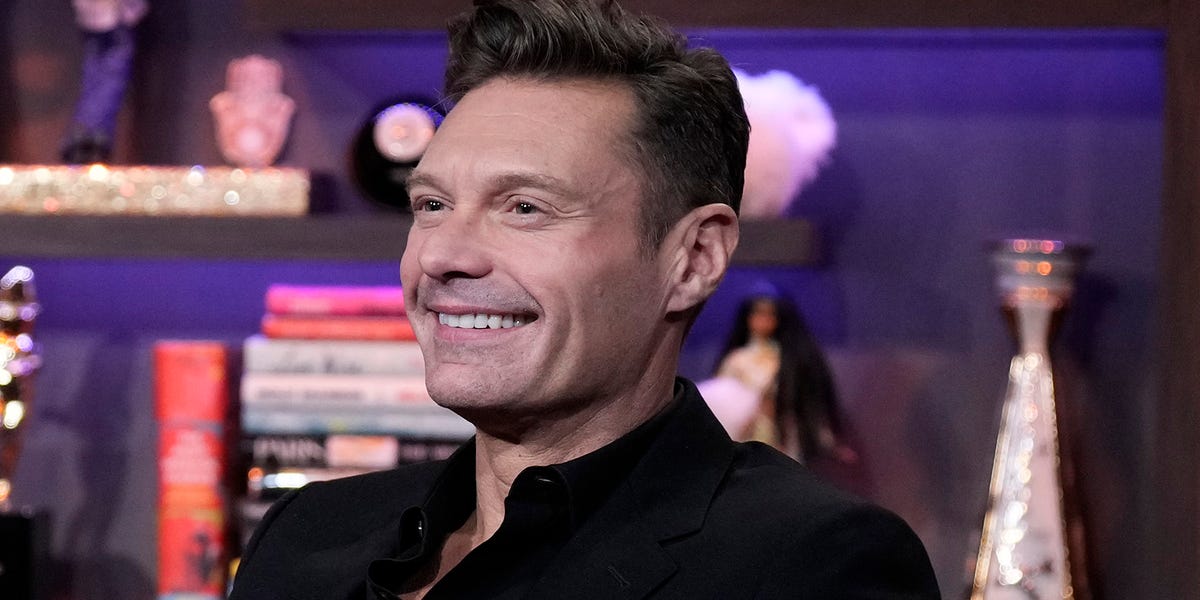
Ryan Seacrest has spent decades doing what Ryan Seacrest does best: appearing everywhere, sounding polished, looking camera-ready, and making live television feel as smooth as a freshly ironed cue card. But every now and then, the longtime host steps away from the glitter of entertainment news, American Idol, radio microphones, and game-show lights to share something more personal. That is exactly why fans rallied around him when he posted an emotional update connected to the Ryan Seacrest Foundation.
The update struck a chord because it was not about ratings, red carpets, or who forgot the lyrics during a live performance. It was about children in hospitals, families facing difficult days, and the power of giving young patients something that feels wonderfully normal: the chance to laugh, create, host, sing, interview, and simply be kids.
At the heart of the conversation is Seacrest Studios, the signature project of the Ryan Seacrest Foundation. These broadcast media centers are built inside pediatric hospitals and give patients access to radio, television, digital media, games, music, celebrity interviews, and hands-on creative programming. In other words, they turn hospital hallways into mini media worlds where a child can go from patient to producer in about five minutes flat. That kind of transformation explains why the foundation update felt emotional and why fans responded with so much warmth.
Why Ryan Seacrest’s Foundation Update Hit Fans So Hard
Celebrity charity announcements can sometimes sound like they were assembled in a publicist’s blender: a little “thrilled,” a dash of “honored,” and three cups of “meaningful partnership.” But Ryan Seacrest’s foundation updates tend to feel different because the work is specific, visible, and deeply connected to his own career.
Seacrest made his name in broadcasting. His foundation gives children the tools of broadcasting. That symmetry is powerful. He is not simply attaching his name to a cause; he is taking the thing he knows best microphones, cameras, interviews, music, live shows, and storytelling and placing it where it can brighten some of the hardest days a family may ever experience.
Fans noticed that. Many reacted with messages of support, admiration, and encouragement, praising Seacrest for using his platform in a practical way. The emotional response makes sense. People may know him as the energetic host who can keep a live show moving even when chaos is clearly tap dancing just offstage. But foundation updates reveal a softer, more personal side of his public life.
What Is the Ryan Seacrest Foundation?
The Ryan Seacrest Foundation is a nonprofit organization founded by Ryan Seacrest and his family. Its best-known initiative is Seacrest Studios, a growing network of multimedia broadcast centers inside children’s hospitals across the United States. The foundation’s mission centers on inspiring pediatric patients through entertainment, education, creativity, and connection.
The concept is simple but clever: bring a real media studio into the hospital so patients can participate in programming without needing to leave the building. Children can host shows, request songs, watch live performances, interview guests, play games, create content, and interact with programming from their rooms through closed-circuit channels. For kids who may be isolated, tired, anxious, or stuck in treatment schedules, that access can provide a meaningful mental and emotional reset.
The studios are not just decorative rooms with a microphone and a “good luck, kiddo” sign. They are professional-grade spaces with cameras, lights, radio equipment, production tools, program directors, interns, hospital staff involvement, and a calendar of activities. They are built to feel exciting, not clinical. And in a hospital environment, that difference matters.
Seacrest Studios: Where Patients Become the Stars
One of the reasons fans support Ryan Seacrest’s foundation work is that the studios flip the usual hospital dynamic. In a medical setting, children are often the ones being observed, examined, scanned, tested, and scheduled. Inside Seacrest Studios, they get to ask the questions. They get to hold the microphone. They get to choose the song, run the game, introduce the guest, or join a show from their hospital room.
That may sound small to someone outside the experience, but for a child in treatment, control can feel rare. Creative participation gives patients a chance to reclaim a little agency. A child who has spent the morning answering questions from doctors can spend the afternoon interviewing a musician, athlete, actor, or hospital staff member. That is not just entertainment. It is a confidence boost wearing headphones.
Parents and caregivers often talk about the importance of moments that make a hospital stay feel less frightening. A studio visit cannot erase the hard parts of treatment, but it can create a pocket of joy. Sometimes that pocket is a game show. Sometimes it is a silly dance challenge. Sometimes it is a child hearing their name announced like a celebrity guest. If there is a better use for a microphone, the microphone community has not filed a formal complaint.
A Growing Network With Real Momentum
The Ryan Seacrest Foundation has expanded steadily over the years, opening Seacrest Studios in major pediatric hospitals across the country. Locations have included hospitals in Atlanta, Dallas, Orange County, Cincinnati, Charlotte, Boston, Denver, Washington, D.C., Nashville, Orlando, Memphis, Queens, Salt Lake City, Miami, and more.
Recent updates have been especially meaningful because they show the foundation is not slowing down. The Atlanta relaunch at Children’s Healthcare of Atlanta’s Arthur M. Blank Hospital was a full-circle moment because Atlanta is where the first Seacrest Studio began. Returning to that origin point with a new state-of-the-art studio gave the story a homecoming feeling the nonprofit equivalent of a season finale, except with fewer cliffhangers and more happy tears.
The Miami opening at Nicklaus Children’s Hospital also stood out. The studio was described as the first bilingual Seacrest Studio in the network, designed to make programming more accessible to children and families in South Florida. That detail is important because access is not only about physical space. It is also about language, culture, and making families feel seen when life already feels overwhelming.
Why Fans See a Different Side of Ryan Seacrest
Ryan Seacrest’s public image is usually built around motion. He hosts. He interviews. He counts down. He introduces. He pivots from one broadcast to another like a man whose calendar drinks espresso. But foundation updates slow the story down. They show him not just as a broadcaster, but as someone who has turned broadcasting into a tool for service.
That is why fan support often feels personal. Viewers have watched Seacrest for years on American Idol, radio, red-carpet coverage, and Wheel of Fortune. Many people associate his voice with big television moments, family nights, road-trip radio, or the suspense of a talent-show elimination. When those same fans see him helping children experience their own version of the spotlight, it creates an emotional connection.
There is also a family element. Meredith Seacrest Leach, Ryan’s sister, has played a major leadership role in the foundation’s growth. The organization has frequently been described as a family effort, and that gives the work a different texture. It is not a one-off celebrity donation; it is a long-running project with siblings, parents, partners, hospitals, staff members, interns, donors, and volunteers all pulling in the same direction.
The Emotional Power of Creative Distraction
Anyone who has spent time in a hospital knows how strange time can feel there. Minutes stretch. Waiting rooms become their own weather system. A hallway can feel longer than a cross-country flight. For children, that experience can be even more confusing. Their routines are interrupted, their bodies are being treated, and their families are often carrying stress just below the surface.
Creative programming gives kids something else to focus on. It gives them a reason to look forward to a certain hour of the day. It can turn “I have another appointment” into “I want to finish the show first.” That shift may not appear on a chart, but families understand its value instantly.
Seacrest Studios are built around this idea. Music, games, interviews, storytelling, and media production can support emotional well-being because they invite children into activity rather than passivity. Instead of simply watching the day happen, patients can help shape part of it. That is a big deal, especially in a place where so many decisions are made by necessity.
How Celebrity Guests Add Extra Spark
One reason Seacrest Studios have become so popular is the foundation’s ability to bring in special guests. Musicians, actors, athletes, influencers, and media personalities have visited studios or joined broadcasts, giving patients memorable experiences that break up the seriousness of hospital life.
The magic is not only in meeting a famous person. It is in the setup: children are not just passive fans waving from a distance. They can ask questions, participate in interviews, help host segments, and become part of the show. That changes the emotional equation. A child who may have felt invisible in the routine of treatment suddenly becomes the person guiding the conversation.
For fans watching from the outside, this is exactly the kind of celebrity access that feels worthwhile. Instead of another glamorous selfie from a velvet-rope event, the spotlight moves into a hospital studio where it can do some good. Hollywood may have many red carpets, but very few are as meaningful as the imaginary one rolled out for a kid about to host their first segment.
Why the Fan Response Matters
When fans support Ryan Seacrest after an emotional foundation update, they do more than compliment a celebrity. Their reaction helps amplify the work. Social media attention can introduce new people to the foundation, encourage donations, inspire partnerships, and remind hospitals and families that the public cares about pediatric patient experiences.
Fan encouragement also matters because nonprofit work is long-term work. Building studios, sustaining programming, staffing locations, coordinating guests, managing hospital relationships, and keeping technology current are not one-day tasks. They require ongoing support. Positive public reaction helps keep momentum alive.
That is especially true in an online culture that often rewards drama faster than kindness. A foundation update gaining attention for the right reasons is refreshing. It is the internet briefly putting down its pitchfork, picking up a box of tissues, and saying, “Actually, this is lovely.” A rare event. Someone alert the historians.
What This Update Says About Seacrest’s Legacy
Ryan Seacrest’s entertainment legacy is already secure. He has been attached to some of the most recognizable programs in modern American television and radio. But the foundation adds another dimension to that legacy. It suggests that the skills behind a media career communication, production, storytelling, performance, timing, and audience connection can be transformed into something beyond entertainment.
That may be the biggest reason the update felt emotional to fans. It shows a career becoming a platform, and a platform becoming a place where children can dream out loud. Seacrest Studios turn the familiar tools of show business into instruments of comfort. The same kind of microphone used to interview stars can also help a young patient introduce a song, tell a joke, or ask a question that makes the whole room smile.
In a celebrity landscape where updates often revolve around image, controversy, or career moves, this story has staying power because it is rooted in service. It gives fans something easy to support: kids getting joy, families getting relief, hospitals getting creative resources, and Ryan Seacrest using his professional world to build something that outlasts a broadcast cycle.
Experiences Related to Ryan Seacrest’s Foundation Update
To understand why fans reacted so strongly, it helps to imagine the experience from the perspective of a family inside a children’s hospital. A parent may begin the day managing medication schedules, physician updates, insurance questions, cafeteria coffee, and the emotional math of staying calm for a child while quietly worrying about everything. Then someone mentions that there is a show happening in Seacrest Studios. Suddenly, the day has a new shape.
A child who has been quiet all morning might perk up at the chance to request a favorite song. Another patient might be invited to answer trivia from their room. A teen who has been bored, frustrated, or embarrassed by the hospital routine may discover that the studio has real equipment and real creative possibilities. They are not being handed a distraction that feels babyish or forced. They are being invited into something that feels current, polished, and theirs.
For siblings, the studio can also become a bridge. Brothers and sisters of patients often experience hospital life from the edges. They may feel worried, overlooked, or unsure how to help. A game, interview, or music segment gives them a shared activity. For a few minutes, the family is not only a medical family; they are an audience, a team, a cheering section, or even a production crew. That kind of shared memory can soften a difficult chapter.
Fans who have followed Ryan Seacrest for years can connect to this because they understand the emotional comfort of familiar media. A favorite show can make a hard day easier. A familiar host can make a room feel less lonely. Music can change the mood faster than almost anything else. Seacrest Studios take those everyday comforts and place them directly inside hospitals, where they can reach children who need them most.
There is also something inspiring about seeing children become creators rather than simply patients. A hospital stay can reduce a child’s world to rooms, procedures, and schedules. Creative media expands that world again. A child can become a DJ, reporter, host, performer, caller, contestant, or storyteller. Even if the moment lasts only a short time, it says something powerful: you are more than what you are going through.
That message is likely what fans sensed in Seacrest’s emotional update. The support was not just for Ryan as a celebrity; it was for the idea that joy deserves infrastructure. Joy needs rooms, staff, cameras, microphones, donors, partners, and people willing to keep showing up. A smile in a hospital is not a small thing. Sometimes it is the thing everyone remembers.
For readers, the takeaway is practical and human. Supporting pediatric patients does not always require a grand gesture. It can mean donating to a trusted hospital program, volunteering where appropriate, sending encouragement to a family, supporting child-life services, or simply sharing stories that highlight meaningful work. The Ryan Seacrest Foundation update resonated because it reminded people that kindness can be organized, creativity can be healing, and entertainment can do more than entertain.
Conclusion
Fans support Ryan Seacrest as he shares emotional foundation updates because the story reaches beyond celebrity news. It is about children finding confidence in hospital studios, families receiving moments of relief, and a media personality using his life’s work to create spaces of imagination and connection. Seacrest Studios show that a microphone can be more than a tool for fame; it can be a doorway into joy.
In a world full of loud updates, this one landed softly but powerfully. It reminded fans that behind the polished host is a long-running commitment to pediatric patients and their families. And judging by the outpouring of support, people are more than ready to cheer for that kind of headline.