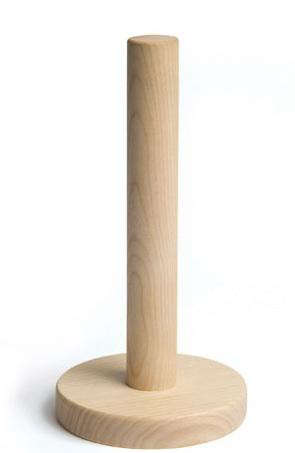
Some kitchen objects shout for attention. A neon toaster practically waves from the counter. A glossy espresso machine behaves like it has its own publicist. Then there is the David Mellor Paper Towel Holder, also known in Britain as a kitchen roll holder: quiet, simple, useful, and much better-looking than something designed to hold emergency marinara cleanup sheets has any right to be.
The charm of this piece is not that it tries to turn a paper towel roll into a sculpture. The charm is that it understands the assignment. It keeps the roll upright, makes the counter feel calmer, and gives a daily-use object the kind of considered design normally reserved for cutlery, ceramics, and lighting. In a kitchen where everything from olive oil to phone chargers somehow gathers near the sink, that small bit of order matters.
David Mellor’s design world has always been about making ordinary tools feel intelligent. The paper towel holder fits neatly into that philosophy. Whether you are drawn to the earlier hand-turned ash version or the later cast iron and beechwood style, the appeal is the same: warm material, honest construction, and a practical shape that looks at home in both minimalist kitchens and cozy, lived-in spaces.
Why a Paper Towel Holder Deserves Design Attention
A paper towel holder may seem like the kitchen equivalent of a background extra. It stands there, says very little, and only gets noticed when something goes wrong. But that is exactly why it deserves attention. If it wobbles, slides, tips, unspools, or looks like a leftover from a college apartment, it quietly annoys you every single day. Tiny kitchen frustrations have a way of becoming surprisingly dramatic. One bad tug, and suddenly the roll is sprinting across the counter like it has rent to pay.
A good countertop paper towel holder should do three things well. First, it should be stable enough to stay put when you tear a sheet. Second, it should be easy to reload. Third, it should look decent because, unlike a vegetable peeler or measuring spoon, it usually lives in plain sight. The David Mellor Paper Towel Holder checks those boxes with a restrained, design-forward attitude.
It also offers something many modern kitchen accessories miss: visual quiet. In a room already filled with appliances, cabinet hardware, faucets, jars, cutting boards, dish towels, and the occasional suspicious banana, a simple wooden or wood-and-metal paper towel holder adds function without visual clutter.
The David Mellor Design Philosophy in the Kitchen
David Mellor was best known for cutlery and tableware, but his larger legacy is the belief that daily objects should be thoughtfully made. That idea is especially relevant in the kitchen. This is the room where design gets tested before breakfast. A beautiful object that cannot handle coffee splashes, greasy fingers, or the chaos of Tuesday dinner is not really a kitchen object. It is a guest star.
The David Mellor approach feels different. It favors proportion, tactility, usefulness, and long-term appeal over decorative noise. The paper towel holder reflects that mindset. There are no gimmicky arms, no unnecessary ornament, no over-engineered contraption that requires a user manual and emotional resilience. It is essentially a vertical holder with carefully chosen materials and balanced form.
Simple Materials, Strong Character
The earlier version highlighted by design editors was hand-turned in ash, a pale wood with a naturally clean, modern look. Ash brings warmth without feeling rustic in a heavy-handed way. It works with marble, butcher block, stainless steel, painted cabinets, and open shelving. It has enough character to soften a sleek kitchen but is restrained enough not to fight with patterned tile or colorful cookware.
Other retail descriptions of the David Mellor kitchen roll holder point to a cast iron and beechwood construction. That combination adds a slightly more grounded feeling. Beechwood keeps the touch warm and domestic, while cast iron gives the base visual and physical weight. In practical terms, weight matters. A flimsy paper towel holder can make tearing a sheet feel like negotiating with a raccoon. A more substantial base helps keep the roll in place.
How It Compares With Ordinary Paper Towel Holders
Most paper towel holders fall into a few common categories: freestanding countertop holders, wall-mounted holders, magnetic holders, under-cabinet bars, and tension-arm models. Each has its strengths. A mounted paper towel holder saves counter space. A tension-arm holder can make one-handed tearing easier. A magnetic holder is handy on certain appliances, assuming it does not slide down the refrigerator like a defeated cartoon character.
The David Mellor Paper Towel Holder is best understood as a countertop design object. It is not trying to be the most technical option on the market. Instead, it focuses on stability, simplicity, and beauty. That makes it especially appealing for people who want kitchen accessories that feel permanent rather than disposable.
If you cook constantly and need a one-handed tear while holding a dripping spoon in the other hand, a tension-arm model may be more convenient. But if you want a holder that looks refined beside a ceramic utensil crock, a stoneware bowl, or a wooden cutting board, the David Mellor design has a quiet advantage. It does not look like kitchen hardware. It looks like part of the room.
Best Kitchen Styles for the David Mellor Paper Towel Holder
One reason the David Mellor Paper Towel Holder works so well is its adaptability. It can slide into several kitchen styles without behaving like a stranger at a family reunion.
Modern Minimalist Kitchens
In a minimalist kitchen, every visible object has to earn its place. The David Mellor holder works because it has a clean silhouette and natural materials. It avoids plastic shine and bulky mechanisms. Pair it with white counters, flat-panel cabinets, stainless steel appliances, and one excellent wooden cutting board. The result feels calm, not empty.
Warm Scandinavian-Inspired Kitchens
Scandinavian-inspired kitchens often rely on light woods, white walls, natural textures, and practical objects that look good enough to leave out. A hand-turned ash or beechwood paper towel holder is right at home here. Add linen towels, matte ceramics, glass storage jars, and a few herbs on the windowsill. Congratulations, your kitchen now looks like it drinks water, gets eight hours of sleep, and never forgets to label leftovers.
Traditional and Cottage Kitchens
In a cottage or traditional kitchen, the holder adds a crafted touch without feeling precious. It pairs well with shaker cabinets, stone counters, brass hardware, open shelves, and enamel cookware. The wood tone helps bridge old and new, which is useful if your kitchen contains both heirloom mixing bowls and a very modern air fryer.
Industrial and Urban Kitchens
The cast iron and beechwood version has particular appeal in industrial-style spaces. Cast iron echoes black metal shelving, dark fixtures, steel-framed windows, or concrete counters. Beechwood keeps the whole thing from feeling too cold. It is the kitchen-accessory equivalent of wearing a tailored jacket with comfortable shoes.
Practical Benefits: What You Notice Day to Day
The real test of a paper towel holder is not how it looks in a product photo. It is how it behaves when life gets saucy. The David Mellor Paper Towel Holder is useful because it keeps the roll visible, reachable, and contained. The vertical format makes reloading simple: lift off the empty cardboard tube, drop on a fresh roll, and continue pretending you are the kind of person who does not spill coffee near the sugar jar.
Its greatest everyday benefit is that it makes a disposable item feel less messy. Paper towels are useful, but the roll itself can look chaotic when left loose on a counter. A handsome holder gives it a designated home. That sounds small, but in kitchen organization, small is often where the magic happens.
It also helps with countertop zoning. Place it near the sink for hand drying and quick cleanup. Put it by the prep area if you use paper towels for blotting produce or wiping cutting boards. Keep it near a coffee station for spills, spoon rests, and the mysterious grounds that appear even when you are careful. Nobody knows where they come from. They simply arrive.
How to Style It Without Overthinking
The easiest way to style the David Mellor Paper Towel Holder is to let it breathe. Do not crowd it with six bottles, three sponges, a candle, a vase, and a decorative object shaped like a pear. Give it a small zone of space. That is when its shape and material can do their quiet work.
For a clean modern look, place it beside a simple soap dispenser and a small tray. For a warmer look, pair it with a wooden salt cellar, a ceramic utensil pot, or a stoneware bowl for garlic and shallots. In a farmhouse-style kitchen, it can sit near a bread board and a linen towel. In a small apartment kitchen, it can act as the one attractive thing on the counter that says, “Yes, this space is tiny, but it has standards.”
Care and Maintenance Tips
Wooden kitchen accessories are easy to care for, but they appreciate basic manners. Keep the holder away from standing water. If it gets splashed, wipe it dry. Avoid soaking it or placing it in the dishwasher. Wood and dishwashers have a relationship best described as “legally separated.”
For everyday cleaning, use a soft damp cloth and mild soap if needed. Dry it immediately. If the wood begins to look dry over time, a small amount of food-safe mineral oil can refresh the surface, depending on the finish. For cast iron components, keep them dry and avoid harsh cleaners that could affect the finish. The goal is not to baby the holder; it is simply to treat it like a well-made object.
Who Should Buy the David Mellor Paper Towel Holder?
This paper towel holder is ideal for design-conscious homeowners, apartment dwellers, gift shoppers, and anyone who believes the kitchen should feel good even during cleanup. It is especially appealing if you prefer natural materials, British design heritage, and objects with a timeless rather than trendy personality.
It may not be the perfect choice for someone who wants a mounted holder to free every inch of counter space. It may also not satisfy a user who wants a spring-loaded arm for frequent one-handed tearing. But for most kitchens, especially those where the paper towel roll is already going to be visible, the David Mellor holder is a refined upgrade.
Buying Considerations Before You Choose
Before buying any paper towel holder, check the dimensions, material, and roll compatibility. Standard rolls usually fit most vertical holders, but jumbo rolls can be wider or taller. If you regularly buy oversized paper towels, make sure the holder can accommodate them comfortably.
Also consider the weight of the base. Heavier holders tend to feel more stable. If the model is made primarily of wood, it may be lighter and easier to move. If it includes cast iron, it may provide more resistance when tearing. Neither is automatically better; it depends on how you use your kitchen.
Finally, think about your counter surface. A wood holder looks especially good on stone, stainless steel, quartz, and painted surfaces. A cast iron base may look beautiful on butcher block or marble, but you should lift rather than drag it to avoid scratches. Practical design still appreciates a little common sense.
Why This Small Object Feels So Satisfying
The David Mellor Paper Towel Holder succeeds because it treats an overlooked object with respect. That is the essence of good kitchen design. It is not only about dramatic ranges, custom cabinets, or pendant lights with names that sound like Scandinavian villages. It is about the small things you touch every day.
When those small things work well and look good, the entire kitchen feels more intentional. A paper towel holder will not make you a better cook. It will not stop pasta water from boiling over. It will not convince children, roommates, or spouses to replace the empty roll. Let us not ask miracles of wood and metal. But it can make cleanup smoother, the counter calmer, and the room just a bit more considered.
Personal Experience: Living With a Better Paper Towel Holder
Using a well-designed paper towel holder changes the kitchen in a way that is almost comically modest. No trumpets sound. No cabinets reorganize themselves. The sink does not sparkle under divine lighting. But after a few days, you notice that the paper towel roll is no longer wandering around the counter like a lost tourist. It has a place. That place looks good. And suddenly the whole cleanup zone feels more civilized.
The first experience is usually visual. A loose roll of paper towels has a casual, slightly chaotic energy. It leans against the backsplash, rolls toward the toaster, or hides behind the olive oil. Put it on a simple wooden holder, and the same roll looks intentional. It is still paper towel, of course. Nobody is mistaking it for a museum artifact. But the holder gives it structure, and structure is often what separates a working kitchen from a counter-based obstacle course.
The second experience is tactile. Wood feels better than plastic. That sounds obvious, but it matters. When you reach for a sheet, the holder has a warmer presence. It feels like part of a kitchen built around cooking, not just cleaning. In an age when many accessories are shiny, synthetic, and aggressively “innovative,” a wooden paper towel holder feels refreshingly calm. It does not need an app. It does not beep. It will never ask to update its firmware while you are wiping up soup.
The third experience is behavioral. When a kitchen tool looks good, people tend to treat it better. A beautiful holder encourages you to replace the roll neatly, wipe the base when it gets dusty, and keep the surrounding counter a little clearer. This is not because the object is magical. It is because good design quietly nudges habits. A messy corner becomes a small station. The paper towels sit near the sink, the soap stays nearby, and a small tray can corral the rest. The kitchen feels less like a battlefield and more like a place where dinner might actually happen without a minor paperwork incident.
In daily use, the biggest pleasure is the absence of annoyance. A decent holder does not slide away dramatically. It does not drop the roll into a puddle. It does not make you use two hands, a hip, and a whispered negotiation just to tear off one sheet. Even if the David Mellor holder is chosen as much for beauty as for technical performance, its stability and straightforward shape make it easy to live with. That simplicity is the point.
It also makes a surprisingly good gift. Most people will not splurge on a designer paper towel holder for themselves, because it feels too practical to be luxurious and too humble to be exciting. Yet that is exactly why it works. It is useful immediately, attractive every day, and unlikely to end up in the drawer of forgotten gadgets. Give someone a complicated kitchen tool and they may use it twice. Give them a beautiful paper towel holder and they will use it before lunch.
The best experience, though, is how naturally it fades into the kitchen. After the initial appreciation, you stop thinking about it. It simply belongs. That is often the highest compliment for a household object. It does its job, improves the room, and never demands applause. The David Mellor Paper Towel Holder is not trying to be the star of the kitchen. It is more like the calm, competent friend who brings napkins, fixes the wobbly chair, and somehow knows where the bottle opener is.
Conclusion
The David Mellor Paper Towel Holder proves that even the most ordinary kitchen accessory can become a small design pleasure. With its restrained silhouette, natural materials, and practical countertop presence, it turns a roll of paper towels into something that looks organized rather than accidental. For kitchens that value simplicity, craftsmanship, and everyday usefulness, this holder is a thoughtful upgrade.
It will not transform your cooking overnight, but it will improve one of the most-used zones in the room. And honestly, in the kitchen, that counts. A little less clutter, a little more beauty, and one fewer object sliding across the counter during cleanup? That is not just design. That is domestic peace with a cardboard tube in the middle.
Note: This article is written as original editorial content based on verified product descriptions, design background, and practical kitchen-use considerations.