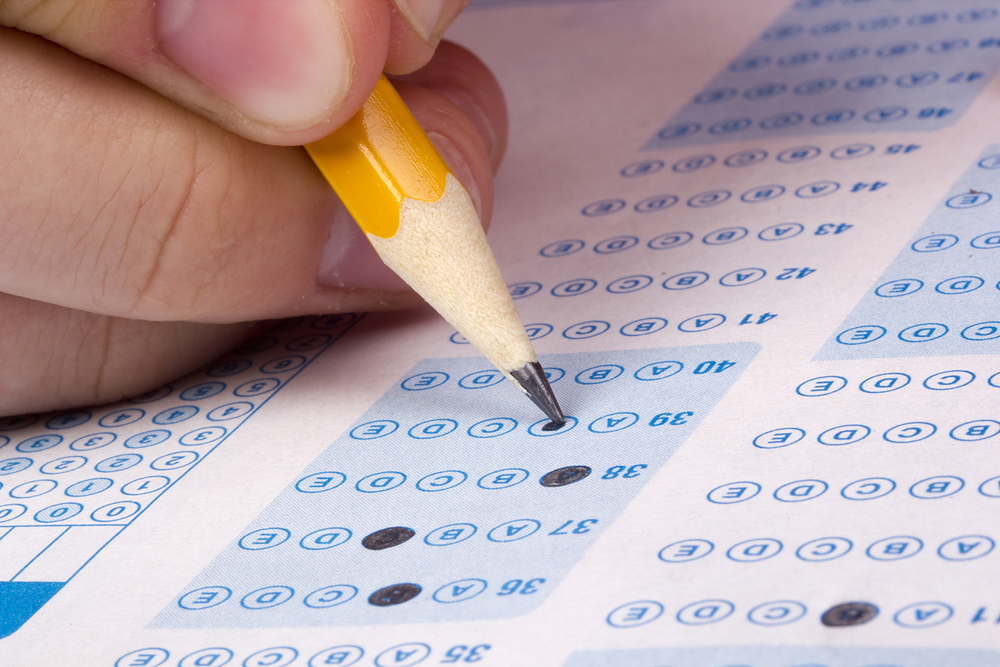
Every test taker has a private horror movie that plays in the back of the mind the night before an exam. In it, the alarm does not ring. The calculator dies. The ID disappears into another dimension. The testing software freezes right after the brain finally remembers the answer. Or worse, the exam opens and the questions look like they were written for a completely different course, possibly by a committee of sleep-deprived aliens with clipboards.
That last nightmare is not just dramatic imagination. For some high-stakes exam takers, it has become painfully real. One widely discussed example came from radiation oncology residents who reportedly walked into board exams expecting familiar physics and radiation biology material, only to face questions they believed leaned heavily into unexpected, highly specific cancer biology content. For trainees who had spent years studying approved resources, attending lectures, and memorizing mountains of material, the moment felt like academic betrayal served cold under fluorescent lights.
This is why the phrase “a test taker’s worst nightmare became reality” hits so hard. It is not only about failing a test. It is about losing trust in the system that promised the test would measure readiness fairly. When a high-stakes exam goes sideways, the damage is not limited to a score report. It can affect careers, confidence, finances, mental health, and the basic belief that hard work still matters.
What Makes an Exam Nightmare Truly Terrifying?
Most people expect exams to be stressful. A little nervous energy is normal. In fact, mild pressure can sharpen focus. The trouble begins when ordinary nerves turn into test anxiety, panic, confusion, or a sense that the rules have changed after the game started. Test anxiety can show up physically, emotionally, and mentally: racing heartbeat, stomach pain, sweating, blanking out, irritability, negative self-talk, and the dreaded “I know this, but my brain has left the building” moment.
High-stakes tests magnify everything. A classroom quiz may hurt a grade. A licensing exam can delay a profession. A college entrance test can affect admissions strategy. A board exam can shape a physician’s future. A bar exam can determine whether a law graduate can practice. Suddenly, the exam is not just a stack of questions. It is rent, reputation, family expectations, student loans, and several years of emotional baggage wearing a lanyard.
The Worst Version: Studying Hard and Still Feeling Ambushed
The most crushing testing nightmare is not walking in unprepared. That is bad, but at least the villain is clear. The deeper nightmare is doing everything “right” and still feeling ambushed. You follow the study guide. You attend the review sessions. You practice old questions. You sacrifice sleep, hobbies, and your social life. Then the real exam appears, and it feels like it came from a secret syllabus hidden in a cave guarded by dragons.
This is the central issue in many controversies over professional exams: alignment. A fair exam should match the knowledge, skills, and level of competence it claims to measure. If the purpose is to determine whether a physician, lawyer, student, or technician is ready for real-world practice, the exam should reward judgment, applied knowledge, and essential competencenot obscure trivia that evaporates from memory before the parking-lot exit.
The Radiation Oncology Board Exam Example
The KevinMD essay that inspired this topic described radiation oncology residents facing an exam they believed had shifted dramatically from the expected preparation model. Radiation oncology board certification includes rigorous testing, and the American Board of Radiology’s qualifying exam process covers areas such as medical physics, radiation and cancer biology, and clinical radiation oncology. These are not casual topics. Nobody is doodling hearts in the margin while casually guessing radiation dose calculations.
The controversy centered on whether the exam tested practical competence or overly narrow scientific details. Residents argued that they had prepared using the established traditions and resources of their field, only to encounter material that felt disconnected from how they had been taught and how they would actually care for patients. Later academic discussion noted unusually high first-time failure rates in 2018 for the physics and radiation/cancer biology qualifying exams, fueling concerns about exam design, communication, and fairness.
That kind of situation creates a special form of panic. A person does not simply think, “I may have missed a few questions.” They think, “Was I preparing for the wrong reality?” That is a different level of stress. It is the academic equivalent of training for a marathon and arriving to find a swimming pool, a unicycle, and someone shouting, “Begin!”
When Testing Systems Fail the Test Takers
Exam takers are often told to be responsible, organized, and resilient. Bring your ID. Arrive early. Charge your device. Close all programs. Do not wear a smartwatch. Do not breathe in a suspiciously rhythmic pattern. Fine. Rules matter. Exam security matters. But fairness is a two-way street. If candidates must prepare carefully, testing organizations must also design, communicate, administer, and troubleshoot carefully.
Recent years have shown that testing failures are not theoretical. Digital and remote exams have introduced new risks: login delays, webcam problems, frozen screens, upload failures, Wi-Fi interruptions, proctor misunderstandings, and software bugs. In some cases, candidates have had to retest. In others, scores were delayed, reviewed, canceled, or disputed. The test taker may have done everything correctly and still ended up trapped in a system error with a countdown clock. That is not an exam. That is a villain origin story.
The Rise of Digital Exam Anxiety
Digital testing can be convenient and accessible. It can also create fresh ways for stress to multiply. The modern test taker now worries not only about content knowledge but also about battery percentage, operating system compatibility, identity verification, facial recognition, internet stability, browser lockdown software, room scans, and whether a pet walking behind the chair will be interpreted as an organized cheating ring.
Testing organizations such as College Board, ACT, Pearson VUE, LSAC, and NCBE publish detailed test-day rules for a reason. They tell candidates what to bring, what not to bring, when to arrive, how ID must match registration, and what behavior can lead to dismissal or score cancellation. Those rules protect exam integrity. But the more complicated the rules become, the easier it is for honest candidates to feel one tiny mistake could destroy months of effort.
Why Unexpected Exam Changes Feel So Unfair
Every exam needs to evolve. Medicine changes. Law changes. Technology changes. College admissions change. A test that never updates becomes stale. The problem is not change itself. The problem is surprise change in a high-stakes environment.
When exam content shifts, candidates need clear communication. Educators need updated guidance. Prep resources need time to adjust. Programs need to know what competence means under the new standard. Otherwise, the exam becomes less like a measurement tool and more like a trapdoor.
Imagine a driving test where students practiced parking, signaling, traffic laws, and highway merging, but the examiner suddenly asked them to rebuild an engine from memory. Engine knowledge may be related to cars, but it is not the same as proving safe driving competence. In the same way, a professional board exam must distinguish between essential knowledge and impressive-but-impractical trivia.
The Human Cost of a Failed High-Stakes Exam
People outside the testing world sometimes say, “Just retake it.” That sounds simple, like restarting a video game level. But high-stakes retakes come with real costs. There may be extra fees, travel costs, delayed employment, lost income, embarrassment, visa complications, residency stress, family pressure, and months of renewed studying. A failed score can feel like a public stamp on a private wound.
For medical residents, bar applicants, and certification candidates, the calendar does not pause out of sympathy. Work continues. Patients still need care. Bills still arrive. Family events still happen. Meanwhile, the candidate has to reopen the books and prepare again, often without knowing whether the next exam will be fairer, clearer, or simply a sequel with worse lighting.
Confidence Can Take the Hardest Hit
The emotional impact is often more damaging than the administrative delay. A capable person begins to wonder whether they are actually capable. One exam result can rewrite years of self-belief in a single afternoon. That is especially painful for people who have always been strong students. They are not used to academic failure, and when it arrives, it does not knock politely. It kicks the door open and rearranges the furniture.
This is why educators, licensing boards, and testing companies should treat exam failure with seriousness and transparency. A score report is not just data. It lands inside a human life.
What Test Takers Can Do When the Nightmare Happens
No test taker can control every variable. But there are practical ways to reduce damage when things go wrong.
Document Everything Immediately
If there is a technical issue, content irregularity, proctor problem, timing error, or testing environment disruption, write down the details as soon as possible. Include the time, section, error messages, names if available, and what you were told to do. Memory becomes fuzzy under stress, and “the computer did weird things” is less useful than “the screen froze for seven minutes during question 34, and the proctor instructed me to restart.”
Use the Official Complaint or Appeal Process
Most major testing organizations have formal procedures for reporting test-day problems. Use them. Do not rely only on social media, group chats, or yelling into a pillow, although the pillow may provide short-term emotional support. File the complaint within the required window and keep copies of everything.
Separate Your Identity From the Score
This is easy to say and hard to do. Still, it matters. A bad test result may affect your path, but it does not define your intelligence, compassion, work ethic, or future contribution. Some excellent professionals have failed important exams. Some average professionals have passed them on the first try. Standardized tests measure certain things under certain conditions. They do not measure the whole person.
What Testing Organizations Should Learn
Testing bodies have a responsibility to protect both standards and trust. If standards are lowered carelessly, the public may be harmed. If standards are changed secretly or administered chaotically, candidates may be harmed. The goal should not be easy exams. The goal should be fair, valid, relevant, and well-communicated exams.
That means publishing clear content outlines, validating new question styles before they count, training proctors consistently, stress-testing digital platforms, offering fair remedies for documented disruptions, and communicating honestly when things go wrong. Silence is not professionalism. It is gasoline on the anxiety fire.
Experiences Related to a Test Taker’s Worst Nightmare
Almost everyone who has taken a serious exam has a story. One student remembers arriving at the SAT center and realizing the name on the admission ticket did not perfectly match the ID. Another remembers sitting for the ACT with a calculator that worked flawlessly at home and died dramatically during the math section, as if auditioning for a soap opera. A nursing candidate recalls a testing center computer freezing mid-question while the timer kept moving, which is basically the digital version of watching a sandwich fall in slow motion and being unable to save it.
Then there are the quieter nightmares. A student studies all night, drinks too much coffee, sleeps two hours, and enters the room with a heart rate that suggests a bear is nearby. The first question appears. It is familiar. Too familiar. The student knows the chapter, remembers the page layout, can picture the highlighted sentence, and still cannot retrieve the answer. The mind becomes a locked filing cabinet, and the key has apparently gone on vacation.
Another common experience is the “wrong emphasis” exam. The teacher spends weeks discussing broad concepts, ethical reasoning, or applied problem-solving. The test then asks for tiny details from a footnote in chapter seven. Students leave the room looking like they have just returned from a brief but intense war with a textbook. This is not just frustration. It is a mismatch between instruction and assessment, and it can make diligent preparation feel useless.
Professional candidates face an even heavier version. Imagine a law graduate sitting for the bar after months of commercial prep, practice essays, flashcards, and expensive application fees. If the software crashes or the question format feels unfamiliar, the candidate is not merely worried about a grade. They are thinking about job offers, debt repayment, family expectations, and whether they will have to explain the delay to an employer. That pressure can turn a technical glitch into a life event.
Medical trainees know a similar pressure. Years of education train them to make decisions that affect real patients, yet a board exam may still hinge on isolated recall under artificial conditions. When the exam feels disconnected from clinical judgment, residents can feel trapped between two worlds: the real world of patient care and the testing world of memorized minutiae. Both require discipline, but only one resembles the job they are preparing to do.
Even online job assessments can produce the same sinking feeling. A candidate may spend hours preparing for a timed writing test, only to accidentally click submit early or lose access after an internet hiccup. The platform may not care that the candidate had the right skills. It only records an incomplete attempt. In that moment, technology does not feel efficient. It feels like a trap with a loading spinner.
The lesson from all these experiences is not that exams are evil. Good exams can motivate learning, protect public safety, and create a shared standard. The lesson is that exams must be worthy of the power they hold. When a test can delay a career, reject an applicant, or shake a person’s identity, it must be designed with humility. A fair test should challenge people, not surprise-punish them. It should measure readiness, not stamina for chaos.
For test takers, the best defense is preparation plus contingency planning. Know the material, yes, but also know the rules, complaint process, device requirements, ID policies, arrival time, and retake options. Pack the night before. Sleep like it is part of the exam, because it is. Practice calming techniques before test day so they are available when panic tries to take the wheel. And if the nightmare happens anyway, remember this: one bad testing experience can interrupt your story, but it does not get to write the ending.
Conclusion
A test taker’s worst nightmare becomes reality when preparation meets an unfair surprise, a broken system, or an exam that measures the wrong thing. The radiation oncology board exam controversy remains a powerful example because it captures a universal fear: doing the work and still feeling blindsided. Whether the setting is medical boards, the bar exam, the SAT, the ACT, a professional certification, or a remote job assessment, the core issue is the same. Exams carry power, and power requires fairness.
For candidates, the path forward is preparation, documentation, emotional resilience, and self-compassion. For testing organizations, the responsibility is even bigger: build exams that are secure, relevant, transparent, and humane. A difficult test can be fair. A rigorous test can be respected. But a confusing, poorly communicated, or technically unstable test does not prove excellence. It proves the testing system needs to study harder.