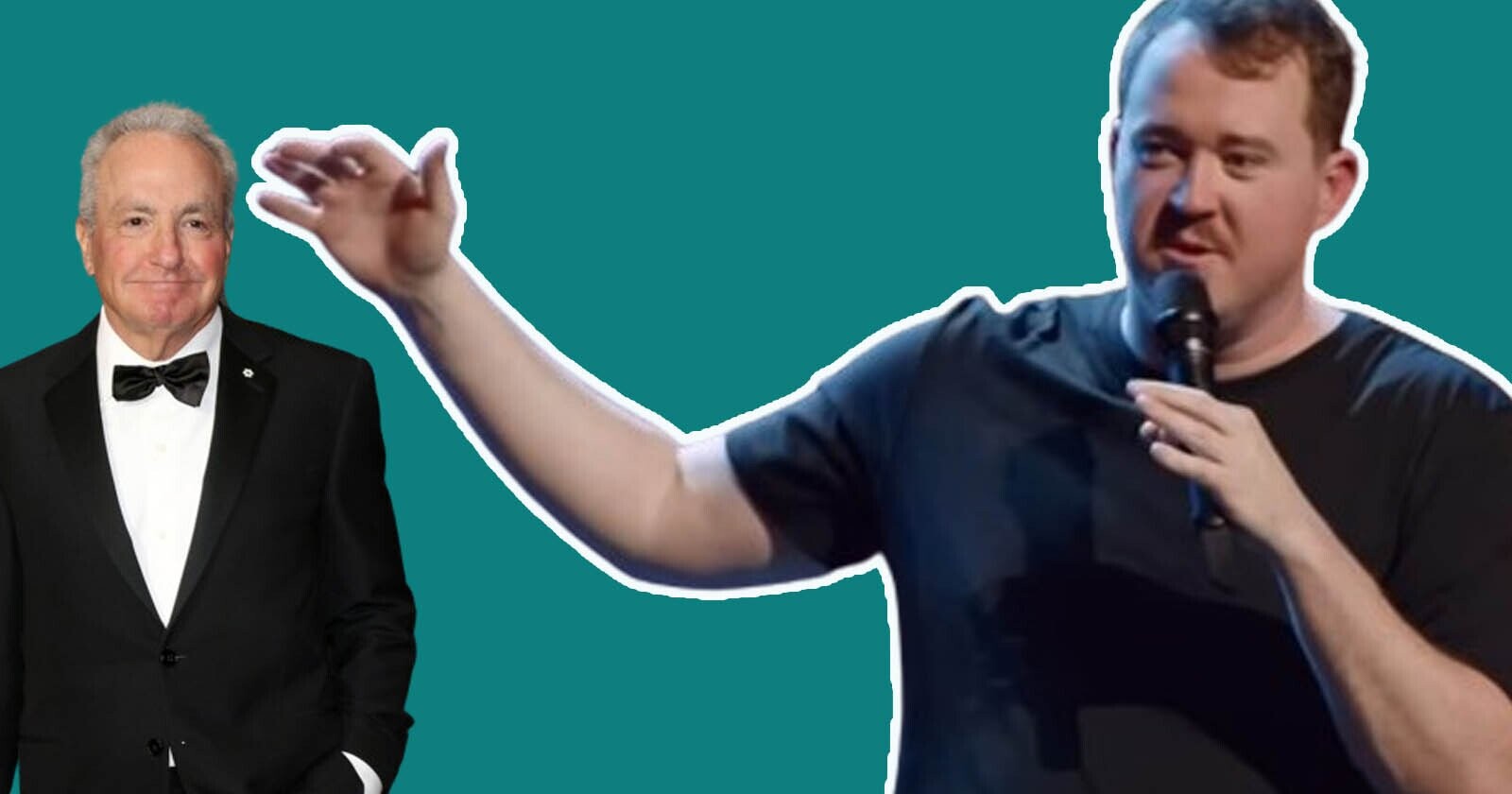
In the long, strange carnival of American comedy, few relationships feel as awkwardly fascinating as the one between Lorne Michaels and Shane Gillis. One is the silver-haired architect of Saturday Night Live, a producer so closely tied to the show that “SNL” sometimes feels like his initials in disguise. The other is a Pennsylvania-born stand-up comic whose brief 2019 hiring became one of the most debated controversies in modern sketch-comedy history.
Gillis was announced as a new SNL cast member, then removed before ever appearing on the show after offensive podcast clips resurfaced. For many performers, that would have been a permanent wall between them and Studio 8H. Yet Gillis did not disappear. He built a following through stand-up, podcasts, YouTube sketches, Netflix specials, and eventually his workplace sitcom Tires. Then came the eyebrow-raising twist: SNL invited him back to host in 2024, and again in 2025.
So why can’t Lorne Michaels quit Shane Gillis? The answer is not simple fandom, forgiveness, or controversy-chasing. It is a messy mix of comedy instincts, audience economics, cultural tension, and Michaels’ lifelong habit of betting on performers who make people argue before they make them comfortable.
The Short Version: Talent Still Talks
Lorne Michaels has spent decades identifying performers who can survive live television pressure. SNL is not just a comedy show; it is a weekly stress test with wigs. A host must handle cue cards, last-minute rewrites, tired writers, nervous cast members, and an audience ready to decide within twelve seconds whether a sketch has legs.
That is one reason Shane Gillis remains interesting to Michaels. Whatever critics think of Gillis’ material, he has become one of the most visible stand-up comedians of his generation. His appeal is not built on polished celebrity charm. It is built on timing, discomfort, self-deprecation, and a “guy at the bar who accidentally became famous” delivery. That rawness is exactly the sort of thing SNL has always tried to bottle, even when the bottle leaks on the carpet.
Gillis also represents a kind of comedy ecosystem that traditional television cannot ignore anymore. His rise came through podcasts, YouTube, stand-up clips, live shows, and streamingnot through a sitcom pilot blessed by network executives in a conference room full of sad sandwiches. Michaels has always tracked where comedy energy is moving. In the 1970s, it was counterculture. In the 1990s, it was cable, clubs, and movie stardom. Today, it is podcasts, Netflix, viral clips, and live touring. Gillis sits right in the middle of that shift.
What Happened Between Shane Gillis and SNL?
In 2019, Shane Gillis was announced as a featured player on Saturday Night Live. The casting itself was notable because it arrived alongside a wider conversation about representation and the future of the show. Soon after the announcement, clips from Gillis’ past podcast appearances circulated online. The clips included racist and homophobic remarks, and backlash came quickly.
NBC and SNL reversed course. Gillis was removed from the cast before he appeared in a single live episode. The decision created a cultural flashpoint. Some argued the firing was necessary because the remarks were unacceptable and would damage the show’s credibility. Others argued that comedy careers should not be defined forever by old material, especially when a performer is still developing.
What makes the story more complicated is Lorne Michaels’ later position. Public reporting has indicated that Michaels did not personally want the firing to happen and felt the decision came from higher up at NBC. That matters because Michaels is not just a producer; he is the gatekeeper of the most famous sketch-comedy stage in America. If he still saw something in Gillis after the controversy, then Gillis was never truly erased from the SNL imagination.
Lorne Michaels Has Always Loved Complicated Comics
The idea that SNL only wants safe performers is historically shaky. The show has always depended on tension. Its best cast members often had something jagged about them: John Belushi’s chaos, Eddie Murphy’s swagger, Norm Macdonald’s stubborn dryness, Chris Farley’s physical abandon, Tina Fey’s sharp political intelligence, Bill Hader’s oddball intensity, and Kate McKinnon’s elastic weirdness.
Michaels’ genius has often been less about finding “nice” comedians and more about finding comedians who create live electricity. That electricity can be hilarious, risky, uneven, or occasionally combustible. The job is to shape it before it burns down the set.
Gillis fits the “complicated comic” category. His supporters see him as a gifted stand-up with a strong ear for character, regional attitudes, and male social awkwardness. His critics see him as a comedian whose past remarks cannot be brushed away as harmless misses. Michaels appears to see something else as well: a performer who draws attention, provokes debate, and connects with a large audience that may not feel fully represented by mainstream comedy institutions.
The Comeback Was Not an Accident
After losing the SNL job, Gillis did not follow the old crisis-management script. He did not vanish for five years, release a tearful documentary, and reappear wearing a cardigan of redemption. Instead, he leaned into the routes available to modern comedians: podcasts, self-produced sketches, online specials, and relentless touring.
From YouTube to Netflix
His 2021 special Live in Austin helped rebuild his momentum by reaching comedy fans directly. That matters because YouTube can act like a giant comedy club where the bouncer is an algorithm and the two-drink minimum is your attention span. If people laugh, they share. If they argue, they also share. Either way, the clip moves.
Then came Beautiful Dogs on Netflix in 2023, which gave Gillis a bigger platform and signaled that streaming services saw market value in his audience. The special leaned into his strengths: rambling storytelling, mock bravado, uncomfortable pauses, and jokes that often make the room decide whether it is laughing with him, at him, or at the absurdity of the situation.
The “Tires” Factor
Tires, the Netflix sitcom co-created by Gillis, John McKeever, and Steve Gerben, expanded his brand beyond stand-up. The series is set around a struggling auto shop and works because it understands a specific kind of workplace comedy: low stakes that feel life-or-death to the people trapped inside them. Nobody is saving the world. They are trying to sell tires, avoid humiliation, and survive the day without saying the dumbest possible thing. Naturally, the dumbest possible thing is usually said before lunch.
The show’s success matters in the Lorne Michaels equation because SNL loves performers who can bring an audience. Gillis was no longer simply “the comedian fired before appearing on SNL.” He had become a bankable comic with a streaming series, popular specials, and a fan base strong enough to turn controversy into curiosity.
Why SNL Needed Gillis Almost as Much as Gillis Needed SNL
When SNL brought Gillis back as host in 2024, the booking did several things at once. It created headlines. It offered closure to a story that never really ended. It gave Gillis a chance to stand on the stage he had lost. It also allowed SNL to position itself as confident enough to revisit its own uncomfortable history.
For a show approaching its 50th season, that is useful. SNL is both an institution and a weekly attempt to prove it is not dead yet. Institutions get dusty. Controversial bookings shake the curtains. A Gillis episode becomes more than an episode; it becomes an event, a referendum, and a group chat explosion.
His 2024 monologue acknowledged the obvious tension. The audience knew the backstory. Gillis knew the audience knew. The show knew everyone knew. That shared awkwardness became part of the performance. It was not a clean victory lap, but it was culturally sticky. People talked about it, reviewed it, clipped it, praised it, disliked it, and debated what it meant. For SNL, that is oxygen.
The Audience Has Changed
One reason Michaels cannot quit Gillis is that the comedy audience has fragmented. There is no single mainstream anymore. There are overlapping comedy tribes: late-night viewers, podcast fans, TikTok clip watchers, Netflix special streamers, political-satire loyalists, anti-woke comedy fans, progressive sketch fans, improv nerds, and people who only watch SNL when a celebrity they recognize is hosting.
Gillis speaks strongly to one of those tribes: listeners who feel that comedy has become too cautious, too polished, or too worried about immediate backlash. Whether one agrees with that audience or not, it exists, it buys tickets, and it streams content. Michaels, who has survived in television by understanding audiences before executives fully understand them, is unlikely to ignore that.
At the same time, SNL must serve a broader audience than a podcast or comedy club. That is the tension. Gillis can succeed in spaces where fans already understand his rhythm. SNL forces him into a national broadcast environment where people may be encountering him cold, with all the history attached. Michaels seems fascinated by that collision.
Comedy, Accountability, and the Business of Second Chances
The phrase “second chance” gets thrown around easily, but in entertainment it is rarely pure morality. It is usually a combination of public interest, commercial demand, personal relationships, and timing. Gillis received another chance at SNL not simply because people forgot what happened. They did not. He returned because his career kept growing despite it.
That raises a serious question: what should accountability look like in comedy? Some audiences believe consequences should be long-lasting, especially when remarks target groups that already face discrimination. Others believe comedians must be allowed to miss, learn, and continue. The Gillis story sits directly in the middle of that argument, wearing a black T-shirt and looking slightly uncomfortable.
Lorne Michaels’ position appears pragmatic. He can acknowledge that the old remarks were wrong while still believing Gillis has comedic value. That does not settle the debate. It simply explains why Michaels keeps reopening the door. In his world, comedy is not judged only by purity; it is judged by whether it works, whether people watch, and whether the performer can handle the room.
What Gillis Gives Lorne Michaels
Shane Gillis gives Michaels access to a comedy lane that SNL sometimes struggles to occupy convincingly: working-class, sports-adjacent, podcast-era, slightly anti-institutional humor. That lane is not new, but its modern distribution is. It lives in clips, group texts, arena tours, and long podcast episodes where comedians talk for three hours and somehow still do not answer the original question.
Gillis also brings character instincts. His best work often comes from embodying a type: the overly confident friend, the exhausted employee, the guy who knows he is not the smartest person in the room but keeps speaking anyway. That skill translates to sketch comedy when properly shaped. SNL is built on types: the politician, the waiter, the awkward dad, the fake commercial spokesman, the person in a meeting who should have stopped talking two sentences ago.
Most importantly, Gillis brings unpredictability. Not chaos for chaos’s sake, but the sense that a joke may swerve. In live comedy, that is valuable. Viewers may not always love the destination, but they pay attention to the turn.
What Lorne Gives Gillis
The relationship is not one-sided. Lorne Michaels gives Gillis legitimacy within the very institution that once rejected him. Hosting SNL does not erase the 2019 controversy, but it changes the story from “fired before his first episode” to “returned as a host.” That is a major narrative upgrade.
For Gillis, SNL also offers reach beyond his core fan base. A Netflix special reaches people who press play intentionally. A podcast reaches subscribers and clip-scrollers. SNL reaches casual viewers, entertainment reporters, social media critics, and people half-awake on a couch wondering why a sketch about a fake commercial is suddenly the most confusing thing they have seen all week.
Appearing on SNL lets Gillis test whether his comedy can operate outside friendly territory. That is valuable for any comedian who wants longevity. A loyal fan base can make you rich. A broader audience can make you durable.
The Real Reason Michaels Can’t Quit Him
The simplest explanation is this: Shane Gillis is useful to Lorne Michaels because he embodies the central problem of modern comedy. Can a major comedy institution remain culturally relevant while navigating offense, backlash, forgiveness, fragmented audiences, and changing standards? Gillis forces that question into the open.
Michaels has always been attracted to comedians who reveal something about the moment. Gillis reveals a lot. He reveals the power of direct-to-fan comedy. He reveals the limits of cancellation as a career-ending force. He reveals the discomfort of audiences who want both accountability and surprise. He reveals how streaming and podcast fame can pressure traditional television to reconsider its own decisions.
That does not mean everyone has to like the decision. It means the decision makes sense within the business and history of SNL. Lorne Michaels does not simply book hosts because they are universally beloved. He books them because they create a show people feel compelled to watch. Gillis does that. Sometimes admiration looks like applause. Sometimes it looks like argument. Television executives, being television executives, often accept both forms as long as nobody changes the channel.
Experiences and Takeaways Related to Lorne Michaels and Shane Gillis
The Lorne Michaels–Shane Gillis story offers useful lessons for anyone who works in comedy, media, content strategy, or public-facing creative work. The first experience is that talent and reputation do not move in a straight line. A performer can be rejected by an institution and still become more powerful outside it. Gillis’ post-2019 career shows how modern creators can survive without traditional approval if they own their audience relationship. Podcasts, live shows, short clips, and self-produced specials now form a parallel career ladder. It may be wobblier than the old ladder, but it often reaches the same roof.
The second experience is that institutions have memories, but they also have needs. SNL did not forget the controversy. Viewers did not forget it either. But the show needed relevance, conversation, and performers who could connect with different audience segments. In media, past decisions are rarely final when market conditions change. A “no” in 2019 can become a “host the show” in 2024 if the audience, platform, and business case shift enough.
The third takeaway is that controversy alone is not a strategy. Plenty of people become controversial and do not build lasting careers. Gillis’ comeback depended on producing work that fans actually wanted to watch. That is important. Outrage may draw attention, but attention without craft fades quickly. Gillis kept performing, writing, producing sketches, touring, and expanding into scripted comedy. The work gave the story somewhere to go.
The fourth experience is that live comedy remains the toughest test. Online audiences can be segmented. A comedian can thrive inside a fan bubble where everyone understands the tone. SNL is different. It puts a performer in front of a mixed audience with critics waiting, fans hoping, skeptics watching, and cast members trying to make the sketches work. That environment exposes whether a comedian can adapt. Gillis’ appearances were debated, but debate itself proved the booking mattered.
The fifth lesson is for editors, producers, and brand managers: audiences are not one thing. Some people saw Gillis’ return as a mistake. Others saw it as overdue. Many were simply curious. Successful media strategy requires understanding those overlapping reactions without pretending they are all the same. Michaels has lasted because he understands that comedy lives in friction. The trick is knowing which friction creates heat and which friction burns the building down.
Finally, the story reminds creators that a public career is cumulative. Every joke, apology, project, interview, and performance becomes part of the larger narrative. Gillis’ relationship with SNL is not a clean redemption story or a clean cancellation story. It is a modern entertainment story: messy, commercial, funny, uncomfortable, and impossible to summarize in one tidy moral. That may be exactly why Lorne Michaels keeps circling back. Shane Gillis is not just a comedian he once hired. He is a live case study in where American comedy is going next.
Conclusion: A Comedy Relationship Built on Risk
Lorne Michaels can’t quit Shane Gillis because Gillis represents something Michaels has chased for five decades: a comic who makes the room react. Not always neatly. Not always comfortably. But unmistakably. In a comedy culture split between platforms, politics, fan bases, and ever-changing boundaries, Gillis is both a performer and a pressure point.
Their connection says as much about Saturday Night Live as it does about Gillis. SNL wants to be historic without becoming museum glass. It wants to be mainstream without becoming bland. It wants young audiences, older audiences, critics, fans, and casual viewers to keep arguing about it on Monday morning. Booking Gillis helps accomplish that, even when the result is divisive.
In the end, Michaels’ attachment to Gillis is not mysterious. It is the logic of a producer who knows comedy is rarely tidy. Talent, timing, controversy, audience demand, and institutional ego all meet at the same crowded table. Gillis may never be the easiest name in the SNL universe, but easy has never been the show’s best setting. That is why Lorne Michaels keeps picking up the phone. And that is why the conversation is probably not over.