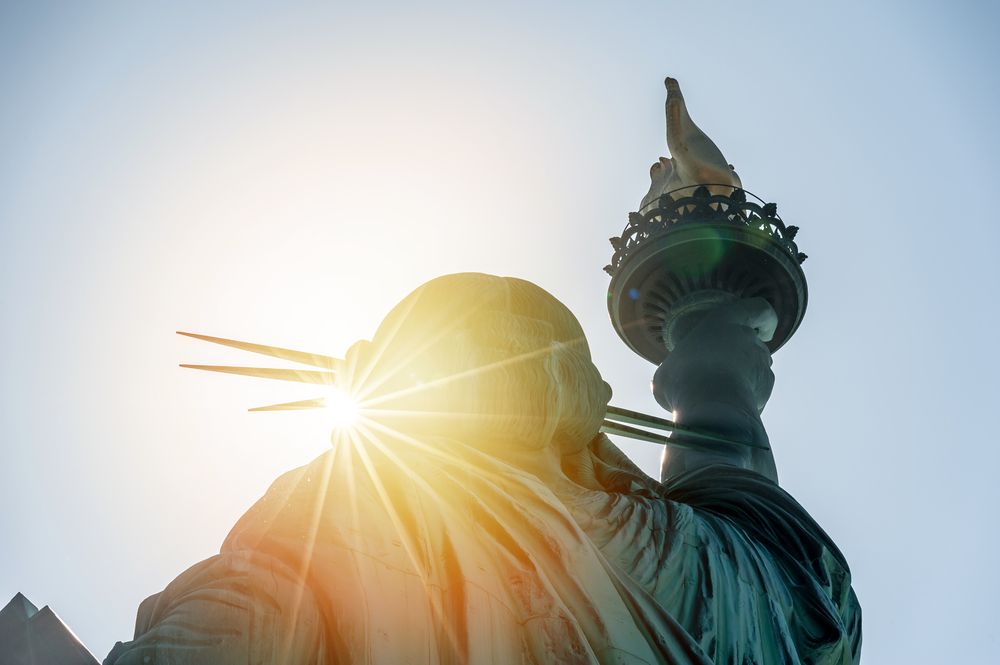
America has always had a complicated relationship with newcomers. It welcomes them with one hand, asks for paperwork with the other, and sometimes checks the spelling of their last names like it is defusing a tiny alphabet bomb. Yet generation after generation, immigrants arrive with suitcases, recipes, degrees, tools, songs, prayers, business ideas, family photos, and a stubborn belief that tomorrow can be negotiated into something better.
The phrase “an immigrant’s gift to America” sounds poetic, but it is also practical. The gift is not one single thing wrapped in red, white, and blue ribbon. It is work. It is courage. It is a restaurant that turns one street corner into a neighborhood landmark. It is a scientist spending late nights in a lab. It is a parent learning English from their child’s homework. It is a nurse, a farmer, a coder, a teacher, a small-business owner, a veteran, a musician, a neighbor, and sometimes the person who introduces an entire town to the miracle of properly seasoned food.
Immigrants do not simply “join” America. They help make America, remake America, and remind America of its oldest promise: that identity here is not frozen in the past. It is built, argued over, improved, and shared.
The First Gift: A Belief in Possibility
Every immigrant story begins with movement, but not all movement is the same. Some people come for education, some for work, some to reunite with family, some to escape war, persecution, poverty, or political instability. Some arrive with advanced degrees. Others arrive with hands trained by farms, factories, kitchens, construction sites, or caregiving. Some speak fluent English on day one. Others learn by listening, trying, failing, and trying again in grocery store lines, school offices, job interviews, and DMV waiting rooms, which may be America’s most humbling classroom.
What many immigrants bring is not a fantasy that America is perfect. In fact, immigrants often understand imperfection very well. They bring something more durable: the belief that effort can still matter. That belief is a gift because it refreshes a national habit that can fade when comfort becomes routine. People who leave behind familiar streets, relatives, language, and status often carry a fierce respect for opportunity. They know the price of a second chance.
This is why immigration is not only a demographic story. It is an emotional engine. It adds motion to the American idea.
Immigrants Strengthen the American Economy
One of the clearest ways immigrants contribute to America is through work. Foreign-born workers are a major part of the U.S. labor force, filling essential roles across agriculture, construction, hospitality, health care, education, technology, transportation, domestic services, research, and entrepreneurship. These jobs are not abstract line items in an economic report. They are the people who harvest food, build homes, care for children, repair infrastructure, open shops, write software, prepare meals, drive local commerce, and help communities function on days when the rest of us are still searching for coffee.
Immigrant labor is especially important in sectors where demand is high and staffing shortages are painful. In health care, immigrants serve as physicians, nurses, home health aides, researchers, technicians, and support workers. In agriculture and food processing, immigrant workers help keep supply chains moving. In technology and science, immigrants contribute to innovation, patents, startups, and global competitiveness.
Entrepreneurship: The Small Shop and the Big Idea
Immigrants are often unusually entrepreneurial. That makes sense. Moving to a new country already requires risk tolerance, problem-solving, and the ability to function while confused. Those are also useful traits when starting a business. The immigrant entrepreneur may begin with a food truck, a cleaning company, a nail salon, a landscaping crew, a corner store, a consulting service, or an app. Some businesses stay small and local, supporting a family and hiring neighbors. Others grow into companies that change entire industries.
America’s business history is full of immigrant founders and children of immigrants who helped build iconic companies. Their stories matter not because every immigrant becomes a billionairemost do not, and most are too busy working to give inspirational speeches in black turtlenecksbut because they show how open systems can turn unfamiliar backgrounds into national advantage.
The gift here is not only money. It is renewal. Immigrant businesses bring services to underserved neighborhoods, revive commercial streets, create jobs, and introduce new products. A family bakery, a Vietnamese nail salon, an Indian grocery, a Mexican restaurant, a Nigerian fashion boutique, or a Ukrainian auto repair shop can become part of a city’s daily rhythm. Over time, what once felt foreign becomes local. Then it becomes beloved. Then people argue online about which place is “the real one,” and congratulations, the immigrant business has officially become American.
Immigrants Expand American Innovation
Innovation thrives when different experiences collide productively. Immigrants often bring knowledge from other education systems, markets, languages, and cultural traditions. This makes them valuable not just as workers, but as translators between worlds. They can see gaps that others miss because they have lived inside more than one system.
In science and technology, immigrant researchers have played major roles in medicine, engineering, computer science, artificial intelligence, physics, and biotechnology. American universities and research labs have long benefited from international talent. Many immigrant scientists come to the United States because of its research infrastructure, academic freedom, funding networks, and culture of experimentation. In return, they contribute discoveries, mentor students, launch companies, and help keep the United States competitive.
Innovation is not limited to laboratories. It also happens in kitchens, classrooms, farms, factories, and community organizations. An immigrant parent who figures out how to run a business while navigating a new tax system is innovating. A refugee organization that helps newcomers find housing and jobs is innovating. A bilingual teacher who helps students bridge two languages is innovating. The American idea grows stronger when more people are invited to solve problems.
Immigrants Enrich American Culture
Culture may be the most delicious immigrant gift, and yes, food deserves its own standing ovation. American cuisine is basically a long group project with contributions from everywhere. Pizza, bagels, tacos, sushi, pho, curry, falafel, pierogi, dim sum, kimchi, gyros, empanadas, and countless regional dishes have shaped how Americans eat. Many of these foods arrived through immigrant communities, adapted to local ingredients, and became part of everyday life.
But culture is bigger than dinner, even if dinner is usually the easiest way to make friends. Immigrants and their descendants have transformed American music, literature, film, architecture, fashion, sports, comedy, religion, and public life. Irish immigrants and their descendants influenced politics, labor organizing, literature, and the arts. Italian Americans shaped food, film, music, and urban life. German immigrants helped build institutions, schools, breweries, newspapers, and civic associations. Chinese immigrants helped build the transcontinental railroad and later helped create vibrant Chinatowns that became centers of commerce and culture. Latino, Caribbean, African, Middle Eastern, South Asian, East Asian, and Eastern European communities have each added language, rhythm, celebration, design, scholarship, and spiritual traditions to the national mosaic.
America’s culture is not weakened by these additions. It becomes more flexible. More flavorful. More interesting. A country that can hold jazz, mariachi, hip-hop, Bollywood dance classes, Korean barbecue, St. Patrick’s Day parades, Lunar New Year festivals, Caribbean carnivals, and Fourth of July fireworks on the same calendar is not losing itself. It is doing what America does best when it is confident: expanding the meaning of “us.”
Immigrants Help Communities Age, Grow, and Stay Alive
Immigration also matters at the local level. Across the United States, many towns and cities face aging populations, shrinking workforces, and empty storefronts. Newcomers can help reverse decline by renting apartments, buying homes, opening businesses, joining churches and civic groups, enrolling children in schools, and paying local taxes. A school that might have closed because of falling enrollment can stay open when immigrant families arrive. A downtown block with vacant shops can come alive again when new businesses take root.
Community renewal rarely looks dramatic at first. It looks like a soccer league forming on weekends. A grocery store adding new ingredients. A library offering English classes. A church basement hosting legal-aid workshops. A school sending home announcements in multiple languages. A landlord finally renovating a long-empty building because demand has returned. Slowly, the town changesnot by losing its old identity, but by adding new chapters.
This is one of the quietest immigrant gifts: presence. Showing up. Staying. Building ordinary life in places that need ordinary life to continue.
The Gift of Family Sacrifice
Many immigrant families are powered by sacrifice so routine that it can become invisible. Parents work night shifts so children can study. Grandparents provide childcare while younger adults build careers. Teenagers translate bank forms, medical instructions, and parent-teacher conference updates. Families pool money to buy a house, start a business, send someone to college, or help relatives abroad.
This sacrifice is not always glamorous. It can be exhausting. It can create pressure between generations. Children may become American faster than their parents expected. Parents may worry that success will cost the family its language, customs, or closeness. The immigrant household often becomes a negotiation table where old values and new realities sit across from each other and refuse to leave.
Yet out of that tension comes a powerful American pattern: the second generation often carries both memory and momentum. Children of immigrants frequently grow up understanding two worlds. They may learn resilience at home and ambition at school. They may become doctors, electricians, artists, soldiers, engineers, writers, public servants, caregivers, entrepreneurs, or community leaders. Their success is not only individual. It is the delayed bloom of seeds planted by people who took risks before them.
Immigrants Remind America What Citizenship Means
Naturalization ceremonies are among the most moving civic events in the United States. People from many countries stand together, raise their right hands, and choose America formally. For native-born citizens, citizenship can feel automatic, like the weather or a last name. For immigrants, citizenship is often studied for, applied for, waited for, paid for, and celebrated.
That choice matters. It reminds the nation that citizenship is not merely a legal status. It is participation. It means voting, serving on juries, paying taxes, volunteering, debating public issues, helping neighbors, and believing that the country’s future is partly your responsibility.
Immigrants also remind America that patriotism does not require forgetting where you came from. A person can love the United States and still cook their grandmother’s food, speak another language at home, celebrate ancestral holidays, and cheer emotionally for two soccer teams. Identity is not a pie with only one slice available. It is more like a buffet, and America should know a thing or two about buffets.
The Challenges Are Real, Too
A serious article about immigration should not pretend everything is easy. Immigration brings challenges for newcomers and for communities. Language barriers, credential recognition, legal backlogs, housing costs, labor exploitation, discrimination, school integration, and access to health care are real issues. Some local governments struggle to respond quickly when migration patterns shift. Some workers fear wage competition. Some communities worry about social cohesion.
But acknowledging challenges is not the same as denying contributions. Good policy should be honest enough to manage difficulty and wise enough to protect opportunity. America benefits most when it combines secure, orderly systems with practical pathways for work, family unity, education, entrepreneurship, and citizenship. When immigrants are allowed to participate fully and legally, their gifts become easier for the whole country to receive.
Specific Examples of Immigrant Gifts
Science and Medicine
Immigrant researchers have helped expand American knowledge in fields ranging from cancer research to computer science. Their work strengthens universities, hospitals, private laboratories, and technology companies. In a world where scientific leadership affects health, security, and economic power, attracting talent is not charity. It is strategy.
Food and Main Street Business
Immigrant-owned restaurants and groceries often become cultural bridges. A neighborhood may first meet a new community through lunch. Over time, the food becomes familiar, then favorite, then essential. It is difficult to fear people after you have developed a serious emotional attachment to their dumplings.
Labor and Essential Services
Immigrants are deeply represented in hands-on industries that keep everyday life moving. They care for children and elders, clean buildings, repair homes, grow food, cook meals, transport goods, and support hospitals. These contributions are not always glamorous, but they are foundational. America does not run on speeches. It runs on people showing up to work.
Public Life and Civic Energy
Immigrants and their children have served in public office, the military, classrooms, courtrooms, nonprofits, unions, and local boards. They bring new perspectives to old debates and often ask practical questions that institutions need to hear: Who is being left out? Why is this form so complicated? Why does this system assume everyone has the same starting point?
Experiences That Reveal an Immigrant’s Gift to America
The experience of immigration is often measured in big categoriespopulation, labor force, tax revenue, startups, patentsbut its deepest meaning is found in ordinary moments. Imagine a mother arriving in a new city with two children, three suitcases, and a phone full of contacts who live in another time zone. At first, everything is unfamiliar: the bus routes, the school forms, the supermarket labels, the small talk, the jokes that do not translate, and the strange American habit of asking “How are you?” while walking away before the answer arrives.
Her gift to America may begin quietly. She takes a job below her training because credentials do not transfer easily. She learns workplace phrases by listening carefully. She saves money, not because saving is easy, but because the future has become a family project. Her children watch her struggle with pronunciation and paperwork, but they also watch her refuse to quit. That lesson may shape them more than any classroom lecture about resilience.
Now imagine a young immigrant student in a public high school. At home, he speaks one language. At school, another. He may feel embarrassed by his lunch, his accent, or his parents’ old-fashioned rules. Then one day a teacher notices his talent in math, writing, robotics, music, or debate. The student begins to see that being between cultures is not a weakness. It is a kind of double vision. He understands how different people think because he has had to translate not only words, but expectations. Years later, he may become an engineer, nurse, business owner, designer, or public defender. America receives his skill, but also the empathy that came from crossing borders early in life.
Consider the immigrant shop owner who opens before sunrise. The store may be small, but it becomes part of the neighborhood’s memory. Children stop by after school. Workers grab coffee on the way to job sites. Elderly customers linger because the owner knows their names. The shop sells more than products. It sells continuity. When a storm hits, the owner stays open late. When a local family faces trouble, there is a donation jar by the register. That is civic life at human scale.
There is also the experience of cultural exchange. A neighbor invites friends to a holiday meal and explains why a certain dish matters. A coworker brings sweets for a festival no one in the office has heard of before. A community center hosts dance, music, or language classes. At first, people attend out of curiosity. Later, they attend because the event has become part of the town’s shared calendar. This is how belonging spreadsnot through slogans, but through repeated invitations.
The immigrant experience can include loneliness, misunderstanding, and grief for the life left behind. But it can also produce extraordinary generosity. Many immigrants know what it feels like to be new, so they help the next newcomer. They share job leads, explain school systems, translate documents, give rides, recommend lawyers, warn against scams, and pass along the hard-won wisdom of survival. That chain of help becomes a hidden infrastructure inside America.
In the end, an immigrant’s gift to America is not only what immigrants bring from elsewhere. It is what they build once they arrive. They bring memory, and then they make new memories. They bring traditions, and then they adapt them. They bring ambition, and then they anchor it in neighborhoods, schools, businesses, churches, laboratories, kitchens, and voting booths. They do not erase America’s story. They add pages, footnotes, recipes, songs, inventions, and occasionally a much-needed reminder that “spicy” should actually mean spicy.
Conclusion: The Gift America Must Be Wise Enough to Receive
An immigrant’s gift to America is not a sentimental slogan. It is visible in the economy, in science, in neighborhoods, in culture, in schools, in family sacrifice, and in the everyday discipline of people who build lives from uncertainty. Immigrants bring labor, talent, creativity, and courage. They also bring questions that keep America honest: Is opportunity real? Can hard work still open doors? Can many cultures share one civic home?
The best answer America can give is not fear, indifference, or nostalgia. It is confidence. A confident country does not panic when new accents enter the room. It listens, adapts, sets fair rules, protects dignity, and recognizes useful energy when it sees it. Immigration has never made America simple. It has made America largerlarger in imagination, larger in flavor, larger in ambition, and larger in its ability to begin again.
The immigrant’s gift is renewal. America’s responsibility is to use it well.