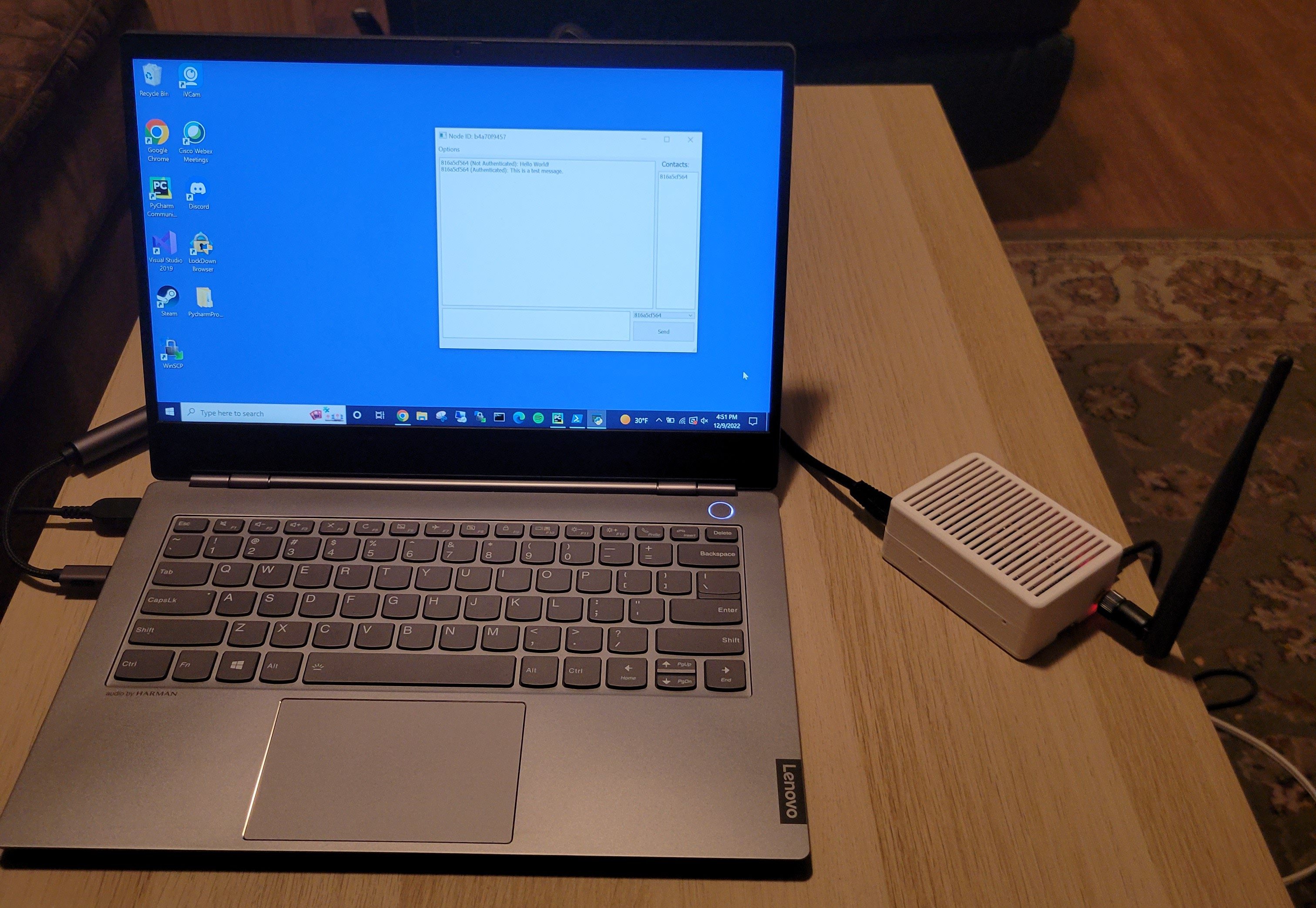
Building a secure LoRa mesh communication network sounds a little like planning a road trip with a group of introverts: everyone wants to stay low-power, travel far, and avoid unnecessary chatter. That, in a nutshell, is why LoRa has become such an attractive choice for long-range IoT deployments. It can connect sensors, trackers, alarms, and field devices across large areas while keeping batteries alive for years instead of waving a white flag after one long weekend.
But there is a catch, and it is not a tiny one. A wireless network that reaches far into farms, campuses, industrial sites, remote infrastructure, or emergency zones also reaches into the land of risk. Weak onboarding, lazy key handling, unsigned firmware, poor segmentation, and “we’ll fix it later” gateway management can turn a promising deployment into a slow-motion security comedy. Funny in a blog post. Less funny in a refinery, a hospital campus, or a flood-monitoring project.
This guide explains what a secure LoRa mesh communication network really means, where LoRa fits, where LoRaWAN fits, why “mesh” is often misunderstood, and how to design a network that is practical, resilient, and much harder to misuse.
What a Secure LoRa Mesh Network Really Is
At the radio level, LoRa is a long-range, low-power modulation technology designed to move small packets of data efficiently over long distances. It is excellent for sensors, telemetry, asset tracking, and sparse command-and-control traffic. In plain English, LoRa is fantastic when your devices mostly want to say, “Temperature is fine,” “Gate opened,” or “Tank level changed,” and then go back to sleep like responsible adults.
LoRaWAN, by contrast, is the networking protocol typically used on top of LoRa radios. Standard LoRaWAN is not a true mesh. It usually operates in a star-of-stars topology, where end devices send messages to one or more gateways, and those gateways forward traffic to a central network server. That architecture is elegant because end devices stay simple and power efficient, but it also means a “LoRa mesh” often refers to a custom or proprietary relay layer built on LoRa radios rather than stock LoRaWAN behavior.
That distinction matters. If you are designing a secure LoRa mesh communication network, you should decide early whether you mean:
LoRaWAN with gateway coverage
This is best for private, public, or hybrid LPWAN deployments where you have IP-connected gateways and want standards-based onboarding, device management, and mature ecosystem support.
Custom LoRa mesh or relay architecture
This is useful when backhaul is sparse, coverage is fragmented, or you need peer-to-peer forwarding in the field. It can extend reach, but every extra hop adds latency, airtime, battery drain, routing complexity, and security overhead.
In other words, mesh can be powerful, but it is not free. Every relay node becomes both a helper and a possible attack surface. Congratulations: your network just hired more employees, and now everyone needs ID badges.
Why Security Has to Be Designed In, Not Sprinkled On Top
A secure LoRa mesh communication network is not just about encrypting payloads. Real security in this space has at least five layers: device identity, trustworthy onboarding, protected firmware, secure transport and gateway management, and operational controls such as segmentation, monitoring, and key rotation.
That is especially important because LoRa deployments often live in messy places. Outdoor enclosures get opened. Remote devices are hard to patch. Contractors come and go. Gateways may sit on roofs, utility poles, remote cabinets, or warehouses with enough dust to qualify as its own ecosystem. In short, the network edge is where theory meets weather, procurement, and human optimism.
Core Building Blocks of a Secure LoRa Mesh Communication Network
1. Strong Device Identity from Day One
Every node should have a unique identity, not a copy-and-paste secret shared across a fleet. Device identity is the backbone of trust. If two hundred field nodes all share the same credentials, one compromise becomes a franchise opportunity for attackers.
For LoRaWAN-style deployments, use unique device identifiers and distinct root keys. Favor onboarding methods that generate fresh session keys rather than static, forever credentials. In practice, Over-the-Air Activation is typically safer than static personalization because it allows new session keys to be created during activation. That gives operators a better security posture, especially for long-lived devices expected to survive years in the field.
For custom mesh systems, the same principle applies: each node should have a cryptographic identity, a controlled enrollment process, and a way to revoke or quarantine compromised nodes. Do not let unknown hardware join the party just because it knows the Wi-Fi password’s weird cousin.
2. End-to-End Encryption and Key Separation
Good network design separates concerns. The network should verify that a packet is valid and authorized, while application data should remain protected end to end. That way, an operator, gateway, or intermediate relay does not automatically gain visibility into every payload.
In LoRaWAN ecosystems, security is usually built around AES-based protections, message integrity checks, frame counters, and separate network and application session keys. That layered model is useful because it supports multitenant or shared infrastructure without giving every intermediary a front-row seat to your business data.
If you are building a custom LoRa mesh, copy the principle, not just the buzzwords. Separate routing trust from data confidentiality. Use per-device or per-role keys where possible. Rotate session material. Protect against replay attacks with counters or nonces. And never assume “nobody will bother with our sensor network” is a strategy. That is not strategy. That is wishful thinking dressed as confidence.
3. Secure Boot and Signed Firmware Updates
Field devices are only as trustworthy as the code they boot. Secure boot helps ensure a device starts only approved firmware. Signed updates help ensure the firmware it receives later is authentic and untampered. Without those controls, a device can become a long-range gossip machine for someone else.
For a secure LoRa mesh communication network, firmware protection should include:
- Secure boot or hardware-rooted verification where feasible
- Authenticated firmware update packages
- Integrity checks before install
- Rollback or recovery support if an update fails
- A clear lifecycle for patching vulnerabilities in radios, gateways, and management tools
This is not overkill. It is basic survival. A sensor deployed for five to ten years will absolutely outlive at least one assumption you made during procurement.
4. Secure Gateway and Backhaul Management
Gateways are the bridge between the radio domain and the IP world. That makes them valuable and vulnerable. If the gateway is loosely managed, the entire network starts wobbling.
Use certificate-based authentication for gateways whenever possible. Secure the management plane separately from the data plane. Prefer encrypted transport for configuration, updates, and telemetry. If your platform supports automated certificate retrieval, secure configuration endpoints, and controlled software updates, use them. A gateway that can prove its identity and pull signed configuration securely is far better than a gateway maintained by “the spreadsheet we update when we remember.”
For campus or industrial environments, gateways should also be placed behind sane network controls. They should not live flat on the same network as everything else from office printers to conference-room TVs. The humble meeting-room tablet has no business being one bad day away from your sensor backbone.
5. Segmentation, Policy Enforcement, and Zero Trust Thinking
Even low-power networks deserve grown-up security architecture. A zero-trust mindset means devices, gateways, applications, and users should be continuously authenticated and limited to the minimum access they need. Segment the radio network from enterprise systems. Segment management functions from telemetry pipelines. Segment field operations from administrative tooling.
In practice, this means:
- Separate VLANs or network zones for gateways and management systems
- Role-based access control for operators, installers, and developers
- Central logging for joins, failures, firmware changes, and suspicious traffic patterns
- Policy enforcement based on device identity and health status
- Restricted east-west movement so one compromised component does not become a guided tour
Mesh networks especially benefit from segmentation because relay behavior can unintentionally increase lateral movement opportunities if routing trust is too broad.
Design Patterns That Actually Work
Private Campus LoRaWAN with Hardened Gateways
This pattern fits hospitals, universities, logistics yards, utilities, and industrial campuses. End devices send data to well-placed gateways, which forward traffic to a managed network server. Security is strongest when devices use unique credentials, gateways authenticate with certificates, firmware updates are signed, and cloud or on-prem services enforce strict access control.
Hybrid LoRa Edge plus Cellular or Fiber Backhaul
This works well for agriculture, environmental monitoring, pipelines, remote substations, and river-level sensing. LoRa handles low-power edge collection. Cellular, fiber, or satellite handles backhaul. This reduces complexity at the sensor level while keeping wide-area visibility. The smart move is to secure both layers independently instead of assuming the cloud magically cures radio insecurity.
Custom LoRa Relay Mesh for Sparse Infrastructure
This pattern is best reserved for places where gateways cannot easily reach the internet or where peer relays are essential during outages or disaster response. It can be effective, but it demands stronger routing controls, better key lifecycle management, and serious attention to duty-cycle, airtime, and battery trade-offs. The more hops you add, the less your battery will write you thank-you notes.
Common Mistakes That Undermine Security Fast
- Using shared fleet keys instead of unique identities
- Choosing static activation for convenience and forgetting to revisit it
- Ignoring secure boot because “the device is in a locked box”
- Leaving gateway management interfaces broadly exposed
- Treating radio coverage as the only design goal while ignoring monitoring and logging
- Building a relay mesh without modeling battery cost and airtime overhead
- Skipping update procedures because the first release “works fine”
That last one is especially dangerous. Working fine on launch day and staying trustworthy three years later are very different achievements.
Best Practices Checklist
If you want a secure LoRa mesh communication network that can survive real-world conditions, aim for this baseline:
- Use unique device identity and controlled onboarding
- Prefer rekey-capable activation and session management
- Protect application payloads separately from network control traffic
- Implement secure boot and signed OTA firmware updates
- Authenticate gateways with certificates
- Encrypt management and backhaul channels
- Segment gateways, applications, and admin tools
- Monitor joins, frame counters, failed authentications, and unusual route behavior
- Plan incident response for compromised nodes and stolen hardware
- Document asset inventory, ownership, update cadence, and decommission procedures
When LoRa Mesh Is the Right Choiceand When It Is Not
LoRa mesh is a strong choice when you need long range, very low power, small data payloads, and resilience across difficult terrain or sparse infrastructure. It shines in remote monitoring, low-frequency telemetry, distributed alarms, environmental sensing, agricultural operations, and selective emergency communications.
It is a weaker fit when you need high throughput, frequent bidirectional traffic, deterministic latency, or dense node-to-node coordination. In those scenarios, standardized mesh technologies such as Wi-SUN or other purpose-built mesh stacks may be better matches. Security is easier to defend when the topology matches the mission. Using LoRa for the wrong traffic pattern is like entering a bicycle in a tug-of-war. Admirable spirit. Terrible plan.
Field Experience: What Teams Usually Learn the Hard Way
One of the most valuable lessons from real deployments is that radio success and security success are not the same milestone. Teams often celebrate the first packet that arrives from a distant sensor and assume the hard part is over. In reality, that first successful transmission is just the moment the project graduates from theory to responsibility. Once a network is live, questions arrive quickly: Who owns the keys? Who can re-enroll a device? What happens when a contractor leaves? How do you know whether a node is offline, jammed, drained, or compromised? Those questions matter more after launch than before it.
Another common experience is discovering that the environment is not neutral. Warehouses full of metal racks, campuses with concrete walls, industrial sites with electrical noise, and outdoor locations with changing weather all affect placement. Teams often start by optimizing for maximum range, then later realize that reliable and secure coverage is better than heroic range with fragile management. A beautifully long link is not useful if the gateway is poorly segmented, the credentials are static, and the update path is manual enough to depend on somebody’s memory and a lucky Tuesday.
Battery life also teaches humility. On paper, low-power operation looks magical. In practice, message frequency, retries, relaying behavior, and unnecessary keepalive chatter can quietly eat into expected lifespan. That becomes even more noticeable in mesh-style designs, where relay nodes work harder than leaf nodes. Experienced operators learn to classify nodes by role, power source, and risk. A solar-powered repeater on a fence line should not be treated the same way as a sealed sensor in a utility vault or a portable emergency node that may be deployed under stress.
Security operations bring their own lessons. The most effective teams make logging boring and consistent. They record joins, failed joins, firmware versions, certificate status, frame-counter anomalies, and changes in route behavior. That sounds tedious until the day a gateway starts behaving strangely or a field node suddenly reappears with outdated firmware after weeks offline. Without logs, troubleshooting becomes storytelling. With logs, it becomes engineering.
There is also a people lesson. Installers, IT teams, facilities staff, and application developers often enter the project with different priorities. The best deployments succeed because those groups agree early on naming, ownership, update windows, and access rules. The worst ones leave security decisions floating between departments like an unlabeled cable in a server closet. In the end, the strongest LoRa networks are rarely the ones with the flashiest diagrams. They are the ones with disciplined onboarding, realistic maintenance plans, simple segmentation, and enough operational maturity to assume that every device will eventually need attention, even the sleepy little ones pretending they are too low-power to cause trouble.
Conclusion
A secure LoRa mesh communication network is not built by choosing a long-range radio and hoping encryption handles the rest. It is built by combining the right topology, unique device identity, secure onboarding, protected firmware, trustworthy gateways, segmented infrastructure, and disciplined operations. LoRa gives you distance and efficiency. Good architecture gives you resilience. Security gives you the right to trust what your network is telling you.
If your deployment is modest, standard LoRaWAN with hardened gateways and strong lifecycle management may be the smartest path. If your mission truly needs relays and self-healing paths, a custom LoRa mesh can work well, but only if security is treated as part of the design, not as a patch note after the fact. Build it like it will be deployed in wind, dust, chaos, and turnoverbecause eventually, it will.

