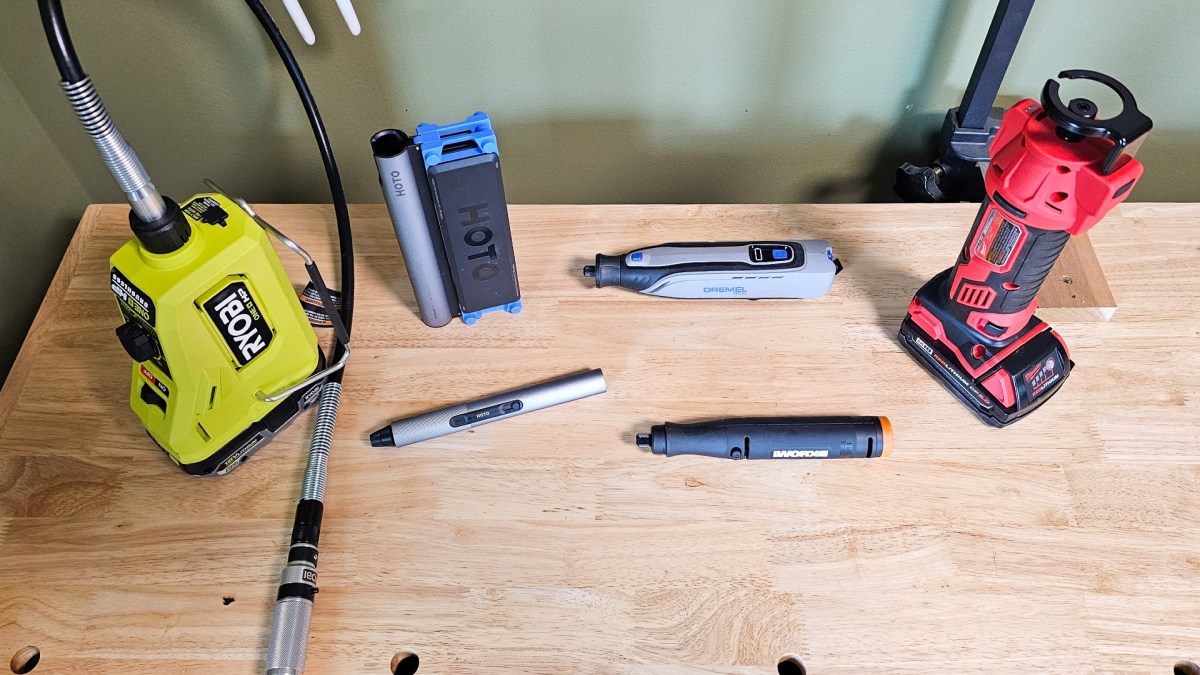
A great rotary tool is the pocketknife of the power-tool worldexcept it spins faster, makes more dust, and occasionally convinces you that you are a jeweler, carpenter, plumber, model maker, and tiny-screw surgeon all before lunch. Whether you want to cut a rusty bolt, engrave a gift, sharpen garden tools, carve wood, polish metal, sand a tight corner, or rescue a DIY project that has gone slightly sideways, the best rotary tools of 2025 make small jobs faster, cleaner, and far less annoying.
The tricky part is that rotary tools all look similar at first glance. Most are compact. Most promise cutting, sanding, grinding, polishing, carving, drilling, and cleaning. Most come with enough accessories to make the box look like a dentist’s drawer. But performance varies a lot. Some models are built for heavy-duty cutting and grinding. Others are better for crafts, light engraving, and precision detail work. A few are wonderfully portable but not meant to chew through thick metal like an angry beaver with a lithium battery.
This guide breaks down the best rotary tools of 2025 by real-world use, not just shiny packaging. We’ll look at corded versus cordless power, RPM range, comfort, accessory compatibility, value, and the kind of buyer each tool actually fits. Because buying the wrong rotary tool is like buying hiking boots for ballroom dancing: technically wearable, but everyone can tell something has gone wrong.
Editor’s note: Prices, bundles, and accessory counts can change throughout the year. Always compare the current kit contents before buying, especially if a battery, charger, flex shaft, shield, or cutting guide matters to your project.
Quick Picks: Best Rotary Tools of 2025
- Best Overall: Dremel 4300-5/40 Rotary Tool Kit
- Best Cordless Power: Milwaukee M12 Brushless Rotary Tool 2525-20
- Best Premium Cordless Dremel: Dremel 8250-5 Cordless Brushless Rotary Tool
- Best Budget Rotary Tool: WEN 2305 Rotary Tool Kit with Flex Shaft
- Best for Beginners: Dremel Lite 7760-N/10
- Best for Crafts and Engraving: Dremel Stylo+ 2050
- Best Compact USB Option: Ryobi USB Lithium Rotary Tool Kit FVM51K
- Best for Drywall Cutouts: DeWalt 20V MAX XR DCE555B
- Best Maker-Style System: Worx MakerX Rotary Tool
What Is a Rotary Tool?
A rotary tool is a small high-speed power tool that uses interchangeable bits and accessories. Instead of swinging, vibrating, or reciprocating, it spins. That spinning motion allows it to cut, grind, sand, carve, drill, polish, sharpen, and clean depending on the attachment installed.
Think of it as a precision multitool for small materials. A rotary tool is not a replacement for a circular saw, angle grinder, bench grinder, drill press, or full-size sander. But for tight spaces, detailed work, and quick fixes, it can be the most useful tool in the drawer. If a regular tool feels too bulky and your hand tool feels too slow, a rotary tool often hits the sweet spot.
How We Chose the Best Rotary Tools
To evaluate the best rotary tools for 2025, we focused on the features that matter most in actual use: power, speed control, accessory compatibility, ergonomics, battery convenience, build quality, price-to-performance value, and task suitability. A rotary tool for cutting metal needs different strengths than one used for engraving glass or polishing jewelry. That is why this list includes both heavy-duty models and light-duty precision tools.
RPM range also matters. Lower speeds are useful for polishing plastics, sanding delicate materials, and preventing heat buildup. Higher speeds help with cutting, grinding, carving, and fast material removal. The best tools offer a wide range with smooth control, so the tool works with the material instead of bullying it into submission.
Best Overall: Dremel 4300-5/40 Rotary Tool Kit
Why It Stands Out
The Dremel 4300-5/40 remains one of the strongest all-around rotary tools in 2025 because it combines corded power, wide accessory compatibility, a useful kit, and excellent control. It offers variable speed from 5,000 to 35,000 RPM, which gives it the range needed for cutting, sanding, polishing, grinding, sharpening, engraving, and detail work.
One of its biggest advantages is the universal 3-jaw chuck. Many rotary tools require collets for different shank sizes, which is fine until you misplace the tiny wrench and begin negotiating with your toolbox like it owes you money. The 3-jaw chuck makes bit changes easier and supports a broad selection of Dremel accessories.
The kit also includes a pivot light, which sounds like a small feature until you are working inside a cabinet, under a sink, or near a shadowy piece of trim. Once you have used a lighted rotary tool, going back feels like performing surgery by candlelight.
Best For
The Dremel 4300 is best for DIYers, homeowners, hobbyists, and serious crafters who want one dependable corded rotary tool for many tasks. It is especially good for users who value consistent power over cordless freedom.
Possible Drawbacks
Because it is corded, it is not as portable as battery-powered models. It is also more tool than a casual crafter may need. If you only plan to engrave a dog tag twice a year, this might be like buying a pickup truck to carry a sandwich.
Best Cordless Power: Milwaukee M12 Brushless Rotary Tool 2525-20
Why It Stands Out
The Milwaukee M12 Brushless Rotary Tool is built for users who want cordless mobility without giving up serious performance. Its brushless motor, compact body, and M12 battery platform make it a strong fit for tradespeople, remodelers, maintenance workers, and DIYers already invested in Milwaukee tools.
The tool offers variable speed control with 12 settings and a range from 5,000 to 27,500 RPM. That top speed is lower than some corded competitors, but the real value is torque under load. It is designed to stay useful during demanding jobs like cutting, grinding, deburring, shaping, and sanding.
Another strong point is ergonomics. At about 0.8 pounds as a bare tool, it feels manageable for overhead work, tight spaces, and longer sessions. The integrated collet wrench also reduces downtime when changing accessories. Anyone who has ever spent five minutes searching for a tiny wrench in a pile of sawdust will appreciate that small mercy.
Best For
This is a smart choice for contractors, remodelers, maintenance crews, and Milwaukee M12 owners who want a cordless rotary tool that feels jobsite-ready.
Possible Drawbacks
It is usually sold as a bare tool, so buyers may need to purchase a battery and charger separately. If you are not already in the M12 ecosystem, the total cost can climb quickly.
Best Premium Cordless Dremel: Dremel 8250-5 Cordless Brushless Rotary Tool
Why It Stands Out
The Dremel 8250-5 is one of the best cordless rotary tools for users who want the familiar Dremel accessory universe with modern brushless performance. It uses a 12V Max lithium-ion battery and delivers variable speed from 5,000 to 30,000 RPM. The brushless motor improves efficiency, power delivery, runtime, and tool life compared with older brushed designs.
This tool is especially appealing for people who love Dremel accessories but hate being tethered to an outlet. It is powerful enough for cutting, grinding, sanding, drilling, deburring, and polishing, while still feeling like a true rotary tool rather than a bulky cutout machine.
The included accessories are useful rather than decorative. The kit typically includes EZ Lock-style cutting accessories, a mandrel, battery, charger, and storage bag. That makes it a strong grab-and-go setup for home repair and intermediate DIY projects.
Best For
The Dremel 8250-5 is best for homeowners, advanced hobbyists, and Dremel fans who want premium cordless convenience without switching brands.
Possible Drawbacks
It costs more than beginner rotary tools, and cordless runtime still depends on battery capacity and workload. Heavy cutting will always drain a battery faster than light polishing or engraving.
Best Budget Rotary Tool: WEN 2305 Rotary Tool Kit with Flex Shaft
Why It Stands Out
The WEN 2305 proves that a useful rotary tool does not have to require a financial pep talk. It is a corded 1.0-amp rotary tool with variable speed from 8,000 to 30,000 RPM. The kit includes a flex shaft and a large accessory set, making it one of the best entry-level values for beginners, crafters, and occasional DIYers.
The flex shaft is the big win here. It lets you hang or rest the main tool while holding a slimmer handpiece for detailed work. That is a major comfort improvement when engraving, carving, polishing, or working on small parts. It makes the setup feel more precise, like switching from a marker to a pen.
For the price, the WEN 2305 handles many common rotary tool tasks well: sanding, polishing, drilling, shaping, deburring, and light cutting. It is not the most powerful tool on this list, but it is one of the easiest to justify buying.
Best For
This is a great first rotary tool for budget-minded users, occasional DIYers, craft hobbyists, students, and anyone who wants to learn before upgrading.
Possible Drawbacks
The accessories are useful for starting out, but heavy users may eventually want higher-quality bits and wheels. Also, the tool is not ideal for prolonged heavy-duty metal cutting.
Best for Beginners: Dremel Lite 7760-N/10
Why It Stands Out
The Dremel Lite 7760-N/10 is designed for simple, approachable use. It is cordless, USB rechargeable, lightweight, and easy to control. With speeds from 8,000 to 25,000 RPM, it is well suited for light sanding, engraving, polishing, sharpening, cleaning, and small crafts.
This is not the tool you buy to cut through thick bolts or reshape steel brackets. It is the tool you buy when you want to engrave a garden marker, clean small hardware, sand a craft piece, or polish a tiny surface without feeling like you are operating a miniature jet engine.
The biggest advantage is confidence. Many beginners are intimidated by high-powered rotary tools. The Dremel Lite keeps things simple with manageable speed settings and a comfortable grip.
Best For
Choose the Dremel Lite if you are new to rotary tools, focused on crafts, or need a compact cordless tool for light-duty jobs around the house.
Possible Drawbacks
It is intentionally light-duty. Users who plan to cut metal, grind aggressively, or run the tool for long sessions should look at the Dremel 4300, Dremel 8250, or Milwaukee M12 instead.
Best for Crafts and Engraving: Dremel Stylo+ 2050
Why It Stands Out
The Dremel Stylo+ 2050 is shaped more like a thick pen than a traditional rotary tool. That design makes it excellent for engraving, etching, polishing, leather burnishing, jewelry work, small wood details, and delicate craft projects. Its variable speed range of 5,000 to 22,000 RPM gives good control for lighter materials.
The Stylo+ is corded, which means no battery anxiety. It is also quiet and easy to hold for extended detail work. If traditional rotary tools feel chunky in your hand, this model may feel much more natural.
Best For
This is the best choice for artists, jewelry makers, craft sellers, model builders, leatherworkers, and users who care more about control than brute force.
Possible Drawbacks
The Stylo+ is not meant for heavy cutting, grinding, or demanding repair jobs. It is a precision craft tool, not a demolition gremlin.
Best Compact USB Option: Ryobi USB Lithium Rotary Tool Kit FVM51K
Why It Stands Out
The Ryobi USB Lithium Rotary Tool Kit is a compact cordless option powered by Ryobi’s USB Lithium battery platform. It is small, portable, and designed for quick accessory changes. The quick-change collet is especially convenient for light jobs where you may switch between sanding, engraving, polishing, and cleaning accessories.
This tool makes sense for people who want cordless convenience in a compact package. It is not a replacement for a full-size corded rotary tool, but it is handy for quick tasks, craft tables, small repairs, and places where dragging out a larger tool feels excessive.
Best For
Choose the Ryobi FVM51K for light-duty work, casual crafting, small household fixes, and users who already like Ryobi’s USB Lithium ecosystem.
Possible Drawbacks
Its compact size means it is not designed for long, heavy, high-load cutting sessions. Treat it as a convenience tool, and it will make a lot more sense.
Best for Drywall Cutouts: DeWalt 20V MAX XR DCE555B
Why It Stands Out
The DeWalt DCE555B is technically more of a cordless rotary drywall cut-out tool than a general-purpose hobby rotary tool. That distinction matters. It is designed for fast, clean cutting in drywall and wall paneling, using a brushless 20V MAX motor that runs at 26,000 RPM.
For electricians, remodelers, drywall installers, and serious home renovators, this type of tool is a time-saver. It can cut around outlets, fixtures, and openings far more efficiently than trying to manage the same job with a utility knife and a prayer.
Best For
Choose this tool if your main job is drywall cutouts, paneling, remodeling, or construction work. It is especially attractive if you already own DeWalt 20V MAX batteries.
Possible Drawbacks
This is not the right tool for jewelry, craft engraving, polishing, or tiny detail sanding. It belongs on a remodel site, not beside a bead organizer.
Best Maker-Style System: Worx MakerX Rotary Tool
Why It Stands Out
The Worx MakerX rotary tool takes a different approach. It uses a slim handpiece connected to a 20V PowerShare battery hub, allowing the working end to stay lightweight and easy to maneuver. With a brushless motor and a speed range that can reach up to 35,000 RPM, it offers strong performance for engraving, sanding, carving, polishing, cleaning, and craft work.
The biggest appeal is the system concept. MakerX tools are designed for creative users who may also want compatible tools like an airbrush, soldering iron, or wood and metal crafter. If your workspace looks half garage and half art studio, the MakerX system may feel right at home.
Best For
This is a strong pick for makers, crafters, model builders, woodcarvers, and users who want a lightweight handpiece with a broader creative-tool ecosystem.
Possible Drawbacks
The battery hub design is clever, but not everyone will love the cable between the handpiece and power source. Traditional rotary tool users may prefer a one-piece design.
Corded vs. Cordless Rotary Tools
Corded rotary tools usually provide the best combination of consistent power, unlimited runtime, and lower long-term cost. They are ideal for bench work, heavy use, and tasks where an outlet is nearby. If you plan to grind metal, cut hardware, carve wood for long sessions, or use a flex shaft often, a corded model like the Dremel 4300 or WEN 2305 can be a smart choice.
Cordless rotary tools win on convenience. They are easier to use outdoors, inside cabinets, on ladders, in driveways, and anywhere a cord would be awkward. The trade-off is battery runtime and sometimes higher cost. For quick cuts, small repairs, craft projects, and mobile work, cordless models like the Dremel 8250, Milwaukee M12, and Ryobi USB Lithium are extremely practical.
Key Features to Look For in a Rotary Tool
Variable Speed Control
Variable speed is one of the most important features. A tool that only runs fast can melt plastic, scorch wood, overheat accessories, and turn polishing compound into a tiny indoor weather event. Look for a broad RPM range and easy adjustments.
Accessory Compatibility
The best rotary tool should work with common 1/8-inch shank accessories. Dremel has the deepest accessory ecosystem, but many other brands also support standard rotary bits. Before buying, check whether the tool uses standard collets, a keyless chuck, or a proprietary setup.
Comfort and Weight
Rotary tools are often used for detail work, so comfort matters. A tool that feels fine for 30 seconds may feel like a vibrating potato after 20 minutes. Look for soft grips, balanced weight, manageable vibration, and a body shape that fits your hand.
Included Accessories
Accessory count is helpful, but quality matters more than quantity. A 190-piece kit sounds amazing until 140 pieces are sanding drums you may never use. The most useful kits include cutting wheels, sanding bands, grinding stones, polishing wheels, mandrels, a wrench or chuck, and a storage case.
Safety Features
A shield attachment, stable speed control, clear instructions, and proper accessory ratings all matter. Rotary tools spin at very high speeds, so never use damaged cutting wheels, mismatched accessories, or mystery bits from the bottom of a drawer labeled “probably fine.”
Rotary Tool Safety Tips
Always wear eye protection when using a rotary tool. Cutting wheels can break, metal can spark, and wood dust can fly. A face shield is smart for cutting and grinding. Use a dust mask or respirator when sanding, cutting, or grinding materials that produce fine dust. Hearing protection may also be useful during longer sessions or when cutting harder materials.
Secure the workpiece before starting. Holding a tiny metal bracket in one hand while cutting with the other is not bravery; it is a shortcut to learning new vocabulary at the emergency room. Use clamps, a vise, or a stable work surface.
Let the tool do the work. Pushing too hard can overheat the motor, damage the accessory, reduce control, and break cutting wheels. Use light pressure and multiple passes. Also, match the speed to the material. Lower speeds are better for plastics and polishing. Higher speeds are useful for carving, grinding, and cutting harder materials.
Which Rotary Tool Should You Buy?
If you want one rotary tool for almost everything, buy the Dremel 4300-5/40. It has the power, speed range, accessory compatibility, and kit quality to handle a wide range of DIY and hobby jobs.
If you want cordless power and already own Milwaukee M12 batteries, the Milwaukee M12 Brushless Rotary Tool is an excellent jobsite-friendly option. If you prefer Dremel’s accessory ecosystem but want cordless convenience, the Dremel 8250-5 is the premium pick.
If you are on a tight budget, the WEN 2305 gives you a lot for the money, especially with the included flex shaft. For beginners and light craft users, the Dremel Lite is easy to love. For engraving and delicate projects, the Dremel Stylo+ feels precise and comfortable. For compact quick tasks, the Ryobi USB Lithium tool is handy. For drywall cutouts, go with DeWalt. For creative maker stations, the Worx MakerX deserves a look.
Real-World Experience: What It’s Like to Use the Best Rotary Tools of 2025
The first thing you learn after using several rotary tools is that “small” does not mean “simple.” These tools reward patience. A good rotary tool feels less like a miniature grinder and more like a precision instrument. When the speed is right, the accessory is sharp, and the workpiece is clamped, the tool glides. When the speed is wrong and the accessory is cheap, the whole experience feels like trying to shave a door with a kazoo.
For home repair, the most satisfying use is cutting small metal pieces. A rotary tool with a reinforced cut-off wheel can trim a screw, slice a rusted bolt, clean up a bracket, or notch a piece of hardware with impressive accuracy. The trick is to avoid forcing the tool. Let the wheel cut gradually. If sparks are flying in a neat line and the motor is not bogging down, you are doing it right. If the tool starts screaming like it has seen the future, back off and slow down.
For woodworking, rotary tools are excellent for shaping, sanding, carving, and cleaning up tight edges. They are not great at removing large amounts of material quickly, but they shine when a full-size sander cannot reach. A sanding drum can smooth a curved cut, soften a sharp corner, or refine a small repair. A carving bit can add detail to signs, trim, ornaments, and hobby projects. The main lesson is to practice on scrap wood first. Rotary tools can remove material faster than expected, and one enthusiastic slip can turn a straight line into abstract expressionism.
For crafts, comfort becomes more important than raw power. Tools like the Dremel Stylo+ and Dremel Lite are enjoyable because they are easy to hold. When engraving glass, polishing small metal pieces, or sanding resin, a lightweight tool offers better control and less hand fatigue. A flex shaft also changes the game. It lets the main motor sit aside while your hand controls a slimmer attachment. For detail work, that feels more natural and precise.
Battery-powered rotary tools are wonderfully convenient, especially for quick jobs. You can walk to the garage, patio, driveway, or shed without hunting for an extension cord. However, heavy cutting drains batteries quickly. That is why cordless tools are best when matched to the job. A compact USB rotary tool is perfect for a quick polish or small engraving task. A 12V or 20V tool is better for cutting, grinding, and repeated use.
The best accessory upgrade is often not a fancy bit but better organization. Rotary accessories are tiny, easy to lose, and surprisingly good at hiding inside drawers. Use a labeled case for cutting wheels, sanding drums, grinding stones, polishing pads, mandrels, collets, and specialty bits. It saves time and prevents the classic DIY ritual of buying the same mandrel three times because the first two are “somewhere safe.”
After enough projects, the best rotary tool becomes the one you actually reach for. For many users, that means a powerful corded Dremel on the bench and a small cordless model nearby for quick tasks. Serious DIYers may prefer a battery-platform tool like Milwaukee or DeWalt. Crafters may choose a pen-style tool. Budget users may start with WEN and upgrade accessories over time. There is no single perfect rotary tool for everyone, but there is a perfect match for your projects.
Conclusion
The best rotary tools of 2025 prove that a compact tool can solve a surprising number of problems. The Dremel 4300-5/40 is the best overall choice for most users because it offers corded strength, wide speed control, accessory flexibility, and a practical kit. The Milwaukee M12 Brushless Rotary Tool is the standout cordless option for demanding work, while the Dremel 8250-5 is the premium cordless pick for users who want Dremel quality without the cord.
Budget buyers should look closely at the WEN 2305, beginners will appreciate the Dremel Lite, and craft-focused users may prefer the Dremel Stylo+. Ryobi, DeWalt, and Worx also offer smart solutions for compact convenience, drywall cutouts, and maker-style workstations.
Choose based on what you actually plan to do. Cutting metal? Prioritize power. Engraving gifts? Prioritize control. Working away from outlets? Go cordless. Building a tiny workshop empire? Get organized, buy good accessories, and prepare to discover that almost every object in your house could use “just a little polishing.”