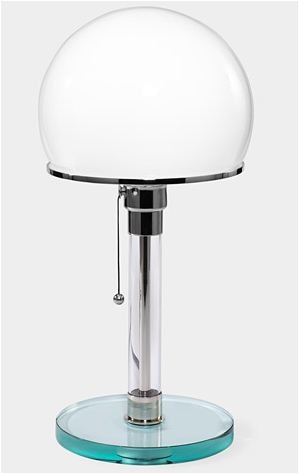
A Bauhaus table lamp is not the kind of lighting that quietly apologizes for taking up space. It sits on a desk, nightstand, or console table with the calm confidence of an object that has already survived a century of design trends and has no plans to panic over your current throw-pillow phase. Clean lines, geometric shapes, honest materials, and practical lighting come together in one compact piece that says, “Yes, I am simplebut I am simple on purpose.”
At the heart of the Bauhaus table lamp story is one of the most famous lighting designs of the modern era: the Wagenfeld lamp, often called the Bauhaus lamp. Designed in the 1920s at the Bauhaus school in Germany, it became a visual shorthand for everything the movement valued: function, clarity, craftsmanship, technology, and beauty without unnecessary decoration. Today, the Bauhaus table lamp remains popular because it works almost anywhere. It can soften a bedroom, sharpen a home office, add quiet drama to a reading corner, or make a small apartment look as if someone inside has very good taste and probably alphabetizes their booksat least when guests come over.
What Is a Bauhaus Table Lamp?
A Bauhaus table lamp is a lighting fixture inspired by the design principles of the Bauhaus movement, a school of design, architecture, and applied arts founded by Walter Gropius in 1919. The Bauhaus approach was revolutionary because it treated everyday objects as serious design problems. A chair, a teapot, a lamp, a building, and a poster all deserved the same disciplined thinking: What is it for? How should it work? What materials make sense? Can it be made clearly, efficiently, and beautifully?
In table lamp form, Bauhaus design usually means a few recognizable features: geometric shapes, minimal ornament, practical proportions, visible structure, and materials such as glass, metal, chrome, nickel, steel, or opal glass. Instead of floral carvings, dangling fringe, or decorative drama worthy of a Victorian séance, a Bauhaus lamp relies on circles, cylinders, spheres, and clean construction.
The Original Bauhaus Lamp: Why the Wagenfeld Design Matters
The most iconic Bauhaus table lamp is associated with Wilhelm Wagenfeld and Carl Jakob Jucker, who developed a table lamp at the Bauhaus metal workshop around 1923–1924. The design is widely admired for its clear use of glass and metal, balanced proportions, and almost architectural composition. A round base supports a simple shaft, while a dome-like shade diffuses light evenly. It looks modern now, which is mildly embarrassing for many “modern” things made last Tuesday.
Wagenfeld was studying at the Bauhaus in Weimar when he created his famous lamp as part of the school’s workshop culture. László Moholy-Nagy, who led the metal workshop during that period, pushed students toward designs that could connect art, craft, and industry. The result was a lamp that appeared ready for mass production, even though early examples were carefully handmade. That tensionindustrial ideal plus artisan precisionis one reason the lamp still fascinates collectors, designers, and people who simply want their bedside lighting to look smarter than a plastic clip-on lamp from a dorm room emergency.
Core Bauhaus Design Principles Behind the Lamp
Form Follows Function
The phrase “form follows function” is often used to explain Bauhaus design, although the idea is broader than a catchy slogan. In a Bauhaus table lamp, the shape is not decoration pasted onto the object. The circular base provides stability. The vertical stem supports the shade. The shade diffuses light. Every part has a job, and the beauty comes from seeing those jobs performed clearly.
Geometry as a Design Language
A classic Bauhaus table lamp often looks like a friendly meeting between geometry homework and good lighting. Circles, cylinders, spheres, hemispheres, and straight lines create the structure. This geometric clarity helps the lamp feel timeless. It does not depend on a trendy motif, a seasonal color, or a celebrity designer’s dramatic signature. It depends on proportion.
Materials That Tell the Truth
Bauhaus designers valued materials for what they were. Glass could glow. Metal could support. Chrome or nickel could reflect. Opal glass could soften brightness. A Bauhaus table lamp does not need to disguise itself as something else. It is not metal pretending to be wood or plastic pretending to be marble. It is refreshingly honest, which is more than we can say for many “easy assembly” furniture instructions.
Beauty Without Clutter
The Bauhaus movement rejected excessive ornament, but that does not mean Bauhaus lighting is cold or boring. A well-designed Bauhaus lamp has warmth because its proportions are considered. The glow of opal glass can be soft and inviting. The reflective stem can add polish. The absence of clutter allows the lamp’s silhouette and light quality to become the decoration.
Key Features of a Bauhaus Table Lamp
When shopping for or styling a Bauhaus table lamp, look for a few essential qualities. First, the shape should be clean and intentional. A circular base, tubular stem, and globe or dome shade are especially common in Bauhaus-inspired lighting. Second, the materials should feel durable and visually honest. Glass, metal, brass, chrome, nickel, and matte finishes all fit the style when used with restraint.
Third, the light should be useful. A Bauhaus lamp is not merely a sculpture that happens to glow faintly like a shy firefly. It should provide practical illumination for reading, writing, relaxing, or creating ambiance. Finally, the lamp should feel balanced. Bauhaus design is rarely fussy, but it is precise. The difference between elegant minimalism and “someone forgot to finish this” often comes down to proportion.
Why Bauhaus Table Lamps Still Look Modern
The Bauhaus table lamp has stayed relevant because it avoids the trap of trendiness. Its design language is based on function, geometry, and material logicideas that continue to influence modern interiors, industrial design, and architecture. While many decorative styles depend on historical references, Bauhaus design looks forward. It does not imitate a palace, a farmhouse, or a beach cottage. It asks what an object needs to do and then removes the noise.
This is why Bauhaus lamps work in so many interiors. In a minimalist room, they reinforce the clean aesthetic. In a mid-century modern home, they feel like a natural ancestor. In a traditional room, they add contrast without shouting. In a small apartment, they offer design credibility without demanding an entire renovation budget. A Bauhaus table lamp is basically the design equivalent of a black turtleneck: simple, adaptable, and suspiciously effective.
Bauhaus Table Lamp vs. Mid-Century Modern Lamp
Bauhaus and mid-century modern design are related, but they are not the same. Bauhaus came earlier and helped shape many ideas that later appeared in mid-century interiors. A Bauhaus table lamp usually emphasizes pure geometry, industrial materials, and functional clarity. Mid-century modern lamps may also use clean lines, but they often include warmer woods, playful angles, colorful shades, or sculptural forms influenced by postwar optimism.
If a lamp looks like a precise study in glass, metal, circles, and cylinders, it may lean Bauhaus. If it has tapered wooden legs, a cone shade, brass accents, or a more playful silhouette, it may lean mid-century modern. Both styles can look fantastic together. In fact, pairing a Bauhaus table lamp with a walnut desk or a mid-century sideboard can create a layered room that feels collected rather than copied from a catalog page.
How to Choose the Right Bauhaus Table Lamp
Consider the Room’s Purpose
Before buying a Bauhaus table lamp, decide what job it needs to perform. For a desk, choose a lamp that provides focused light and does not take up too much surface area. For a bedside table, look for a softer shade that diffuses light comfortably. For a living room console, a sculptural Bauhaus-inspired lamp can work as both lighting and visual anchor.
Check the Scale
Scale matters. A tiny lamp on a large console can look like it wandered into the wrong apartment. A huge lamp on a narrow nightstand can make your alarm clock look nervous. Measure the surface before choosing a lamp. For bedside use, the bottom of the shade should usually sit around eye level when you are seated or reclining, so the light feels comfortable rather than aggressively theatrical.
Choose Materials Carefully
If you want a classic Bauhaus look, glass and metal are your best friends. A clear glass base with an opal glass shade creates a faithful historical mood. Chrome or nickel accents add reflective precision. Matte black metal can create a more contemporary Bauhaus-inspired look. Brass can work too, although it tends to warm the style and move it slightly toward modern luxury.
Think About Bulb Temperature
The wrong bulb can ruin even the most beautiful lamp. For living rooms and bedrooms, warm white bulbs around 2700K often create a cozy atmosphere. For desks or task lighting, a slightly cooler bulb may help with focus. If the lamp has an opal glass shade, the diffuser will soften the light, but bulb choice still matters. Nobody wants a Bauhaus masterpiece that makes the room feel like a dentist’s office.
Where to Use a Bauhaus Table Lamp
A Bauhaus table lamp is wonderfully flexible. On a desk, it adds order and sophistication. The clean silhouette pairs especially well with simple work surfaces, metal accessories, and uncluttered shelving. In a bedroom, a Bauhaus lamp can make the nightstand feel calm and intentional. Its soft glow works well with linen bedding, neutral walls, and wood furniture.
In the living room, place a Bauhaus table lamp on a side table, media console, or low cabinet. It can balance artwork, books, and ceramics without creating visual chaos. In an entryway, it makes a strong first impression because the lamp reads as both functional and artistic. Guests may not know the history of Bauhaus design, but they will understand that the lamp looks deliberate.
How to Style a Bauhaus Table Lamp
The easiest way to style a Bauhaus table lamp is to give it breathing room. Bauhaus design does not love clutter. Pair the lamp with a small stack of books, a simple tray, a ceramic bowl, or one sculptural object. Avoid surrounding it with too many competing shapes. If the lamp already has a round base and dome shade, try adding rectangular books or a square tray to create contrast.
Color also matters. A classic Bauhaus-inspired interior often uses neutrals with occasional primary color accents. A black, white, glass, or chrome lamp can look stunning beside a red book, a blue vase, or a yellow artwork. The trick is restraint. One bold accent looks intentional. Seven bold accents look like the room lost a fight with a crayon box.
Original, Reproduction, or Inspired Design?
When looking for a Bauhaus table lamp, you will find three broad categories: authorized reproductions, vintage originals, and Bauhaus-inspired modern lamps. Authorized reproductions aim to preserve the original design details and are often numbered or certified. Vintage originals may interest collectors, but they can be expensive and require careful authentication. Bauhaus-inspired lamps borrow the movement’s principles without claiming to be historical replicas.
There is no single right choice for everyone. If you are a design collector, an authorized version may be worth the investment. If you simply love the look, a well-made Bauhaus-inspired lamp can deliver the mood at a more accessible price. The key is honesty. A lamp does not need to be an original museum-worthy object to be beautiful, but sellers should be clear about what they are offering.
Common Mistakes to Avoid
The first mistake is buying a lamp only because it says “Bauhaus” in the product title. The word is popular, and not every product using it reflects the design philosophy. Look at the shape, materials, construction, and purpose. If the lamp has fifteen decorative curls and a glitter shade, it may be many things, but Bauhaus is probably not one of them.
The second mistake is ignoring light quality. A lamp can look beautiful when turned off and still be annoying at night. Check whether the shade diffuses light well and whether the bulb is replaceable. The third mistake is over-styling. A Bauhaus lamp looks best when it is allowed to be clear and calm. Too many accessories around it can weaken the effect.
Care and Maintenance Tips
Because many Bauhaus table lamps use glass and polished metal, regular gentle cleaning helps maintain their appearance. Dust the lamp with a soft microfiber cloth. For glass shades, use a mild glass cleaner sprayed onto the cloth rather than directly onto the fixture. For metal parts, avoid abrasive cleaners that may scratch or dull the finish. Always unplug the lamp before cleaning, because design history is wonderful, but electrical safety is better.
If your lamp uses a fabric-covered cord or pull switch, handle those details gently. Replace bulbs only within the manufacturer’s recommended wattage or LED equivalent. If you own a vintage or collectible lamp, consider professional rewiring if the cord or socket looks worn. A beautiful lamp should glow, not spark like a tiny indoor thunderstorm.
Experience Section: Living With a Bauhaus Table Lamp
The first thing you notice when living with a Bauhaus table lamp is that it changes the mood of a room without making a dramatic announcement. Some lamps try very hard to be noticed. They have oversized shades, unusual colors, or bases shaped like animals that seem to be questioning their career choices. A Bauhaus table lamp is different. It simply sits there with perfect posture, and after a few days the room around it starts to feel more organized.
On a desk, the experience is especially satisfying. The lamp’s clean geometry creates a sense of focus. When paired with a simple laptop stand, a notebook, and one good pen, it can make even an ordinary work session feel slightly more intentional. You may not become more productive overnight, but you will at least procrastinate in a better-designed environment. The glow from an opal glass shade is soft enough to reduce visual harshness but still bright enough for reading or writing when the right bulb is used.
In a bedroom, a Bauhaus table lamp brings calm. Unlike lamps with heavy patterns or ornate bases, it does not compete with bedding, curtains, or wall art. It works particularly well with white sheets, natural wood, black accents, and neutral walls. The best part is the evening ritual: turning on the lamp instead of the ceiling light. Suddenly the room feels quieter, warmer, and more adultpossibly even adult enough to fold laundry before it becomes a decorative mountain.
In a living room, the lamp often becomes a conversation piece, but not in a loud way. People may ask where it came from or why it looks familiar. That opens the door to the Bauhaus story: the 1919 school, the idea of uniting art and craft, the move toward functional modern design, and the famous Wagenfeld lamp. It is rare for a small object to carry that much design history while still doing something as practical as lighting a corner.
The most useful lesson from living with a Bauhaus table lamp is that simplicity is not the same as emptiness. A good Bauhaus lamp has presence because every detail is considered. The base, stem, shade, switch, cord, and glow all contribute to the whole. It teaches you to notice proportion, material, and purpose. After a while, you may start looking at other household objects differently. Why is that chair so bulky? Why does that toaster have so many decorative ridges? Why does that cheap lamp wobble like it has unresolved emotional issues?
A Bauhaus table lamp also proves that good design does not need to dominate a room. It can support daily life quietly. It can make reading easier, make a desk more pleasant, make a nightstand feel finished, and make a corner feel cared for. That is the real charm of Bauhaus lighting: it is beautiful because it is useful, and useful because it is beautifully designed.
Conclusion
A Bauhaus table lamp is more than a stylish lighting choice. It is a compact lesson in modern design: function first, geometry with purpose, materials used honestly, and beauty created through clarity rather than decoration. Whether you choose an authorized Wagenfeld reproduction, a vintage collectible, or a Bauhaus-inspired modern lamp, the goal is the same: bring thoughtful light into everyday life.
The reason this design still feels fresh after a century is simple. It was never trying to chase a trend. It was trying to solve a problem well. That is why a Bauhaus table lamp can sit comfortably in a minimalist apartment, a mid-century living room, a modern bedroom, or a creative studio. It brings order, glow, and a little design intelligence to the roomwithout needing to shout about it.
Note: This article is written for web publication in standard American English and is based on real Bauhaus design history, museum-documented objects, and established lighting references, without inserting raw source links into the article body.