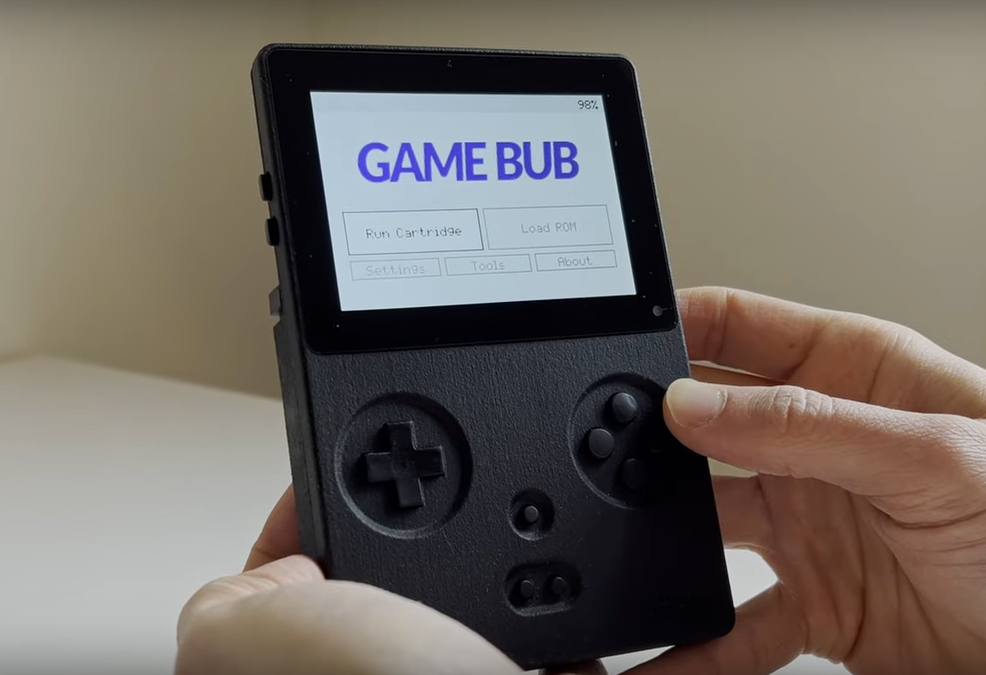
If retro gaming had a dream dinner party, the guest list would be chaos in the best way: original cartridges, ROM libraries, FPGA purists, software emulation fans, collectors with plastic storage bins full of Game Boy games, and one friend who still insists the link cable is a personality trait. Into that wonderfully nerdy crowd walks Game Bub, a handheld that tries to make peace between two worlds that are usually kept in separate pockets.
On one side, you have the physical-media crowd. These are the people who like the click of a cartridge slot, the joy of seeing a label from 1998 that somehow survived middle school, and the sense that a game is not just a file but a tiny brick of memory. On the other side, you have the ROM crowd, who want convenience, portability, backups, homebrew, and the ability to carry an entire legal library on a microSD card instead of in a backpack that feels like it contains six bricks and a bad decision.
Game Bub is interesting because it does not force you to choose. It is designed to play both original Game Boy-family cartridges and ROM files, bringing together convenience and nostalgia in a way that feels practical instead of gimmicky. In a retro handheld market full of compromises, that makes Game Bub stand out like a shiny Pokémon cartridge in a bargain bin.
What Is Game Bub, Exactly?
Game Bub is an open-source FPGA handheld built for Game Boy, Game Boy Color, and Game Boy Advance games. That description matters, because every word is doing some heavy lifting.
Open-source means the project is not a mystery box. The hardware design, firmware, and related code are part of an ecosystem that invites tinkering, improvement, and community trust. For hobbyists, that is a huge deal. Instead of buying a black box and hoping updates keep coming, users can actually see how the machine works and how it might evolve over time.
FPGA means the device is built around programmable hardware that can be configured to mimic the behavior of older systems in a low-level, hardware-like way. That does not mean “magic” or “not emulation.” In fact, one of the more refreshing things about the Game Bub story is the creator’s honesty: the value of FPGA here is not marketing sparkle, but practical hardware integration. If you want a handheld that can interact with real cartridges, support the Game Link Cable, and feel more at home with original accessories, FPGA makes a lot of sense.
And handheld means this is not just a desk project for people who alphabetize soldering irons. It is meant to be played, carried, docked, enjoyed, and occasionally admired by strangers who will ask, “Wait, what is that thing?” before you spend fifteen minutes answering with increasing enthusiasm.
Why ROMs and Cartridges in One Device Is Such a Big Deal
Retro handhelds usually lean in one direction. Some are designed around original cartridges, giving collectors a modern way to play old physical media with better screens, battery life, and build quality. Others live in ROM-land, where you load files from storage and enjoy a flexible, all-in-one experience. Game Bub’s appeal is that it deliberately bridges those two use cases.
Cartridges bring the physical connection
There is still something charming about using original cartridges. You are not just launching software. You are holding a piece of gaming history. Maybe it is the exact copy of Pokémon Emerald you had as a kid. Maybe it is a used cart with someone else’s save file still on it, which is basically digital archaeology. Playing from a cartridge turns the whole experience into something tactile and personal.
Physical carts also matter for preservation-minded players. Some people genuinely want their hardware to work with the game collection they already own, not merely with a folder of files. That makes a cartridge slot more than a nostalgia feature. It becomes a bridge between past ownership and present usability.
ROMs bring flexibility and convenience
ROM support is where life gets easier. You can keep backups of games you own, load homebrew projects, test fan-made translations, explore ROM hacks, and reduce wear on aging cartridges. It also means you do not need to carry a zipper pouch full of tiny game bricks just to decide whether today feels more like Advance Wars or Wario Land 4.
For modern players, convenience matters. People want save management, organized libraries, quick switching, and a clean way to bring classics on the road. ROM support is not just about quantity. It is about usability. That is why the best retro devices are no longer built around an either/or argument. They are built around the reality that many players want both.
How Game Bub Pulls It Off
Game Bub is built to support original Game Boy, Game Boy Color, and Game Boy Advance cartridges while also loading ROMs from a microSD card. That makes it more flexible than devices that only accept physical media and more collector-friendly than software handhelds that ignore cartridges completely.
The hardware is equally interesting. It uses an AMD Xilinx FPGA along with an ESP32-S3 microcontroller for auxiliary tasks. In plain English, that means it has serious brains for a device that mostly exists so you can replay games where turtles throw hammers at you. It also includes a 4-inch display, stereo speakers, USB-C charging, and battery life that is generous enough to encourage long sessions instead of constant charger anxiety.
Game Bub also has features that make it feel like a love letter to the Game Boy ecosystem rather than just another generic emulator shell. It supports the Game Link Cable in both Game Boy and Game Boy Advance modes, which means multiplayer and accessory compatibility are part of the design conversation. It supports extras like rumble and a real-time clock for games that depend on them. There is also a dock option for video out, which means the handheld can go from couch companion to TV setup without pretending it is too cool for cables.
That combination matters because it makes Game Bub feel less like “a device that runs old games” and more like “a modern home for an old platform.” That is a much smarter identity.
Where Game Bub Fits in the Retro Handheld Crowd
The retro gaming market is not exactly starving for hardware. If anything, it looks like a vending machine made entirely of nostalgia. So where does Game Bub fit?
Compared with cartridge-first devices like the Analogue Pocket, Game Bub feels more open and less precious. The Pocket has earned praise for high-quality hardware and broad cartridge support, but its core identity has long centered on physical media first, with ROM flexibility arriving through other routes. Game Bub, by contrast, is upfront about serving both cartridges and ROMs as part of the main experience.
Compared with cartridge-only devices such as the ModRetro Chromatic, Game Bub is simply more versatile. If you love original media but also want a practical travel library, Game Bub makes fewer demands on your lifestyle. It does not force you to become the kind of person who carries eight cartridges in a velvet case and calls that “minimalist.”
Compared with platforms like Evercade, which rely on proprietary cartridges and curated libraries, Game Bub feels much more rooted in the original Game Boy ecosystem. It is not trying to create a closed store or a brand-new retro lane. It is trying to respect an existing one.
And compared with cheap software-emulation handhelds, Game Bub is clearly a more enthusiast-oriented device. It is not aiming to be the least expensive way to play old games. It is aiming to be a thoughtful, well-designed way to play them with original hardware compatibility, open development, and fewer weird compromises.
The Real Appeal: Convenience Without Betraying the Vibe
This is where Game Bub gets clever. A lot of retro hardware makes you choose between comfort and authenticity. One device has a beautiful screen but no cartridge slot. Another plays real carts but gives you the operating experience of a 2003 microwave. Another one can emulate everything under the sun but feels so generic that the games lose part of their charm.
Game Bub’s big promise is that you can have a modern experience without flattening the soul out of the old one. You can pop in a cartridge when you want the ritual. You can load ROMs when you want convenience. You can dock it when you want the living room feel. You can use link cable features when you want the original multiplayer weirdness that made the Game Boy era so memorable.
That balance is rare. It is easy to build a device that does a lot. It is harder to build one that makes those features feel like they belong together.
Who Should Be Interested in Game Bub?
Game Bub makes the most sense for a few specific kinds of players.
Collectors will like it because it respects physical cartridges. If you already own a shelf of Game Boy, Game Boy Color, or Game Boy Advance games, Game Bub gives that collection a modern place to live without demanding original aging hardware.
Tinkerers and hardware enthusiasts will like it because it is open-source and clearly designed by someone who enjoys the engineering as much as the nostalgia. This is the kind of product that invites curiosity instead of hiding from it.
Practical retro players will like it because ROM support means fewer hassles. You can carry a digital library, preserve saves, and enjoy homebrew or legally backed-up titles without juggling physical media all day.
People who care about preservation will like the fact that Game Bub sits at the intersection of usability and respect for original game formats. It is not just another disposable nostalgia gadget. It has an actual philosophy.
Things to Keep in Mind Before You Fall in Love
Even a clever handheld has tradeoffs. Game Bub is not really aimed at people who just want the cheapest possible way to revisit old games. If price is your only filter, there are software-emulation devices that will cost less.
It is also not the device for players who want dozens of consoles in one tiny machine. Game Bub’s focus is tighter, and that is part of its appeal. It is not trying to be everything. It is trying to do the Game Boy family really well.
And while ROM support is a huge benefit, smart users should still think carefully about legality and ethics. The most defensible way to approach ROMs is to use games you legally own, backups you created yourself, homebrew software, patches, and other rights-respecting files. In other words, let the hardware be the fun part, not the sketchy part.
Experiences Related to Game Bub Playing ROMs and Cartridges
The most interesting thing about Game Bub is not just that it supports ROMs and cartridges. It is how different those two experiences feel on the same device, and how nice it is to have both available without switching ecosystems.
Imagine starting with a real cartridge. You slide in an original Game Boy Advance game, power on the system, and immediately get that little rush that only physical media can give you. The game is not just data. It is an object with history. Maybe the label is scuffed. Maybe the shell has the kind of scratches that suggest it once rode around in a backpack with pencils, earbuds, and no adult supervision. Playing that cart on modern hardware feels a bit like restoring an old photo and then framing it. The game is still itself, but the experience is cleaner, brighter, and easier to enjoy.
Now switch to a ROM loaded from microSD. Suddenly the vibe changes from collector mode to convenience mode. You are no longer deciding which single cartridge to bring. You are browsing, choosing, and jumping between games without physically swapping anything. That is perfect for travel, for quick sessions, or for the kind of indecisive evening where you want to test three games in ten minutes and then settle on the one that wins your mood. ROM support also feels especially useful when you want to preserve the battery-backed save on an aging cartridge or avoid repeated insertions on a rare game you would rather not treat like a hotel keycard.
The best part is that Game Bub does not make one mode feel “real” and the other feel second-class. Cartridges feel special, as they should. ROMs feel practical, as they should. Instead of forcing a winner, the device lets your habits decide. If you are home and feeling sentimental, cartridges are great. If you are commuting, packing light, or experimenting with homebrew, ROMs are the obvious pick.
There is also a subtle emotional difference. Cartridges slow you down. You choose a game more deliberately. ROM libraries speed you up, which can be great, but they can also turn play into scrolling if you are not careful. Game Bub lets you move between those mindsets. Some days you want a curated, one-game evening with the cartridge you loved in seventh grade. Other days you want a buffet. Having both makes the handheld feel less like a toy and more like a flexible gaming companion.
And then there is the social side. A link cable feature is the kind of detail that instantly turns a nice handheld into a conversation starter. It is one thing to say a device can run old games. It is another thing entirely when it starts behaving like it belongs in the original ecosystem. That creates the kind of experience retro fans love: not just playing a game, but re-creating the weird little rituals around it.
That is really the Game Bub experience in a nutshell. Cartridges give you memory, ROMs give you momentum, and the handheld gives you a reason to stop arguing about which one matters more.
Final Thoughts
Game Bub is not interesting because it chases nostalgia. Plenty of handhelds already do that. It is interesting because it understands that nostalgia alone is not enough. People want original cartridges, but they also want backups, portability, modern screens, solid battery life, and features that respect the way they actually play in 2026.
That is why the phrase “Game Bub plays ROMs and cartridges” lands so well. It sounds simple, but it captures the device’s real charm. This is a handheld built for collectors who want convenience, tinkerers who want openness, and players who want old games to fit into modern life without losing their character.
In a world full of retro hardware trying to be louder, shinier, or more aggressively nostalgic, Game Bub takes a smarter route. It asks a better question: why not build one device that respects both the shelf and the SD card? Honestly, that might be the most modern retro idea of all.