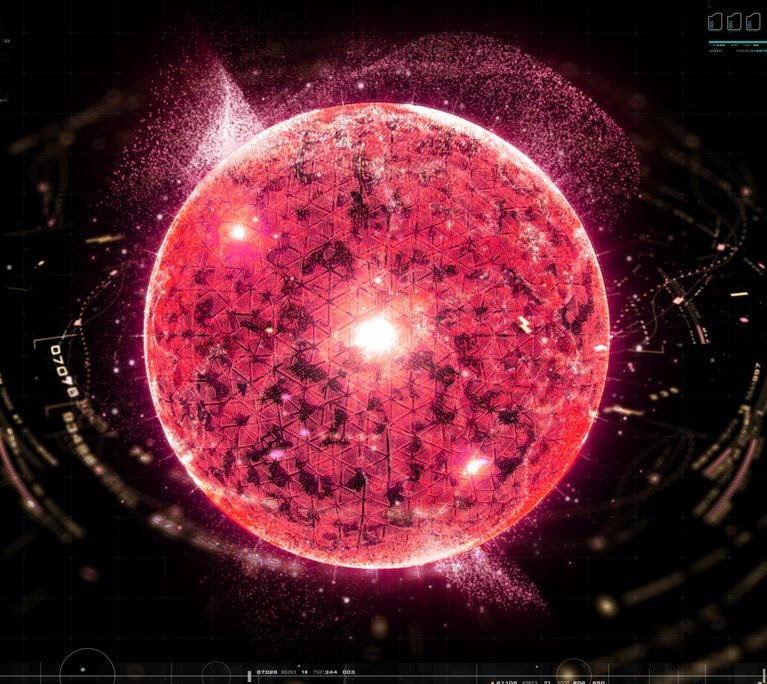
Nuclear fusion sounds like something a superhero would use to charge a flying car, but it is actually one of the most serious energy ideas on Earth. At its heart, fusion energy is the same basic process that powers the sun and stars: light atomic nuclei combine, release energy, and make physicists smile in a way that usually requires a whiteboard and strong coffee.
The big dream is simple to describe and extremely hard to build: create a nuclear reactor that can produce practical electricity from fusion. Unlike today’s commercial nuclear power plants, which use nuclear fission to split heavy atoms such as uranium, a fusion reactor would join light isotopes such as deuterium and tritium. If engineers can make it reliable, affordable, and grid-ready, nuclear fusion could become a powerful source of clean, high-density energy.
But fusion is not magic, and it is not “free energy.” It is a demanding technology that asks scientists to control plasma hotter than the center of the sun, protect materials from energetic neutrons, breed scarce tritium fuel, and convert extreme heat into steady electricity. In other words, fusion energy is less like plugging in a cosmic battery and more like teaching a tiny star to behave politely in a machine.
What Is Nuclear Fusion?
Nuclear fusion is the process in which two light atomic nuclei combine to form a heavier nucleus, releasing energy. The most discussed reaction for early fusion power plants is deuterium-tritium fusion. Deuterium is a stable isotope of hydrogen that can be found in water. Tritium is a radioactive hydrogen isotope that is much rarer and must be produced or bred for large-scale use.
In a deuterium-tritium reaction, the two isotopes fuse to form helium and a high-energy neutron. That neutron carries most of the released energy. In a future fusion power plant, the energy from neutrons would be captured in a surrounding structure called a blanket. The heat would then be transferred to a working fluid, used to drive a turbine or other power conversion system, and turned into electricity.
Why Fusion Needs Plasma
Fusion does not happen easily because atomic nuclei are positively charged, and positive charges repel each other. To overcome that repulsion, the fuel must reach extreme temperatures and pressures. At those temperatures, matter becomes plasma, a hot soup of charged particles. Plasma is not exactly a calm bowl of soup, though. It wiggles, drifts, leaks, and occasionally throws scientific tantrums.
A fusion reactor must confine plasma long enough, at high enough temperature and density, for enough fusion reactions to occur. This challenge is often described through the “triple product,” which combines temperature, density, and confinement time. The better those three numbers become, the closer a fusion system gets to useful energy production.
Nuclear Fusion vs. Nuclear Fission
Nuclear fusion and nuclear fission both release energy from the atomic nucleus, but they work in opposite ways. Fission splits heavy atoms. Fusion joins light atoms. Today’s nuclear power plants use fission, not fusion, to generate electricity.
In a fission nuclear reactor, uranium fuel is arranged in fuel rods inside a reactor core. A neutron strikes a uranium atom, the atom splits, and additional neutrons are released. Those neutrons can continue the chain reaction. The reactor controls that chain reaction with coolant, moderators, control rods, and engineered safety systems. The heat boils water or transfers heat to another water loop, creating steam that spins a turbine.
Fusion is different. It does not rely on a self-sustaining chain reaction in the same way. If the plasma cools or loses confinement, the fusion reaction rapidly drops off. That gives fusion an attractive safety profile, although it does not mean fusion plants would be engineering-free playgrounds. They would still involve radiation, high heat, tritium handling, activated materials, complex maintenance, and strict regulation.
Waste, Fuel, and Safety Differences
One reason fusion energy receives so much attention is that it does not produce the same long-lived radioactive waste profile as fission. Fusion reactions can activate structural materials, meaning some reactor components may become radioactive over time, but the waste challenge is expected to be different from spent fission fuel. Fusion also uses tiny amounts of fuel at any moment, which limits the energy available inside the reactor chamber.
Still, “cleaner” does not mean “effortless.” A commercial fusion reactor must manage tritium carefully, prevent leaks, withstand neutron damage, and replace internal components exposed to harsh conditions. The engineering checklist is long enough to make even a very organized clipboard nervous.
How a Fusion Reactor Might Work
A practical fusion reactor needs several major systems working together. First, it needs a chamber where the plasma can exist. Second, it needs a confinement method to keep that plasma stable. Third, it needs heating systems to reach fusion conditions. Fourth, it needs a blanket to absorb neutron energy, produce heat, and ideally breed tritium. Finally, it needs power conversion equipment to turn heat into electricity.
Magnetic Confinement: Tokamaks and Stellarators
Magnetic confinement fusion uses powerful magnetic fields to hold plasma away from reactor walls. The most famous design is the tokamak, a doughnut-shaped machine that confines plasma using a combination of magnetic fields and plasma current. Tokamaks have dominated fusion research because they have achieved some of the best plasma performance results.
Stellarators are another magnetic confinement design. They also use twisted magnetic fields, but their geometry is more complex. The advantage is that stellarators may be better suited for steady-state operation because they do not depend on the same large plasma current used in tokamaks. The disadvantage is that their magnets and shapes can look like they were designed by a genius octopus with a geometry degree.
Inertial Confinement: Lasers and Tiny Fuel Capsules
Inertial confinement fusion takes a different approach. Instead of holding plasma for a relatively long time with magnets, it compresses a tiny fuel capsule extremely quickly. At the National Ignition Facility in California, powerful lasers deliver energy to a target, causing conditions that can trigger fusion. This approach has produced landmark ignition experiments, meaning the fuel produced more fusion energy than the laser energy delivered to the target.
That is a major scientific achievement, but it is not the same as a commercial power plant. The total electricity used by the facility is far greater than the laser energy reaching the target. For practical fusion energy, researchers would need higher repetition rates, durable target systems, efficient drivers, economical fuel capsules, and a way to collect heat continuously. In plain English: amazing science first, power bill solution later.
Recent Progress in Fusion Energy
Fusion has moved from “always 30 years away” jokes into a more serious era of public-private development. U.S. national laboratories, universities, and private companies are now working on magnets, plasma control, fusion materials, blanket systems, tritium processing, and power plant designs.
One of the biggest milestones came from laser fusion experiments at the National Ignition Facility. Multiple ignition shots have demonstrated that controlled fusion burn is achievable in the laboratory. A 2025 experiment produced a record fusion yield of 8.6 megajoules from a laser energy delivery of about 2.08 megajoules to the target. That does not mean your neighborhood will plug into a laser-fusion plant tomorrow, but it is a powerful proof that fusion physics can cross historic thresholds.
Magnetic fusion has also gained momentum. High-temperature superconducting magnets are especially important because stronger magnetic fields can help make fusion devices more compact. MIT and Commonwealth Fusion Systems have demonstrated major magnet progress using high-temperature superconductors, supporting the idea that smaller, high-field tokamaks may be a promising path toward net-energy fusion devices.
Why Fusion Energy Matters
The world needs electricity that is reliable, scalable, and low in carbon emissions. Solar and wind are growing quickly, batteries are improving, geothermal is gaining attention, and fission nuclear power already provides large amounts of firm electricity. Fusion energy could eventually join that clean-energy toolbox as a high-density source that can operate day and night.
Fusion fuel also has attractive features. Deuterium is widely available, and lithium can be used in reactor blankets to breed tritium. A fusion power plant would not need trainloads of fuel every week. In theory, small amounts of hydrogen isotopes could produce enormous energy. That energy density is one reason fusion has such a magnetic pull on researchers, investors, and headline writers.
Fusion as Grid Power
A future fusion power plant would probably look surprisingly familiar outside the reactor island. Like coal, gas, geothermal, and fission plants, many fusion designs would use heat to generate electricity. The exotic part is the source of the heat. Instead of burning fuel or splitting uranium atoms, fusion would harvest energy from plasma reactions.
For grid operators, the key question is not whether fusion is cool. It is extremely cool, scientifically speaking, while also being extremely hot, thermally speaking. The real question is whether fusion plants can be built at competitive cost, operated reliably, maintained efficiently, and connected to the grid on a schedule that makes sense for energy markets.
The Biggest Challenges Facing Fusion Reactors
The first challenge is plasma stability. Plasma is active, turbulent, and sensitive to disturbances. A commercial reactor must keep it under control for long periods. That requires advanced sensors, fast control systems, strong magnets, clever modeling, and probably enough computing power to make a laptop feel like an abacus.
The second challenge is materials. Fusion neutrons are energetic and can damage the internal components of a reactor. Materials must survive intense heat, radiation, mechanical stress, and chemical exposure. The inner wall and blanket will be especially important because they sit close to the action and must handle both energy capture and fuel breeding.
The third challenge is tritium. Deuterium is abundant, but tritium is not. Most commercial fusion concepts assume the reactor will breed tritium from lithium inside the blanket. That means the plant must produce enough tritium to keep itself running, recover it efficiently, and control it safely. Tritium self-sufficiency is one of the great make-or-break issues for fusion energy.
The fourth challenge is economics. A fusion reactor cannot simply be a beautiful scientific machine. It must become a power plant that utilities can finance, regulators can license, workers can maintain, and customers can afford. Commercial fusion requires not just plasma breakthroughs, but supply chains, manufacturing, workforce training, licensing rules, and realistic business models.
Fusion Blankets: The Unsung Heroes
When people imagine fusion energy, they often picture glowing plasma. Fair enough; plasma gets the dramatic lighting. But the blanket may be one of the most important parts of a future fusion reactor. The blanket surrounds the plasma chamber, absorbs neutron energy, helps protect components, removes heat, and can breed tritium from lithium.
Researchers are exploring different blanket concepts, including liquid metal breeders such as lead-lithium and gas-cooled designs using helium. These systems must handle extreme heat while avoiding corrosion, cracking, leaks, and unwanted chemical reactions. If the plasma is the rock star, the blanket is the road crew, stage manager, and fire marshal all rolled into one.
Public and Private Fusion Development
The United States has increased its focus on commercial fusion energy through federal programs, national laboratory research, university partnerships, and private-sector collaboration. The Department of Energy has supported efforts such as the Milestone-Based Fusion Development Program and Fusion Innovation Research Engine Collaboratives to connect foundational science with industry needs.
Private fusion companies are exploring a wide range of designs, including compact tokamaks, stellarators, field-reversed configurations, magnetized target fusion, laser fusion, and Z-pinch concepts. This variety is healthy because fusion has not yet settled on a single winning reactor architecture. The industry is still in its “many clever ideas enter, only the practical survive” phase.
Will Fusion Replace Fission Reactors?
Fusion energy is often described as the future of nuclear power, but it is better to see it as a possible addition rather than an instant replacement. Fission reactors already generate large amounts of electricity around the world. They are commercially proven, heavily regulated, and available today. Fusion reactors are still being developed.
If fusion becomes commercial, it may complement advanced fission, renewables, energy storage, and other clean technologies. Different regions may choose different mixes based on cost, grid needs, land use, fuel supply, policy, and public acceptance. Energy transitions are rarely dramatic movie scenes where one technology kicks open the door and yells, “I’ll take it from here.” They are usually slower, messier, and full of spreadsheets.
Common Myths About Nuclear Fusion
Myth 1: Fusion Is Already Ready for the Grid
Not yet. Fusion has achieved historic scientific milestones, but commercial electricity production requires much more than producing fusion reactions. A power plant must run repeatedly, recover energy efficiently, manage fuel, withstand damage, and sell electricity at a competitive price.
Myth 2: Fusion Has No Radiation
Fusion does involve radiation, especially neutron radiation in deuterium-tritium systems. It may avoid some of the long-lived waste issues associated with fission fuel, but reactor components can become activated and must be managed responsibly.
Myth 3: Fusion Is Impossible
Fusion is not impossible. It happens naturally in stars and has been produced in laboratories. The hard part is making it practical, continuous, economical, and useful for electricity generation. That is a huge challenge, but not a fantasy.
Experiences and Practical Lessons from Learning About Nuclear Fusion
One of the most interesting experiences when studying nuclear fusion is realizing how quickly the topic changes from simple to complex. At first, fusion sounds beautifully straightforward: take two hydrogen isotopes, push them together, release energy, and enjoy clean power. Then you learn about plasma confinement, neutron damage, tritium breeding, superconducting magnets, liquid metal corrosion, power conversion, and regulatory frameworks. Suddenly, the “simple” star-in-a-bottle idea has a to-do list longer than a grocery receipt before Thanksgiving.
A practical lesson is that fusion rewards patience. Many people hear about ignition at the National Ignition Facility and assume the energy problem has been solved. The achievement is real and remarkable, but it belongs to the scientific step of the journey. A commercial fusion plant must repeat energy production many times per second or operate continuously, depending on the design. It must do this while maintaining equipment, recovering fuel, protecting workers, and producing electricity efficiently. The gap between a physics breakthrough and a power plant is not a crack in the sidewalk; it is a canyon with engineers building bridges from both sides.
Another useful experience is comparing fusion with existing fission reactors. Fission plants may seem less futuristic, but they teach an important lesson: energy technologies must live in the real world. They need maintenance crews, spare parts, licensing, emergency planning, supply chains, financing, and public trust. Fusion developers can learn from decades of nuclear operations, especially around safety culture and regulatory transparency.
Fusion also changes how people think about clean energy. It is tempting to look for a single “perfect” solution, but energy systems are more like orchestras than solo acts. Solar, wind, hydro, geothermal, fission, storage, transmission, demand management, and future fusion may all play different roles. Fusion’s potential strength is firm, high-density power. That could be valuable for heavy industry, large cities, data centers, desalination, hydrogen production, and grids that need reliable electricity when the weather is not cooperating.
The most memorable takeaway is humility. Fusion scientists are trying to control matter under conditions humans were never casually meant to handle. They are building machines that manage temperatures hotter than stars while keeping materials, magnets, computers, fuel systems, and safety controls working together. That combination of ambition and precision is what makes nuclear fusion so fascinating. It is not just an energy technology; it is a test of how well science, engineering, policy, and patience can cooperate.
Conclusion: Fusion Energy Is Promising, but the Reactor Race Is Real
Nuclear fusion could become one of the most important energy technologies of the future. It offers the possibility of abundant, low-carbon, high-density power with fuel sources that are far more attractive than fossil fuels. It also promises a different safety and waste profile from traditional fission nuclear reactors.
Yet fusion energy still has serious obstacles to overcome. Plasma must be confined and controlled. Reactor materials must survive extreme environments. Tritium must be bred and recovered. Blankets must capture heat and produce fuel. Power plants must be economical, licensable, and reliable. The good news is that progress is accelerating across national laboratories, universities, and private companies. Fusion is no longer just a distant scientific dream; it is becoming a competitive engineering race.
The smartest view is balanced optimism. Fusion is not ready to replace today’s power plants, but it is advancing in ways that deserve attention. If researchers and companies can turn laboratory success into practical reactors, fusion energy may one day help power the world with the same process that lights the stars. Not bad for something that starts with hydrogen and ends with humanity trying to bottle sunshine.