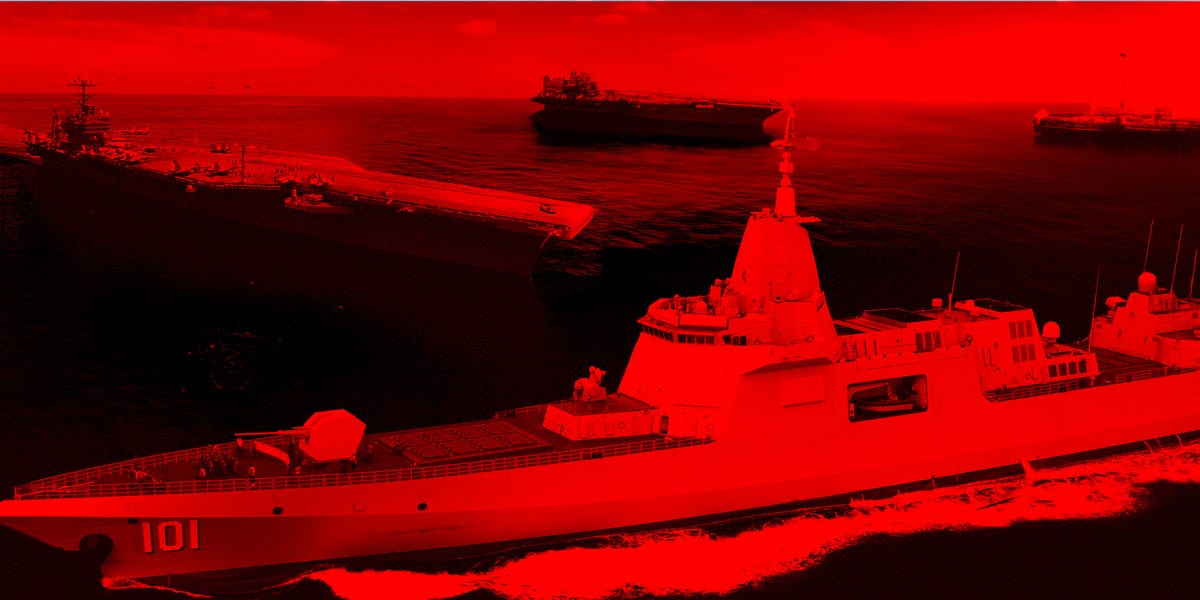
China’s new aircraft carrier, the Fujian, is not just another giant gray ship with a dramatic flight deck and a name that looks excellent in headlines. It is the most visible symbol yet of China’s attempt to move from a coastal defense navy to a blue-water naval power that can operate far from home. For decades, aircraft carriers were mostly a U.S. Navy conversation. Now, Beijing has placed itself directly in that conversation, and the Fujian is the ship making everyone lean forward in their chair.
Commissioned in November 2025, the Fujian is China’s third aircraft carrier and its first carrier that was both designed and built domestically. It follows the Liaoning, a refurbished Soviet-era carrier, and the Shandong, China’s first domestically built carrier but one still heavily influenced by Soviet-style design. The Fujian is different. It has a flat flight deck, electromagnetic catapults, and a design that points toward a navy with bigger ambitions than coastal patrols and parade-day photo opportunities.
In plain English, the Fujian matters because it gives China a more flexible way to launch aircraft at sea. Earlier Chinese carriers use ski-jump ramps, which look dramatic but limit how much fuel, equipment, and payload aircraft can carry at takeoff. The Fujian’s electromagnetic launch system changes that equation. It can support heavier aircraft, including early-warning planes and newer carrier-based fighters, giving the ship a much broader role in surveillance, air defense, and long-distance naval operations.
What Is the Fujian Aircraft Carrier?
The Fujian, also known as the Type 003 aircraft carrier, is the newest and most advanced carrier in the People’s Liberation Army Navy. It was built at Jiangnan Shipyard in Shanghai, launched in June 2022, underwent sea trials beginning in 2024, and entered service in late 2025. Estimates place the ship at around 80,000 tons full-load displacement, making it one of the largest aircraft carriers outside the United States.
Its size matters, but size alone is not the story. A giant ship without the right systems is just an expensive floating parking lot. The Fujian’s real importance lies in its aircraft launch technology. Unlike the Liaoning and Shandong, which use ski-jump ramps, the Fujian uses a catapult-assisted takeoff but arrested recovery system, often shortened to CATOBAR. Even better for China’s naval planners, it uses electromagnetic catapults rather than older steam catapults.
That leap is why defense analysts pay so much attention to this ship. Electromagnetic catapults can launch aircraft more smoothly and precisely than older systems. They can also handle a wider range of aircraft weights. For a modern carrier, that flexibility is gold. It means the Fujian is not limited to launching only lighter fighters with reduced fuel or equipment. It can support a more balanced air wing, including fighters, electronic warfare aircraft, and airborne early-warning aircraft.
Why China’s New Aircraft Carrier Is a Big Deal
The phrase “aircraft carrier” often creates instant mental images: jets roaring, sailors in color-coded deck shirts, and a flight deck that looks like organized chaos with jet fuel. But carriers are more than military hardware. They are political symbols, diplomatic tools, and floating statements of national ambition. The Fujian tells the world that China wants to be seen as a maritime power with reach beyond its immediate neighborhood.
For China, the ship fits into a much larger naval modernization campaign. Beijing has expanded its fleet of destroyers, frigates, submarines, amphibious ships, and support vessels. The Fujian sits at the top of that pyramid. It gives the Chinese navy a platform that can train with advanced carrier aircraft and operate farther into the western Pacific. That does not mean the ship instantly matches decades of U.S. carrier experience, but it does mean China has crossed an important technological threshold.
The Fujian also changes how observers think about the Indo-Pacific balance. A carrier with electromagnetic catapults can help extend air coverage, surveillance, and command reach. It can support operations farther from land-based airfields. That is especially relevant in discussions of the South China Sea, the East China Sea, Taiwan, Guam, and the wider western Pacific. The ship is not a magic wand, but it gives Beijing more options.
The Technology Behind the Fujian
Electromagnetic Catapults
The Fujian’s headline feature is its electromagnetic aircraft launch system. Think of it as the difference between pushing a shopping cart down a ramp and using a carefully controlled high-speed launch rail. The ramp method works, but it has limits. The electromagnetic catapult gives aircraft a more controlled boost, which helps them take off with heavier loads and more fuel.
This technology is difficult to develop because it requires precise power management, advanced engineering, and reliable shipboard systems. A carrier at sea is not a laboratory with perfect conditions. Saltwater, movement, vibration, heat, and heavy operations all conspire to make engineering problems more annoying than a printer jam five minutes before a deadline.
By installing electromagnetic catapults on the Fujian, China has joined a very small group of navies operating this advanced launch technology. The United States uses similar technology on its Ford-class carrier. The Fujian’s system is therefore a major sign that China is not merely copying old carrier models; it is trying to jump into the newest generation of carrier aviation.
A Flat Flight Deck
The Fujian’s flat deck is another major change. Earlier Chinese carriers use a ski-jump bow that curves upward. That layout is simpler but less flexible. A flat deck paired with catapults lets the carrier launch a wider variety of aircraft more efficiently. It also gives deck crews more room to organize launch and recovery cycles, although true carrier efficiency depends on years of training, procedures, maintenance, and experience.
New Carrier Aircraft
During testing and public demonstrations, China showed aircraft associated with the Fujian, including the J-15T fighter, the J-35 stealth fighter, and the KJ-600 early-warning aircraft. The KJ-600 is especially important because airborne early-warning aircraft act like flying radar stations. They help a carrier group see farther, coordinate aircraft, and better understand what is happening over the horizon.
This is where the Fujian becomes more than a bigger version of China’s earlier carriers. A carrier that can launch early-warning aircraft is much more useful for sustained operations away from shore-based support. In simple terms, it helps the ship avoid sailing around like a very expensive person who forgot their glasses.
How the Fujian Compares With China’s Earlier Carriers
China’s first carrier, the Liaoning, began life as a Soviet-built hull. It gave China a training platform and a foundation for learning carrier operations. The Shandong, China’s second carrier, improved on that model but still used a ski-jump design. Both ships helped the Chinese navy build experience, train pilots, and understand the complicated art of running aviation at sea.
The Fujian is the next step. It is larger, more advanced, and built around a more capable launch system. Instead of being mainly a learning platform, it is designed to support a broader set of missions. That said, a new carrier does not become fully mature the moment a flag is raised. Carrier aviation is one of the most difficult military skills in the world. It requires pilots, deck crews, engineers, escort ships, logistics, command systems, and years of repeated practice.
This is why analysts are careful when discussing the Fujian. The ship is impressive, but operational readiness takes time. Sea trials, launch tests, and commissioning ceremonies are milestones, not finish lines. China must still prove that the Fujian can operate reliably with a full air wing, coordinate with other ships, sustain deployments, and perform complex operations under pressure.
What the Fujian Means for the Indo-Pacific
The Fujian arrives at a time when the Indo-Pacific is already crowded with strategic competition. The South China Sea remains contested. Taiwan remains a central flashpoint. Japan, the Philippines, Australia, India, and the United States all watch Chinese naval growth closely. In this setting, a new Chinese aircraft carrier is not just a ship; it is a regional signal.
For Beijing, the Fujian supports the vision of a navy that can operate beyond the so-called First Island Chain, a line of islands that includes Japan, Taiwan, and the Philippines. Farther out lies the Second Island Chain, including Guam, where the United States maintains important military facilities. A capable carrier force could help China extend surveillance and air operations into those wider waters.
However, aircraft carriers are also vulnerable assets. They need escorts, submarines, supply ships, air cover, and constant maintenance. A carrier is powerful, but it is not invincible. In modern conflict, missiles, submarines, drones, satellites, and cyber systems all complicate carrier operations. The Fujian gives China more reach, but it also gives China a very large asset to protect.
Why the Fujian Still Has Limits
Despite the excitement around the Fujian, it is not nuclear-powered. That matters. Nuclear-powered carriers can operate for very long periods without refueling the ship itself, although they still need supplies for crew and aircraft. The Fujian is conventionally powered, which means its endurance is more limited. For long-distance operations, China will need strong logistics, reliable replenishment ships, and access to friendly ports or support networks.
Another limitation is experience. The U.S. Navy has operated large-deck carriers for generations. It has built a deep culture of carrier operations, from deck handling to maintenance to global logistics. China is learning quickly, but learning at sea is not the same as launching a slick promotional video. Real readiness is built through repetition, mistakes, repairs, and more repetition.
There is also the question of the carrier air wing. A carrier’s value depends heavily on the aircraft it carries and how well those aircraft are integrated. The J-35, J-15T, and KJ-600 suggest major progress, but China still has to demonstrate consistent, large-scale carrier flight operations. Until then, the Fujian should be seen as a major capability in development rather than a fully proven peer to America’s most experienced carrier strike groups.
The Message Behind the Metal
The Fujian is both a military platform and a political message. Domestically, it shows Chinese audiences that the country is building advanced technology and expanding its national power. Internationally, it tells neighboring countries and the United States that China is serious about maritime influence. Aircraft carriers have always been part machine, part theater. The Fujian is no exception.
Its commissioning also fits President Xi Jinping’s broader goal of building a “world-class” military by mid-century. That phrase is intentionally broad, but the direction is clear: China wants armed forces capable of protecting its interests, influencing regional outcomes, and challenging U.S. dominance in key areas. The Fujian is one of the clearest examples of that ambition floating in steel form.
Could China Build More Aircraft Carriers?
Almost certainly. The Fujian is unlikely to be the end of China’s carrier program. In fact, it may be a bridge to even larger and more advanced carriers. Chinese shipyards have shown enormous capacity, and Beijing has invested heavily in naval modernization. Future carriers may include nuclear propulsion, more advanced aircraft systems, and improved integration with drones or unmanned platforms.
The real question is not whether China can build more carriers. The better question is how it plans to use them. A navy designed mainly for regional defense has different needs than a navy designed for global presence. If China continues expanding overseas interests, bases, and logistics networks, carriers like the Fujian could become central tools of diplomacy, deterrence, and power projection.
Experience Section: What Following China’s New Aircraft Carrier Teaches Us
Watching the story of China’s new aircraft carrier unfold is a useful experience in how modern power is built, measured, and misunderstood. At first glance, the Fujian looks like a single news event: China commissions a new carrier, analysts react, headlines multiply, and everyone on the internet suddenly becomes a naval architect before lunch. But the deeper lesson is that military power is not created by one ship. It is created by systems.
One experience readers often have when studying the Fujian is surprise at how many moving parts sit behind one carrier. The ship is only the most visible piece. Behind it are shipyards, engineers, pilots, aircraft designers, radar specialists, logistics planners, training schools, fuel systems, command networks, and political decisions. A carrier is not just built; it is absorbed into a navy’s culture. That takes time.
Another useful takeaway is the difference between appearance and readiness. A commissioned carrier looks official. It has flags, uniforms, speeches, and a deck big enough to make a football field feel underdressed. But readiness is quieter. It shows up in maintenance records, training cycles, safe takeoffs and landings, night operations, long deployments, and the ability to coordinate with escorts and supply ships. The Fujian’s real story will be written over years, not during one ceremony.
For anyone interested in geopolitics, the Fujian also teaches the importance of geography. Maps matter. China’s coastline, Taiwan’s location, Japan’s island chain, the South China Sea, and Guam all shape why this carrier matters. A ship that can operate farther from shore changes planning assumptions. It does not guarantee control, but it complicates the chessboard. And in geopolitics, complicating the chessboard is practically a full-time job.
The Fujian also offers a lesson in technology jumps. China moved from ski-jump carriers to an electromagnetic catapult carrier, skipping the long steam-catapult phase that defined many earlier carrier programs. That does not mean every challenge is solved, but it shows a willingness to take ambitious engineering risks. Sometimes modernization is gradual. Sometimes it arrives wearing a flight deck and demanding everyone update their PowerPoint slides.
Finally, following the Fujian encourages a balanced view. It is neither a harmless showpiece nor an unstoppable superweapon. It is a serious platform with real strategic meaning, but also with real limits. The smartest way to understand it is to avoid hype in both directions. The Fujian matters because it shows where China is going: toward a larger, more capable, more confident navy. But where it ends up will depend on training, logistics, doctrine, regional responses, and the hard reality of operating complex machines at sea.
Conclusion
China’s new aircraft carrier, the Fujian, marks a major step in the modernization of the People’s Liberation Army Navy. With its flat deck, electromagnetic catapults, and ability to support newer carrier aircraft, it gives China capabilities that its earlier carriers could not provide. It also sends a clear message: Beijing wants a navy that can operate farther, see farther, and influence events beyond its coastline.
Still, the Fujian should be understood with balance. It is advanced, but not magic. It is powerful, but not proven across decades of global operations. It gives China new options, but also creates new demands for training, logistics, and protection. The carrier’s future significance will depend less on its launch ceremony and more on how effectively China turns hardware into real operational skill.
For readers, policymakers, and anyone who enjoys watching giant ships reshape global debates, the Fujian is worth following closely. It is not just China’s newest aircraft carrier. It is a floating preview of the next chapter in Indo-Pacific security.