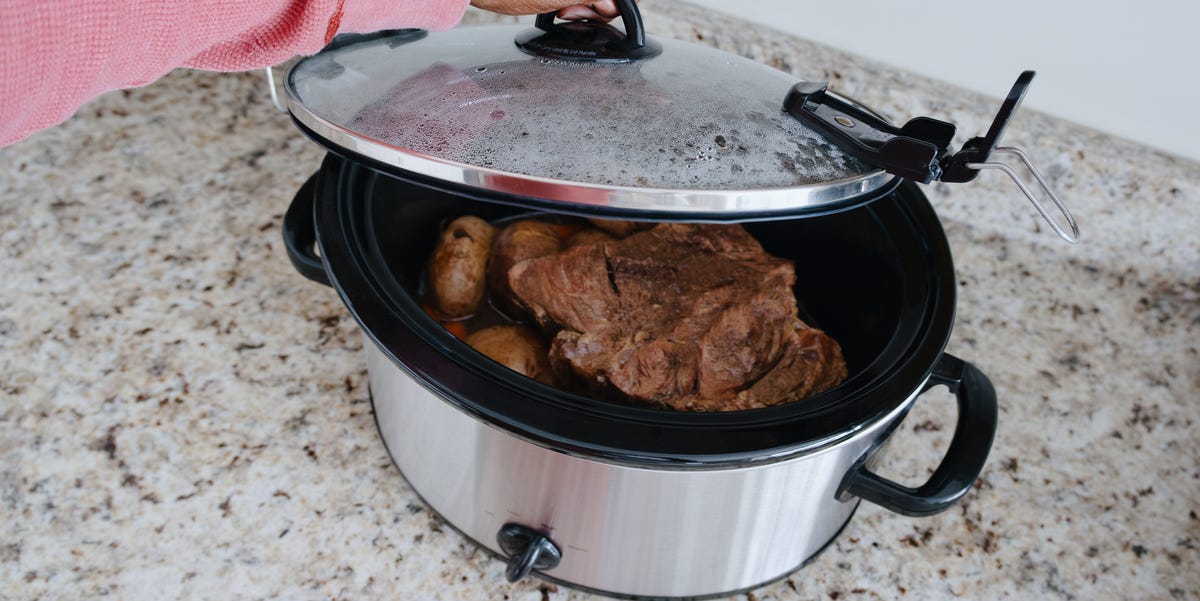
Slow cookers are the golden retrievers of kitchen appliances: friendly, dependable, and happiest when left alone to do their thing. But if your model has clips, latches, or a locking lid, it can be tempting to snap everything shut and assume tighter equals better. After all, a locked lid feels secure, efficient, and strangely professional, like you just earned a culinary badge.
Here’s the problem: on many popular slow cookers, those lid locks are designed for transport, not for cooking. Locking the lid while the food cooks can trap extra steam, create pressure issues, and interfere with how the appliance is meant to perform. In plain English, your slow cooker is supposed to cook low and slow, not audition for a pressure-cooker reboot.
That does not mean every single clip-on slow cooker is identical. A few models are engineered with vent holes and specific wattage adjustments that allow latching during cooking. But for the average home cook, the safest everyday rule is simple: if your manual does not explicitly say you can latch the lid while cooking, do not do it. Treat those locks as travel gear, not cooking gear.
This guide breaks down why locking a slow cooker during cooking can be risky, how slow cookers differ from pressure cookers, what manufacturers actually mean by “locking lid,” and what safe slow-cooker use really looks like in a real American kitchen. Because dinner should be comforting, not suspenseful.
Why Locking the Lid Seems Smart but Can Be a Bad Idea
At first glance, locking the lid sounds perfectly reasonable. A snug lid should keep heat in, right? More steam should mean faster cooking, right? Not exactly.
Slow cookers are designed to cook food with steady, gentle heat over a long period of time. They rely on a specific balance of temperature, moisture, and a normal lid position. That glass lid is there to sit in place and hold heat, but not to transform the appliance into a sealed pressure environment. When you lock the lid on a model that was not designed for locked-lid cooking, you can trap steam in a way the appliance did not intend.
That is the heart of the danger. The issue is not that your countertop will instantly become an action movie. The danger is misuse: trapped steam can create pressure, and that pressure can affect cooking performance. It can also encourage people to think they are using a sealed cooker when they are not. A slow cooker and a pressure cooker are cousins at best, not twins.
The Real Problem: Steam Plus Pressure Plus the Wrong Appliance Design
When food cooks in a slow cooker, moisture turns to steam. On many models, that moist environment is part of what helps food cook safely and evenly. But “moist environment” is not the same thing as “pressurized environment.” A pressure cooker is specifically built with locking systems, seals, valves, and safety mechanisms to manage rising pressure. A standard slow cooker is not.
That is why some manufacturers say it plainly: the lid should not be locked during cooking. The clips are there so you can move the appliance after cooking without decorating your car interior with queso, chili, or suspiciously airborne pot roast gravy.
What “Locking Lid” Actually Means on a Slow Cooker
One of the biggest sources of confusion is marketing language. A slow cooker may be advertised with a “locking lid,” “carry lid,” “clip lid,” or “latch system,” and shoppers naturally assume that feature improves cooking. In many cases, it does not. It improves transport.
Think of it like a seatbelt for your casserole during the drive to a potluck. It is not there to change the cooking method. It is there to keep the contents from sloshing everywhere when you carry the unit from the kitchen counter to the car, from the car to the office party, or from the party to the table where someone will absolutely say, “Who made the meatballs?”
That distinction matters. A lot.
Transport Feature vs. Cooking Feature
If your slow cooker manual or manufacturer FAQ says the latches are for moving, transporting, or storing the cooker, believe it. That is not legal fine print trying to ruin your fun. That is the appliance telling you what it was built to do.
Some manuals go even further and warn that locking the lid during cooking can keep steam in and produce pressure that affects performance. That is a strong sign that the clips are not a harmless bonus during cooking. They are the wrong setting for the wrong moment.
To be fair, there are exceptions. A few slow cookers are designed with vent holes and other adjustments that allow the lid to be latched while cooking. That is why the most accurate rule is not “every clip is always bad.” The accurate rule is: never assume a clipped lid is safe for cooking unless the manufacturer specifically says so for your exact model.
In everyday life, the easiest and safest habit is still this: cook with the lid resting in its normal position, then lock it only when it is time to transport the finished food.
Why a Slow Cooker Is Not a Pressure Cooker
This is where many kitchen misunderstandings begin. Pressure cookers are intentionally sealed and engineered to hold and regulate pressure. They have locking lids, pressure-release systems, valves, and multiple safety controls. The entire cooking method depends on controlled pressure.
A slow cooker works differently. It heats the crock slowly from the sides and sometimes the bottom, building a steady cooking environment over several hours. Its job is not to rapidly increase internal pressure. Its job is to keep the food cooking at a safe, steady pace long enough for tough cuts to soften, soups to deepen, and your house to smell like you have your life together.
When you try to force pressure-cooker behavior onto a standard slow cooker by locking a lid that was not meant to be locked during cooking, you are asking the appliance to perform outside its design. That is where performance problems, uneven results, and safety concerns start waving red flags.
Why the Confusion Happens
Modern kitchens are crowded with lookalike appliances. Multi-cookers, electric pressure cookers, rice cookers, Dutch ovens, and slow cookers all share overlapping recipes and often sit next to each other on store shelves. Add a shiny latch to a slow cooker and suddenly people assume it behaves like a pressure cooker. It does not.
If an appliance truly cooks under pressure, the manufacturer will make that crystal clear. You will see specific pressure settings, release instructions, seals, and safety language built around that function. A simple carry latch on a slow cooker is not the same thing.
The Food Safety Angle Nobody Should Ignore
Even when locking the lid does not create dramatic trouble, it can still push you toward bad habits. And with slow cookers, bad habits tend to show up as food-safety mistakes.
Safe slow cooking is about time, temperature, moisture, and proper handling. If you are already misusing the lid, there is a decent chance you may also be guessing about other rules, such as whether frozen meat can go straight into the crock, whether “warm” is good enough for cooking, or whether leftovers can cool right in the stoneware overnight. Spoiler alert: that path leads to disappointment at best and foodborne illness at worst.
Follow These Slow-Cooker Safety Rules Instead
- Thaw meat and poultry first. Putting frozen meat into the slow cooker can keep it in the temperature danger zone too long.
- Fill the cooker properly. Most guidance recommends keeping it between half full and two-thirds full for best performance and safer cooking.
- Keep the lid on while cooking. Ironically, the safe advice is to keep the lid closed, but not necessarily locked. Lifting the lid repeatedly can slow cooking significantly.
- Start cooking right away. Do not let a loaded slow cooker sit around waiting to start later.
- Use a thermometer. Long cooking time is not a magic safety force field. Check the internal temperature of meat and other foods.
- Do not cook on “warm.” Warm is generally for holding already cooked food, not bringing raw food to a safe temperature.
- Do not reheat leftovers in a slow cooker. Reheat on the stove, in the oven, or in the microwave first.
- Cool leftovers quickly. Do not leave them sitting in the slow cooker insert to cool forever like a forgotten science project.
One More Overlooked Risk: False Confidence
Sometimes the most dangerous thing in a kitchen is not the appliance. It is confidence wearing sunglasses indoors.
When a lid is clipped shut, people often assume the cooker is “more secure,” “hotter,” or “safer.” That feeling can lead to careless shortcuts. Maybe someone tosses in partially frozen chicken because the lid is “really sealed.” Maybe they decide not to check doneness because it has been cooking for hours. Maybe they leave food in the cooker too long afterward because it “must still be fine in there.”
That kind of confidence is exactly why reading the manual matters. Appliance features are not universal. A latch does not mean the same thing on every model. A slow cooker is one of the easiest appliances to use correctly, but only if you stop trying to make it something it is not.
Special Ingredient Warning: Beans Deserve Respect
There is another slow-cooker safety issue worth mentioning because it surprises people every year: dried kidney beans. Undercooked kidney beans contain a natural toxin that requires proper boiling to destroy. A slow cooker may not reach a high enough temperature fast enough to make them safe if you skip the stovetop step.
In other words, if your recipe begins with dried kidney beans, do not just toss them into the slow cooker and hope for the best. Hope is not a cooking temperature.
Many experienced home cooks either soak and boil beans first or use canned beans in slow-cooker recipes to keep things simple and safe. It is one of those small details that separates “cozy dinner” from “why does everyone feel weird?”
How to Use a Locking-Lid Slow Cooker the Right Way
The good news is that owning a slow cooker with clips or a locking lid is not a problem. Using it incorrectly is the problem. Here is the best way to think about it:
- Prep the food safely.
- Place the lid on normally for cooking.
- Do not latch the lid during cooking unless your exact manual says that your exact model is designed for it.
- When the food is fully cooked and you need to move the appliance, then use the locking feature for transport.
- Once you arrive, set the cooker down carefully and return to the manufacturer’s instructions for serving or warming.
That approach keeps the locking feature in its correct lane. It is a travel tool, not a cooking hack.
Common Myths About Locked Slow Cooker Lids
“If it is locked, it cooks faster.”
Not necessarily. A slow cooker is calibrated around how it is designed to operate. Changing that environment may affect performance instead of improving it.
“A locked lid means better heat retention, so it must be safer.”
Better heat retention is not automatically safer when the appliance is not built to cook under that exact condition. Safe cooking depends on proper design, not improvisation.
“It has clips, so the manufacturer obviously wants me to use them while cooking.”
Nope. On many models, those clips are explicitly meant for carrying the cooker after the food is done.
“All slow cookers with locks work the same way.”
Definitely not. Some models specifically forbid latching during cooking, while a few vented models allow it. The manual wins every time.
The Bottom Line
If your slow cooker has a locking lid, the smartest move is not to assume it should be locked while cooking. On many popular models, that is exactly what you should not do. The danger comes from trapping steam, creating pressure issues, and interfering with the way the appliance is designed to cook.
The safest habit is beautifully simple: let the slow cooker cook like a slow cooker. Use the lid as intended, keep it closed, avoid unnecessary peeking, follow food-safety basics, and save the latches for the car ride to the potluck.
And if you remember only one thing from this entire article, make it this: never treat a slow cooker like a pressure cooker just because it has clips. That little misunderstanding is how kitchen confidence turns into kitchen chaos.
Kitchen Experiences Related to Locking a Slow Cooker While Cooking
A lot of the most useful lessons around slow cookers do not come from fancy test kitchens. They come from ordinary Tuesday mornings, church potlucks, office lunches, and family dinners where someone says, “I thought that clip was supposed to stay on.” That confusion is incredibly common, especially with newer transport-style models. A person buys a slow cooker with locking hardware, sees the sturdy clips, and assumes the locked position must be the “more correct” position. It feels more secure, more complete, and oddly more official. Unfortunately, kitchen appliances do not reward vibes.
One very common experience happens before a party or work event. Someone makes chili, meatballs, or pulled chicken and wants to avoid spills, so they lock the lid before the food is even hot. The thinking is practical: if the lid will be locked later for transport, why not leave it that way the whole time? That is exactly where trouble starts. The user is no longer following the design of many standard slow cookers. Even if nothing dramatic happens, they have introduced a variable the manufacturer may specifically warn against. This is how small misunderstandings turn into bad appliance habits that get passed from one kitchen to another like an inherited casserole dish.
Another relatable experience is the “I only checked it once” moment. People are often surprised by how much a slow cooker depends on consistency. Open the lid too often, and cooking slows down. Lock the wrong lid during cooking, and now you are changing the moisture and steam behavior in another direction. A lot of home cooks discover, usually after one disappointing batch, that slow cookers are less about constant tinkering and more about patient cooperation. They want stable conditions, not creative interference.
There is also the experience of false reassurance. A clipped lid can make a cook feel like everything is under control. The food looks sealed in, the appliance looks tidy, and the whole setup appears “extra safe.” That feeling sometimes encourages shortcuts elsewhere. Maybe the chicken went in half frozen because the cook assumed the heat would eventually sort it out. Maybe leftovers stayed in the crock too long because the thick insert still felt warm. Maybe nobody checked the internal temperature because dinner had been cooking all day and smelled amazing. Smell, unfortunately, is not a safety certificate.
Then there is the transport moment, which is where locking lids truly shine. This is the good experience people were promised in the first place. Once the food is fully cooked, the lid is secured, the cooker rides to the destination without splashing sauce across the passenger seat, and the host arrives feeling like a capable adult in a sweater commercial. That is the right use. It is practical, helpful, and exactly why these latches exist on many models.
What many experienced slow-cooker users eventually learn is that the appliance rewards boring excellence. Thaw the meat. Fill the crock correctly. Keep the lid on. Read the manual. Reheat leftovers the right way. Use the lock for travel, not for cooking unless the manufacturer says otherwise. None of this is glamorous, but it works. And in the kitchen, “works” is often the most beautiful word in the English language.