Let’s clear up one thing before anyone puts on a trench coat and starts running a gym-side investigation: you usually cannot know for sure whether someone is using anabolic steroids just by looking at them. You can spot patterns. You can notice red flags. You can connect dots that seem to be doing jumping jacks. But a diagnosis? That takes medical history, lab testing, and a clinician who knows what they’re doing.
This article is about anabolic-androgenic steroids (AAS), the testosterone-like drugs people may misuse to build muscle, get leaner, or boost performance. It is not about corticosteroids like prednisone, which doctors prescribe for inflammation, asthma, or autoimmune conditions. Very different category. Same word. Maximum confusion.
So if you’re wondering how to tell if someone is on steroids, the smartest answer is this: look for a cluster of physical, behavioral, and timing-related signs, not one dramatic clue. Big biceps alone do not equal steroids. Neither does acne. Neither does being annoyingly good at deadlifts. But when multiple science-backed signs show up together, suspicion becomes more reasonable.
First, a reality check: there is no single “steroid look”
Some people are naturally muscular. Some gain size quickly because of genetics, elite training, great nutrition, or yes, youth and free time. Others may be on prescribed testosterone or another legitimate hormone treatment under a doctor’s care. That is why the most responsible way to approach this topic is to think in terms of probability, not certainty.
With that said, medical literature and clinical guidance do point to a recognizable pattern of side effects and changes linked to anabolic steroid misuse. Here are 10 of the strongest clues.
10 Science-Backed Ways to Tell If Someone May Be Using Steroids
1. Muscle and strength gains happen at cartoon speed
One of the clearest clues is rapid body transformation that seems out of proportion to the person’s training history. We’re talking about someone who appears to add a striking amount of muscle in a short period while also getting stronger unusually fast. Natural progress is possible, of course, but it tends to be slower, less linear, and a lot more rude about plateaus.
Steroids can increase protein synthesis and recovery, which helps users train harder, more often, and with more volume. That can lead to faster growth than most people can achieve naturally. If someone goes from “weekend lifter” to “comic-book blacksmith” in a suspiciously short window, it is reasonable to raise an eyebrow. Maybe even both.
2. Back acne, shoulder acne, and very oily skin suddenly appear
Acne is one of the most commonly reported physical side effects of androgen exposure. A telltale pattern is sudden, stubborn acne on the back, shoulders, chest, or jawline, especially in someone who did not struggle with it before. Steroids can stimulate sebaceous glands, which means more oil, more clogged pores, and more breakouts.
This matters because gym-goers often shrug off bacne as “just sweating more.” Sometimes it is. But when acne appears alongside rapid muscle gain, mood changes, or water retention, it becomes more meaningful. One sign is a shrug. Three signs are a pattern.
3. They look unusually puffy despite getting more muscular
Many people imagine steroid use always creates a dry, sharply chiseled physique. Real life is messier. Anabolic steroids can cause fluid retention and swelling, which may make the face look fuller, the neck thicker, or the body a bit “inflated” even while muscle size increases.
This puffiness can show up with weight gain that seems too fast to be pure muscle. Rings may fit tighter. The face may look rounder. Ankles or lower legs may even appear swollen in some cases. If the physique is getting bigger and stronger while the person also looks oddly waterlogged, that combination can be a clue.
4. A male develops breast tissue or puffy nipples
Gynecomastia, or enlargement of male breast tissue, is a classic steroid-related red flag. It happens because some steroids can alter hormone balance, including estrogen-related effects. Early on, it may show up as tender or puffy nipples. Later, it may look like noticeable breast tissue under the chest.
This is one of the more specific signs because it is strongly tied to hormonal disruption. It can still happen for other reasons, including medication side effects, obesity, puberty, or medical conditions, so it is not proof. But if a muscular person suddenly develops breast changes while also showing other steroid-linked signs, the suspicion gets stronger.
5. Testicles seem smaller, fertility changes, or libido gets weirdly inconsistent
In men, external testosterone or steroid use can suppress the body’s own hormone production. That may lead to testicular shrinkage, lower sperm production, infertility, and sexual function changes. This is one of the least visible clues to casual observers but one of the most medically important.
A partner may notice the person’s sex drive swinging wildly, or hear complaints about fertility problems, erectile issues, or genital changes. The irony here is almost sitcom-level: a drug taken to look more “alpha” can suppress the body’s natural testosterone system. Biology has a mean sense of humor.
6. Hair changes show up fast: thinning scalp hair or sudden excess body hair
Another science-backed sign is androgen-related hair change. In genetically susceptible people, steroids can accelerate male-pattern hair loss. At the same time, they may increase facial or body hair growth. So the person may look hairier in one place and less hairy in another. Very efficient. Very inconvenient.
This clue is especially useful when it happens quickly and does not match the person’s usual pattern. A sudden receding hairline, increased shaving frequency, or more noticeable chest, shoulder, or back hair can fit the steroid picture, particularly when paired with acne and rapid muscle gain.
7. Their mood changes feel too intense for “just being motivated”
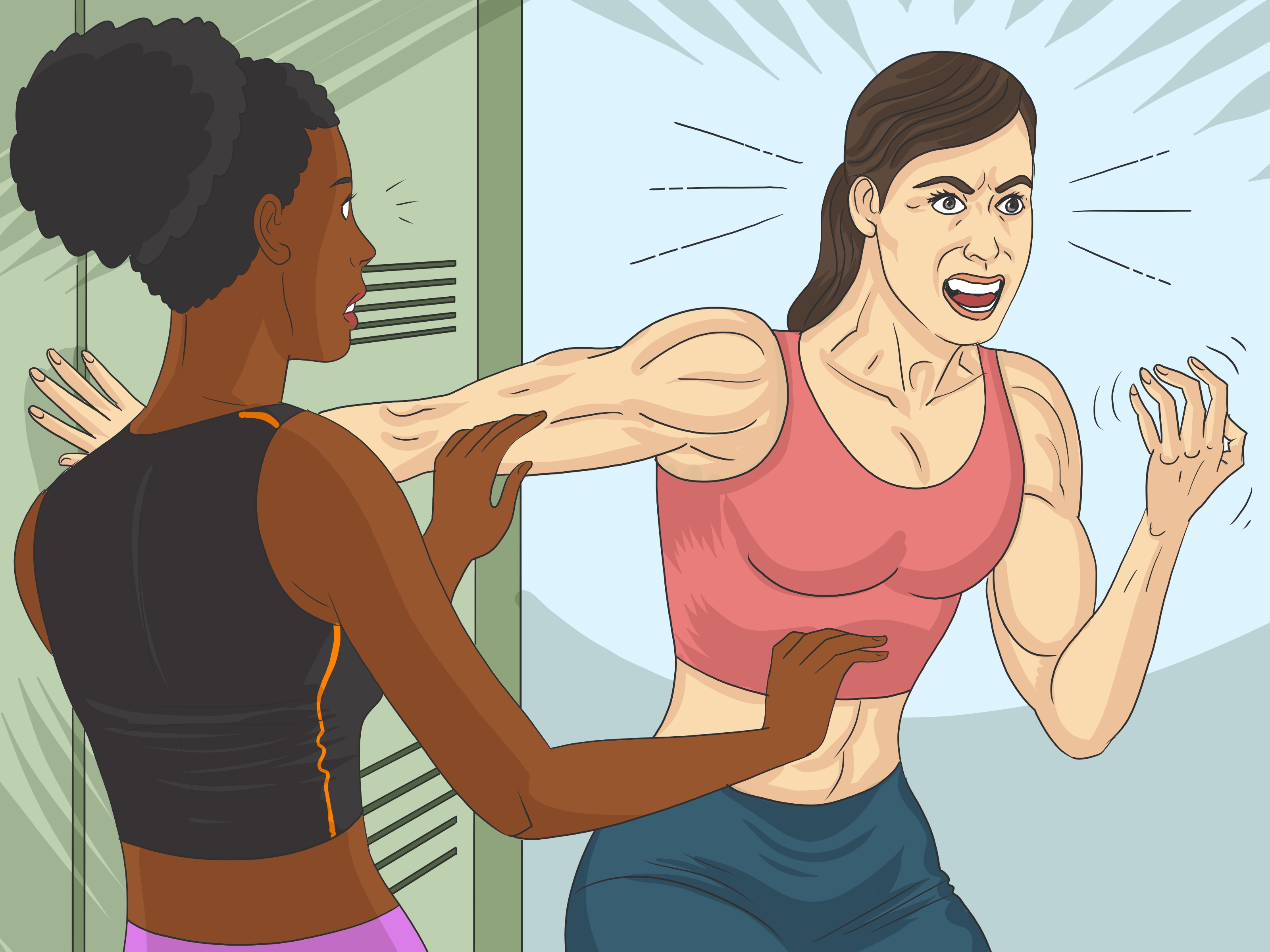
Steroid misuse has been linked to irritability, aggression, mood swings, restlessness, and in some cases manic or depressive symptoms. That does not mean every user turns into a movie villain flipping benches in a rage montage. But a noticeable change in temperament is worth paying attention to.
Friends, partners, and teammates often describe the shift as the person becoming shorter-tempered, more reactive, more suspicious, or emotionally harder to read. Some become euphoric and driven; others become edgy and hostile. If the person suddenly seems like they are living at volume level 11, hormones may be part of the story.
8. Blood pressure symptoms, headaches, or a flushed look keep showing up
Steroids can affect the cardiovascular system, and one common issue is elevated blood pressure. You usually cannot see a blood pressure number floating above someone’s head, unfortunately, but you may notice the side effects: frequent headaches, facial flushing, nosebleeds, pounding heart sensations, or getting winded in a way that seems out of sync with their muscular appearance.
A person can look fit and still be putting serious strain on the heart and blood vessels. That is one reason the “healthy-looking bodybuilder” stereotype can be misleading. Visible muscle does not guarantee invisible health.
9. In women, you notice “masculinizing” changes that do not fit their baseline
In women, anabolic steroids may cause virilization, meaning the development of more typically male characteristics. This can include a deeper voice, increased facial or body hair, acne, hair thinning at the scalp, menstrual changes, and other hormonal shifts.
This is one of the strongest steroid-related patterns because the changes can be especially noticeable when they appear together. A woman who suddenly develops severe acne, irregular periods, a lower voice, and rapid muscle gain is showing a constellation of signs that deserves medical attention. Some of these effects may not fully reverse, which makes early recognition important.
10. The signs appear in cycles: dramatic gains, side effects, then a crash
Many steroid users do not take the drugs continuously. They may cycle, stack, or pyramid them, meaning the visible effects often come in waves. During one phase, the person gets bigger, leaner, stronger, oilier, angrier, and somehow more interested in mirror lighting. Later, they may flatten out, lose size, feel low, or become less confident.
That repeated pattern matters. If the body changes, acne, mood, and energy all seem to rise and fall together over time, it is more suggestive than a single snapshot. Steroid use often leaves a timeline, not just a look.
What does not prove steroid use?
It is just as important to know what doesn’t prove anything:
- Being very muscular
- Having acne
- Training obsessively
- Using legal supplements like creatine or protein powder
- Looking lean year-round
- Having a bad attitude at the gym because the squat rack is taken again
All of those can happen without steroid use. Context matters. Combinations matter. Timing matters. Medical evaluation matters most.
If you’re worried about someone, what should you actually do?
If the concern is about a partner, friend, athlete, or family member, skip the public accusation and choose a private, calm conversation instead. Focus on health changes, not morality. Mention the specific things you’ve noticed: mood swings, chest changes, acne, fertility problems, blood pressure issues, or dramatic physical shifts. Ask whether they’re taking anything, including testosterone, injectable compounds, “research chemicals,” or gym products bought online.
If there are urgent warning signs like chest pain, shortness of breath, jaundice, severe depression, paranoia, or suicidal thinking, treat that as a medical issue right away. Steroid misuse is not just a vanity story. It can become a cardiovascular, liver, psychiatric, or reproductive health story very quickly.
The bottom line
If you want to know how to tell if someone is on steroids, the best answer is not “look for giant traps” or “check how much chicken they eat.” It is this: look for a cluster of science-backed changes. Rapid muscle gain, acne, fluid retention, gynecomastia, testicular changes, hair loss, mood swings, blood pressure symptoms, virilization in women, and cyclical body changes all raise suspicion.
But no single feature gives you certainty. Plenty of innocent explanations exist, and some people using prescribed hormones may show overlapping side effects. So think of these as evidence-based clues, not a verdict. The only reliable way to confirm steroid use is through medical assessment and, when appropriate, testing.
Experience-Based Takeaways: What People Often Notice First
In real life, people rarely figure this out because one giant clue lands in their lap with a dramatic soundtrack. It is usually more subtle than that. A girlfriend notices her partner’s shoulders and chest getting huge in what feels like record time, but what really catches her attention is the mood change. He is more impatient, more reactive, and starts breaking out across his back like he is fifteen again. A training buddy notices another lifter suddenly jumps in size and strength, then starts wearing looser shirts even though he seems more obsessed with showing off his physique. Later, the same buddy hears complaints about headaches and sees the person’s face looking puffy between “cutting” phases.
Partners often notice the less glamorous stuff first. Not the bigger arms. The weird sleep. The shorter temper. The decline in sexual function. The chest tenderness. The way confidence flips into anxiety when a cycle ends and the mirror becomes less friendly. That is one reason steroid use can stay hidden in plain sight: from a distance, people see “results.” Up close, close friends and family often see the side effects.
Coaches and teammates tend to describe a different pattern. They may notice someone recovering unusually fast, adding weight to lifts at a suspicious pace, and changing physically in bursts rather than gradually. Sometimes the athlete becomes more intense in ways that seem productive at first. More driven. More focused. More relentless. Then the downside shows up: irritability, conflict, panic about losing size, or a sudden drop in mood and confidence. The pattern starts to look less like dedication and more like chemistry with a calendar.
Women may tell a different story entirely. The first concern may not be muscle gain at all, but acne that gets much worse, periods that change, unexpected hair growth, hair thinning at the scalp, or a voice that seems lower than before. These are often frightening because they can feel personal, visible, and hard to reverse. For some, the physical changes are not the only issue. There may also be pressure from fitness culture, social media, bodybuilding circles, or aesthetics-driven competition. In those settings, steroid use can be normalized long before the health risks are taken seriously.
There is also another side to these experiences that deserves attention: sometimes people suspect steroids and turn out to be wrong. A person may have severe acne because of genetics, fast muscle growth because they are young and training well, or gynecomastia because of puberty or another health condition. Someone may look puffier because they are bulking, sleeping poorly, or dealing with stress. That is why “experience” helps you notice patterns, but it should not replace medical judgment. The most useful lesson from real-world stories is not “trust your assumptions.” It is “pay attention to clusters, ask better questions, and don’t confuse suspicion with proof.”
In other words, if you think someone may be using steroids, the smartest response is neither blind denial nor dramatic accusation. It is quiet observation, honest conversation, and respect for the fact that hormones can reshape more than muscles. They can affect mood, relationships, fertility, confidence, and long-term health. That is the part people often learn too late, usually after the “before and after” photos stop being impressive and the real-life consequences begin asking for a seat at the table.