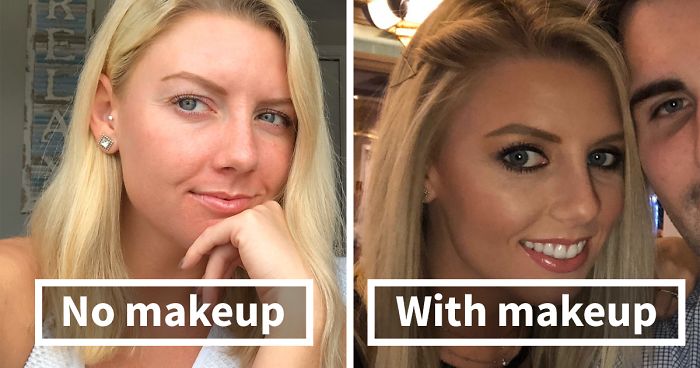
Makeup is tiny in size but strangely powerful in public. A little mascara, concealer, blush, or lip gloss can change how a woman feels when she walks out the door. Even more surprisingly, it can change how other people treat her. Many girls and women describe a noticeable difference between “makeup me” and “bare-faced me”: more compliments, more eye contact, warmer service, more attention from strangers, and sometimes more assumptions they never asked for.
The topic of girls with and without makeup is not just a beauty debate. It is a social experiment happening every morning in bathrooms, cars, office elevators, school hallways, coffee shops, and dating apps. Some women say makeup helps them feel confident and expressive. Others say it feels like a uniform they are expected to wear to be considered “put together.” And plenty land somewhere in the middle: they enjoy makeup, but they do not enjoy being treated like two different people depending on whether their eyelashes are visible from space.
Research on facial cosmetics, attractiveness bias, workplace grooming, and body image helps explain why these stories feel so familiar. Studies suggest that makeup can influence perceptions of attractiveness, competence, likability, trustworthiness, social status, and confidence. But the effect is complicated. The same makeup that earns praise in one setting can attract judgment in another. A natural look may be called polished; a dramatic look may be called too much; no makeup may be read as tired, lazy, or “not trying.” In other words, women often face a beauty rulebook that was apparently written in invisible ink.
Why Makeup Changes How People Respond
Human beings make snap judgments. We notice faces quickly, and we often attach meaning to what we see before logic has finished tying its shoes. Makeup can make features look more defined, smooth uneven skin tone, brighten the face, and create contrast around the eyes and lips. Because people often associate visual polish with health, energy, confidence, or professionalism, makeup can become a shortcut in how others interpret a woman.
This does not mean makeup magically changes a person’s worth. It means society has trained many people to read appearance as information. That is where the trouble begins. A woman wearing makeup may be treated as friendlier, more capable, more attractive, or more socially available. The same woman without makeup may be asked if she is sick, tired, upset, or “having a rough day.” Nothing about her personality changed. Her eyeliner simply clocked out.
The Halo Effect: When Looking “Good” Becomes Being “Good”
One key idea behind this difference is the halo effect. This is the tendency to assume that people with one positive trait also have other positive traits. When someone is perceived as attractive, others may also assume they are more confident, intelligent, kind, successful, or capable. Makeup can trigger this effect because it may increase perceived attractiveness or polish.
That is why a woman might notice that people smile more when she wears makeup, hold doors longer, respond faster to her emails, or take her suggestions more seriously in meetings. Is the lipstick doing the quarterly report? No. But in a biased environment, visual presentation can affect first impressions before skills have a chance to speak.
What Girls Say Happens When They Wear Makeup
Across personal stories, social media discussions, forums, and everyday conversations, many girls and women describe the “makeup version” of themselves as receiving more attention. Sometimes that attention feels flattering. Sometimes it feels exhausting. Sometimes it feels like watching society fail an open-book test.
They Receive More Compliments
One of the most common experiences is a jump in compliments. A girl who wears makeup to school after usually going bare-faced may suddenly hear, “You look so pretty today!” A woman who wears foundation and mascara to work may be told she looks “fresh” or “professional.” The compliment itself may be kind, but it can also sting a little when the hidden message sounds like: “Congratulations, your normal face has been upgraded.”
Many women say they enjoy compliments on creative makeup, such as colorful eyeliner or a bold lipstick. That kind of praise recognizes style and effort. The awkward part is when people act as if makeup is the difference between being visible and invisible.
They Get More Romantic Attention
Some girls report that they are approached more often when wearing makeup. They may receive more messages on dating apps, more stares in public, or more flirtatious comments. Makeup can highlight features that society codes as feminine or glamorous, which may increase romantic or sexual attention.
However, more attention is not always better attention. Women may feel more watched, interrupted, or judged. A red lip can be treated like a public announcement, even when the person wearing it simply liked the color. As many women know, “I wanted to look cute” is not the same as “I opened customer service for unsolicited opinions.”
They Are Seen as More Put Together
In offices, interviews, restaurants, retail settings, and formal events, makeup is often interpreted as effort. A little concealer and mascara may make someone appear more awake or polished. Some women say they receive better service, more professional respect, or warmer reactions when they wear makeup.
This is where makeup becomes less about beauty and more about social coding. For women, “professional” is often tangled with grooming expectations. A bare face may be perfectly clean and appropriate, yet still be judged as less finished. Meanwhile, men are rarely expected to contour their way into being taken seriously. Funny how that works.
What Happens When Girls Go Without Makeup
Going without makeup can feel freeing, practical, and comfortable. It can also reveal how much society expects women to decorate themselves before being considered socially acceptable. Girls and women who stop wearing makeup often notice that the reactions around them change.
People Ask If They Are Tired or Sick
This may be the most famous no-makeup experience. A woman goes bare-faced and someone immediately asks, “Are you okay?” or “Did you sleep?” The answer may be, “Yes, Brenda, this is just my face before caffeine and capitalism.”
Dark circles, redness, acne, texture, or pale lips are normal human features. But because makeup often covers or softens them, people may interpret the natural face as a sign of illness or stress. For girls who are already self-conscious, those comments can make makeup feel less like a choice and more like armor.
They Feel Less Visible
Some women say that without makeup, they are approached less often, complimented less, or treated more neutrally. That can be peaceful. It can also be painful. If someone receives noticeably less kindness when bare-faced, it may create the feeling that her natural appearance is not enough.
This experience can affect confidence, especially for teens and young women still building their identity. When attention rises and falls with makeup, it becomes easy to believe that beauty is something you apply rather than something you already have.
They Are Judged as “Lazy” or “Unprofessional”
In some workplaces or social circles, women who do not wear makeup are viewed as less polished, less ambitious, or less feminine. This is not about hygiene. It is about gender expectations. Clean skin, brushed hair, and appropriate clothing may not be enough if the culture has quietly decided that women must add visible beauty labor to look “ready.”
The unfairness is obvious. Makeup takes time, money, skill, and energy. Expecting women to wear it daily creates a beauty tax. It says, “Before you do your job, please complete this unpaid art project on your face.” Some women enjoy that art project. Others would prefer to sleep an extra fifteen minutes, which is also a valid lifestyle philosophy.
The Double Standard: Too Much, Too Little, Never Just Right
One reason this topic resonates so strongly is that women are often judged no matter what they choose. Wear no makeup, and someone may say you look tired. Wear light makeup, and someone may say you look natural, as if “natural” required nine products and a prayer. Wear bold makeup, and someone may call it attention-seeking. The target keeps moving.
This double standard is especially frustrating because makeup can be both personal and public. For one woman, it is art. For another, it is confidence. For another, it is cultural expression. For another, it is a workplace strategy. For another, it is simply not interesting. None of these choices should invite disrespect.
Natural Makeup Still Counts as Makeup
Many people praise women for looking “naturally beautiful” when they are actually wearing a carefully blended routine. Tinted moisturizer, brow gel, cream blush, mascara, lip balm, and highlighter can create a fresh look that appears effortless. The irony is that the most socially rewarded makeup is often makeup that pretends not to be makeup.
This can create unrealistic standards. If the “barely there” look still requires products, tools, lighting, and skill, then actual bare skin gets compared to a filtered version of natural. That is like comparing a homemade sandwich to a restaurant menu photo. Both may be good, but one had professional staging.
Heavy Makeup Can Bring Praise and Criticism
Bold makeup often receives admiration for creativity, glamour, or confidence. At the same time, it can trigger negative assumptions. Some people may see a dramatic look as less trustworthy, less serious, or too focused on appearance. Women may be praised for beauty but penalized for looking like they know they are beautiful.
This is one of the strangest social traps: women are encouraged to be attractive but not too attractive, confident but not too confident, stylish but not distracting, feminine but not vain. It is a narrow sidewalk, and apparently someone spilled lip gloss on it.
Makeup, Confidence, and Self-Expression
Despite the bias, makeup is not the villain. Many girls love makeup because it is fun. It can be playful, artistic, calming, and empowering. A bright eyeliner can turn a boring Tuesday into a tiny celebration. A good lipstick can make someone feel ready for a difficult conversation. A skin tint can help a person with acne feel less exposed while healing.
For many women, makeup is not about hiding. It is about choosing how to show up. It can be a form of identity, culture, creativity, or mood. The problem is not makeup itself. The problem is treating women better only when they wear it, or judging them when they do not.
Makeup as Control
One reason makeup feels powerful is that it offers control in a world where women’s appearances are constantly evaluated. A girl may not control whether someone comments on her acne, but she can decide whether to cover it. A woman may not control workplace bias, but she can choose a look that makes her feel prepared. That choice can be meaningful.
Still, control becomes complicated when it is shaped by pressure. If someone wears makeup because she enjoys it, that is freedom. If she wears it because she fears being treated poorly without it, that is not quite the same thing.
Social Media Makes the Difference More Intense
Social media has raised the stakes of appearance. Girls now compare themselves not only to classmates and celebrities but also to filtered selfies, beauty tutorials, edited videos, and “clean girl” routines that somehow require 42 steps to look like you just drank water. Online beauty culture can be inspiring, but it can also make normal skin look like a technical error.
Many young women grow up seeing faces that are blurred, lifted, brightened, and reshaped by filters. Then they look in the mirror and wonder why real pores did not get the update. This can make the difference between wearing makeup and not wearing makeup feel even larger.
Filters Have Changed What People Expect
Makeup used to compete with magazine covers. Now it competes with AI smoothing, face-altering filters, and high-resolution front cameras that behave like tiny detectives. When filtered beauty becomes normal, natural faces may be judged more harshly. A girl without makeup is not just compared to another girl with makeup; she may be compared to an edited image that no human face can sustainably match.
This is why conversations about makeup should include media literacy. Girls deserve to know that skin has texture, eyes have shadows, noses have pores, and nobody wakes up with a soft-focus lens installed in their forehead.
How Friends, Family, and Partners React
The people closest to a girl can shape how she feels about makeup. A supportive friend may say, “You look great either way.” A less thoughtful person may say, “Wow, you look so much better with makeup,” and then wonder why the room suddenly feels cold.
Family comments can be especially powerful. Parents, siblings, and relatives may unintentionally teach girls that appearance determines approval. A simple “You should put on a little makeup” before an event can sound like advice, but it may land as criticism. Partners can also affect confidence. A partner who praises only the made-up version of someone may make bare-faced moments feel vulnerable.
Compliments That Actually Help
Better compliments focus on choice and expression rather than correction. “That eye shadow color is amazing” feels different from “You finally look awake.” “I love your style today” feels different from “You look better with makeup.” The first respects creativity. The second creates a ranking system.
Girls and women do not need people to pretend makeup makes no visual difference. Of course it can. That is partly the point. But kindness should not disappear when the makeup remover comes out.
Makeup in School and Work Settings
School and work are two places where makeup expectations can become especially tricky. Teen girls may feel pressure to wear makeup to avoid teasing, look older, or fit in. Working women may feel pressure to appear polished, approachable, energetic, and professional. In both settings, the standards are often stricter for girls and women than for boys and men.
Some offices claim they do not require makeup, yet reward the appearance of women who wear it. This can happen subtly through compliments, opportunities, client-facing assignments, or assumptions about confidence. A woman may never be told, “Wear makeup,” but she may learn that wearing it smooths the road.
The Cost of Looking “Effortless”
The everyday makeup routine can add up. Products cost money. Application takes time. Removing makeup requires care. Sensitive skin may react. Acne-prone skin may need non-comedogenic products. Some women enjoy the process, but others experience it as another task in a day already packed with responsibilities.
Calling makeup “effortless beauty” is almost funny. The effort is often very present. It is just expected to be invisible.
Skin Care, Acne, and the Bare-Faced Conversation
For girls with acne, rosacea, hyperpigmentation, eczema, scarring, or sensitive skin, the makeup conversation can feel even more personal. Makeup may offer confidence, but it may also irritate the skin if products are not chosen carefully. Dermatology guidance often recommends gentle cleansing, moisturizer, sunscreen, and acne-friendly or oil-free products when needed.
It is important not to shame girls for covering skin conditions. It is also important not to imply they must cover them to be accepted. Acne is common. Texture is common. Redness is common. A face is not a failure because it looks like it belongs to a living person.
Healthy Skin Is Not the Same as Perfect Skin
One useful shift is to separate skin health from skin perfection. Healthy skin can still have pores, breakouts, scars, lines, and discoloration. Makeup can be part of a routine, but it should not be treated as a moral requirement. A girl who wears concealer is not insecure by default. A girl who does not wear concealer is not careless. Both are simply making choices.
Why Some Girls Stop Wearing Makeup
Some women intentionally stop wearing makeup for a period of time to reset their relationship with their appearance. They may want to get comfortable seeing their bare face, save money, simplify mornings, or challenge the idea that they owe the world decoration.
The first few days can feel strange. People may comment. The mirror may feel unfamiliar. But many women say that after a while, their bare face begins to feel normal again. They stop seeing every blemish as an emergency. They realize that most people are too busy worrying about their own lives to study anyone else’s pores. This realization is deeply freeing and slightly insulting to the ego, but mostly freeing.
Why Some Girls Keep Wearing Makeup
Other women hear the “go bare-faced” message and think, “That is nice, but I like my eyeliner.” That is valid too. Empowerment does not require throwing away your blush. The goal is not to replace one rule with another. Girls should not be told they must wear makeup, and they should not be told they must reject it to prove confidence.
The healthiest approach is choice. Wear makeup because it delights you, steadies you, expresses you, or simply matches your outfit. Skip it because you are tired, comfortable, busy, uninterested, or happy as you are. The face is yours. Society may have comments, but society also once thought low-rise jeans were a universal solution. Society is not always qualified.
How to Treat Girls the Same With or Without Makeup
The solution starts with awareness. Notice whether you compliment women only when they look polished. Notice whether you ask bare-faced friends if they are tired. Notice whether you equate makeup with effort and no makeup with neglect. These habits are common, but they can be changed.
If someone wears makeup, appreciate the artistry without implying she needed improvement. If someone does not wear makeup, do not treat her natural face as a medical mystery. In workplaces, evaluate performance rather than polish. In schools, avoid appearance-based teasing or ranking. In relationships, make sure affection does not depend on foundation coverage.
Better Things to Say
Instead of saying, “You look better with makeup,” try “That makeup look is beautiful.” Instead of “You look tired,” try “How are you doing today?” Instead of “You should wear makeup more often,” try saying absolutely nothing and enjoying the peaceful sound of personal boundaries.
Real-Life Experiences: With Makeup vs. Without Makeup
Many girls describe the difference as subtle at first, then impossible to ignore. One college student might wear makeup to class and notice that people sit closer, start conversations, or ask to borrow notes. The next week, she goes bare-faced in a hoodie and feels like background furniture. Nothing about her intelligence changed, but the room’s reaction did.
A young employee may notice that customers are warmer when she wears mascara and lipstick. They say please and thank you. They make small talk. They call her “sweetheart,” which is sometimes friendly and sometimes a tiny red flag wearing cologne. On no-makeup days, the same customers may be shorter, less patient, or less likely to smile. She learns that service work can turn a woman’s face into part of the product, even when it should not.
Another woman may experience the opposite. When she wears bold makeup, she receives more attention but also more judgment. Strangers stare. Coworkers comment. Friends ask who she is trying to impress. Without makeup, she feels calmer and more anonymous. For her, bare-faced life is not rejection; it is relief. She likes knowing that she can buy cereal without accidentally hosting a beauty review panel in aisle five.
Some girls say makeup changes how other women treat them too. A polished look may bring compliments from friends, but it may also bring competition or suspicion in certain groups. Research and personal stories both suggest that beauty can create social rewards and social penalties. A girl may be admired for looking good and criticized for looking too good. That mixed reaction can make beauty feel less like a gift and more like a group project where nobody agreed on the instructions.
For teens, the difference can be sharper because school environments often magnify appearance. A girl who experiments with makeup may suddenly be called pretty by classmates who ignored her before. That attention can feel exciting, but it can also raise an uncomfortable question: “Were they not seeing me before?” If she stops wearing makeup, she may fear losing status. This is how beauty pressure sneaks innot always through cruelty, but through inconsistent kindness.
On dating apps, women often report that makeup changes match rates and message tone. A glam photo may attract more likes but also more shallow comments. A bare-faced photo may attract fewer messages but sometimes more grounded ones. Neither result proves that one version is better. It shows that online dating often turns appearance into a sorting system before personality enters the chat.
There are also women who find that going without makeup strengthens their confidence over time. At first, they may feel exposed. Then they begin to recognize their face in all conditions: sleepy, happy, stressed, sunlit, bare, dressed up, breaking out, glowing. They stop treating makeup as a shield and start treating it as an option. That shift can be powerful.
Others build confidence through makeup itself. They learn technique, color theory, skin care, and creativity. They enjoy transforming their look. They feel more themselves with winged liner than without it. For them, makeup is not a mask; it is a microphone. It helps broadcast a mood that was already there.
The most important lesson from these experiences is not that makeup is good or bad. It is that girls notice how differently the world responds. They notice the compliments, the assumptions, the silence, the extra attention, the criticism, and the sudden concern for their sleep schedule. They notice because they are living inside the comparison every day.
A fairer world would not require girls to perform beauty to receive warmth. It would allow makeup to be fun, expressive, professional, dramatic, minimal, occasional, or completely absent. It would teach people to see the person first and the products second. Until then, girls will keep comparing notes, and those notes tell a clear story: makeup may change a face, but other people’s reactions reveal the culture around it.
Conclusion
The conversation around girls being treated differently with and without makeup is really a conversation about beauty standards, social bias, confidence, and choice. Makeup can be joyful, artistic, and empowering. It can also expose unfair expectations that women should look polished, pretty, and pleasant at all times.
Girls and women deserve consistent respect whether they are wearing a full glam look, a little tinted moisturizer, or nothing but sunscreen and hope. Compliment the creativity. Respect the bare face. Question the bias. And remember: a woman’s value does not wash off with cleanser.