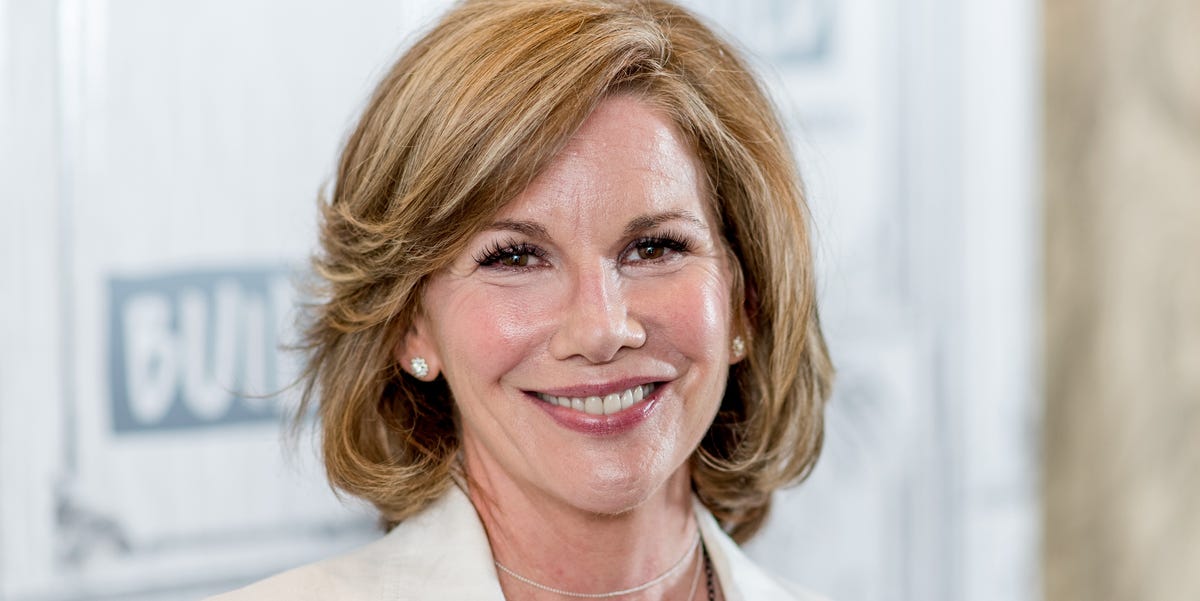
Melissa Gilbert spent much of her life inside the bright, noisy machinery of Hollywood. She began acting as a toddler, became a household name as Laura Ingalls Wilder on Little House on the Prairie, grew up under studio lights, and spent decades working in television, film, theater, advocacy, and public life. In other words, Los Angeles was not just where she lived. It was part hometown, part office, part mirror, and occasionally part pressure cooker.
So when fans hear that Melissa Gilbert left LA, the obvious question is: why would a star so deeply tied to Hollywood walk away from the place that made her famous? The answer is not a dramatic “slam the door and cue the thunderstorm” celebrity exit. It is more human than that. Gilbert has explained that she needed space to age honestly, feel healthy, reconnect with nature, and stop living under the constant expectation that women in entertainment should somehow look exactly the same forever. Spoiler alert: time does not take notes from casting directors.
Her move was not about rejecting acting, fame, or the fans who loved her as Half-Pint. It was about choosing a life where she could breathe. First came Michigan after her 2013 marriage to actor and director Timothy Busfield. Later came New York City, then a rustic home in the Catskills that became the center of her memoir Back to the Prairie. Along the way, Gilbert traded parts of the Hollywood routine for gardening, chickens, home renovation, community, and a more relaxed version of herself.
The Short Answer: Melissa Gilbert Left LA to Age on Her Own Terms
The simplest reason Melissa Gilbert left Los Angeles is that she did not feel the city was a healthy place for her to grow older. She has spoken openly about how LA’s entertainment culture can make aging feel like a problem to be solved instead of a natural stage of life. For an actress who had been watched since childhood, that pressure was not theoretical. It was personal, daily, and exhausting.
Gilbert has described Los Angeles as a place where everyone seemed to be looking, comparing, evaluating, and competing. That kind of environment can be hard on anyone, but it can be especially intense for women in show business. The industry often rewards youth, thinness, smooth skin, and a carefully managed public image. In that ecosystem, getting older can feel less like gaining wisdom and more like committing a minor career crime. No wonder she wanted a different zip code.
After leaving LA, Gilbert said she stopped chasing the version of herself that the business seemed to prefer. She let her hair go gray, stepped away from cosmetic routines she no longer wanted, focused more on physical and emotional health, and began embracing age as something earned rather than something to battle. That shift became a major theme of her public life, her writing, and her lifestyle brand Modern Prairie.
From Child Star to Hollywood Veteran
To understand why leaving LA mattered, it helps to understand how long Melissa Gilbert had been living inside the Hollywood system. She was cast as Laura Ingalls Wilder when she was only nine years old. Little House on the Prairie became one of the defining family dramas of American television, and Gilbert’s performance made her one of the most recognizable young actresses of the 1970s and early 1980s.
Playing Laura was not just another job. It shaped her identity in the public imagination. Fans watched her grow up on screen, cry, laugh, run through fields, argue with Nellie Oleson, and learn life lessons from Pa Ingalls. That role gave Gilbert a lifelong connection to viewers who saw her as part of their own childhood memories. It also meant she experienced fame before most kids had mastered algebra, which is both impressive and mildly unfair to algebra.
After Little House, Gilbert continued acting in television movies, series, stage productions, and voice work. She also served as president of the Screen Actors Guild from 2001 to 2005, proving she was more than a former child star. She was a working professional with leadership experience in the entertainment industry. But even with that record, the pressure of being a woman aging in Hollywood did not simply disappear.
Why LA Felt Like the Wrong Place to Grow Older
Gilbert has been blunt about the emotional cost of trying to stay young in a city built around image. She has described a time when she was still dyeing her hair red, trying to maintain a very small size, and feeling disconnected from who she really was becoming. That kind of pressure can turn self-care into self-surveillance. Suddenly, the mirror is not just a mirror. It is a tiny unpaid casting agent with terrible manners.
Her point was not that Los Angeles is bad for everyone. Many people thrive there. It is a creative city full of artists, families, entrepreneurs, and dreamers. But for Gilbert, LA had become too closely tied to an idea of beauty and success that no longer fit. She did not want to spend the next chapter of her life fighting biology, hiding change, or apologizing for being older.
That distinction matters. Gilbert did not simply leave “Hollywood” as an industry. She left Los Angeles as an environment. She still acts. She still connects with fans. She still participates in projects that interest her, including a guest role on Hallmark’s When Calls the Heart. What changed was the center of gravity in her life. She no longer wanted the business to define her daily rhythm, her body image, or her sense of worth.
The Michigan Chapter: A First Step Toward Quiet
In 2013, the same year she married Timothy Busfield, Gilbert moved away from Los Angeles and began a quieter life in Michigan. Busfield, also an actor and director, had roots there, and the change gave Gilbert something she had not felt in a long time: distance. Not just physical distance from LA, but emotional distance from the routines and expectations that had shaped her for decades.
Michigan became a reset button. Away from the constant entertainment-industry gaze, Gilbert began dropping habits that were tied to the old pressure. She stopped trying to freeze herself in an earlier version of her appearance. She focused on health, comfort, and authenticity. For many readers, that may sound familiar. Sometimes the biggest life changes do not begin with a dramatic announcement. They begin when you realize you no longer want to spend two hours getting ready to feel like somebody else.
That chapter also helped Gilbert reconnect with nature. She has said that Busfield introduced her to rural Michigan, and that experience helped awaken a love of the outdoors that had always been part of her. It is a charming full-circle detail: the girl who became famous on a television prairie eventually discovered that she genuinely loved the real-world version, minus the script supervisor and possibly with better plumbing.
The Catskills and “The Cabbage”
After Michigan, Gilbert and Busfield moved to New York City in 2018, then purchased a rustic property in upstate New York in 2019. Their Catskills home became affectionately known as “The Cabbage,” a blend of cabin and cottage. It was not exactly a glossy celebrity mansion tour waiting to happen. The home needed serious work, and that was part of the point.
In Back to the Prairie: A Home Remade, A Life Rediscovered, Gilbert writes about restoring that house and building a life around peace, quiet, nature, gardening, animals, and hands-on effort. The memoir presents the move not as an escape fantasy but as a messy, funny, sometimes difficult reinvention. There were power tools, repairs, chickens, weather, wildlife, and the kind of home projects that make a person question every confident sentence ever spoken at a hardware store.
The Catskills gave Gilbert a new setting for a new identity. Instead of power lunches, there were vegetables. Instead of constant beauty maintenance, there were DIY projects. Instead of trying to look untouched by time, she found meaning in living more fully inside time. That is the emotional heart of her story: she was not running away from life. She was running toward a life that felt more real.
How Little House on the Prairie Still Connects to Her New Life
It would be too easy to say that Melissa Gilbert became Laura Ingalls again in real life. She did not move to the Catskills to cosplay the 1870s. There is no need to churn butter every morning unless one has very specific breakfast goals. But the values associated with Little House on the Prairie do echo through her later choices: simplicity, resilience, family, nature, work, and community.
Gilbert has often acknowledged the deep impact of the show. She grew up surrounded by cast members, animals, outdoor sets, and stories about survival and togetherness. The series remained beloved because it gave viewers a sense of warmth and moral clarity, even when its storylines were emotionally intense. In her adult life, Gilbert seems to have returned not to the character of Laura, but to the feeling of steadiness that the show represented for so many people.
Her Catskills life is modern, not nostalgic. She is not rejecting technology or pretending the world is simple. Instead, she appears to be choosing what deserves her attention. That is a very modern struggle. Many people are not famous, but they still know what it feels like to be watched, compared, and pushed to perform. Social media has turned half the planet into a tiny version of Los Angeles, complete with filters and unsolicited opinions. Gilbert’s story resonates because it suggests that stepping back can be an act of strength.
Modern Prairie: Turning a Personal Shift Into a Community
Gilbert’s move away from LA did not end her public work. It redirected it. Alongside Nicole Haase, she co-founded Modern Prairie, a lifestyle brand and community focused especially on women in midlife and beyond. The project celebrates creativity, connection, home, heritage, and the idea that women should feel seen and valued at every stage of life.
This is important because Gilbert’s story is not just about leaving a city. It is about challenging a cultural message. The phrase “anti-aging” is everywhere, usually attached to creams, treatments, routines, and promises that time can be negotiated with if you purchase the correct serum. Gilbert has pushed back against that mindset. Her view is refreshingly direct: aging is not the enemy. It is evidence that you are still here.
Modern Prairie extends that idea into products, workshops, community events, and storytelling. It is not merely a celebrity side business with a cute name. It reflects Gilbert’s larger mission: helping women feel less alone as they move through major transitions such as menopause, empty nesting, grief, reinvention, creativity, and self-acceptance. In other words, it is a place for women who have lived enough life to know that matching throw pillows are nice, but feeling understood is better.
Leaving LA Did Not Mean Leaving Acting
One misconception about Melissa Gilbert leaving Los Angeles is that she completely abandoned entertainment. That is not accurate. She has continued to work selectively and remains connected to television audiences. Her appearance on Hallmark’s When Calls the Heart brought her back into a frontier-flavored world, which felt fitting to many fans who still associate her with prairie storytelling.
This selective return shows the difference between walking away from unhealthy pressure and walking away from a craft. Gilbert did not stop being an actress. She simply stopped organizing her entire life around the demands of being seen as a Hollywood actress. That distinction is powerful. Work can remain meaningful even when it no longer owns the whole calendar, the whole closet, and the whole nervous system.
For longtime fans, that may be the most satisfying part of her evolution. She is not trapped in the past, yet she honors it. She is not chasing youth, yet she is still creative. She is not living in Los Angeles, yet she remains part of the entertainment conversation. Her career has become less about proving she still belongs and more about choosing where she wants to show up.
What Her Story Says About Hollywood and Women
Melissa Gilbert’s decision points to a larger issue in entertainment: women are often expected to age without appearing to age. They are encouraged to look natural, but not too natural; youthful, but not desperate; confident, but not difficult; accomplished, but still somehow available for reinvention according to other people’s standards. That is a lot of homework, and nobody even offers extra credit.
Hollywood has changed in some ways. More actresses are speaking openly about ageism, cosmetic pressure, menopause, body image, and the right to appear on screen as fully human adults. Streaming platforms, cable networks, independent projects, and audience demand have created more opportunities for older performers than the industry once allowed. Still, the pressure has not vanished. Gilbert’s honesty matters because she names the emotional experience behind the headlines.
Her story also reframes success. In a celebrity culture obsessed with comeback narratives, the real victory may not be returning to the red carpet looking unchanged. It may be building a life where you no longer need the red carpet to confirm your value. Gilbert’s Catskills chapter suggests that reinvention can look like soil under your fingernails, a gray strand of hair, a repaired room, a quiet morning, or a business built around community rather than competition.
Experiences Related to Melissa Gilbert’s Choice to Leave LA
Melissa Gilbert’s decision feels relatable because many people, famous or not, eventually face a version of the same question: “Am I living in a place, job, routine, or identity that still fits me?” Most of us will not leave behind a Hollywood career, a childhood role beloved by millions, or a city where every restaurant entrance feels like a low-budget audition. But plenty of people understand the urge to step away from environments that reward performance over peace.
One experience that connects strongly to Gilbert’s story is the feeling of outgrowing a former self. This can happen after a divorce, a career change, a health scare, becoming a parent, watching children grow up, losing someone, or simply waking up one morning and realizing the old costume is itchy. Gilbert has spoken about reaching a point where trying to look and live a certain way no longer felt authentic. That moment is not weakness. It is self-recognition. Sometimes the bravest sentence is not “I can handle this.” It is “I do not want this anymore.”
Another related experience is the pressure to stay visually acceptable in a culture that constantly ranks appearances. While Hollywood magnifies that pressure, social media has exported it everywhere. People compare homes, faces, vacations, meals, outfits, bodies, relationships, and even relaxation routines. A quiet life can start to look suspiciously unproductive. Gilbert’s move offers a counternarrative: a slower life can be rich, active, creative, and deeply meaningful. It does not have to be a retreat. It can be a renovation of priorities.
There is also the experience of rediscovering practical joy. In Back to the Prairie, the pleasures are not glamorous in the usual celebrity sense. They include fixing a house, living with nature, growing food, and raising chickens. These activities can be inconvenient, muddy, and occasionally ridiculous. Anyone who has ever tried a “simple” home project knows that simplicity often arrives after three trips to the hardware store and one dramatic conversation with a crooked shelf. Yet that kind of work can make life feel grounded. It gives the body something real to do and the mind something useful to solve.
Gilbert’s story also speaks to the experience of finding love and partnership later in life. Her marriage to Timothy Busfield became part of her relocation story because their shared desire for a different rhythm helped make the move possible. Major life changes are easier when someone close to you understands the goal. A partner, friend, sibling, or community can help turn “I need out” into “Here is what we are building instead.” For Gilbert, the new life was not just about location. It was about companionship, shared humor, and a household shaped by mutual choice.
Finally, her experience highlights the importance of letting identity evolve. Fans may always see Melissa Gilbert as Laura Ingalls, and she seems to cherish that connection. But she is also an author, entrepreneur, advocate, wife, mother, grandmother, performer, and woman who decided that aging was not a crisis. That layered identity is the real lesson. People are allowed to be more than the role that made them known, more than the city that shaped them, and more than the expectations that once kept them polished. Gilbert left LA because she wanted room to become fully herself. That is not quitting. That is editing the script.
Conclusion: Why Melissa Gilbert’s LA Exit Still Matters
Melissa Gilbert left Los Angeles because the city’s entertainment culture made it difficult for her to age naturally and feel authentically herself. After decades in the public eye, she chose a quieter path that began in Michigan and eventually led to a rustic Catskills home, a memoir, a lifestyle community, and a more peaceful relationship with time.
Her story is compelling because it is not just a celebrity relocation tale. It is a thoughtful example of what happens when someone decides that success should feel healthy, not performative. Gilbert did not erase her Hollywood past. She carried the best parts with her: storytelling, resilience, humor, and the prairie spirit that made viewers love her in the first place.
In the end, the reason Melissa Gilbert left LA is also the reason many people make major life changes. She wanted to stop fighting herself. She wanted a home that felt like a home, not a stage. She wanted to age, create, love, work, and live without asking permission from an industry obsessed with youth. And honestly, that may be the most prairie thing she has ever done.