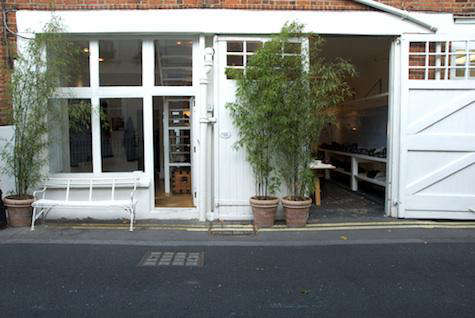
London is hardly short on shops that know how to make an entrance. There are glossy flagships with marble floors, department stores that feel like small countries, and boutiques where the lighting alone appears to have its own creative director. Then there is Egg.
Tucked away at 36 Kinnerton Street in Belgravia, Egg Trading occupies a very different corner of London’s retail universe. The shop became famous not by shouting louder than everyone else, but by lowering its voice. Its appeal comes from simple clothing, tactile natural fabrics, handmade objects, ceramics, glass, and an almost stubborn resistance to disposable fashion.
The original boutique was founded by Maureen Doherty in 1994 in a former dairy. Over the decades, Egg developed a cult following among designers, artists, architects, fashion insiders, and shoppers who prefer clothes that look better after being lived in rather than after being photographed for exactly nine seconds on social media.
Today, Egg remains one of London’s most distinctive independent shopping destinations. It is part fashion boutique, part gallery, part craft cabinet, and part lesson in how a retail space can have a strong personality without covering every available surface with branding.
Why Egg in London Is Not Your Typical Fashion Boutique
Walk into many luxury stores and you immediately understand the hierarchy: important handbag here, important shoe there, intimidating object under spotlight, customer quietly wondering whether touching anything will trigger an alarm.
Egg approaches shopping differently.
The atmosphere has traditionally been understated and almost domestic. Clothing may hang simply rather than being arranged in aggressively merchandised displays. Ceramics, glassware, textiles, and other objects sit alongside garments as if they naturally belong together. The result feels closer to visiting the studio of an unusually disciplined collector than entering a conventional designer boutique.
That restraint is central to the Egg aesthetic. The emphasis is not on logos or obvious status signals. Instead, attention moves toward shape, proportion, texture, color, construction, and how a garment behaves when someone actually wears it.
In other words, Egg is interested in clothes doing their job. Revolutionary concept, apparently.
The Story Behind Egg Trading
Maureen Doherty and a Different Approach to Fashion
Egg was created by Maureen Doherty, whose career connected her with some of the most interesting corners of modern fashion and design. Before establishing the shop, Doherty worked extensively in fashion retail and had a significant professional relationship with Japanese designer Issey Miyake.
That experience helps explain Egg’s appreciation for volume, movement, unconventional proportion, craftsmanship, and clothing that does not depend on tightly following the outline of the body.
Doherty opened Egg on Kinnerton Street in 1994. The building had previously been a dairy, and remnants of its practical past helped shape the store’s identity. Rather than erasing every historical imperfection, the space celebrated simplicity and usefulness.
Egg gradually became known not simply as a place to buy clothing but as a carefully edited world. Doherty brought together fashion, ceramics, textiles, glass, furniture, and art with an unusually personal eye. She also supported makers and artists, including ceramicists whose work fit naturally into the store’s quiet environment.
Doherty died in 2022, but the shop and brand have continued, preserving an approach to clothing and objects that she spent decades developing.
A Store Built Around Longevity
Egg’s philosophy runs almost directly against rapid trend cycles. The brand produces two principal clothing collections a year rather than chasing an endless sequence of micro-seasons.
Its own description of the design process emphasizes research rather than trend forecasting. Inspiration can come from books, photographs, traditional uniforms, workwear, and practical garments from different cultures.
A French gardener’s jacket might prove more interesting than whatever happens to be trending on an app this afternoon. A Rajasthani milkman’s uniform can influence proportion or construction. The point is not to copy historical clothing but to study why useful garments have endured.
What the Clothes at Egg Actually Look Like
Anyone expecting bodycon dresses, giant monograms, or garments requiring an engineering team to put on may be surprised.
Egg is associated with loose silhouettes, generous dresses, jackets, coats, trousers, shirts, knitwear, and layered pieces. Garments are often designed to be tied, wrapped, or buttoned, giving the wearer some freedom in how a piece sits on the body.
The silhouette can be sculptural without being theatrical. A voluminous coat may create a dramatic shape, but it is still meant to be worn. An oversized shirt can feel artistic while remaining pleasantly useful for activities such as walking, working, traveling, or eating lunch without negotiating a peace treaty with your waistband.
Natural Fabrics Are Part of the Experience
Texture is crucial to Egg’s identity. Seasonal collections have traditionally made extensive use of materials such as cotton, linen, silk, wool, and cashmere.
Warm months bring lighter linens, cottons, and fine silks. Cold-weather collections become denser and more layered, with wool, cashmere, and richer fabrics adding warmth.
This emphasis on fabric means Egg clothes often make more sense in person than they do in a flat product photograph. You notice weight, movement, softness, weave, and the slightly irregular qualities that give natural materials character.
Clothes That Refuse to Obsess Over Age
One of Egg’s most interesting qualities is the absence of an obvious target age.
The brand has long described its clothing as something that can belong to men or women, younger or older wearers, and people of different body types. That does not mean every piece magically fits every person. It means the design philosophy is less interested in telling shoppers what someone of a particular age is supposedly allowed to wear.
A linen coat does not care whether you are 28 or 68. Frankly, the coat has other things to worry about.
Egg Is About More Than Clothing
The original Shopper’s Diary appeal of Egg came partly from the way clothing shared space with beautifully made household goods. Over the years, the shop has featured ceramics, linens, handblown glass, textiles, and unusual functional objects.
That mix is essential because it demonstrates a broader philosophy: useful things can also be beautiful, and beautiful things do not have to become precious museum pieces that nobody is allowed to touch.
Earlier displays at Egg have included handmade cups and bowls, Venetian-style blown glass, Indian cotton textiles, and ceramics by accomplished makers. Doherty also developed a more formal collection of objects for the home, reinforcing the connection between what we wear and what we live with.
Ceramics, Glass, and Everyday Objects
A drinking glass becomes interesting when its shape, weight, imperfections, and maker are considered. A bowl becomes more than a bowl when someone has clearly thought about the curve of the rim and the relationship between the object and the hand.
This attention to everyday details is one reason design-minded visitors enjoy Egg even when they are not shopping for clothes.
You may enter thinking about a jacket and suddenly become emotionally invested in a ceramic cup. Retail is dangerous that way.
The Interior: A Lesson in Quiet Retail Design
Egg’s Kinnerton Street location has always been central to its mythology. The shop occupies an old building rather than a polished shopping-center unit, and the contrast between modest architecture and sophisticated merchandise gives the space much of its charm.
Historically, whitewashed surfaces, surviving dairy details, simple stairs, sparse displays, and restrained arrangements created a setting that allowed individual objects to breathe.
The store has also evolved architecturally. Doherty collaborated with architect Jonathan Tuckey on neighboring spaces, including work connected with an adjoining former stable and living or working areas.
The important lesson is not that every shop should become aggressively minimalist. Emptying a room and placing one sock in the middle does not automatically create cultural significance.
Rather, Egg demonstrates the power of editing. When fewer objects compete for attention, material, craftsmanship, and proportion become easier to see.
Why Egg’s Slow Approach Feels More Relevant Now
Egg was practicing a slower form of retail long before phrases such as “slow fashion,” “buy less, buy better,” and “investment wardrobe” became everyday marketing language.
Its model encourages shoppers to develop relationships with garments over time. Natural fabrics soften. Linen wrinkles. Wool develops character. A frequently worn jacket becomes associated with particular journeys, dinners, workdays, rainy afternoons, and perhaps one regrettable encounter with airport coffee.
The intention is not for every garment to appear permanently untouched. Egg’s clothes are supposed to become personal.
That concept offers an appealing alternative to fashion built around constant replacement. A versatile coat that remains relevant for years may provide greater practical value than several trend-driven pieces that quickly feel dated.
Timeless Does Not Have to Mean Boring
There is an unfortunate assumption that “timeless clothing” means beige trousers, navy sweaters, and a lifetime ban on having fun.
Egg proves otherwise.
Its clothes can use unexpected volume, unusual layering, bold proportions, rich colors, and playful combinations. What makes them relatively timeless is not a lack of personality. It is the fact that the personality does not depend entirely on a specific season’s trend.
Shopping Egg in London: What to Look For
For first-time visitors, Egg rewards slower browsing. Instead of walking through with a mental checklist of products, pay attention to how pieces interact.
1. Start With the Fabric
Touch the linen, wool, cotton, silk, or cashmere where appropriate. Notice thickness and drape. Egg’s approach is strongly material-driven, so fabric often tells you more than a hanger does.
2. Try the Unexpected Shape
A voluminous garment can look intimidating when hanging flat. Put it on. Move around. Roll the sleeves. Change how it is wrapped or buttoned.
Some of Egg’s most characteristic pieces make sense only after they begin interacting with a human body.
3. Look Beyond Fashion
Do not ignore the objects. Small ceramics, textiles, glass, or other handmade pieces often communicate the store’s philosophy as clearly as the clothing.
4. Think in Years, Not Weekends
Instead of asking, “What will I wear this with Saturday?” ask, “Would I still want this in five years?”
That question changes the entire shopping process.
Finding Egg on Kinnerton Street
Egg is located at 36 Kinnerton Street in Belgravia, close to the Knightsbridge area of central London. Its setting is part of the fun: Kinnerton Street is quieter and more residential in character than the city’s grand luxury-shopping avenues.
Visitors accustomed to searching for enormous illuminated logos may need to recalibrate their retail radar. Egg’s relative discretion is intentional.
The surrounding neighborhood makes the store easy to combine with a design-focused walk through Belgravia and Knightsbridge. Rather than treating Egg as a frantic shopping stop between ten other stores, give it enough time to absorb the space.
A Shopper’s Experience: Spending Time at Egg in London
The most satisfying way to experience Egg is to forget, temporarily, how modern shopping normally works.
Imagine turning off one of London’s busier streets and moving onto Kinnerton Street. The traffic and retail noise begin to fade. There is no giant commercial spectacle announcing that you have arrived at an internationally admired boutique. Instead, you find a storefront that feels unusually calm.
That first contrast is memorable. London luxury shopping often performs wealth with remarkable enthusiasm. Egg behaves as though it has nothing to prove.
Once inside, the instinct to scan rapidly for recognizable products begins to disappear. There may be a coat hanging almost by itself, a group of shirts, a tactile piece of linen, a ceramic vessel, or glassware positioned with the restraint of a still-life composition.
You slow down because the store gives you permission to slow down.
The clothing deserves that patience. A generously cut dress may look almost abstract on its hanger. Put it on and the geometry changes. Fabric falls away from the body, sleeves shift when you move, and what seemed enormous begins to look deliberate.
This is the point where Egg becomes particularly enjoyable for shoppers who have spent years being told that flattering clothing must make the body appear narrower, taller, younger, curvier, straighter, or somehow more obedient.
Egg’s response is essentially: perhaps the fabric could simply be beautiful.
Another pleasure is discovering that fashion is only part of the story. Your eye might move from a jacket to a bowl, from a linen garment to a piece of glass. Instead of creating separate departments, the combination suggests a consistent way of living with things: choose carefully, appreciate materials, and keep what you love.
There is also an educational quality to the experience. After spending time in a space like Egg, you may begin noticing construction more carefully elsewhere. Is that inexpensive shirt actually pleasant to wear? Will that synthetic sweater look exhausted after four washes? Does that chair need seventeen decorative details, or would one strong proportion have been enough?
Good shops can change the way you see other shops.
Of course, a visit may also test your budget. Handmade goods, natural fabrics, specialist production, and small-scale fashion generally do not come with fast-fashion price tags. Egg is a place where selective purchasing makes sense.
Rather than leaving with five bags, you might leave with one garment, one object, or merely an idea about how you want to dress. Oddly enough, that can feel more satisfying than a conventional shopping spree.
If you do buy a piece, the real experience begins later. Linen softens. Wool settles into your routine. A coat becomes the thing you automatically reach for before leaving home. A ceramic cup migrates toward the front of the kitchen shelf because it feels better in your hand than the other twelve cups you mysteriously own.
That is perhaps the best explanation of Egg’s lasting appeal. The store does not focus exclusively on the thrill of buying something new. It is interested in what happens after the purchase, when an object stops being merchandise and becomes yours.
Is Egg Worth Visiting?
Yes, particularly if your idea of interesting shopping involves independent design, natural fabrics, craftsmanship, ceramics, slow fashion, or unusual retail interiors.
Someone hunting for recognizable logos and seasonal statement pieces may find Egg almost aggressively subtle. But shoppers who appreciate Yohji Yamamoto, Issey Miyake, Comme des Garçons, traditional workwear, Japanese design principles, handmade ceramics, or beautifully aged textiles are likely to understand the appeal immediately.
Egg is also worth visiting simply as a study in curation. Few stores demonstrate so clearly that retail atmosphere depends not only on what is displayed but also on what is deliberately left out.
Conclusion: The Quiet Magic of Egg in London
Egg has survived decades of dramatic changes in fashion because it has never seemed particularly interested in chasing fashion in the first place.
From its beginnings in Maureen Doherty’s converted dairy on Kinnerton Street to its continuing role as a destination for clothing and objects, Egg represents an unusually consistent idea: make fewer things, make them thoughtfully, choose materials carefully, and allow people to develop their own relationship with what they wear.
That philosophy feels increasingly refreshing in an era when shopping can resemble an endless conveyor belt of new arrivals.
Visit Egg and you may find a coat, a linen shirt, a ceramic bowl, or a piece of glass. More importantly, you may leave thinking differently about the things you already own.
And for a shop with such a small sign, that is a fairly large accomplishment.
Note: Egg continues to operate at 36 Kinnerton Street, London SW1X 8ES. Collections, objects, availability, and opening arrangements can change, so travelers should confirm current details directly with the shop before visiting.