Some pillows are little more than rectangular bags of fluff with excellent marketing departments. Harvester Sleeping Pillows were designed with a more unusual idea: blend luxurious goose down with silky milkweed fibers, wrap the filling in natural cotton, and create a pillow that feels light, breathable, and pleasantly moldable.
The Harvester name originally belonged to an Ogallala Comfort pillow collection. It should not be confused with decorative pillows featuring tractors, wheat fields, or suspiciously cheerful farm equipment. This was a premium sleeping pillow made for people interested in natural materials, customizable firmness, and down-like comfort without the heavy, overstuffed feel of some traditional luxury pillows.
Although the Harvester line is now mainly found in archived product listings, its construction remains interesting. It also provides a useful case study in how fill power, firmness, sleeping position, fabric, allergies, and responsible sourcing affect the performance of a pillow.
What Are Harvester Sleeping Pillows?
Harvester Sleeping Pillows were produced by Ogallala Comfort Company, a Nebraska-based bedding manufacturer known for its proprietary Hypodown blend. The signature filling combines 70% white goose down with 30% milkweed fiber, sometimes described in older listings as Syriaca clusters. Ogallala continues to use this 70/30 blend in its current pillow and comforter collections.
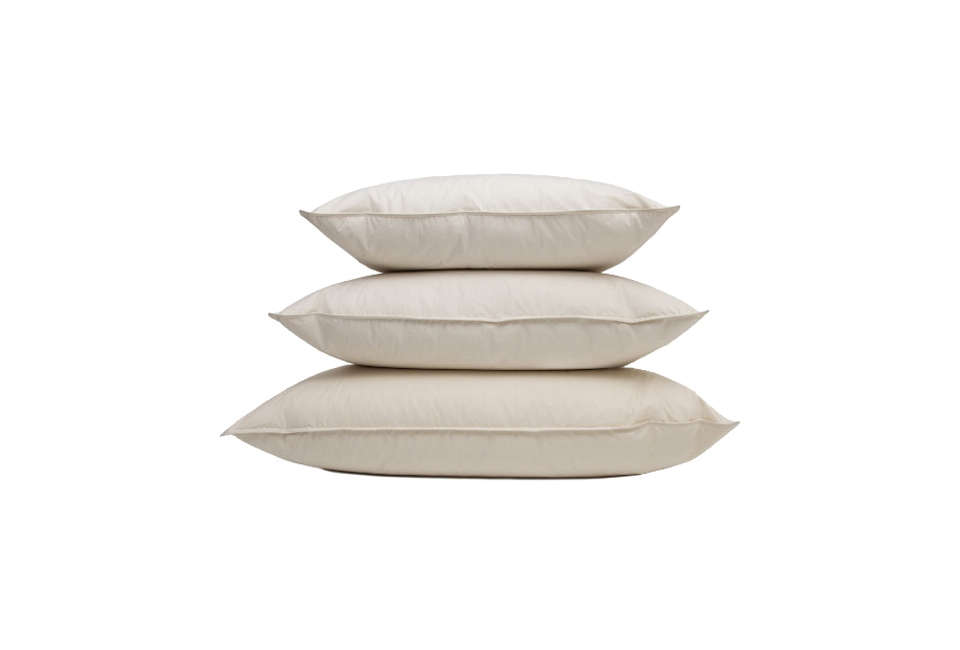
An archived Remodelista description presented the Harvester pillow as an especially natural-looking product. Its cover was described as unbleached, undyed, and free from added chemical treatments, with double-layered 312-thread-count cotton, matching piping, and a lightly speckled ecru appearance. Customers could choose among different sizes, fill levels, and firmness options.
Archived retail specifications are not completely identical. For example, one 700-fill version was listed with a 353-thread-count double-layer cotton sateen shell and satin piping. That variation suggests that the Harvester collection evolved over time or was offered in multiple constructions. Buyers considering old inventory should therefore inspect the exact label rather than assuming every Harvester pillow has precisely the same shell or fill power.
Inside the Harvester Pillow: Goose Down and Milkweed
Why Use Goose Down?
High-quality down consists of soft clusters found beneath the outer feathers of ducks or geese. Unlike stiff feather quills, down clusters expand in many directions and trap air. That structure gives a down pillow its familiar combination of low weight, softness, insulation, and compressibility.
A down pillow can be shaped around the neck, folded slightly under the shoulder, or compressed beneath the head. It does not push back in the same way as a solid block of memory foam. For sleepers who enjoy rearranging their pillow several times before finally declaring peace with the universe, that moldability can be a major advantage.
What Does Milkweed Fiber Add?
Milkweed pods contain very light, silky fibers that help carry seeds through the air. Ogallala blends those fibers with goose down to produce Hypodown. The company describes the result as breathable, resilient, and naturally resistant to common allergens associated with conventional down products. These are manufacturer performance claims rather than a guarantee that every person with allergies will tolerate the pillow.
The milkweed component also gives the pillow a distinctive environmental story. Milkweed is essential to the monarch butterfly life cycle because monarch caterpillars rely on it as their host plant and food source. Ogallala states that its current milkweed sourcing supports sustainable harvesting and monarch habitat protection. Responsible harvesting practices matter because milkweed availability is directly connected to monarch reproduction and migration.
Understanding Fill Power
Archived Harvester Sleeping Pillows appeared in several fill-power categories, including 600-, 700-, and 800-fill versions. Fill power does not directly tell you how firm a pillow will feel. It measures the loft and expansion of the down: higher-quality clusters generally occupy more space for the same weight.
A higher fill-power pillow can feel lighter and more buoyant while still providing substantial loft. However, firmness also depends on how much filling is placed inside the shell. A generously filled 600-fill pillow can be firmer than a lightly filled 800-fill pillow.
Typical Differences Between Fill Levels
- 600 fill: Usually the most approachable option, with a lower, softer profile and slightly less airy loft.
- 700 fill: A middle-ground choice balancing softness, support, and resilience.
- 800 fill: The lightest and most luxurious-feeling option, using larger down clusters that expand efficiently.
Older Harvester listings confirm that 600- and 700-fill models were sold with different firmness choices. The product name alone is therefore not enough to determine whether a particular pillow will be soft, medium, firm, or extra firm.
How Harvester Sleeping Pillows Feel
The defining sensation is softness without the dense, slow response associated with memory foam. A Harvester pillow should compress quickly when the head settles into it, then regain much of its loft after being fluffed. The filling can move within the shell, allowing the sleeper to create a shallow cradle or gather more material beneath the neck.
Because the blend is light and loose, the pillow is less likely to feel like a rigid platform. That is wonderful for sleepers who want a cloudlike surface. It may be less satisfying for someone who expects a pillow to hold an architectural shape all night, as though it recently graduated from engineering school.
Pressure Relief
Down clusters distribute pressure gently rather than creating a hard contact point under the ear or jaw. This can make a well-selected Harvester pillow comfortable for people who dislike the resistance of dense foam. However, adequate pressure relief depends on choosing enough loft. A pillow that collapses too far may leave the neck unsupported even when the surface itself feels wonderfully soft.
Temperature and Breathability
Loose down and milkweed clusters contain many open spaces through which air can move. That gives the filling a light, breathable character. Even so, no pillow can promise a permanently cool surface. Room temperature, pillowcases, humidity, body heat, and the sleeper’s tendency to perspire all influence nighttime comfort.
Consumer Reports notes that pillows with loose pieces of filling can allow more internal air circulation than some solid constructions. Sleepers who run hot should also use a breathable pillowcase and avoid covering the pillow with several thick protectors unless allergy control requires them.
Choosing Firmness by Sleeping Position
The most luxurious filling in the world cannot rescue a pillow with the wrong height. A suitable pillow should help keep the head and neck reasonably aligned with the rest of the spine. Sleep position, shoulder width, body size, mattress firmness, and personal preference all affect the amount of loft required.
For Side Sleepers
Side sleepers usually need the greatest pillow height because the pillow must fill the distance between the mattress and the side of the head. A medium-firm, firm, or extra-firm Harvester pillow would generally be the logical starting point. People with broad shoulders or a firm mattress may need more fill because their shoulders do not sink deeply into the bed.
The goal is not to stack the head toward the ceiling. It is to prevent the neck from bending sharply downward or upward. Sleep Foundation guidance similarly notes that side sleepers tend to need a higher-loft pillow to support spinal alignment.
For Back Sleepers
Back sleepers often do well with medium loft and moderate firmness. The pillow should support the natural curve of the neck without pushing the chin toward the chest. A medium Harvester pillow could provide a useful balance, particularly because the loose filling can be gathered beneath the neck while remaining softer beneath the back of the head.
Johns Hopkins and Cleveland Clinic both emphasize avoiding pillows that are excessively high or low, since poor positioning can contribute to neck and shoulder stiffness.
For Stomach Sleepers
Stomach sleepers generally need a thin, soft pillow because the head is already turned to one side. Too much loft can increase neck rotation and extension. A soft 600-fill Harvester model would likely have been the most suitable option, especially if the sleeper could compress or reshape it easily.
Some stomach sleepers prefer an extremely low pillow or no head pillow at all. Sleep Foundation testing generally places suitable stomach-sleeper pillows below approximately three inches in loft, although body type and mattress softness still matter.
For Combination Sleepers
Combination sleepers need adaptability. This is where the Harvester construction makes sense: loose down and milkweed filling can be punched, folded, gathered, and redistributed as the sleeper changes position. A medium model would normally offer the safest compromise, although a side-and-back sleeper may prefer medium-firm support.
Potential Benefits of Harvester Sleeping Pillows
- Highly moldable comfort: The loose filling can be shaped around the neck and head.
- Lightweight construction: Down and milkweed provide loft without making the pillow feel excessively heavy.
- Multiple firmness choices: Archived models were offered in several support levels and sizes.
- Natural-looking shell: Some versions used undyed, unbleached cotton with subtle ecru speckling.
- Breathable feel: The cluster-based filling allows air space within the pillow.
- Distinctive material story: The Hypodown blend combines conventional luxury bedding with harvested milkweed fiber.
Possible Drawbacks
- Frequent fluffing: Soft cluster fillings naturally compress and may need reshaping each morning.
- Variable support: People who prefer a rigid contour pillow may find down too mobile.
- Premium pricing: High-fill-power down pillows are significantly more expensive than standard polyester alternatives.
- Uncertain availability: Most Harvester listings are archival, discontinued, or out of stock.
- Care limitations: Natural down products may require more cautious cleaning than basic machine-washable pillows.
- Not automatically allergy-proof: A naturally derived filling does not eliminate dust mites, pet allergens, or every individual sensitivity.
Allergies, Dust Mites, and Pillow Protection
Ogallala describes Hypodown as naturally hypoallergenic, but “hypoallergenic” should not be interpreted as “incapable of causing symptoms.” People may react to different substances, including dust mites, cleaning residues, shell materials, or the filling itself.
Dust mites can live in bedding regardless of whether the pillow contains down, foam, latex, or synthetic fiber. Mayo Clinic, the Asthma and Allergy Foundation of America, and the American Academy of Allergy, Asthma & Immunology recommend using zippered allergen-barrier covers and regularly washing suitable bedding in hot water when managing dust mite allergies.
A protector can also reduce the amount of skin oil, perspiration, and moisture reaching the pillow. Choose a tightly woven but breathable protector so the pillow does not lose all the airy softness that made it expensive in the first place.
How to Care for a Harvester Pillow
Fluff It Regularly
Shake the pillow from opposite ends and gently redistribute the filling with your hands. Daily fluffing helps separate compressed clusters and restores loft. For a firmer feel, gather more filling into the center or under the neck before lying down.
Keep It Dry
Down performs poorly when repeatedly exposed to moisture. Allow the pillow to air out before making the bed, especially after a warm night. Do not place a damp pillow inside a sealed protector or storage bag.
Use a Pillowcase and Protector
A removable protector is easier to clean than the pillow itself. Wash the pillowcase and protector according to their care labels. Allergy-sensitive sleepers may need a certified allergen-barrier encasement rather than an ordinary decorative protector.
Follow the Original Care Label
Archived Harvester models may use different fabrics and constructions, so a universal washing instruction would be unreliable. Follow the sewn-in label. If the label is missing, contact the manufacturer or use a professional cleaner experienced with down bedding. Improper washing, harsh detergent, insufficient rinsing, or incomplete drying can produce clumps, odors, and damaged seams.
Responsible Down and Environmental Considerations
Consumers evaluating any down pillow should consider both material quality and animal-welfare sourcing. The Responsible Down Standard is designed to improve the welfare of ducks and geese and provide traceability through the supply chain. Ogallala states that its current products use European RDS-certified down, although buyers of older Harvester inventory should verify the label attached to that specific item.
The milkweed story is equally important. Milkweed is not merely a fluffy agricultural byproduct; it is essential habitat for monarch caterpillars. Responsible sourcing should support healthy milkweed populations rather than remove seed material without a restoration plan. The U.S. Fish and Wildlife Service identifies milkweed and flowering plants as necessary components of monarch habitat.
Can You Still Buy Harvester Sleeping Pillows?
The original Harvester pillow appears to be an archival or discontinued collection rather than a major part of Ogallala’s current catalog. Older Harvester products may occasionally surface through resale platforms, clearance inventories, specialty bedding stores, or old marketplace listings. Several archived retailer pages currently identify Harvester models as unavailable or out of stock.
Ogallala’s current pillows use names such as Flora, Sequoia, and Laurel. These models continue the Hypodown concept at different fill-power levels and may be the closest modern alternatives to old Harvester options. Flora is positioned as a lighter, lower-profile pillow, Sequoia offers a balance of softness and support, and Laurel uses a higher 800-fill blend for a more luxurious feel.
Questions to Ask Before Buying Old Inventory
- Is the pillow unused, refurbished, returned, or previously slept on?
- What is the exact fill power and firmness?
- Does the original manufacturer label remain attached?
- Are there stains, odors, flattened areas, or leaking seams?
- Has the pillow been stored in a dry, climate-controlled location?
- Can it be returned after a brief home trial?
A sealed vintage pillow is not automatically a bargain. Natural filling can absorb odors or moisture during poor storage, and an old return policy may be about as supportive as a pancake.
Who Is a Harvester-Style Pillow Best For?
A Harvester or modern Hypodown pillow may appeal to sleepers who enjoy soft, moldable bedding but want more loft options than a basic feather pillow provides. It is especially attractive to people who value natural-looking cotton, lightweight filling, U.S. craftsmanship, and a sustainability narrative connected to milkweed cultivation.
It may not be ideal for sleepers who need a fixed cervical contour, dislike daily fluffing, want a low-cost pillow, or require a product that can be washed frequently in a household machine. Persistent neck pain, numbness, weakness, headaches, or sleep disruption should be discussed with a qualified healthcare professional rather than treated solely by purchasing increasingly ambitious pillows.
A Realistic First-Week Experience With a Harvester-Style Pillow
The following experience-based scenario illustrates what a sleeper might notice when changing from an ordinary polyester pillow to a Harvester-style down-and-milkweed pillow. It is not a claim that every person will have the same result.
Night One: The Pillow Looks Smaller Than Expected
After opening the package, the first surprise is usually the weight. The pillow feels remarkably light and may initially appear less substantial than a dense foam model. A few vigorous shakes make it expand. The natural cotton shell feels crisp rather than slippery, and the ecru fabric has a quiet, handmade appearance.
At bedtime, the head sinks quickly. There is no slow memory-foam embrace and no rubbery rebound. A back sleeper may instinctively gather the filling under the neck, creating a small supportive ridge. The pillow feels luxurious, although the first reaction may be, “Did I just spend premium money on something I have to punch into shape?” Yesbut the punching is part of the arrangement.
Nights Two and Three: Firmness Becomes More Important
After two nights, the sleeper begins to understand whether the selected firmness works. A side sleeper using a soft version may notice the pillow compressing too deeply, allowing the head to tilt toward the mattress. Folding the pillow can temporarily add height, but a firmer fill would be a better long-term choice.
A back sleeper with a medium pillow may have the opposite experience. The filling can be spread beneath the head and gathered under the neck, producing support without a hard pressure point. The pillow responds immediately whenever the sleeper rolls or adjusts position.
Nights Four and Five: The Fluffing Routine Arrives
By the middle of the week, morning fluffing becomes automatic. The center may look slightly flattened after a full night, but shaking the pillow restores much of its shape. This is reassuring for someone who enjoys interactive bedding and mildly annoying for someone who believes pillows should maintain themselves like disciplined household employees.
The sleeper may also notice that the pillow does not feel as dense or heat-trapping as a solid foam design. A cool cotton pillowcase helps preserve that airy sensation. On a warm night, however, the surface can still absorb body heat, and turning the pillow remains the traditional midnight ceremony it has always been.
Nights Six and Seven: Comfort Becomes Personal
At the end of a week, the question is not whether the pillow feels expensive. The materials and softness usually make that clear. The real question is whether its movement and loft match the sleeper’s habits.
A person who changes positions may appreciate being able to bunch the pillow for side sleeping and flatten it when rolling onto the back. Someone accustomed to a rigid orthopedic pillow may miss the predictable shape. A stomach sleeper may love a soft, lower-fill version but find a firm model much too tall.
The most successful experience comes from treating firmness as a functional choice, not a luxury ranking. Extra firm is not automatically “better,” and 800 fill is not universally more comfortable than 600 fill. The right pillow is the one that keeps the neck comfortable while satisfying the sleeper’s preference for softness, height, and movement.
After seven nights, a well-matched Harvester-style pillow can feel airy, refined, and unusually easy to shape. A poorly matched version can feel expensive, collapsible, or overfilled. That contrast explains why return policies and sleep trials matter so much. Pillow comfort cannot be determined entirely from thread count, fill power, product photography, or a poetic description involving clouds. Eventually, a human head has to vote.
Conclusion
Harvester Sleeping Pillows combined goose down, milkweed fiber, and natural cotton in a distinctive luxury design. Their greatest strengths were moldability, low weight, breathable loft, and a range of firmness choices. Their limitations included premium pricing, regular fluffing, variable archived specifications, and limited present-day availability.
Anyone searching for an original Harvester pillow should verify the exact fill power, shell construction, condition, and return policy. Shoppers who cannot locate the discontinued model can consider current Ogallala Hypodown pillows built around the same 70% goose down and 30% milkweed concept.
Above all, choose according to sleeping position rather than buying the highest fill power your credit card can survive. Side sleepers generally need more loft, stomach sleepers need less, and back sleepers usually benefit from a balanced middle ground. The right Harvester-style pillow should support the neck while remaining soft enough to make bedtime feel less like a medical appointment and more like a well-earned collapse into comfort.