Your deck should not turn into a dark wooden mystery zone the moment the sun clocks out. With the right mood lighting, it can become an outdoor dining room, a cozy lounge, a date-night hideaway, a family hangout, or the place where everyone mysteriously gathers even though the kitchen is still inside. The secret is not simply buying the brightest lights you can find. In fact, that is usually how a relaxing deck starts looking like a grocery store parking lot.
Adding the perfect mood lighting to your deck is about balance. You need enough light for safety, enough softness for atmosphere, and enough control so the space feels flexible. A deck used for grilling needs a different lighting plan than a deck used for quiet reading, late-night chats, or hosting friends around an outdoor sectional. The best design combines ambient lighting, task lighting, and accent lighting so every part of the deck has a purpose after dark.
This guide walks through practical deck lighting ideas, fixture types, color temperature, installation planning, safety considerations, and real-world experience tips. Whether you want low-voltage LED deck lights, solar post cap lights, string lights, stair riser lights, recessed deck lighting, or a layered combination, the goal is the same: create an outdoor space that feels warm, safe, inviting, and just dramatic enough to make your neighbors wonder if you hired a designer.
Why Mood Lighting Matters on a Deck
Deck lighting does three important jobs: it improves safety, extends usable outdoor time, and creates atmosphere. Without lighting, stairs become guesswork, railings disappear into the shadows, and outdoor furniture turns into ankle-level ambush equipment. Good lighting helps guests see where they are walking, makes transitions between levels easier, and highlights edges, steps, doors, and seating zones.
But mood lighting goes beyond visibility. It shapes how the space feels. A few harsh floodlights may technically illuminate a deck, but they rarely make anyone want to settle in with a drink, a blanket, and a good conversation. Soft, layered lighting gives your deck dimension. It creates gentle pools of brightness instead of one flat wash of light. That is what makes the space feel intentional rather than accidental.
The best deck lighting ideas usually start with a simple question: how do you want the deck to feel at night? Cozy and romantic? Bright enough for dinners? Playful and festive? Modern and architectural? Once you know the mood, choosing fixtures becomes much easier.
Start With a Simple Lighting Plan
Before buying lights, walk around your deck in the evening and look for the places that genuinely need illumination. Pay attention to stairs, entry doors, grill stations, seating areas, railings, posts, planters, and pathways leading to the yard. Mood lighting works best when it supports how people actually move and gather.
Divide the Deck Into Zones
A deck usually has several zones, even if it is small. There may be a traffic zone near the door, a dining zone near the table, a cooking zone around the grill, and a lounging zone with chairs or a sofa. Each zone deserves a different lighting approach. For example, the grill area needs clear task lighting, while the seating area may only need soft ambient lighting from rail lights, lanterns, or warm string lights.
Think in Layers, Not One Big Light
The most common deck lighting mistake is relying on one bright wall light and calling the job done. One fixture can create glare, harsh shadows, and a flat look. Layered outdoor lighting is more comfortable. Use ambient lighting for overall glow, task lighting where you need function, and accent lighting to highlight details. A layered deck looks richer, feels safer, and gives you more control over the mood.
Choose the Right Types of Deck Lighting
There is no single perfect fixture for every deck. The best result usually comes from mixing several types of outdoor deck lighting in a thoughtful way. Here are the most useful options.
String Lights for Instant Warmth
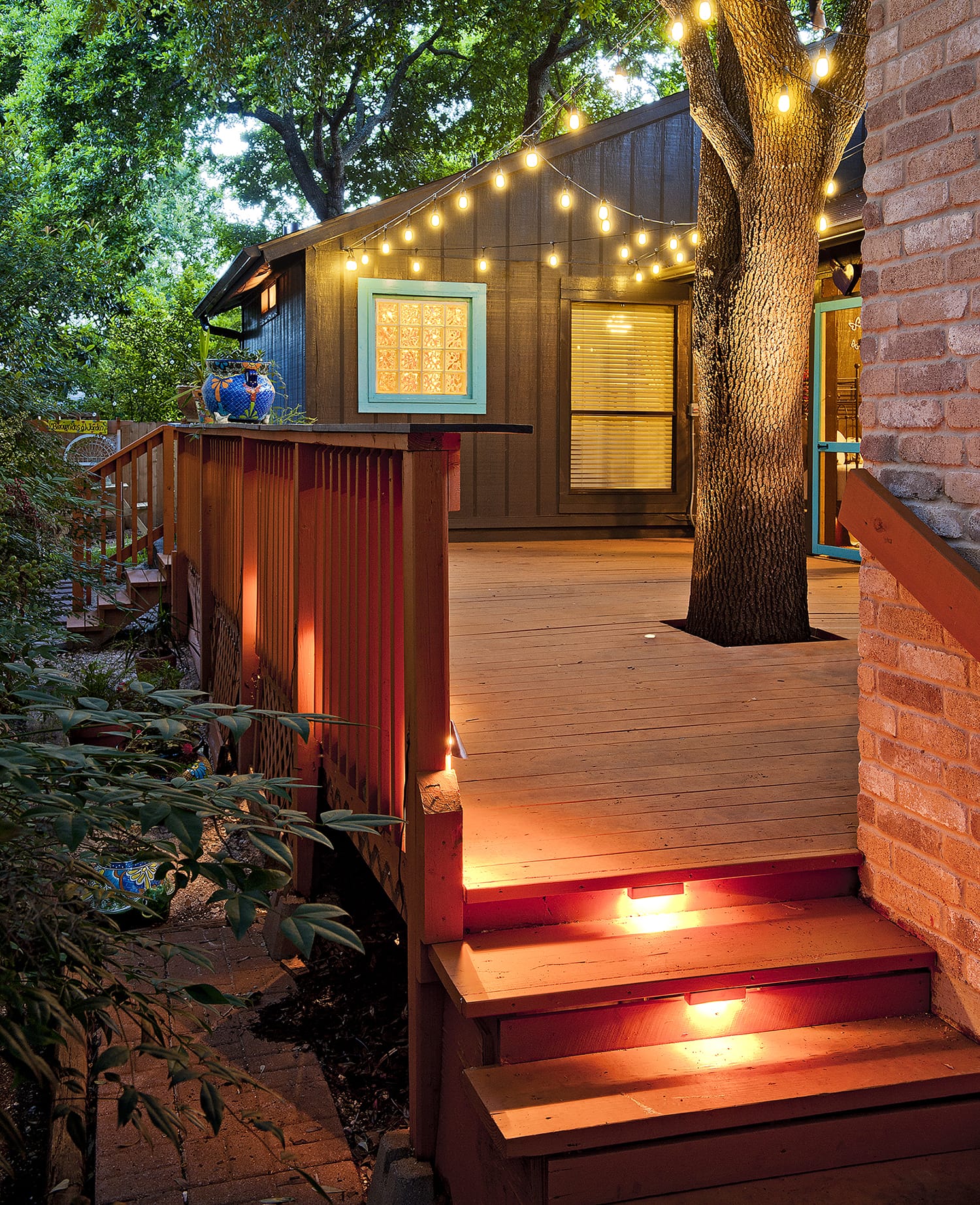
String lights are the charming overachievers of deck lighting. They are affordable, easy to love, and capable of making almost any space feel like a backyard café. Hang them overhead, along a pergola, between posts, or across a small seating area. For a mood-focused deck, choose warm white bulbs rather than bright cool white bulbs. The result feels relaxed instead of clinical.
For the cleanest look, avoid droopy, tangled, last-minute installation. Use guide wire if needed, keep lines intentional, and make sure the lights are rated for outdoor use. String lights should feel casual, not chaotic. There is a difference between “cozy bistro” and “holiday storage bin exploded.”
Stair Lights for Safety and Style
Deck stair lighting is one of the smartest upgrades you can make. Stair riser lights, side-mounted step lights, or small recessed fixtures can guide movement without overwhelming the whole deck. They help prevent trips and also create a beautiful layered glow from below.
Place stair lights so each step is visible without shining directly into someone’s eyes. Warm, low-output LED fixtures are usually enough. The goal is not to make the stairs look like an airport runway. It is to make them easy to navigate while keeping the mood soft.
Post Cap Lights for a Polished Look
Post cap lights sit on top of railing posts and create a gentle glow around the deck perimeter. They work especially well on traditional wood decks, composite decks, and railing systems with evenly spaced posts. Solar post cap lights are convenient because they avoid wiring, while low-voltage post cap lights usually offer more reliable brightness and consistency.
Post cap lighting can visually outline your deck without making it feel boxed in. It also adds a finished, architectural detail during the day. If your deck has many posts, use restraint. Lighting every single post may be too much for a small area. Lighting corners and key transitions can often look more refined.
Under-Rail Lighting for Subtle Ambiance
Under-rail lighting is excellent for mood because it hides the light source and washes the deck surface softly. LED strip lights or small linear fixtures can be installed beneath handrails to create a smooth, modern effect. This type of lighting is great for seating areas because it provides visibility without glare.
Under-rail lighting also works well when you want a cleaner design. Since the fixtures are tucked away, the deck does not look cluttered during the day. At night, the glow appears almost effortless, which is exactly the kind of outdoor lighting magic most people want.
Recessed Deck Lights for a Built-In Glow
Recessed deck lights are installed into the deck boards or surrounding surfaces. They can mark edges, define pathways, or add a soft glow around seating zones. They look sleek and permanent, especially on modern decks.
However, placement matters. Too many recessed lights can make the deck look overly busy. Space them evenly and use them to guide movement rather than decorate every square foot. Also consider durability, water exposure, and whether the fixtures are designed for foot traffic if they are placed on walking surfaces.
Wall Sconces and Door Lights for Practical Illumination
Wall-mounted outdoor lights near doors provide necessary visibility when entering or leaving the house. These fixtures are useful for security, convenience, and general orientation. For mood lighting, choose fixtures with diffused glass, downward-facing designs, or dimmable bulbs. A bright bare bulb near the door can create glare and ruin the atmosphere faster than someone saying, “Let’s turn on the big light.”
Lanterns, Table Lamps, and Portable Lights
Battery-powered outdoor lamps, rechargeable lanterns, and weather-resistant table lights add flexibility. They are perfect for renters, small decks, or anyone who wants mood lighting without a major installation. Place them on side tables, dining tables, steps, or plant stands to create movable pools of light.
Portable lighting is also helpful for seasonal changes. In summer, you might want lights around the dining table. In fall, you may shift the glow toward a lounge chair and a blanket. Your deck is allowed to have moods. Honestly, so are you.
Pick the Right Color Temperature
Color temperature has a huge impact on mood. For most decks, warm white light in the 2700K to 3000K range creates the most comfortable atmosphere. It feels similar to indoor incandescent lighting and works well with wood, composite decking, plants, stone, and outdoor textiles.
Cool white or bluish light can feel harsh outdoors, especially in spaces meant for relaxing. It may be useful for security lighting or very specific task areas, but it is rarely the best choice for a cozy deck. If you want a calm outdoor living space, warm light is your friend. Think candlelit dinner, not dentist chair.
For a very intimate mood, amber-toned lights or lower color temperatures can work beautifully. They reduce glare and create a softer nighttime environment. Just make sure the light is still bright enough for steps, doors, and cooking areas.
Brightness: How Much Light Do You Really Need?
When it comes to mood lighting, more brightness is not always better. The best deck lighting is usually low to moderate in brightness, spread across several fixtures. This creates visibility without harsh contrast.
Use brighter light only where tasks happen. A grill station, outdoor kitchen counter, or dining table may need more illumination. Stairs and transitions need clear but gentle light. Lounge areas can be much softer. If your fixtures are dimmable, even better. Dimmers allow you to shift from “family dinner” to “quiet evening glow” without changing the whole setup.
As a practical rule, test lights before permanently installing them. Temporarily place fixtures or plug in sample lights at dusk and sit outside for several minutes. Your eyes adjust after a short time, and what seemed too dim at first may become perfect once the sky is fully dark.
Low-Voltage, Solar, or Line-Voltage Lighting?
Deck lighting systems usually fall into three broad categories: low-voltage, solar, and line-voltage. Each has advantages.
Low-Voltage Deck Lighting
Low-voltage lighting is one of the most popular choices for decks. These systems typically use a transformer to reduce household current to a safer, lower voltage for outdoor fixtures. Low-voltage LED lights are energy-efficient, long-lasting, and available in many styles, including stair lights, post lights, rail lights, and recessed fixtures.
This option is excellent for permanent installations where you want dependable performance. It does require planning for wiring, transformer capacity, fixture placement, and weather protection. For complex installations, hiring a qualified electrician is a smart move.
Solar Deck Lighting
Solar lighting is convenient because it does not require wiring. Solar post caps, stair lights, wall lights, and small deck accents can be installed quickly in sunny locations. They are especially useful for decks far from outlets or for homeowners who want an easy upgrade.
The tradeoff is consistency. Solar lights depend on sun exposure, battery quality, season, and placement. A solar light tucked under a shady tree may perform like it has given up on life. Use solar fixtures where panels receive strong direct sunlight, and choose quality products with outdoor-rated materials.
Line-Voltage Lighting
Line-voltage outdoor lighting uses standard household voltage and is commonly used for wall sconces, ceiling lights, and larger fixtures. It can provide strong illumination, but installation should be handled carefully and must follow electrical code. For most mood-focused deck lighting, low-voltage or solar options are easier and more flexible.
Safety and Weather Resistance Come First
Outdoor lighting must be designed for outdoor conditions. Look for fixtures rated for wet or damp locations depending on where they will be installed. Fully exposed fixtures need wet-location ratings. Fixtures under covered areas may be suitable with damp-location ratings, but always check the manufacturer’s specifications.
Use weatherproof boxes, outdoor-rated connections, and proper cable protection. Low-voltage transformers should be installed according to instructions and plugged into appropriate outdoor power sources. Outdoor outlets should be protected and properly covered. If wiring is beyond your comfort level, bring in a licensed electrician. A beautiful deck is great; a beautiful deck that does not create electrical drama is much better.
Also consider trip hazards. Extension cords should not snake across walking areas. Fixtures should be securely mounted. Wires should be hidden, protected, or routed where they will not be damaged by foot traffic, furniture, pets, or enthusiastic children chasing fireflies.
Use Smart Controls for Better Mood Lighting
Smart controls can make deck lighting easier to enjoy. Timers, photocells, motion sensors, dimmers, and app-controlled systems allow you to automate your lighting. A photocell can turn lights on at dusk. A timer can shut them off later in the evening. Dimmers let you adjust the mood without unplugging anything or wandering around like a stage technician.
Smart plugs can work well for outdoor string lights, provided they are rated for outdoor use. Some low-voltage systems also offer compatible dimmers or smart transformers. If you frequently entertain, separate controls for different zones are especially useful. You might keep stair lights on for safety while dimming the dining or lounge area.
Design Ideas for Different Deck Styles
Small Decks
Small decks benefit from subtle lighting. A few under-rail lights, one warm wall sconce, and a short run of string lights may be enough. Avoid too many fixture styles, which can make the space feel cluttered. Keep the color temperature consistent and focus on creating depth.
Large Multi-Level Decks
Large decks need zones. Use stair lights for transitions, post cap lights for boundaries, task lighting near cooking areas, and softer fixtures around seating. Multi-level decks look especially beautiful when lighting guides the eye from one area to another without blasting the whole structure with brightness.
Modern Decks
Modern decks pair well with recessed lighting, under-rail LED strips, minimalist sconces, and clean linear fixtures. Keep the design simple and avoid overly decorative lanterns unless you want an intentional contrast. Hidden light sources often look best in modern spaces.
Rustic or Traditional Decks
Rustic decks look great with warm string lights, lanterns, post cap lights, and fixtures with bronze, black, or weathered metal finishes. Let the lighting enhance wood grain, plants, and natural textures. The goal is cozy, not overly polished.
Common Deck Lighting Mistakes to Avoid
The first mistake is overlighting. Your deck does not need to be visible from space. Too much light can flatten the design, create glare, bother neighbors, and attract more insects. Use light where it helps, and let some shadows remain.
The second mistake is mixing too many color temperatures. Warm string lights, cool stair lights, and bluish wall lights can make a deck feel visually messy. Try to keep most fixtures in the same warm range for a cohesive look.
The third mistake is ignoring glare. Any fixture that shines directly into people’s eyes will become annoying. Shielded, downward-facing, or diffused fixtures are usually more comfortable.
The fourth mistake is forgetting maintenance. Outdoor lights face rain, dust, pollen, temperature changes, and the occasional spider with real estate ambitions. Choose durable fixtures and clean lenses occasionally so the lighting stays attractive.
Maintenance Tips for Long-Lasting Deck Lighting
Inspect your deck lighting at the start of each outdoor season. Check for loose fixtures, damaged wires, cloudy lenses, weak solar batteries, and corroded connections. Wipe down fixtures with a soft cloth and mild cleaner. Trim plants that block solar panels or cover pathway lights.
For low-voltage systems, make sure the transformer is working properly and that fixtures remain evenly bright. If lights at the end of a run are noticeably dimmer, voltage drop may be the issue. For solar lights, replace rechargeable batteries when performance declines. A small amount of maintenance keeps the deck looking intentional instead of forgotten.
Budget-Friendly Ways to Add Mood Lighting
You do not need a luxury renovation budget to improve your deck lighting. Start with one or two high-impact upgrades. String lights can transform a seating area quickly. Solar post cap lights can define the perimeter. Battery lanterns can add charm to tables and corners. LED candles can create a soft glow without open flames.
If you plan to invest more over time, begin with safety lighting first. Stairs, doors, and edges should come before purely decorative accents. Then add atmosphere with rail lighting, post lights, and portable fixtures. A phased approach lets you improve the deck without shocking your wallet into hiding.
Real-World Experience: What Actually Works on a Deck
One of the most useful lessons from real deck lighting projects is that the best setup often looks underwhelming in the box and fantastic at night. A tiny stair light or a modest under-rail fixture may not seem exciting when you hold it in your hand. But once it is installed and the sun goes down, that small glow can completely change how the deck feels.
In practice, the most comfortable decks usually avoid one dominant light source. A deck with only a bright wall fixture near the back door often creates a harsh center of attention and deep shadows everywhere else. People tend to gather away from the glare, or they leave the light off entirely and rely on phone flashlights when carrying plates. A better experience comes from spreading low-level light across the space. Stair riser lights make movement safer. Under-rail lights define the seating area. A few lanterns on side tables add warmth. Suddenly, the deck feels usable without feeling exposed.
Another real-world tip: test the lights from a seated position. Many homeowners place lights while standing, then discover later that a fixture shines directly into someone’s eyes when they sit down. This happens often with rail lights, wall sconces, and step lights mounted too high or angled poorly. Before final installation, sit in the chairs, look toward the house, look toward the stairs, and imagine having a conversation there for an hour. If a light feels annoying during the test, it will be even more annoying during dinner.
Color temperature also matters more than people expect. Warm white lighting makes wood tones, cushions, plants, and food look better. Cool white lighting may seem crisp in the store, but outdoors it can feel sharp and unwelcoming. If the goal is mood lighting, warm light usually wins. It makes the deck feel like an extension of the home rather than a separate utility area.
Solar lights can be wonderful, but placement is everything. On sunny railings, solar post caps can provide a charming glow with almost no effort. In shaded corners, they may fade quickly or barely turn on. If you are using solar deck lighting, install a few lights first and watch how they perform over several nights before buying dozens. The sun is not evenly generous to every part of your deck.
For people who entertain, separate lighting zones are worth considering. You may want brighter light near the grill while cooking, soft light around the dining table during the meal, and very low light near lounge chairs afterward. When all lights are controlled together, the deck has only one personality. With zones, it becomes flexible. It can host burgers at 7 p.m., board games at 8 p.m., and quiet conversation at 10 p.m. without changing anything except the lighting level.
Finally, the best deck lighting feels natural. Guests should notice that the deck feels beautiful, not that every fixture is fighting for attention. When lighting is done well, people move safely, faces look warm, food looks inviting, and the space encourages everyone to stay outside a little longer. That is the real purpose of mood lighting: not to show off the lights, but to make the moments on the deck feel better.
Conclusion
Adding the perfect mood lighting to your deck is part design, part safety, and part common sense. Start by identifying how you use the space, then layer ambient, task, and accent lighting to support those activities. Choose warm color temperatures, avoid glare, light stairs and edges carefully, and use outdoor-rated fixtures that can handle real weather.
Whether you choose low-voltage LED deck lighting, solar post caps, string lights, recessed fixtures, lanterns, or under-rail lighting, the best results come from restraint and intention. Your deck does not need to be the brightest place on the block. It needs to be comfortable, functional, and inviting. With the right lighting plan, your outdoor space can become the kind of place where dinner lasts longer, conversations get better, and nobody has to pretend they meant to trip over that planter.