Anyone who has worked in retail, hospitality, food service, or customer support knows that the public arrives in several varieties. Most customers are perfectly reasonable. Some are delightful. A small but unforgettable minority, however, seem to enter a business believing they have purchased not only a product, but also temporary ownership of every employee in the building.
An online collection inspired by stories from service-industry communities captured this phenomenon beautifully. Workers described customers who insulted their appearance, ignored safety rules, demanded discriminatory treatment, sexually harassed employees, invented policies, and acted personally betrayed by ordinary inconveniences such as waiting for a table. These customer service horror stories are funny in hindsight, but many were painful, frightening, or humiliating when they happened.
Bad customer behavior is more than material for an entertaining internet thread. OSHA defines workplace violence broadly enough to include threats, harassment, intimidation, and verbal abuse. Research involving restaurant employees has also connected customer incivility with burnout and intentions to quit, while management support can reduce some of the damage. In other words, one screaming diner may disappear after dessert, but the emotional mess can remain on the menu for days.
Why Customers From Hell Become Unforgettable
Most of the worst rude customer stories share the same ingredients: entitlement, humiliation, a refusal to accept basic rules, and the assumption that employees cannot answer back. The customer may be angry about a legitimate problem, but instead of solving it, they turn the interaction into community theater performed entirely in the key of outrage.
Frontline employees also have to perform emotional labor. They are expected to remain calm, friendly, and helpful while someone insults their intelligence or explains that a coupon from 2009 is “basically still valid.” That imbalance is what makes these stories so satisfying when a worker, manager, or perfectly timed consequence finally restores order.
The 25 Worst Customer Horror Stories
-
1. The Customers Who Assumed Their Server Could Not Understand Spanish
A group openly mocked their server’s body in Spanish, assuming the blonde woman nearby understood nothing. She introduced herself fluently in Spanish, explained the entire menu in the same language, and delivered exceptionally attentive service. Their confidence evaporated faster than ice in a milkshake.
-
2. The Missing Receipt That Became a Personal Attack
A new server forgot to print an itemized receipt during a hectic shift. Instead of requesting another copy, an older customer loudly insulted her career, competence, and life choices. The restaurant owner interrupted, defended the employee, and told the couple their business was no longer wanted.
-
3. The Employee Judged More Harshly Because of His Race
A manager noticed that one hardworking Black employee received disproportionate complaints from certain customers. They accused him of standing around even when he was completing assigned tasks or speaking with the owner. Ordinary mistakes were forgiven elsewhere, but his every movement seemed to receive a suspicious inspection.
-
4. The Man Who Turned Payment Into a Petty Contest
After being reminded about store rules, a regular customer tried paying for a small order with a $100 bill. When that failed, he returned with rolls of coins. The cashier calmly opened and counted every coin, removing the dramatic victory he had apparently imagined while driving there.
-
5. The Drunk Customer Whose Mother Became His Ride
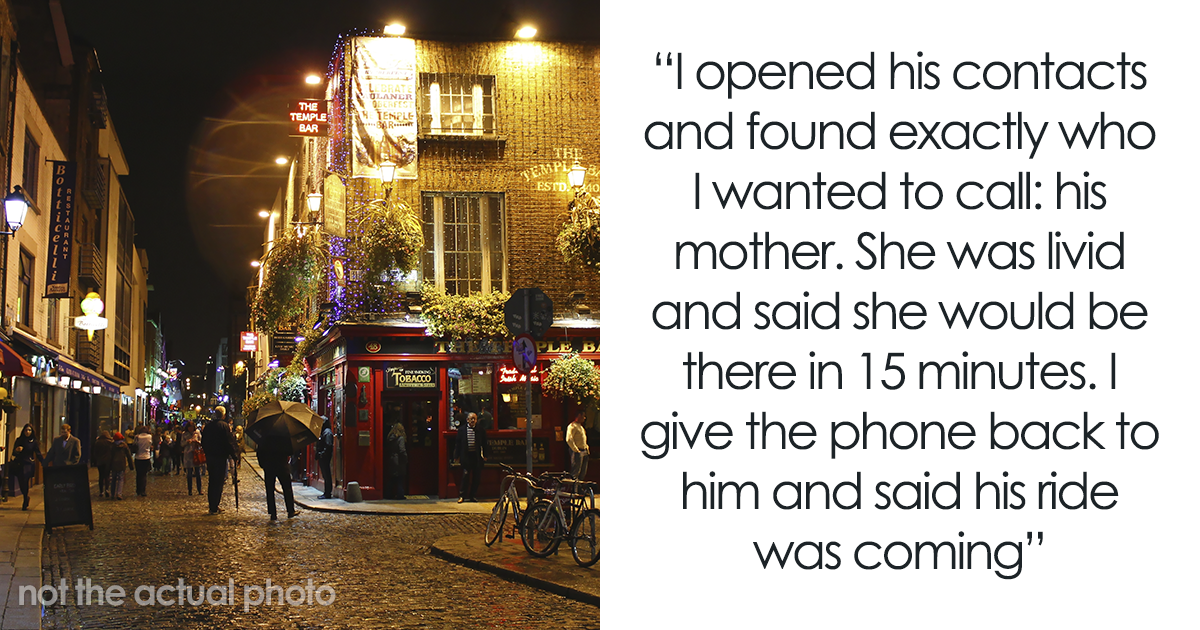
A heavily intoxicated bar patron was removed and then directed racist abuse at security. When he demanded help ordering transportation and handed over his unlocked phone, the security worker called the most effective emergency service available: the man’s mother. She collected him while delivering a public lecture.
-
6. The Diner Offended by Two Men Holding Hands
A woman demanded that a gay couple be moved because she did not want her children seeing them hold hands. The manager refused to disturb the couple and suggested that anyone unable to tolerate other guests peacefully eating dinner might be the person who should leave.
-
7. The Group Demanding a “Hot White Server”
Several regulars complained whenever they were served by a Black woman and eventually requested an attractive white server. The host enthusiastically honored the spirit of their request by assigning a tall, muscular Black male server. Strangely, the group discovered the ability to remain completely silent.
-
8. The Customer Who Ordered a Beer Every Time the Server Appeared
A diner arrogantly instructed his server to bring him a beer during every visit to the table. She followed the command literally. By the end of the meal, unopened beers had accumulated and the customer faced a substantial bill, complete with mandatory gratuity. Precision can be expensive.
-
9. The Pickup Customer Who Threw a Mask on the Floor
When asked to follow the restaurant’s safety policy, a customer threw the provided mask down and swore at an employee. The manager retrieved his prepared order, maintained eye contact, and placed it in the trash. His request to speak with management produced the unfortunate discovery that he already was.
-
10. The Date Who Interrupted a Choking Rescue
A restaurant employee began helping a choking customer while another person called emergency services. The customer’s date, convinced her first-aid knowledge outranked the visible emergency, struck the rescuer with her purse and accused them of doing it incorrectly. Apparently, the Heimlich maneuver needed a committee meeting.
-
11. The Party Determined to Rearrange the Dining Room
A group demanded that tables be pushed together despite spacing restrictions. The manager repeatedly offered three suitable alternatives. When the customers dramatically announced they would eat somewhere else, the manager thanked them and returned to work, denying them the argument they had carefully rehearsed.
-
12. The Man Who Announced His Sexual Thoughts to a Bartender
A customer told a bartender that he was imagining her naked. Rather than shrinking away, she responded with an absurd remark that immediately shifted the embarrassment back onto him. His friends laughed, his confidence collapsed, and the bartender won the exchange without needing a manager.
-
13. The Caller Who Blamed a Pizza Shop for Her Hungry Family
During a Friday rush complicated by a 40-pizza order, a caller was told delivery could take up to two hours. She began yelling that the restaurant was making her children suffer. The manager ended the conversation by canceling the order, reducing her wait time to exactly zero.
-
14. The Customer Who Used a Tip to Criticize a Server’s Body
After receiving normal service, a man deliberately left no tip and explained that the server should wear more makeup, exercise, and become more attractive. This was not constructive feedback. It was humiliation disguised as financial advice from someone who had mistaken a restaurant receipt for a beauty-pageant scorecard.
-
15. The Couple Who Seated Themselves at a Dirty Reserved Table
Facing an hour-long wait, a couple skipped the host stand and claimed a dirty booth reserved for another family. They then ordered staff to clean it immediately. A server refused service, management escorted them out, and the reservation system survived its attempted hostile takeover.
-
16. The Regular Who Expected Employees to Memorize Her Drink
A notoriously hostile regular became furious because a server asked what she wanted. She believed spending money there meant every employee should automatically remember her iced tea specifications. The server responded with exaggerated kindness, making the woman’s behavior obvious to her embarrassed husband.
-
17. The Five-Minutes-Before-Closing Banquet
A group arrived moments before closing and behaved as though the empty dining room represented a private reservation. They ordered slowly, lingered, and ignored employees completing closing duties. Arriving before closing may be technically allowed, but ordering a three-act meal is a different moral category.
-
18. The Customer Who Thought Her Change Was a Tip
After paying cash, one woman became angry because the server had walked away with what appeared to be a tip. The amount was later revealed to be payment intended to cover the bill, leaving almost nothing for gratuity. Her indignation disappeared when the arithmetic was explained.
-
19. The Woman Who Demanded to Be Carded Without Carrying Identification
A mother complained that younger relatives were asked for identification while she was not. The server politely requested hers. Unfortunately, she had left it at home, and once identification had been requested, the restaurant could not serve her alcohol. Vanity ordered the drink; policy canceled it.
-
20. The Dairy-Free Customer Who Chose Buttermilk Pancakes
A brunch customer wanted to replace a salmon plate because she had decided to avoid dairy. Her preferred substitute was buttermilk pancakes. When informed that buttermilk was dairy, she replied that a small amount would be acceptable, apparently unaware that the ingredient had received top billing in the name.
-
21. The Guest Wearing Nazi Symbols
A Jewish bartender refused to personally serve a customer displaying Nazi tattoos. Rather than supporting the employee’s boundary, a supervisor framed the issue as accepting “different walks of life.” The incident demonstrated how badly management can fail when it confuses hatred with harmless personal variety.
-
22. The Customer Who Threatened a Bartender’s Job
A bartender casually complimented a customer’s dress. She responded with insults, assumed he was pursuing her, and threatened to get him fired if her drink was not made quickly. He declined to serve her, demonstrating that beverages do not become mandatory simply because someone arrives carrying confidence.
-
23. The Caller Who Wanted a Seafood Dish at Buffet Prices
A restaurant caller questioned why a freshly prepared seafood paella cost more than a bargain meal and repeatedly compared the establishment with a buffet. The employee explained that seafood, table service, and cooking to order all cost money. The caller continued negotiating with reality, but reality held firm.
-
24. The Customers Who Ignored the Limited Menu
During a period of reduced staffing, diners repeatedly requested unavailable dishes and substitutions that would effectively require rebuilding the full menu. Some acted as though servers had personally hidden ingredients from them. A limited menu, however, is informationnot the opening position in a hostage negotiation.
-
25. The Table That Made a Bartender Cry Over an Empty Plate
A bartender helping with lunch service attempted to remove an apparently finished appetizer plate. The guests accused her of being rude and incompetent because she had not requested formal permission first. A tiny misunderstanding became an attack on her professionalism, leaving her in tears after the table departed.
These accounts have been condensed and fully paraphrased from longer service-industry stories. Together, they show recurring patterns of discriminatory demands, sexual harassment, rule-breaking, personal insults, tip-based intimidation, and anger over circumstances employees cannot control.
What These Rude Customer Stories Reveal
The Customer Is Not Automatically Right
The famous customer-service slogan was never supposed to grant permission for abuse. A customer can be mistaken about a price, a reservation, an ingredient, a law, or the basic mechanics of time. Good service means listening and finding reasonable solutions. It does not mean tolerating racism, threats, harassment, or deliberate humiliation.
The EEOC notes that workplace harassment can come from someone outside the company, including a client or customer. Employers are expected to prevent harassment and respond once they become aware of it. Clear policies, accessible reporting procedures, trained managers, and consistent consequences are therefore more important than a decorative sign claiming employees are “family.”
Supportive Managers Change the Ending
The most satisfying stories are rarely those in which workers produce the perfect comeback. They are the ones in which a manager steps in, ends the abuse, and tells the employee, “You do not have to accept this.” Research on customer incivility has repeatedly found that supervisory and organizational support can reduce negative effects on frontline workers.
Businesses should authorize employees to pause an interaction, call a supervisor, refuse service when appropriate, and contact security during threatening incidents. Retail-safety guidance also emphasizes prevention plans, training, communication tools, and clear rules against abusive behavior.
More Experiences From the Front Lines: What a Bad Customer Encounter Really Feels Like
A customer-from-hell story often sounds hilarious when reduced to three paragraphs online. During the actual encounter, however, the employee is usually balancing several pressures at once. A server being shouted at may have six other tables waiting. A cashier facing a threatening customer may be unable to leave the register. A call-center representative may know that ending an abusive call could damage a performance score.
Consider a restaurant host managing a packed lobby. Every table is assigned, reservations are timed, and the kitchen is already approaching capacity. A couple walks past the host stand and seats themselves. From their perspective, they have located two empty chairs. From the host’s perspective, they have interrupted a carefully coordinated system involving servers, cooks, reservations, cleaning schedules, and guests who arrived earlier. When the couple becomes angry, the host is not merely handling a complaint. The host is protecting the entire queue from being rewarded for ignoring it.
Now imagine a retail employee explaining a return policy. The customer insists that another branch accepted the same return last year. The employee checks the receipt, explains the deadline, and offers store credit. Instead of considering the solution, the customer raises their voice and begins recording. The worker must suddenly perform three jobs: policy expert, conflict mediator, and unwilling actor in a video that may soon appear online without context.
Restaurant tipping can create another uncomfortable power imbalance. Because many workers depend on gratuities, a customer may treat the tip as permission to comment on appearance, flirt aggressively, or demand emotional attention. A tip should reward service. It should never function as payment for tolerating harassment. Employees should not have to decide between protecting their dignity and protecting the income needed for rent.
The aftermath matters too. Once the customer leaves, the worker cannot always take a long break. The next table expects a smile. The next caller knows nothing about the previous conversation. The employee must suppress anger, embarrassment, or fear and immediately return to being pleasant. That repeated emotional reset is one reason customer incivility can contribute to exhaustion and turnover.
There are practical ways to improve these experiences. Managers can check in after serious incidents instead of pretending nothing happened. Teams can document repeat offenders, establish a code phrase for requesting help, rotate workers away from an aggressive customer, and clearly explain when service will be refused. Even a five-minute break can keep one ugly interaction from poisoning an entire shift.
Customers also have power to improve the environment. Waiting patiently, reading posted policies, accepting that workers do not control inventory, and speaking respectfully require almost no effort. When another customer becomes abusive, calmly supporting the employee can change the atmosphere. Sometimes a simple “They are doing their best” is enough to remind the loudest person in the room that an audience is not necessarily on their side.
Advice for workers often focuses on staying calm, avoiding personal escalation, taking short breaks, and seeking support after difficult encounters. Those tools can help, but responsibility cannot rest entirely on employees. Organizations must create conditions in which workers are protected rather than instructed to smile harder while absorbing abuse.
Conclusion: Respect Costs Nothing, Unlike 25 Unwanted Beers
The funniest customers-from-hell stories usually end with poetic justice: an arrogant drinker receives the exact mountain of beer he requested, a discriminatory seating demand backfires, or a rude guest discovers that the young woman standing nearby is the manager. Yet the larger lesson is not that employees need sharper comebacks. It is that service workers deserve ordinary human respect.
Mistakes happen. Orders are delayed. Receipts go missing. Restaurants run out of ingredients. Policies can be confusing, and legitimate complaints should be taken seriously. None of that justifies racism, sexual harassment, threats, personal insults, or treating an employee as a convenient target for frustration.
The next time something goes wrong, explain the problem, listen to the available options, and remember that the person helping you probably did not design the computer system, set the price, cause the traffic, manufacture the defective toaster, or personally eat the last slice of cheesecake. They are simply trying to get through a shift without becoming entry number 26.