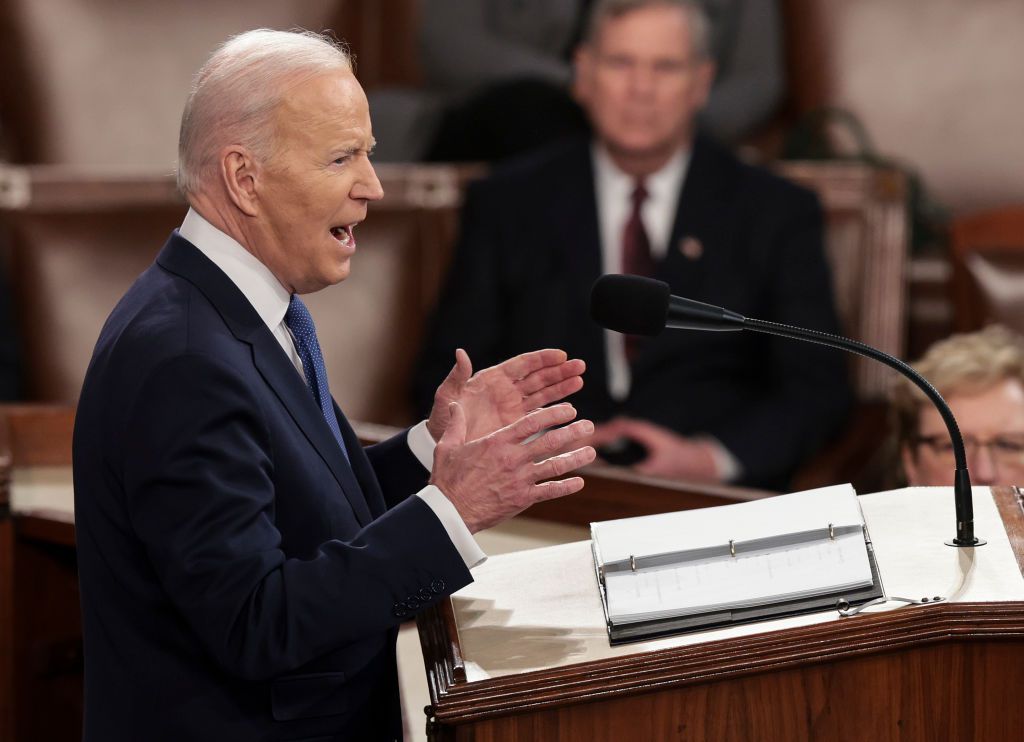
For millions of Americans, student loan forgiveness has felt less like a policy issue and more like a long-running television drama: dramatic announcements, court cliffhangers, payment pauses, surprise plot twists, and enough acronyms to make a tax accountant reach for coffee. So the big question remains: Is student loan forgiveness still on Biden’s agenda?
The honest answer is: not as an active presidential agenda, because Joe Biden is no longer president. Biden’s administration ended in January 2025, and the current federal student loan landscape is being shaped by the Trump administration, new repayment rules, court decisions, and ongoing federal programs such as Public Service Loan Forgiveness, income-driven repayment forgiveness, borrower defense, and disability discharge.
But that does not mean Biden’s student loan forgiveness agenda disappeared without leaving fingerprints. Quite the opposite. By the end of his term, the Biden-Harris administration had approved roughly $188.8 billion in student loan forgiveness for 5.3 million borrowers through a combination of existing federal programs, regulatory changes, and targeted relief actions. The broad, one-time cancellation plan was struck down by the Supreme Court in 2023, and the SAVE repayment plan later collapsed under legal pressure. Still, Biden’s approach reshaped the national conversation around college debt, repayment fairness, and whether the federal government should do more than simply mail borrowers a bill and wish them luck.
The Short Answer: Biden’s Forgiveness Agenda Is Now a Legacy, Not a Live Plan
If you are asking whether President Biden is currently pushing new student loan forgiveness from the White House, the answer is no. His presidency ended on January 20, 2025. The current administration has moved in a different direction, emphasizing repayment, simplification of loan plans, limits on future borrowing, and a new Repayment Assistance Plan scheduled for implementation in 2026.
However, if you are asking whether Biden-era student loan forgiveness still matters, the answer is a very loud yes. Think of it like a group project where Biden already turned in his section, the courts added red ink, and borrowers are still trying to figure out which version the professor is grading. Many of the forgiven balances have already changed people’s financial lives. At the same time, several Biden-era ideas, especially broad cancellation and the SAVE Plan, are no longer moving forward.
What Biden Tried to Do With Student Loan Forgiveness
Biden entered office promising to reduce the burden of student debt. His administration pursued that goal in two major ways: first, through a sweeping one-time cancellation plan; second, by expanding or fixing existing forgiveness programs that had already been written into federal law.
The Big Forgiveness Plan
The headline proposal was simple enough for borrowers to understand and big enough to make political opponents reach for a microphone: up to $10,000 in federal student loan cancellation for many eligible borrowers, and up to $20,000 for qualifying Pell Grant recipients. The administration argued that the COVID-19 emergency gave the Education Department authority to provide broad relief under the HEROES Act.
That plan would have helped tens of millions of borrowers. But in 2023, the Supreme Court ruled that the administration did not have authority to carry out cancellation on that scale without clearer congressional approval. In plain English: the Court said the Education Department could adjust loan rules in emergencies, but it could not use that authority to erase hundreds of billions of dollars in debt for a broad group of borrowers.
That ruling did not end all student loan forgiveness. It ended Biden’s biggest, splashiest, most campaign-promise-shaped version of it.
The Backup Strategy: Use Existing Programs Better
After the Supreme Court blocked broad cancellation, the Biden administration leaned hard into existing programs. These included Public Service Loan Forgiveness, income-driven repayment forgiveness, borrower defense to repayment, closed school discharge, and Total and Permanent Disability discharge.
This strategy was less flashy than “everyone gets cancellation,” but it was more legally durable in many cases. Instead of creating one giant new forgiveness program, the administration tried to repair programs that already existed but had been criticized for confusing rules, servicer mistakes, and extremely low approval rates.
How Much Student Debt Was Forgiven Under Biden?
By the end of Biden’s term, the administration reported approximately $188.8 billion in approved student loan forgiveness for 5.3 million borrowers. That total came through 33 executive actions and targeted categories of relief, not through the blocked one-time cancellation plan.
Major buckets of relief included:
- Public Service Loan Forgiveness: Relief for qualifying government and nonprofit workers after 120 qualifying monthly payments.
- Income-driven repayment fixes: Adjustments that credited borrowers for past repayment periods that had not been properly counted.
- Borrower defense: Relief for borrowers misled or defrauded by schools.
- Disability discharge: Cancellation for borrowers with total and permanent disabilities.
- Closed school discharge: Relief for some borrowers whose schools closed before they could complete their programs.
That is why the answer to “Did Biden forgive student loans?” is more complicated than a simple yes or no. His broad plan failed in court, but his administration still oversaw more student loan cancellation than any previous administration.
What Happened to the SAVE Plan?
The Saving on a Valuable Education Plan, better known as the SAVE Plan, was one of the Biden administration’s most important student loan repayment initiatives. It was designed to lower monthly payments for many borrowers, prevent unpaid interest from ballooning balances, and provide faster forgiveness for some borrowers with smaller original balances.
Borrowers liked the idea because it made repayment feel less like trying to fill a bathtub while the drain was open. For many people, especially lower-income borrowers, SAVE meant smaller monthly bills and less panic when interest started piling up.
But SAVE became a legal battleground. Republican-led states challenged the plan, arguing that the Education Department had exceeded its authority by creating repayment terms that functioned like mass forgiveness. Courts repeatedly blocked parts of the plan, and by 2026 the Department of Education had announced that SAVE had ended and that borrowers enrolled in the plan would need to move into another repayment option.
For borrowers, the practical result is important: SAVE is no longer a safe long-term repayment strategy. Borrowers who were enrolled in SAVE should pay close attention to notices from their loan servicers and Federal Student Aid, compare repayment options, and avoid assuming that a previous $0 payment will automatically continue forever.
Is Any Student Loan Forgiveness Still Available?
Yes. This is where many headlines get sloppy. Broad Biden-style mass cancellation is not currently moving forward, but several federal forgiveness and discharge programs still exist.
Public Service Loan Forgiveness
Public Service Loan Forgiveness, or PSLF, remains one of the most important paths to federal student loan cancellation. Borrowers may qualify if they work full time for a qualifying government or nonprofit employer, have eligible Direct Loans, make 120 qualifying monthly payments, and meet program rules.
PSLF matters because it connects loan relief to public service work. Teachers, nurses, firefighters, military members, nonprofit employees, social workers, and government workers have used it as part of their long-term financial planning. The program has also been politically debated, and recent rulemaking has focused on redefining certain eligibility details. Still, PSLF has not vanished.
Income-Driven Repayment Forgiveness
Income-driven repayment plans base monthly payments on income and family size. Under traditional IDR rules, borrowers may receive forgiveness after 20 or 25 years of qualifying payments, depending on the plan and loan type. That is not exactly instant relief. It is more like “financial slow cooking.” But for borrowers with high balances and modest incomes, IDR forgiveness can still be a meaningful path.
Future repayment rules are changing, especially with the creation of the new Repayment Assistance Plan. Borrowers should not assume that every old repayment plan will remain available forever, but the basic concept of income-linked repayment remains central to federal student loan policy.
Borrower Defense and Closed School Discharge
Borrowers who were misled by their schools may qualify for borrower defense relief. This has been especially important for students who attended certain for-profit colleges that made deceptive claims about job placement rates, earnings, accreditation, or program value.
Closed school discharge may also help borrowers whose schools shut down while they were enrolled or soon after they withdrew. These programs are not “free money.” They are remedies for borrowers who were harmed by institutional misconduct or sudden school closures.
Total and Permanent Disability Discharge
Borrowers who are totally and permanently disabled may qualify for federal student loan discharge. The Biden administration made major changes to streamline disability discharge, including automatic data matching for some eligible borrowers. This type of relief remains one of the clearest examples of student loan forgiveness serving a humanitarian purpose.
What Is the Current Administration Doing Instead?
The current administration has shifted the message away from broad cancellation and toward repayment. The Education Department has emphasized that borrowers should prepare to repay their loans, transition out of blocked or ended plans, and review new repayment options.
One of the biggest changes is the new Repayment Assistance Plan, often called RAP, which is scheduled to become available in 2026. RAP is designed to simplify repayment and replace some of the maze-like IDR structure that confused borrowers for years. Depending on income and debt level, it may help some borrowers while making repayment less generous for others.
Policy analysts have noted that RAP may reduce payments for some middle-income borrowers while requiring at least small payments from borrowers who previously might have owed $0 under older IDR formulas. It may also extend the forgiveness timeline to 30 years for some borrowers, which is long enough to make a person question whether their student loan has become a family heirloom.
Why Student Loan Forgiveness Became So Politically Explosive
Student loan forgiveness is controversial because it touches several emotional pressure points at once: fairness, taxes, college costs, personal responsibility, wages, class mobility, and whether higher education still delivers a good return on investment.
Supporters argue that student debt has become a drag on household formation, home buying, retirement savings, entrepreneurship, and mental health. They point out that many borrowers did what they were told: go to college, invest in yourself, and the economy will reward you. Then tuition rose, wages lagged in many fields, interest accumulated, and suddenly the “investment” looked like a subscription service with no cancel button.
Opponents argue that broad forgiveness shifts costs to taxpayers, including people who never attended college, already paid off their loans, or chose cheaper schools. They also worry that cancellation does not solve the root problem: colleges can keep raising prices if the federal government keeps absorbing the consequences.
Both sides have a point worth taking seriously. Student loan forgiveness can help borrowers who are genuinely trapped, but without controlling tuition, improving college accountability, and giving students clearer information about program outcomes, the country risks refilling the same debt bucket over and over.
What Borrowers Should Do Now
Borrowers should focus less on political slogans and more on their own loan file. That may sound boring, but boring can save money. The first step is to log in to StudentAid.gov and confirm loan types, servicer information, repayment plan status, PSLF counts if applicable, and whether any applications are pending.
Borrowers coming out of the SAVE Plan should watch for notices from their servicers. Missing a transition deadline could result in being placed into a standard or tiered standard repayment plan, which may raise monthly payments. Anyone working in public service should submit employment certification and track PSLF progress carefully. Borrowers with older loans, such as FFEL loans, should check whether consolidation is necessary for certain federal benefits.
Borrowers who attended a school that misled them should review borrower defense options. Borrowers with serious disabilities should check disability discharge rules. And borrowers struggling with payments should contact their servicer before defaulting, because default can bring credit damage, collection fees, wage garnishment, and tax refund offsets.
So, Is Student Loan Forgiveness Still on Biden’s Agenda?
No, not in the literal sense. Biden is no longer president, and his administration’s student loan forgiveness agenda has ended. The broad cancellation plan was blocked by the Supreme Court. The SAVE Plan has ended after legal challenges. New repayment policies are now being shaped by the current administration.
But Biden’s student loan forgiveness agenda remains historically important. It changed millions of balances, repaired broken forgiveness pathways, expanded public awareness of PSLF and IDR, and forced the country to confront a basic question: what should happen when higher education is sold as a ticket to opportunity but financed like a luxury yacht?
The future of student loan forgiveness is likely to be narrower, more program-specific, and more dependent on congressional action or carefully designed regulations. Borrowers should not bank on sweeping cancellation. But they also should not assume forgiveness is impossible. The smartest approach is to understand which programs still exist, track eligibility, keep documentation, and make repayment decisions based on current rules instead of campaign-season wishful thinking.
Borrower Experiences: What This Topic Feels Like in Real Life
Behind every student loan policy debate is a borrower refreshing their email, checking a servicer portal, and wondering whether the number on the screen is about to change their life. Student loan forgiveness is not abstract when your monthly payment competes with rent, groceries, childcare, car repairs, and the occasional wild dream of ordering guacamole without checking your bank balance first.
Consider a public school teacher who borrowed for a master’s degree because her district encouraged advanced credentials. For years, she made payments while working in a qualifying public service job, only to discover that some payments did not count because she was in the wrong repayment plan. Under Biden-era PSLF fixes, borrowers like her finally saw years of service recognized. The experience was part relief, part disbelief, and part “Why was this so hard in the first place?”
Now think about a borrower who attended a for-profit college that promised strong job placement but delivered weak credentials and a mountain of debt. For that borrower, forgiveness through borrower defense is not a bonus. It is a correction. It says, in effect, that students should not be left holding the bill when a school sells a dream it cannot honestly provide.
Another common experience belongs to borrowers enrolled in SAVE. Many saw monthly payments fall, sometimes to $0, and felt they finally had room to breathe. Then came lawsuits, injunctions, forbearance confusion, and the eventual end of the plan. For these borrowers, the emotional whiplash is real. Planning a budget around a repayment program that later disappears is like building a house on a rug and then watching someone pull the rug.
There are also borrowers who feel frustrated by forgiveness. Some paid off loans early by working extra jobs, living with roommates, skipping vacations, or choosing lower-cost schools. They hear cancellation proposals and wonder why sacrifice seems to be punished. That experience matters too. Any serious student loan policy has to acknowledge the resentment felt by people who followed the rules as they understood them.
Parents are another part of the story. Parent PLUS borrowers often took on debt because they wanted to give their children a better future. Many did not fully understand how limited their repayment options could be. For them, student debt can collide with retirement planning, health expenses, and fixed incomes. Forgiveness debates are not just about twenty-somethings; they also affect parents and even grandparents.
The biggest lesson from these experiences is that borrowers need clarity more than slogans. They need repayment plans that do not change every few months, servicers that give accurate information, colleges that are accountable for outcomes, and policymakers who remember that a loan balance is not just a number. It is a monthly reminder of a decision often made at 18, under pressure, with incomplete information and a brochure full of smiling students sitting under suspiciously perfect trees.
Student loan forgiveness may no longer be on Biden’s active agenda, but the borrower experience he spotlighted is still very much alive. The next chapter will be judged not only by how much debt is forgiven, but by whether the system becomes easier to understand, fairer to navigate, and less likely to trap the next generation in the same expensive maze.
Conclusion
Student loan forgiveness is no longer an active Biden White House agenda item, but it remains one of the defining issues of his presidency. His administration failed to deliver broad one-time cancellation after the Supreme Court blocked the plan, yet it still approved historic levels of targeted relief through existing programs. Today, borrowers face a new reality: SAVE has ended, repayment rules are changing, and broad cancellation is unlikely without congressional action.
The best move for borrowers is practical, not political. Check your loan status, understand your repayment plan, track forgiveness eligibility, and respond quickly to servicer notices. Student loan forgiveness is not completely gone, but it has become more limited, more technical, and more dependent on specific qualifications. In other words, the magic wand is off the table. The paperwork, unfortunately, is very much alive.