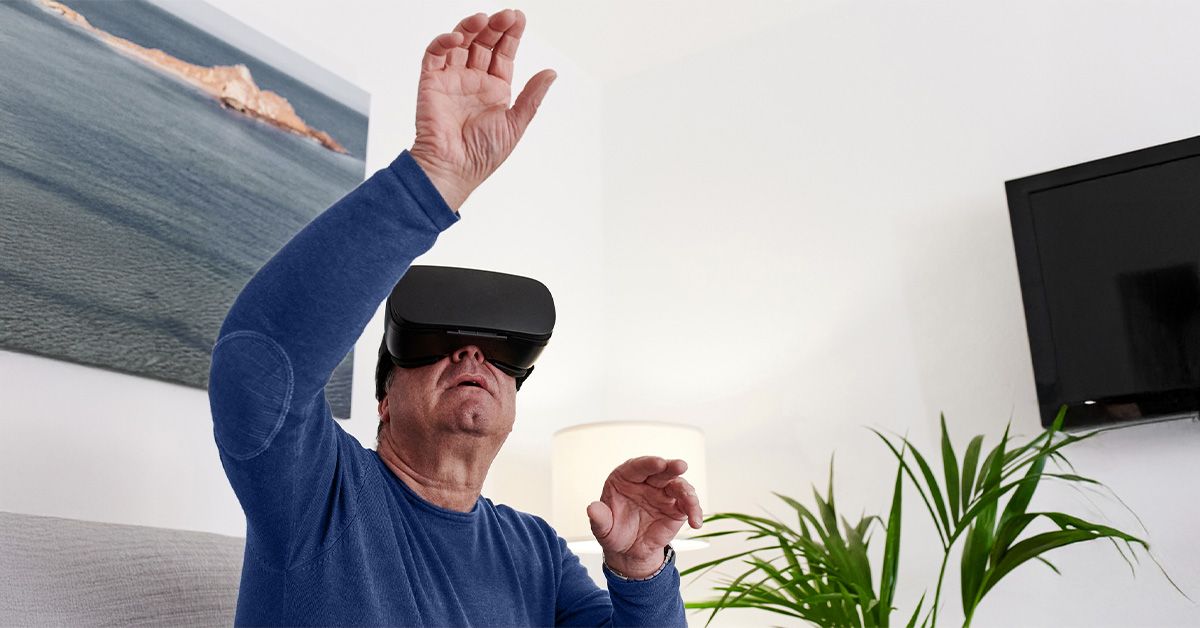
If the phrase exercise video games makes you picture a grandparent shadowboxing the television while a confused cat watches from the couch, you are not entirely wrong. But the bigger question is more serious: can these active games actually help protect the brain and lower the risk of Alzheimer’s disease?
The honest answer is a smart, cautious maybe. Regular physical activity is one of the most consistent lifestyle habits linked with better brain health. Exercise video games, also called exergames, add an interesting twist by mixing movement with attention, coordination, reaction time, and often a little friendly competition. That combination has made researchers pay attention for a very simple reason: the brain likes a challenge, and the body does too.
Still, this is not the moment for magical thinking. No game, gadget, or virtual tennis match has been proven to prevent Alzheimer’s all by itself. What exercise video games may do is help older adults move more, stay engaged longer, and practice both physical and mental skills at the same time. And in the world of healthy aging, that is not a small thing.
What Are Exercise Video Games, Exactly?
Exercise video games are games that require body movement rather than only thumbs and intense staring. They can include dance games, motion-controlled sports, virtual cycling, rhythm games, balance games, and virtual reality fitness programs. In other words, they turn exercise into something that feels less like a lecture and more like a mission.
Unlike traditional workouts, exergames often ask the player to do several things at once. You may need to step in the right direction, react to cues on a screen, remember a pattern, dodge a virtual obstacle, or keep pace with a task that changes in real time. That blend of motion and mental effort is exactly why they are so interesting in conversations about Alzheimer’s prevention and cognitive decline.
Why Alzheimer’s Prevention Is Such a Big Deal
Alzheimer’s disease is the most common cause of dementia, and it affects memory, thinking, judgment, and eventually daily functioning. Age remains the biggest risk factor, but it is not the only one. Researchers have spent years studying how heart health, blood pressure, diabetes, sleep, depression, hearing loss, social isolation, and physical inactivity may shape long-term brain health.
That is why prevention conversations now sound less like “find one miracle cure” and more like “build a brain-friendly lifestyle.” It is not as glamorous as a sci-fi helmet, but it is much more realistic. The strongest evidence still points toward ordinary habits: move your body, manage vascular risk factors, sleep well, stay socially connected, challenge your mind, and keep doing those things long enough for them to matter.
What Science Says About Exercise and Alzheimer’s Risk
Exercise helps the brain, even if it is not a magic shield
Researchers do not have clear proof that exercise alone can completely prevent Alzheimer’s disease. That is the important reality check. However, there is strong support for something slightly less dramatic and still very meaningful: regular physical activity is associated with better brain health, lower risk of age-related cognitive decline, and improved management of health problems that raise dementia risk.
Why might that happen? Exercise improves blood flow, supports heart health, helps regulate blood sugar, improves sleep, reduces stress, and may boost brain plasticity. It can also improve mood and reduce sedentary time, which matters because a brain living inside a healthier body tends to have better odds than a brain trapped in a chair all day.
Even more encouraging, experts increasingly describe physical activity as useful across the spectrum. For cognitively healthy adults, it may support long-term brain resilience. For people with mild cognitive impairment, it may help preserve certain thinking skills. For people already living with dementia, movement may still improve mood, sleep, mobility, confidence, and some aspects of cognition.
The most important takeaway: consistency beats intensity theater
A huge misconception is that brain-protective exercise must look heroic. It does not. A flashy fitness montage is optional. What matters far more is regular movement done safely and often enough to become routine. Walking, dancing, cycling, strength work, balance training, and active games can all fit into that picture.
That matters because the real enemy for many older adults is not a lack of information. It is boredom, fear of falling, pain, low motivation, bad weather, social isolation, or the simple truth that some forms of exercise feel about as appealing as folding wet laundry. This is where exercise video games enter the chat.
So, Can Exercise Video Games Help?
Yes, they can help, but the word help is doing a lot of careful work here.
Exercise video games are promising because they may solve one of the biggest problems in any fitness plan: getting people to stick with it. If a person is more willing to step, reach, balance, turn, react, and laugh while playing a game than while counting treadmill minutes like a prisoner carving marks into a wall, the game has already cleared an important hurdle.
Some studies in older adults with mild cognitive impairment or dementia suggest exergames may improve global cognitive function, executive function, attention, memory, balance, and physical performance. In several reviews, the benefits appear strongest when the programs last longer and are performed regularly rather than as one-off novelty sessions. Translation: one enthusiastic Saturday with virtual bowling is nice, but it is not a retirement plan for your neurons.
Why exergames may be uniquely useful
Traditional exercise works mostly through physical pathways. Exergames may add another layer by requiring the brain to react, plan, remember, and adapt while the body moves. That dual-task effect is important because daily life rarely asks us to do one thing at a time. We walk while talking, cook while deciding, and navigate stores while ignoring a thousand distractions and one suspiciously expensive avocado display.
Exergames can also provide immediate feedback. A player sees scores, levels, prompts, targets, and progress. That feedback may increase motivation and enjoyment, especially for people who dislike repetitive workouts. Some systems are social too, which matters because social engagement is also associated with healthier cognitive aging.
Where the Evidence Looks Strongest
The best case for exercise video games right now is not that they are a proven shield against Alzheimer’s. It is that they appear to be a useful tool inside a broader healthy-aging strategy, especially for:
- older adults who find standard workouts boring or hard to maintain,
- people with mild cognitive impairment who can still follow structured game prompts,
- community programs trying to combine movement, fun, and social interaction,
- caregivers looking for safer, shorter, more engaging activity sessions at home or in supervised settings.
Researchers have reported promising results in programs using motion-based games, virtual reality cycling, balance tasks, and other active formats. Some findings suggest improvements in executive function, memory-related tasks, reaction speed, and general cognitive scores. Other studies show gains in balance, gait, confidence, and participation. That is encouraging because falls, inactivity, and isolation often travel together in older age like an uninvited trio.
Where the Evidence Is Still Weak or Uncertain
Here is the part that keeps the article honest and saves everyone from headline nonsense: the research is still mixed.
Some systematic reviews find meaningful cognitive benefits from exergaming, especially in people with mild cognitive impairment and in longer programs. But other reviews describe the overall evidence as uncertain because the studies are small, the methods differ, the game types vary wildly, and the comparison groups are not always consistent. In plain English, one study may compare exergaming to doing nothing, while another compares it to regular exercise. Those are very different contests.
There is also the issue of supervision. Many studies happen in controlled environments with trained staff, clear instructions, and safety support. Real homes are messier. Rugs slide. Pets wander. Wi-Fi sulks. Grandchildren “help” by changing the settings into chaos mode. So while exergames may be safe and useful, they are not automatically plug-and-play for every household.
Another important limit: exergames are more likely to support brain health and engagement than to stop Alzheimer’s pathology in its tracks. They may help people function better, stay active, and challenge the brain. That is valuable. It is also different from saying they prevent the disease outright.
How to Use Exercise Video Games in a Brain-Healthy Way
1. Treat them as a tool, not the whole toolbox
The smartest approach is to use exergames as one part of a larger routine. Pair them with walking, strength training, flexibility work, sleep habits, healthy eating, social activities, and regular medical care. Brain health is a team sport.
2. Choose games that match ability, not ego
The best game is not the most intense one. It is the one a person can use safely and consistently. For some people, that may be gentle balance games or seated movement tasks. For others, it may be dance, stepping, rhythm games, or virtual sports.
3. Keep sessions realistic
Short sessions count. Ten to twenty minutes done regularly can be more sustainable than a dramatic 60-minute session that inspires a three-day nap and lifelong resentment.
4. Prioritize safety
Clear the floor, use supportive shoes, keep water nearby, and consider supervision for anyone with balance issues, significant cognitive impairment, or a history of falls. A game should raise the heart rate, not the family blood pressure.
5. Aim for enjoyment
Enjoyment is not fluff. It is adherence fuel. If someone smiles, laughs, competes, and asks to do it again tomorrow, that matters more than a perfect fitness aesthetic.
What a Practical Weekly Routine Might Look Like
A realistic brain-friendly routine might include brisk walking on several days, two strength sessions, a few balance exercises, and two or three short exergame sessions each week. The goal is not to turn the living room into a startup wellness lab. The goal is to reduce sedentary time and make regular movement easier to repeat.
For a person with mild cognitive changes, a caregiver or family member can make the experience smoother by setting up the system, simplifying instructions, and joining in. That social piece can turn “exercise time” into shared time, which is often far more sustainable.
Experiences From the Real World: What People Often Notice Over Time
In real life, the first benefit families notice is often not memory. It is willingness. A person who refuses a formal workout may agree to “play a game for ten minutes.” That tiny shift matters because it changes exercise from an obligation into an activity. Once that happens, the whole mood around movement can soften.
Some older adults say exergames feel less intimidating than a gym and less monotonous than walking laps in the neighborhood. They like the cues, the structure, and the feeling that something is happening on the screen besides a clock judging them. For people who spent years avoiding exercise because it felt repetitive, the game format can be a back door into healthier habits.
Caregivers often describe another subtle change: engagement. A loved one who seems mentally flat during ordinary exercise may become more alert when there is a target to hit, a score to beat, or a sequence to follow. The game gives the activity a purpose. Instead of “lift your arm five times,” the task becomes “catch the balloon,” “step on the glowing tile,” or “return the virtual tennis ball.” That small difference can turn compliance into participation.
There are emotional benefits too. Many families report more laughter during active games than during standard exercise. That may sound minor, but joy is not minor in dementia care or brain-health routines. Enjoyment can reduce resistance, lower stress, and make repetition easier. And repetition is where the value lives.
Community centers and senior programs often see social momentum build around exergames. One person starts, another watches, then suddenly a small crowd is cheering through virtual bowling like it is the championship round. The social atmosphere can pull in people who might never volunteer for a fitness class. In that sense, the game is not just exercise equipment. It is an invitation.
At the same time, not every experience is a glowing montage. Some people find the technology annoying. Some become frustrated by fast visual cues or confusing menus. Others are physically unable to use certain systems safely. That is why matching the game to the person is so important. A badly chosen program can discourage participation just as quickly as a good one can encourage it.
Families also learn that progress can look ordinary. Sometimes the win is not a dramatic memory improvement. Sometimes it is better balance getting out of a chair, more confidence taking steps, fewer excuses to stay sedentary, improved mood after activity, or a more regular daily routine. Those are meaningful gains, even when they do not make for flashy before-and-after stories.
Another common experience is that shorter, familiar sessions work best. People do well when the game becomes part of a rhythm: after breakfast, before lunch, with a spouse, three times a week, same room, same setup, low stress. Brain-friendly habits grow better in routine than in chaos.
Perhaps the most useful lesson from real households is this: exergames work best when nobody expects them to perform miracles. When families use them as one enjoyable way to move, think, connect, and repeat healthy behavior, they can become surprisingly valuable. Not because they are futuristic wizardry, but because they make a good habit easier to keep.
Final Verdict
So, can exercise video games help keep Alzheimer’s at bay? Potentially, yes, in a supporting role. They are not a proven shield against the disease, and they should not be marketed like one. But they can help older adults move more, stay mentally engaged, practice balance and coordination, and stick with activity long enough for it to matter. That is not hype. That is useful.
The smartest conclusion is also the least flashy: exercise video games are most promising when they are part of a bigger brain-health strategy. Think of them as a bridge between intention and action. They may not cure anything, but for some people, they make the healthy choice more fun, more social, and far more doable. And when it comes to long-term habits, doable is a superpower.