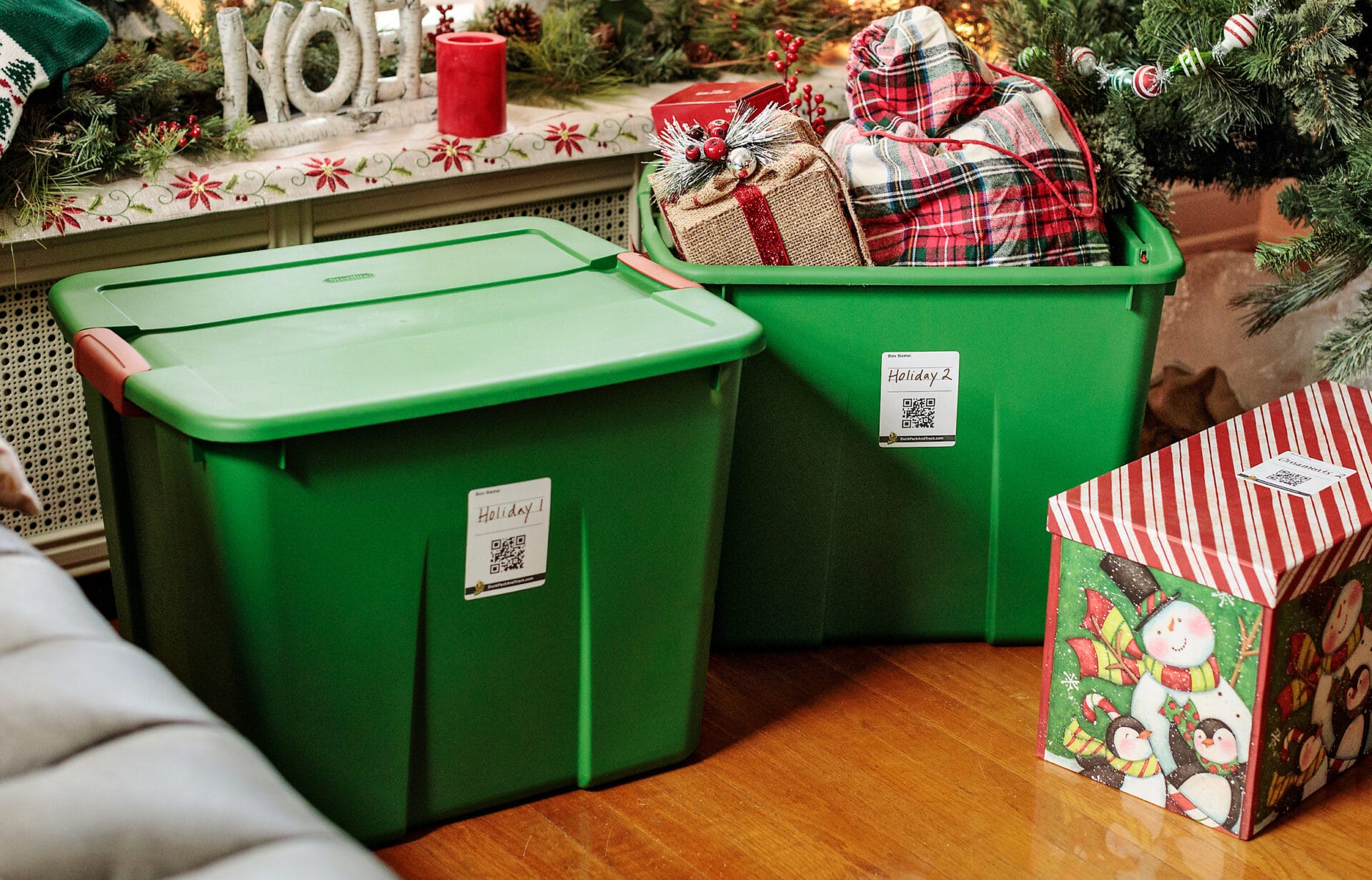
Note: Duck Pack & Track was an app-based labeling and storage inventory system from Duck Brand. The official Duck Brand FAQ states that the Duck Pack & Track app was permanently discontinued on April 1, 2023, and its proprietary labels no longer work with ordinary QR code readers. This article explains how the system worked, why it was useful, and what today’s homeowners, movers, renters, resellers, and organization lovers can learn from it.
Somewhere in America, right now, a person is standing in front of six identical storage bins muttering, “I know I put the holiday lights in one of these.” Fifteen minutes later, they have found a Halloween wig, three extension cords, a box of mystery cables, and a single shoe nobody remembers buying. The holiday lights? Naturally, they are in the bin labeled “Kitchen.”
That everyday comedy is exactly the kind of problem the Duck Pack & Track app was designed to solve. Instead of writing vague labels on cardboard boxes and hoping Future You could decode them, Duck Pack & Track created a digital inventory system for boxes, bins, closets, storage units, garages, attics, basements, craft rooms, dorm rooms, and moving-day chaos. The idea was simple: label the container, scan it with your phone, log what is inside, and search later when you need something.
For anyone who has ever bought a second tape measure because the first one was “somewhere safe,” the concept still feels refreshingly practical. Even though the original app is no longer active, its system remains a smart blueprint for modern home organization: every stored item should have a home, every container should have a clear identity, and every important item should be searchable before frustration turns into a full excavation project.
What Was the Duck Pack & Track App?
Duck Pack & Track was a digital storage and moving organization system built around custom labels and a mobile app. Users purchased Duck Pack & Track labels, placed them on boxes or smooth storage containers, scanned the unique code through the app, and created a digital record for that container. The record could include the box name, location, contents, and even photos of what was packed inside.
Instead of labeling a box “Miscellaneous,” which is basically the storage equivalent of throwing your belongings into a fog machine, the system encouraged users to be specific. A better label might be “Garage Shelf 2: Camping Gear” or “Bedroom Closet: Winter Sweaters.” Once an item was entered into the app, users could search for it later by typing or speaking the item name. The app would then show which box or bin contained it.
At launch, the Duck Pack & Track system was promoted as a way to make moving, unpacking, and household storage less stressful. It worked especially well for people who had many containers that looked similar: plastic totes in a garage, stacked moving boxes, resale inventory bins, seasonal decor containers, craft supply boxes, or long-term storage tubs.
Why Digital Storage Tracking Matters
Traditional labeling works until life gets complicated. A marker on a box is helpful when you have five boxes. It becomes less helpful when you have fifty. And it becomes almost useless when those boxes are stacked three deep behind a folding chair, a broken fan, and a bag of gift bows from 2014.
Digital storage tracking solves three common problems: memory, visibility, and searchability. Memory is the first to fail because most people do not remember exactly where they packed every item. Visibility is the next issue because items disappear once they are inside opaque containers or sealed cardboard boxes. Searchability is the big upgrade: instead of opening boxes one by one, you search a digital list and go directly to the right container.
This is the same reason businesses use inventory systems instead of guessing where products are. A home may not be a warehouse, but anyone with a packed garage knows it can certainly feel like one. The Duck Pack & Track app brought that inventory mindset into everyday life without requiring spreadsheets, barcode scanners, or a degree in logistics.
How Duck Pack & Track Worked
1. Label the Box or Bin
The first step was to place a Duck Pack & Track label on a box, tote, plastic bin, or other smooth-surface container. Each label had a unique code connected to the app. The physical label gave the container an identity, which is the foundation of any reliable storage system.
A good naming habit made the system even better. Instead of “Box 1,” users could name containers by category and location, such as “Holiday Decor: Tree Ornaments,” “Office Closet: Tax Records,” or “Kids’ Room: Outgrown Clothes 4T.” The more specific the name, the less detective work required later.
2. Scan the Label with the App
After applying the label, users scanned it with their phone through the Duck Pack & Track app. This connected the physical container to a digital record. The scan was useful because it reduced confusion: the label on the bin matched the record in the phone.
This kind of scan-and-log process is especially helpful during a move. Moving days are famous for turning calm adults into people who pack the coffee maker at midnight and forget where they put the mugs. A quick scan system keeps decisions organized before the moving truck arrives.
3. Add Contents, Location, and Photos
Once a container was scanned, users could enter what was inside. The app allowed typed entries and voice input, which made the process faster when packing many items. Users could also add photos, a small feature with big practical value.
Photos are useful because written descriptions can be too broad. “Cords” is not very helpful when you need one specific laptop charger. A photo can show exactly what is in the box before you pull it down from a shelf. For high-value items, photos can also support insurance records, moving claims, or simple peace of mind.
4. Search When You Need Something
The best part of the system was the Find function. Users could search for an item, and the app would show which container held it. That meant no more opening every bin to find one scarf, screwdriver, cookbook, or missing toy dinosaur. The app acted like a personal search engine for stored belongings.
That may sound small, but small frustrations add up. A searchable storage system saves time, reduces duplicate purchases, and makes storage areas less intimidating. When you know where things are, your garage stops feeling like a villain’s lair and starts acting like usable square footage again.
Best Uses for Duck Pack & Track
Moving to a New Home
Moving is where a system like Duck Pack & Track shines. During packing, each box can be assigned a room, category, priority level, and destination. A box called “Kitchen: Coffee and Breakfast” is much more useful than “Kitchen Stuff.” Better yet, marking certain containers as “Open First” helps you find essentials on the first night.
For example, an “Open First” box might include coffee, mugs, paper towels, basic tools, phone chargers, medicine, pet food, toilet paper, and a change of clothes. Without a tracking system, that box has a magical way of hiding under twenty less important boxes labeled “Books.”
Garage and Basement Storage
Garages and basements are where good intentions go to gather dust. They hold seasonal decorations, tools, sports gear, paint supplies, camping equipment, garden items, and the occasional object nobody can identify but everyone is afraid to throw away.
A digital inventory system gives every container a purpose. You can create categories such as “Outdoor,” “Auto,” “Holiday,” “Tools,” “Paint,” “Sports,” and “Keepsakes.” Then you can track the exact shelf or corner where each container lives. Instead of searching the entire garage, you search the app and go straight to the right spot.
Seasonal Decor
Holiday decorations are perfect candidates for digital tracking. Many households store ornaments, lights, wreaths, candles, table linens, gift wrap, costumes, and outdoor decorations in separate bins. The trouble begins when the bins are all red, green, orange, or clear-but-not-clear-enough.
With a Pack & Track-style system, you could log “white string lights,” “front door wreath,” “Thanksgiving table runner,” or “Halloween skeleton hands” and know exactly which bin to grab. That is especially helpful when you only need one item and do not want to perform a full archaeological dig in the attic.
Small Business and Resale Inventory
Resellers, craft sellers, online shop owners, and hobby businesses often store inventory in boxes or bins. A searchable system can help track where each item is located before it sells. For example, a reseller could log “vintage denim jacket,” “blue ceramic vase,” or “set of four brass knobs” and find the correct bin when it is time to ship.
This approach reduces errors, speeds up order fulfillment, and prevents the dreaded “I sold it but can’t find it” panic. For a small business, organized storage is not just neatit protects time, money, and customer trust.
Craft Rooms and Hobby Supplies
Craft rooms are wonderful places, but they can become tiny tornado zones. Fabric, yarn, beads, paint, glue, paper, cutting tools, patterns, and unfinished projects all need homes. A digital label system helps makers find supplies quickly without buying duplicates.
Imagine searching “gold ribbon” and finding that it is in “Craft Bin 3: Gift Wrap,” not under the desk, not in the closet, and not behind the sewing machine where it has been living rent-free since last spring. That is the kind of tiny victory that keeps creative energy alive.
What Made the Duck Pack & Track App Useful?
The genius of Duck Pack & Track was not that it invented organization. People have labeled boxes for generations. The real value was combining physical labels with searchable digital records. That bridge between the real world and the phone made storage easier to manage.
The app also lowered the effort required to keep an inventory. Voice input made it easier to add multiple items while packing. Photos made records more visual. Location fields made containers easier to retrieve. The search function made the entire system feel less like a chore and more like a shortcut.
Most importantly, it helped users organize for how real people think. When you need your snow gloves, you do not want to remember whether they are in “Winter,” “Closet,” “Sports,” or “Blue Bin.” You want to search “snow gloves” and get an answer. That is the difference between storage and usable storage.
The Important Discontinuation Issue
The biggest drawback today is that Duck Pack & Track is no longer an active app. Duck Brand discontinued the app on April 1, 2023, citing a decline in usage. The company also noted that users could no longer download app content after that date, and the original labels were made specifically for the Duck Pack & Track app rather than general QR code readers.
That matters for anyone who finds old labels online or has unused labels in a drawer. The labels may still be physically adhesive, but the original digital function is no longer supported. In other words, buying leftover labels today is not the same as buying a working modern inventory system.
However, the organizational method behind Duck Pack & Track is still extremely useful. You can recreate the same basic workflow with modern QR label systems, inventory apps, spreadsheets, cloud notes, or even a shared family document. The tool changed, but the principle remains: give each container a unique identity, record what is inside, and make the record searchable.
How to Recreate a Duck Pack & Track-Style System Today
Create a Numbering System
Start by assigning every container a unique number or code. For example, use “G-01” for Garage Box 1, “A-04” for Attic Box 4, or “C-07” for Closet Bin 7. Write the code clearly on multiple sides of the box so you can see it no matter how the container is stacked.
Build a Searchable Inventory
Use a spreadsheet, notes app, home inventory app, or QR label service to record each container. Include fields for box code, room, location, contents, priority, date packed, and notes. The key is searchability. If you can type “passport,” “wreath,” “printer ink,” or “baby blanket” and find the right container, the system is working.
Add Photos
Photos reduce confusion and save time. Take one photo of the open container before closing it. For valuable items, take close-up photos and record serial numbers when available. This is useful for electronics, collectibles, tools, jewelry, camera gear, and business inventory.
Use Specific Keywords
When entering contents, think like the person who will search later. Instead of “winter stuff,” write “winter coats, snow gloves, scarves, knit hats, thermal socks.” Instead of “documents,” write “tax returns, mortgage papers, birth certificates, insurance records.” Specific words make search results more accurate.
Keep the System Easy
The best storage system is the one you will actually use. If your inventory process takes ten minutes per box, you will abandon it by Box 6 and start writing “random” on everything. Keep entries practical. List important items, categories, and anything you know you will search for later.
Common Mistakes to Avoid
The first mistake is using labels that are too vague. “Stuff,” “More Stuff,” and “Stuff 2” are not labels; they are cries for help. Always include a room, category, or purpose.
The second mistake is failing to update the inventory. If you remove the camping lantern from a bin, update the record. Otherwise, the system becomes a historical document instead of a current tool. A wrong inventory is almost worse than no inventory because it sends you confidently to the wrong place.
The third mistake is overpacking containers. A bin that is too heavy to lift might be organized on paper, but it is still annoying in real life. Keep containers manageable, especially if they will be stored overhead or moved often.
The fourth mistake is ignoring location. Knowing an item is in “Box 12” is helpful. Knowing “Box 12 is on the garage shelf, second row, left side” is much better. Location details turn your inventory into a map.
Experience Section: Real-Life Lessons from Using a Pack-and-Track Mindset
The real magic of a Duck Pack & Track-style system shows up during ordinary moments. Not dramatic, movie-trailer moments. Just regular life moments when you need one specific thing and do not want to turn your home into a crime scene investigation.
Picture a family preparing for the holidays. In the old system, decorating begins with someone pulling down eight bins and opening them all in the hallway. The dog steals a ribbon. Someone steps on an ornament hook. Nobody knows where the outdoor timer is. With a tracked system, the family searches “outdoor timer” and finds “Holiday Bin 5: Exterior Lights.” One bin comes down, the timer appears, and peace is restored before cocoa gets cold.
Or think about a renter moving into a first apartment. Moving boxes are stacked in the living room like cardboard skyscrapers. Without a system, the renter opens box after box looking for a shower curtain, which is not a luxury when you need to go to work the next morning. With a digital inventory, “shower curtain” leads directly to “Bathroom Box 2.” That one search can make the first night in a new place feel less like camping indoors.
Small business owners benefit even more. A part-time reseller may have twenty bins of clothing, books, toys, or home goods. When an item sells, speed matters. If the inventory says “red wool blazer” is in “Resale Bin R-06, closet shelf,” the order can be packed quickly. Without a system, the seller may spend an hour searching, sweating, and questioning every career decision that led to this moment.
Parents also know the pain of rotating children’s clothes. One month you need size 3T pajamas; the next, you are searching for snow boots that were “definitely saved.” A searchable storage list lets parents track sizes, seasons, and categories. Boxes can be named “Kids Clothes: 2T Summer,” “Kids Clothes: 3T Winter,” or “Baby Keepsakes.” This makes hand-me-downs easier to use and sentimental items easier to protect.
There is also an emotional benefit. Clutter often feels overwhelming because it is unknown. A sealed box could contain important documents, old cables, craft supplies, or three mugs wrapped in newspaper. Once the contents are recorded, the mystery disappears. The box stops being a question mark and becomes a known part of the home.
One practical experience many organizers share is that the system works best when used during packing, not after. Trying to inventory fifty sealed boxes later is like trying to write a restaurant review after eating in the dark. As each box is packed, add the contents immediately. The extra minute spent logging items can save many future minutes of searching.
Another lesson is to combine digital tracking with visual cues. Color-coded tape, room labels, and large printed numbers make the physical storage area easier to navigate. The digital system tells you what you need; the visual system helps you find the container quickly. Together, they create a storage setup that feels simple rather than fussy.
The Duck Pack & Track app may no longer be available, but its best idea is still alive: your stored items should not vanish just because they are packed away. Whether you use a modern QR system, a spreadsheet, or a notes app, the goal is the same. When you need something, you should be able to find it without opening every box in the house and accidentally discovering decorations from three holidays ago.
Conclusion
Duck Pack & Track offered a clever solution to a very human problem: we own things, we store things, and then we forget where the things went. By connecting labeled containers to a searchable mobile inventory, the app made it easier to locate stored items, manage moving boxes, organize seasonal decor, and keep household supplies under control.
Although the original Duck Pack & Track app has been discontinued, the organizing strategy behind it remains valuable. A smart storage system does not need to be complicated. It needs clear labels, useful categories, searchable records, accurate locations, and a habit of updating the list when items move.
If your attic, garage, closet, or storage unit currently looks like a cardboard jungle, the Pack & Track approach can still inspire a better way. Give every container a name. Record what is inside. Add photos when they help. Search before you dig. Your future self will thank you, probably while holding the exact item you needed in under sixty seconds.