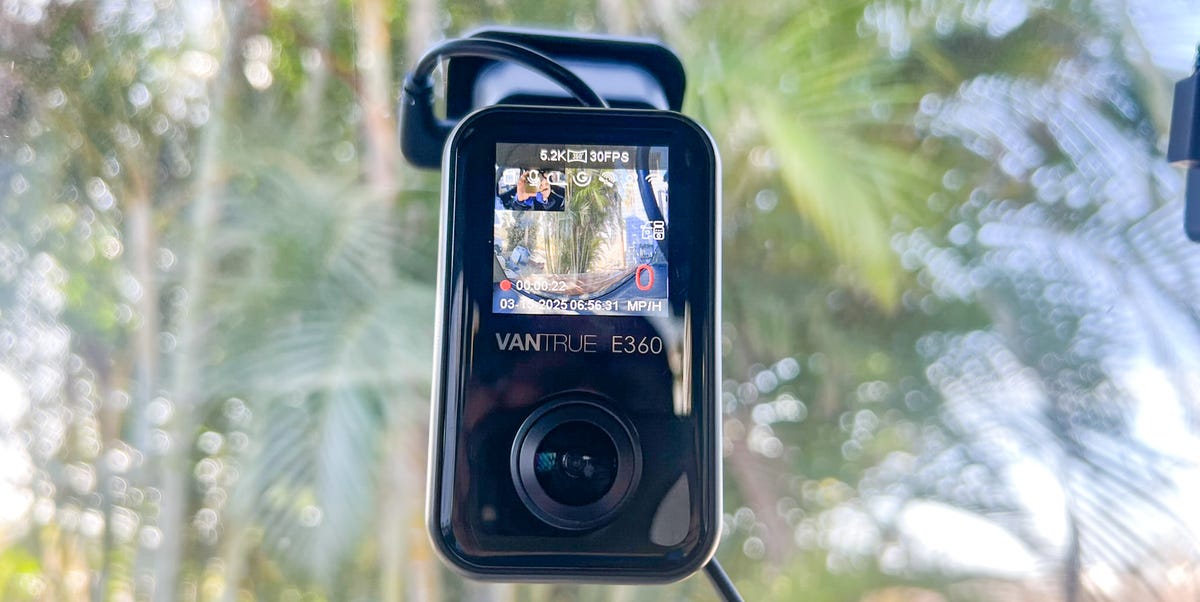
Buying a dashcam used to be simple: pick a little camera, stick it to the windshield, and hope it recorded something clearer than a potato in a rainstorm. Not anymore. In 2025, the best dashcams are sharper, smarter, smaller, and far more useful than the grainy road recorders of the past. Today’s top models can capture 4K video, monitor your car while parked, save clips automatically after a crash, track GPS data, connect to your phone, and even send cloud alerts when something suspicious happens.
That is great news for drivers, but it also makes shopping confusing. Do you need 4K or is 1080p enough? Is a front-only dashcam fine, or should you buy a front and rear dash cam? Are subscription-based smart features worth it? And why does every product page suddenly sound like it was written by a robot who really loves the phrase “ultra clear night vision”?
This guide cuts through the windshield glare. Below are six of the best dashcams in 2025, chosen for real-world usefulness, video quality, reliability, parking protection, app experience, and value. Whether you commute daily, drive for rideshare, park on busy streets, or simply want proof when another driver says, “I definitely had the green light,” these dashcam reviews will help you choose the right model.
Quick Picks: Best Dashcams in 2025
- Best Overall: Viofo A329S 2CH
- Best Parking Protection: Thinkware U3000 Pro
- Best Smart Dashcam: Nextbase iQ 4K
- Best for Rideshare Drivers: Vantrue Nexus 5S
- Best Compact Dashcam: Garmin Dash Cam Mini 3
- Best Value 4K Dashcam: 70mai Dash Cam 4K A810
How We Chose the Best Dashcams
The best dash cam is not always the one with the longest spec sheet. A camera can claim 4K recording and still struggle with glare, night driving, or license plates moving at highway speed. For this list, the most important factors were video clarity, low-light performance, field of view, storage options, reliability, ease of installation, parking mode, GPS, app usability, and overall value.
We also considered different types of drivers. A rideshare driver may need cabin recording. A city driver may care more about parking surveillance. A minimalist may want a tiny camera that hides behind the mirror. A road tripper may want GPS, fast downloads, and large storage. In other words, the “best dashcam” depends on whether your car needs a security guard, a witness, a travel recorder, or all three wearing a tiny adhesive mount.
1. Viofo A329S 2CH – Best Overall Dashcam
Why it stands out
The Viofo A329S 2CH is one of the most complete dashcams for 2025 because it focuses on the thing that matters most: excellent footage. The front camera records up to 4K at 60 frames per second, while the rear camera records at 2K HDR. That combination gives drivers sharp forward detail and strong rear coverage without turning the setup into an overly complicated science project.
Its Sony STARVIS 2 sensors help improve low-light clarity, which is a major advantage for night driving, rain, parking lots, and early-morning commutes when every headlight looks like a tiny sun. Wi-Fi 6 support makes file transfers quicker than older dashcams, and support for large SSD storage is a big win for drivers who want long recording capacity without constantly managing memory cards.
Best for
The Viofo A329S is best for drivers who want premium video quality, front and rear recording, strong night footage, and advanced storage. It is a great fit for commuters, road-trippers, and anyone who wants crisp evidence rather than a blurry clip titled “Maybe That Was a License Plate.”
Potential drawbacks
The A329S is not the cheapest dashcam, and its deeper feature set may be more than casual drivers need. Installation is also more involved if you want clean rear-camera wiring and parking mode. Still, for overall performance, it is one of the most convincing dashcams of the year.
2. Thinkware U3000 Pro – Best Dashcam for Parking Protection
Why it stands out
The Thinkware U3000 Pro is built for people who worry about what happens after they walk away from the car. It offers 4K front recording and 2K rear recording, both supported by Sony STARVIS 2 sensors. The standout feature, however, is radar-assisted parking surveillance. Instead of waiting only for impact, the system can detect nearby motion while parked, helping the camera wake up and capture potential incidents more intelligently.
This makes the U3000 Pro especially appealing for apartment parking lots, street parking, office garages, and anywhere shopping carts seem to have developed free will. It also includes GPS, Wi-Fi, HDR, advanced driver assistance alerts, and power-saving parking features. For drivers who want a premium “watch my car while I’m gone” system, this is one of the strongest options.
Best for
Choose the Thinkware U3000 Pro if parking protection matters as much as driving footage. It is ideal for urban drivers, owners of newer vehicles, and anyone who parks in high-traffic areas where bumps, taps, and door dings are not exactly rare wildlife.
Potential drawbacks
The U3000 Pro is expensive, and some of its best features require hardwiring or additional accessories. The screenless design looks clean, but users who prefer adjusting settings directly on the device may need time to get comfortable with the app-based approach.
3. Nextbase iQ 4K – Best Smart Dashcam
Why it stands out
The Nextbase iQ 4K is less like a traditional dashcam and more like a connected security system for your car. It offers 4K recording, an in-cabin camera, 4G connectivity, live view, real-time notifications, voice control, Smart Sense Parking, Witness Mode, and cloud storage options. In plain English: it wants to do more than record your commute. It wants to keep an eye on your car, notify you about events, and let you check in remotely.
That makes it one of the most advanced dashcams in 2025 for drivers who like smart features. Witness Mode can be especially useful because it allows hands-free recording and sharing during stressful situations. Remote alerts and live view can also give peace of mind when your vehicle is parked away from home.
Best for
The Nextbase iQ 4K is best for tech-forward drivers who want cloud-connected protection, smart parking features, and remote access. It is also useful for families who share a vehicle or anyone who wants more than simple loop recording.
Potential drawbacks
The biggest catch is cost. The hardware is premium, and many of the most attractive smart features require a subscription. If you only want basic accident recording, the iQ may feel like hiring a personal assistant just to remind you where you parked. But if you want a connected dashcam with serious security tools, it earns its place.
4. Vantrue Nexus 5S – Best Dashcam for Rideshare Drivers
Why it stands out
The Vantrue Nexus 5S is designed for coverage. It is a four-channel dashcam system with front, rear, and dual cabin views. That makes it especially useful for Uber, Lyft, taxi, delivery, and family drivers who want a fuller record of what happens both outside and inside the vehicle.
The system records high-resolution front footage, strong rear footage, and cabin angles supported by infrared night vision. It also includes useful features such as GPS, voice control, HDR support, 5GHz Wi-Fi, and parking monitoring. For professional drivers, the interior cameras are not just a bonus; they can be essential for documenting passenger disputes, suspicious behavior, or “I never left my phone in your car” moments.
Best for
The Vantrue Nexus 5S is best for rideshare drivers, taxi drivers, road warriors, and families who want more than a simple front-facing camera. It provides broad coverage and better context when incidents involve the cabin or rear seats.
Potential drawbacks
Four-channel recording means more wiring, more setup, and more storage demand. The front unit is larger than minimalist dashcams, and parking mode works best with a proper hardwire kit. If you only need front-road footage, this setup may be more camera than necessary.
5. Garmin Dash Cam Mini 3 – Best Compact Dashcam
Why it stands out
The Garmin Dash Cam Mini 3 proves that a dashcam does not need to look like a gadget glued to your windshield by a nervous spaceship mechanic. This tiny camera is about the size of a car key and can hide neatly behind the rearview mirror. It records 1080p HD video with a 140-degree field of view and includes voice control, automatic incident detection, HDR optics, and a built-in polarizer to help reduce windshield glare.
It is not the most advanced dashcam on this list, but that is part of its charm. The Mini 3 is simple, discreet, and easy to live with. For drivers who hate clutter, screens, cables, and anything that makes the dashboard look like a surveillance van, Garmin’s small camera is refreshingly low-drama.
Best for
Choose the Garmin Dash Cam Mini 3 if you want a compact, reliable, front-only dashcam from a trusted brand. It is ideal for daily drivers, leased vehicles, small cars, and anyone who wants basic protection without a bulky device.
Potential drawbacks
The Mini 3 records at 1080p, so it cannot match the detail of 4K competitors. It also lacks some premium features, such as built-in GPS. If license plate capture at distance is your top priority, a higher-resolution model may be a better choice.
6. 70mai Dash Cam 4K A810 – Best Value 4K Dashcam
Why it stands out
The 70mai Dash Cam 4K A810 is one of the most impressive value picks because it delivers true 4K front recording with a Sony STARVIS 2 IMX678 sensor, HDR, built-in GPS, a 150-degree field of view, and optional rear-camera support. It offers many of the features shoppers want from a modern dashcam without jumping immediately into luxury pricing.
The A810 is especially appealing for drivers who want sharper-than-1080p evidence but do not want to spend premium money. Front 4K footage helps with signs, lane markings, and plate detail, while dual-channel recording adds rear protection. The 3-inch screen is also convenient for setup and quick review, especially for users who do not want to open an app every time they adjust the camera angle.
Best for
The 70mai A810 is best for value-focused buyers who want 4K video, GPS, HDR, and optional front-rear coverage. It is a strong pick for commuters, first-time dashcam buyers, and families upgrading from an older 1080p camera.
Potential drawbacks
Like many value-focused models, the app and smart features may not feel as polished as premium competitors. Also, if you need the most advanced parking surveillance or cloud connectivity, a higher-end Thinkware or Nextbase model may be more suitable.
Dashcam Buying Guide: What Matters Most in 2025?
Video resolution
For most drivers, 4K is worth considering because it can capture more detail than 1080p, especially when trying to read plates or signs. However, resolution is not everything. Sensor quality, HDR, lens design, bitrate, and night performance also matter. A good 2K camera can beat a cheap “fake 4K” camera that produces noisy, smeared footage.
Front-only vs. front and rear dashcams
A front-only dashcam is better than no dashcam, but a front and rear dash cam gives more complete evidence. Rear footage can help with tailgating, rear-end crashes, parking incidents, and disputes where the action starts behind you. If your budget allows, dual-channel recording is usually the smarter long-term choice.
Night vision and HDR
Many accidents happen in bad lighting, and that is where cheaper cameras often collapse into a soup of headlights and mystery shapes. Look for HDR, quality sensors, and proven low-light performance. Sony STARVIS and STARVIS 2 sensors are common in many top dashcams because they are designed to perform better in low-light conditions.
Parking mode
Parking mode can be a game changer, but it often requires a hardwire kit, OBD power cable, or external battery pack. Basic parking mode records after impact. Better systems can use motion detection, buffered recording, low-power monitoring, or radar-assisted detection. If you park on the street, this feature is worth serious attention.
GPS and speed data
GPS can record location, route, and speed information. That can be helpful for documenting where an incident happened, but some drivers prefer to disable speed overlays before sharing footage. The best setup depends on how you plan to use the recordings.
Storage
High-resolution video creates large files. Use a high-endurance microSD card from a reputable brand, and check the maximum capacity supported by your camera. Some newer premium models also support external SSD storage, which is helpful for long trips, commercial driving, and multi-camera recording.
Legal and privacy considerations
Dashcams are generally allowed in the United States, but mounting rules and audio recording laws vary by state. Avoid blocking your view through the windshield, and consider disabling audio if you regularly carry passengers. When in doubt, mount the dashcam near the rearview mirror, keep it unobtrusive, and check local rules before recording cabin audio.
Which Dashcam Should You Buy?
If you want the best all-around dashcam for 2025, the Viofo A329S 2CH is the strongest pick because it balances sharp footage, modern sensors, fast connectivity, and excellent front-rear coverage. If parked-car protection is your biggest concern, the Thinkware U3000 Pro is the smarter security-focused option. If you want the most connected, futuristic experience, the Nextbase iQ 4K is the dashcam equivalent of giving your car a smartphone and a mild security obsession.
For rideshare drivers, the Vantrue Nexus 5S is hard to ignore because four-channel coverage captures more context. For minimalists, the Garmin Dash Cam Mini 3 is small, discreet, and easy to recommend. For budget-minded buyers who still want 4K, the 70mai A810 offers excellent value.
Real-World Experience: What Living With a Dashcam Teaches You
After you use a dashcam for a while, you realize it is not just an accident recorder. It changes how you think about driving. You become more aware of lane discipline, following distance, traffic signals, and the tiny daily dramas of the road. A dashcam will not make bad drivers disappear, unfortunately. If it could, it would be the best-selling product in human history. But it does create a calm sense of backup. When something happens, you are not relying only on memory, panic, or the other driver’s surprisingly creative version of events.
One of the biggest lessons is that installation matters more than people expect. A great dashcam placed too low on the windshield can block visibility. A camera pointed slightly too high may record beautiful clouds while missing the bumper that matters. A rear camera with loose wiring can rattle, shift, or disconnect. Before trusting any dashcam, drive around the block, review the footage, and adjust the angle. The best view usually includes the road ahead, a bit of hood, and enough surrounding lanes to show context.
Another practical lesson is that memory cards are not optional accessories to buy randomly from the nearest bargain bin. Dashcams write and overwrite video constantly, which is hard on storage. A high-endurance microSD card is worth the money. Cheap cards can fail quietly, and discovering that your camera stopped recording two weeks ago is the kind of surprise nobody ordered. Format the card regularly through the dashcam menu, check recordings once in a while, and replace the card if the camera starts throwing errors.
Parking mode also sounds simple until you use it. Motion detection can be useful, but in busy areas it may record every passing pedestrian, tree shadow, and leaf with main-character energy. Impact detection can miss low-speed contact if sensitivity is too low, but trigger constantly if sensitivity is too high. Radar-assisted systems and buffered recording improve the experience, but the best settings still depend on where you park. A quiet driveway is different from a downtown curb, and both are different from a grocery store parking lot where carts roam like wild animals.
App quality is another real-world factor that rarely gets enough attention. A dashcam can record excellent footage, but if downloading a clip takes forever or the app disconnects constantly, you will not enjoy using it. Fast Wi-Fi, clear menus, and reliable file management matter. This is especially true after an incident, when nobody wants to sit in a hot car tapping “reconnect” while traffic honks in the background like an angry brass section.
Finally, the best dashcam is the one you forget about until you need it. It should start automatically, record reliably, save important clips, and stay out of your way. Fancy features are wonderful, but reliability is king. A dependable 2K or 4K dashcam with proper installation, good storage, and clean footage is far better than a flashy model whose best feature is looking impressive on the box. Buy for your actual driving life, not just the longest feature list. Your future self, possibly standing beside a dented bumper, will thank you.
Conclusion
The dashcam market in 2025 is packed with strong choices, but the best model depends on your priorities. The Viofo A329S 2CH is the top all-around pick for drivers who want premium video and front-rear coverage. The Thinkware U3000 Pro is the best choice for serious parking protection. The Nextbase iQ 4K delivers smart connected features, while the Vantrue Nexus 5S is a practical powerhouse for rideshare and cabin recording. The Garmin Dash Cam Mini 3 keeps things compact and simple, and the 70mai A810 gives budget-conscious buyers a sharp 4K option.
Whatever you choose, focus on clear footage, reliable storage, sensible installation, and the features you will actually use. A dashcam is not glamorous, but neither is arguing about fault in a fender bender with no evidence. Think of it as a quiet witness that never blinks, never forgets, and never says, “I’m pretty sure the light was yellow.”