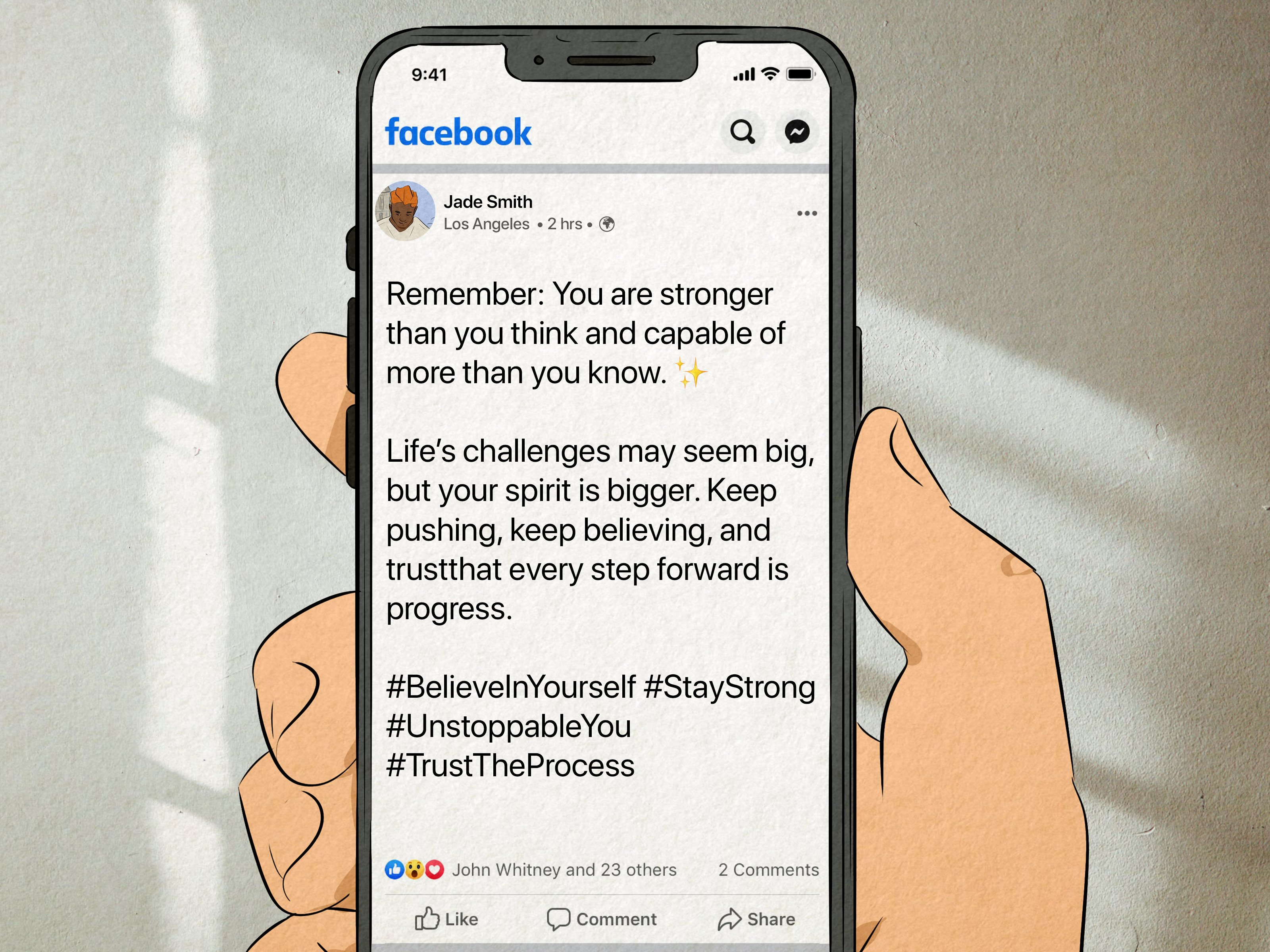
If hashtags feel a little old-school on Facebook, that is because they kind of are. But they are not dead, buried, and writing postcards from the afterlife. Facebook hashtags still work. They can still help organize content, support discovery, and connect your post to a broader topic. The catch is that Facebook is not Instagram, and it definitely is not 2013 anymore.
On Facebook, hashtags are best treated like seasoning, not the whole meal. A few relevant tags can help people understand your topic and occasionally help your post appear in hashtag feeds. A giant pile of random tags, on the other hand, can make your post look spammy, awkward, or like it is trying way too hard at the company picnic.
This guide breaks down how to hashtag on Facebook, what still works, what to avoid, and how to use hashtags in a way that feels natural, strategic, and friendly to both readers and search engines.
What Facebook hashtags actually do
A Facebook hashtag is a word or short phrase with a # in front of it, such as #SmallBusiness, #TravelTips, or #SpringCleaning. When used correctly, the hashtag becomes clickable. That click can lead people into a topic-based feed where they may find other posts and Reels related to the same subject.
That means hashtags on Facebook are less about magic growth hacks and more about categorization, context, and discoverability. They tell Facebook and your audience what the post is about. They can also help you group campaign content, branded content, community content, or event content under one label.
So yes, Facebook hashtags still have a job. It is just not a glamorous one. Think “organized office manager” rather than “viral rock star.”
How to hashtag on Facebook
1. Start with the pound sign
Type the # symbol directly before a word or phrase. No gap. No dramatic pause. No lonely space between the symbol and the word.
Correct: #DigitalMarketing
Not correct: # Digital Marketing
2. Remove spaces
If your hashtag uses more than one word, write the words together as one phrase. This turns the entire phrase into a single clickable hashtag.
Example: #HowToHashtag instead of #How To Hashtag
3. Use capitalization for readability
Capital letters are not required, but they help. #NationalDogDay is easier to read than #nationaldogday. This is helpful for accessibility, clarity, and avoiding the occasional accidental word mash-up that makes your marketing manager stare into the distance.
4. Skip punctuation and special symbols
Periods, commas, exclamation points, and odd symbols can break your hashtag or make it useless. Numbers are generally fine, but punctuation is where things get messy.
Better: #Top10Tips
Avoid: #Top-10-Tips!
5. Keep the hashtag relevant to the post
This is where strategy matters. Your hashtag should match the actual subject of the post. If you are posting about a bakery promotion, use hashtags about baking, your location, or the campaign itself. Do not suddenly toss in #Motivation, #Viral, and #Success unless your croissant has truly achieved enlightenment.
6. Check your audience settings
This part gets overlooked all the time. A hashtag does not override your privacy settings. If your post is shared with a limited audience, only that audience can see it in that hashtag feed. So if you want discoverability beyond your existing circle, your post generally needs to be public or posted from a public Page.
7. Place hashtags where they read naturally
You can place hashtags at the beginning, middle, or end of a Facebook post. In practice, most people put them at the end so the main message stays clean. If the hashtag fits smoothly into the sentence, that works too.
Example: We are celebrating #NationalCoffeeDay with free refills until noon.
Do hashtags still work on Facebook?
Yes, but with a giant asterisk and a raised eyebrow.
Hashtags on Facebook can still help with topic discovery, campaign organization, branded conversations, and search visibility inside Facebook. But they do not carry the same weight they once did, and they are usually not the main reason a post performs well. Your creative, your timing, your relevance, your audience, and your overall engagement signals usually matter more.
That is why smart marketers take a balanced approach. They use hashtags when the tag adds context, improves discoverability, or supports a campaign. They do not dump twelve generic tags under every post and hope the algorithm sends flowers.
In other words, hashtags can help, but they are not a substitute for good content. Facebook likes posts that feel useful, timely, relevant, and authentic. Your hashtag strategy should support that, not scream over it.
How many hashtags should you use on Facebook?
For most Facebook posts, one to three relevant hashtags is a strong range. In some cases, going up to five may still be reasonable, especially for a campaign, event, or branded content series. Beyond that, the post often starts to feel cluttered.
A good rule of thumb is simple: if the hashtags look like an afterthought pile, you probably have too many. If they feel like neat signposts that clarify the post, you are in good shape.
On Facebook, restraint usually looks smarter than volume. The platform is not especially impressed by a caption that ends with a hashtag avalanche. Neither are your readers.
Best types of hashtags to use on Facebook
Branded hashtags
These are hashtags unique to your brand, slogan, community, or recurring series.
Examples: #BrewWithBennett, #TeamOakStreet, #CookWithCara
Branded hashtags are especially useful if you want to group your own content, encourage user-generated content, or build recognition around a campaign.
Campaign hashtags
These are tied to a specific promotion, event, contest, fundraiser, product launch, or limited-time message.
Examples: #SpringRefreshSale, #ReadForGood2026, #LaunchDayLive
Campaign hashtags can help create continuity across multiple posts so people see the connection immediately.
Community or niche hashtags
These connect your content to a broader interest area.
Examples: #HomeOrganization, #PlantCare, #MomsWhoGarden, #SmallBusinessTips
These are useful when you want to appear in conversations beyond your existing followers.
Location hashtags
These work well for local businesses, community groups, events, and neighborhood-based services.
Examples: #ChicagoBrunch, #AustinMoms, #SeattleCoffee
Location hashtags can be especially helpful when your audience lives in a specific city or region.
Event and timely hashtags
If your content relates to a holiday, trend, awareness day, sports event, or community moment, a timely hashtag can make sense.
Examples: #EarthDay, #BackToSchool, #NationalPetDay
Just make sure the tag is truly related to your content. Chasing random trending tags is the social media version of showing up at a wedding you were not invited to.
Facebook hashtag best practices
- Use hashtags with intention. Pick tags that support the post topic, audience, and goal.
- Favor relevance over popularity. A niche tag that matches your content often works better than a giant broad tag that swallows it whole.
- Keep them readable. Shorter, clearer hashtags are easier to understand and remember.
- Use branded tags consistently. If you create one, keep using it so it becomes recognizable.
- Test and compare. Try similar posts with and without hashtags to see what your audience responds to.
- Make the post strong without the hashtags. The caption should still make sense if the hashtags vanished into the digital wind.
- Review the hashtag before using it. Search it first to make sure it is not associated with spam, unrelated content, or something wildly off-brand.
Common Facebook hashtag mistakes to avoid
Using too many hashtags
A long list of hashtags can make your post look cluttered, desperate, or spammy. Facebook is not the place for hashtag confetti.
Using irrelevant hashtags
If the tag does not match the post, skip it. Irrelevant hashtags can hurt trust with readers and make the post look manipulative.
Using vague generic hashtags only
Tags like #Love, #Happy, or #Success are so broad that they often add very little value on Facebook. They may feel energetic, but they rarely do much strategic heavy lifting.
Creating hashtags nobody can spell
If your hashtag looks like a keyboard exercise, people will not use it. Keep branded tags simple, memorable, and easy to type.
Ignoring privacy and visibility
If your content is not public, your hashtag will not suddenly catapult it into broad discovery. Audience settings still rule the room.
Relying on hashtags instead of content quality
Hashtags do not rescue weak content. A boring post with three hashtags is still a boring post. It is just wearing accessories now.
Examples of smart Facebook hashtag use
Example 1: Local coffee shop
Post: Our maple cinnamon latte is back, and yes, it tastes like autumn got its life together. Stop by before 2 p.m. for a buy-one-get-one deal.
Hashtags: #MapleLatte #SeattleCoffee #FallDrinks
Example 2: Nonprofit event
Post: Join us this Saturday for our annual 5K fundraiser. Every registration helps stock classroom libraries for local students.
Hashtags: #RunForLiteracy #CommunityFundraiser #BostonEvents
Example 3: Home organization brand
Post: Drawer chaos is not a personality trait. These simple dividers can turn a junk drawer into something almost suspiciously tidy.
Hashtags: #HomeOrganization #DeclutterTips #NeatAtHome
Notice what these examples have in common: the hashtags are relevant, readable, limited, and tied to the message. No random tag salad. No algorithm begging. No emotional support hashtag pile.
How to find the right hashtags for Facebook
Choosing the right hashtags is not about guessing what looks trendy. It is about matching your content to the way your audience thinks, searches, and talks.
Look at your core keywords
Start with your main topic. If your post is about backyard gardening, your base keyword might become hashtags like #BackyardGarden, #GardenTips, or #VegetableGardening.
Check competitor and industry usage
Look at how similar brands, creators, or organizations in your niche use hashtags on Facebook. Not to copy them blindly, but to understand patterns. If everyone in your niche uses one branded tag and one location tag, that tells you something useful.
Use campaign logic
If the post belongs to a larger effort, create one consistent hashtag for that campaign and keep using it. This helps connect the dots for your audience and your future reporting.
Search the hashtag before posting
Click or search the hashtag to see what shows up. If the feed is full of unrelated junk, the tag may not be worth using. If the feed aligns with your niche, that is a better sign.
Track performance over time
Pay attention to what actually works on your Page. You may find that branded and location tags perform better than broad generic ones. You may also discover that some posts do better with no hashtags at all. That is not failure. That is data doing its job.
Are hashtags good for Facebook SEO?
They can help a little, but they are only one small piece of the puzzle.
Hashtags can support Facebook discoverability by labeling the topic clearly and giving your post another way to appear in searches or feeds tied to that tag. But Facebook SEO is broader than hashtags. It also includes your Page name, about section, caption keywords, engagement, image quality, video strength, consistency, and overall audience relevance.
So yes, hashtags can support your Facebook SEO strategy. Just do not confuse “supporting actor” with “lead role.” The star of the show is still valuable content written for real humans.
Quick answers to common Facebook hashtag questions
Can you use hashtags on Facebook posts?
Yes. Facebook supports hashtags in posts, and the hashtags become clickable when formatted correctly.
Should every Facebook post include hashtags?
No. Use them when they add context, support discovery, or fit a campaign. Some posts are cleaner and stronger without them.
Do hashtags make a Facebook post go viral?
Usually not by themselves. They may help people find your content, but they do not guarantee reach or engagement.
Are branded hashtags worth it on Facebook?
Yes, especially for campaigns, community-building, events, and user-generated content. Keep them short and consistent.
What is the biggest hashtag mistake on Facebook?
Using too many irrelevant hashtags and expecting them to do all the work.
Experience and real-world lessons from using Facebook hashtags
In real-world social media work, Facebook hashtags tend to reward discipline more than creativity. That sounds boring, but it is true. The posts that usually benefit from hashtags are the ones with a clear purpose. A local business promoting an event, a nonprofit organizing a campaign, a creator building a recurring series, or a brand collecting community posts under one memorable label can all get real value from a good hashtag strategy.
One common pattern is that marketers start with way too many tags because that habit carried over from other platforms. Then they slowly realize Facebook readers prefer cleaner captions. Once the hashtags are cut down to one or two smart choices, the post often feels more human and performs more naturally. Not because Facebook suddenly throws confetti, but because the message is easier to read and more believable.
Another useful lesson is that branded hashtags work best when they are repeated consistently over time. A single branded hashtag tossed into one random post does almost nothing. But a branded tag used across customer stories, launch content, community spotlights, and event updates starts to create a neat little content trail. That is where the value builds. People begin to recognize it, and your team has an easy way to group related posts.
There is also a big difference between popular and useful. Broad hashtags might look exciting, but they are often too crowded or too vague. Niche tags and local tags usually feel more grounded. A neighborhood bakery may get more practical value from #PortlandBakery than from a giant generic tag like #Food. The smaller tag is more targeted, more relevant, and much less likely to disappear into a content tornado.
Marketers also learn quickly that hashtags cannot fix a weak post. If the image is dull, the offer is confusing, or the caption says nothing interesting, the hashtag is just decorative trim on a shaky fence. But when the content is strong, the right hashtag can add helpful context. It gives the post a place to live and a clearer signal about what it is trying to do.
Perhaps the biggest practical takeaway is that testing beats assumptions. Some Pages see better results with a branded hashtag and a location tag. Others do better with no hashtags at all. The only reliable approach is to test, compare, and keep what works. Facebook hashtags are not dead. They are just picky, subtle, and slightly allergic to nonsense.
Conclusion
If you want to hashtag on Facebook effectively, keep it simple. Use a few relevant hashtags, make them readable, match them to the post, and remember that privacy settings still shape discoverability. Hashtags can help categorize your content, support campaigns, and occasionally widen visibility, but they work best when paired with strong copy and clear intent.
The smartest Facebook hashtag strategy is not flashy. It is useful. And on a platform crowded with noise, useful is a pretty good superpower.