Some vacations send you home with a sunburn, an overpriced souvenir, and a mysterious charge from the hotel minibar. My trip to Fhiking legs, a new respect for vegetables, and the shocking realization that I could survive an entire week without treating cookies as a food group.
Fitness Ridge, the Southern Utah retreat many travelers now know as Movara Fitness Resort, was not the kind of place where guests spent all day floating beside a pool while someone delivered tiny drinks with umbrellas. It was a structured fitness and wellness retreat built around movement, nutritious meals, practical education, personal accountability, and the kind of group encouragement that makes you attempt one more hill even when your calves are filing a formal complaint.
I arrived expecting exercise. What I did not expect was the emotional reset, the spectacular red-rock scenery, the friendships, or the strange satisfaction of waking up early because a desert trail was waiting.
Historical and program details verified through official Movara information and archived Utah reporting. rriving at Fitness Ridge in Southern Utah
Fitness Ridge was located in Ivins, Utah, near St. George and the dramatic landscapes of Snow Canyon State Park. Even before the first workout, the surroundings made the trip feel different from an ordinary gym vacation. Red Navajo sandstone, black lava formations, desert plants, and wide blue skies created a setting that looked as though nature had hired a very enthusiastic interior designer.
The resort’s history is almost as interesting as its scenery. Its founders began their wellness program in 2002, originally operating from a hotel with access to a nearby gym. A dedicated facility opened in Ivins in 2007 under the Fitness Ridge name. The retreat later became associated with NBC’s The Biggest Loser before separating from that brand and becoming Movara Fitness Resort.
Knowing that history helped me understand the atmosphere. This was not a newly invented wellness trend wrapped in beige towels and inspirational fonts. The program had spent years refining a simple formula: provide structure, encourage effort, teach practical habits, and surround guests with people trying to improve their lives.
Orientation: Equal Parts Excitement and Nervous Laughter
Arrival day included introductions, an explanation of the schedule, and a chance to meet the other guests. Some people wanted to lose weight. Others hoped to rebuild strength, improve endurance, recover their confidence, or escape routines that had become unhealthy.
The room contained beginners, experienced exercisers, repeat visitors, couples, solo travelers, parents, professionals, and people at several stages of their health journey. That variety immediately made the retreat less intimidating. Nobody needed to arrive as an athlete. We simply needed to arrive willing to participate.
There was plenty of nervous humor. We compared hiking shoes, discussed our relationships with treadmills, and quietly wondered whether the words “morning hike” meant a pleasant stroll or an outdoor audition for an action movie.
The Morning Hikes Were the Heart of the Experience
Each morning began early, usually before my brain had completed its first cup of imaginary coffee. After breakfast and preparation, we headed into Southern Utah’s red-rock country for a guided hike adapted to different ability levels.
This was one of the smartest features of the Fitness Ridge experience. Guests were not thrown onto one trail and told to keep up. Hiking groups could be organized according to pace, terrain, distance, and difficulty. Faster hikers had room to challenge themselves, while beginners could build confidence without feeling as though they were delaying the entire state of Utah.
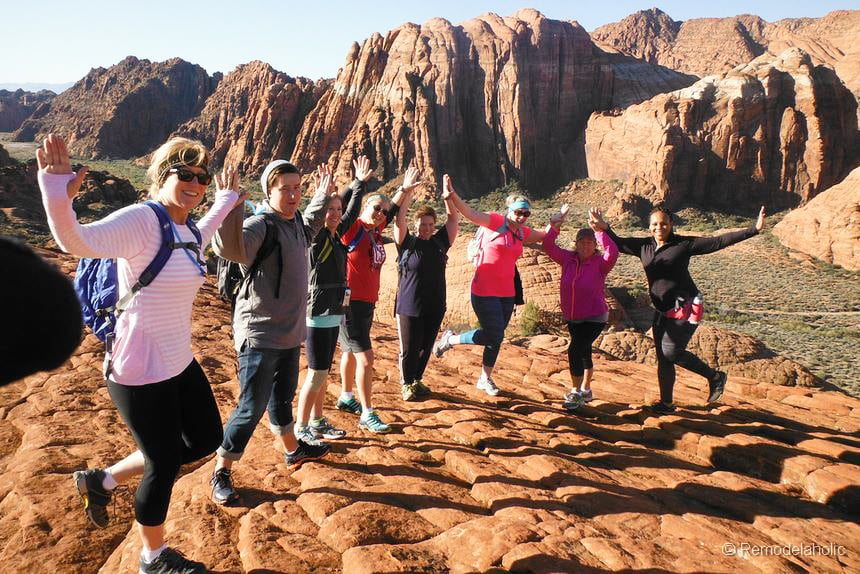
The scenery was extraordinary. Some routes crossed sandy washes and dark lava rock. Others climbed smooth sandstone slopes toward panoramic overlooks. The surrounding Snow Canyon landscape is known for its dunes, cliffs, trails, ancient lava flows, and striking contrast between orange-red stone and black basalt.
Snow Canyon landscape and hiking information verified through Utah State Parks and Movara trail descriptions. he Moment I Stopped Watching My Feet
During my first hike, I spent most of the climb staring at the ground. I was concentrating on every step, partly for safety and partly because looking uphill seemed unnecessarily discouraging.
Then our guide asked us to pause.
I looked back and saw the canyon stretching beneath us. The morning sun was lighting the sandstone, the air was cool, and the resort suddenly felt very far away. I had climbed much higher than I realized.
That moment became one of the trip’s central lessons: progress can be difficult to notice while you are busy making it. Sometimes you need to stop, turn around, and look at the distance already covered.
A Full Schedule of Fitness Classes
The hike was only the opening act. After returning to the resort, the schedule could include cardio workouts, strength training, circuit classes, pool exercise, stretching, mobility work, dance-based sessions, or other instructor-led activities.
Was it demanding? Absolutely. My muscles discovered several new emotions, most of them dramatic. However, the program was not simply about pushing until everyone collapsed artistically onto a yoga mat. Instructors demonstrated modifications, encouraged guests to work at an appropriate level, and focused on consistent participation.
The group format also made a major difference. Exercising alone makes negotiation easy. At home, I can tell myself that folding one towel counts as functional fitness. In a room filled with supportive people doing the same workout, it becomes much harder to abandon a set because a dumbbell has looked at you disrespectfully.
Group fitness provided structure, professional instruction, accountability, and social support. Those elements are valuable because exercise routines are often easier to maintain when someone else has already planned the session and other participants are expecting you to show up.
Exercise guidance and group-fitness benefits are consistent with CDC and American Council on Exercise recommendations. earning the Difference Between Pain and Challenge
One lesson I appreciated was learning to distinguish productive effort from a genuine warning sign. Being out of breath during a controlled cardio interval was not automatically a disaster. Sharp pain, dizziness, or unusual symptoms were signals to stop and speak with a professional.
That distinction helped me become more confident. Instead of fearing every uncomfortable sensation, I began paying closer attention to form, breathing, hydration, recovery, and the messages my body was sending.
The Food Was Healthy Without Feeling Punitive
Before visiting a structured fitness retreat, I imagined the meals would consist of three lettuce leaves arranged around a lonely chickpea. Thankfully, the food was much more satisfying.
Fitness Ridge became known for chef-prepared, portion-aware meals designed to support active days. Depending on the period in the resort’s history, published accounts described calorie-controlled menus featuring nutrient-dense ingredients, lean proteins, fruits, vegetables, grains, smoothies, soups, and lighter versions of familiar comfort foods.
The biggest surprise was not that the meals tasted good. It was that clearly defined portions reduced the constant mental debate surrounding food. There was no need to calculate every bite or repeatedly ask whether I had eaten too much. The meal arrived, I ate it slowly, and I learned what a balanced serving could look like.
I also noticed that hunger felt different when meals contained protein, fiber, produce, and thoughtfully selected carbohydrates. A balanced plate did not create the same energy roller coaster as grabbing a pastry and calling it breakfast because it was technically morning.
Nutrition discussion reflects documented resort meals and current U.S. guidance emphasizing nutrient-dense foods. ealthy Eating Became Practical
The educational sessions were just as important as the menu. It is easy to eat well when a chef prepares every plate. The real test begins at home, where the refrigerator contains leftovers, the delivery app knows your name, and nobody stops you from eating cereal directly from the box at 11:30 p.m.
Lessons on portions, meal planning, emotional eating, label reading, motivation, and sustainable routines helped connect the retreat to ordinary life. The goal was not to recreate every resort meal perfectly. It was to leave with enough knowledge to make better decisions more often.
The Community Made Difficult Days Easier
The most memorable part of my Fitness Ridge trip was not a particular workout or number on a scale. It was the community.
When people exercise, eat, learn, and recover together for several days, small talk disappears quickly. Guests begin sharing why they came, what they have struggled with, and what they hope will change. Someone who was a stranger at breakfast might be encouraging you up a hill before lunch.
There was no need to pretend that every moment felt wonderful. Some days were energizing. Others involved fatigue, frustration, homesickness, or the sudden discovery that sitting down after leg day requires strategic planning.
Support did not always arrive as a grand motivational speech. Sometimes it was a high-five, a shared joke, a reminder to drink water, or someone saving you a seat at dinner. Those small interactions made the retreat feel cooperative rather than competitive.
Recovery Was Part of the Program, Not a Reward for Weakness
After hiking and multiple fitness sessions, recovery became essential. Stretching, mobility work, time in the pool, adequate sleep, and optional spa treatments could help tired bodies prepare for another active day.
This changed my view of rest. I had often treated recovery as something people did when they lacked discipline. At Fitness Ridge, recovery was presented as part of disciplined training. Muscles, joints, energy levels, and motivation all need attention.
The combination of physical activity and a regular schedule also improved my sleep. By evening, my body was no longer interested in scrolling through my phone for two hours. It wanted a pillow, a blanket, and immediate silence.
Regular exercise can support mood, stress management, physical function, and sleep, although individual results vary. A retreat may provide a powerful beginning, but those benefits depend on continuing reasonable habits after the suitcase is unpacked.
Exercise, stress, mood, and sleep information is supported by CDC and Mayo Clinic guidance. hat Changed During My Fitness Ridge Trip?
It would be easy to describe the trip only through measurable results. Weight, inches, endurance, pace, blood pressure, or fitness-test performance can all provide useful information. Yet the deeper changes were less visible.
I became more comfortable being a beginner. I stopped assuming that everyone in a fitness environment was judging me. I discovered that I could complete hard workouts without needing to be the best person in the room. Most importantly, I began viewing health as a collection of repeatable behaviors rather than a dramatic project requiring perfection.
Fitness Ridge gave guests something that everyday life often does not: uninterrupted time to practice. At home, health goals compete with work, errands, family responsibilities, screens, social events, and the suspiciously persuasive voice suggesting that tomorrow would be a much better day to begin.
At the retreat, the healthier choice was usually the easiest available choice. Meals were prepared. Classes were scheduled. Guides knew the trails. Other guests provided encouragement. That environment created momentum.
The Real Challenge Began at Home
A week at a fitness resort cannot permanently solve every health problem. It cannot exercise on your behalf after you leave, quietly replace the cookies in your cabinet with carrots, or appear beside your bed each morning holding hiking poles.
The trip was valuable because it showed me what was possible. The next step was reducing the experience to habits that could survive normal life.
I created a realistic weekly plan rather than attempting to copy the retreat’s full schedule. I chose regular walks, two strength-training sessions, basic meal preparation, consistent sleep, and one weekly check-in with myself. The plan looked less impressive than a sunrise hike through Snow Canyon, but it was much more likely to continue.
Current physical activity guidance for most adults recommends at least 150 minutes of moderate-intensity aerobic activity per week, along with muscle-strengthening work on two or more days. That benchmark offered a practical foundation without requiring me to transform my living room into a televised boot camp.
Who Might Enjoy a Fitness Ridge-Style Retreat?
A structured Utah fitness retreat may appeal to people who want more than a relaxing spa vacation. It can be especially useful for travelers who appreciate planned days, guided exercise, outdoor activity, nutrition education, and a supportive group environment.
It may also attract beginners who feel overwhelmed by traditional gyms, experienced exercisers who want a fresh challenge, or people who need temporary distance from routines that have become difficult to change.
However, an intensive program is not appropriate for everyone. Anyone with an injury, chronic illness, recent surgery, pregnancy, significant mobility concern, or other medical issue should seek professional medical advice before beginning a demanding fitness schedule. Prospective guests should also ask how workouts are modified, what qualifications staff members hold, and whether the available program matches their needs.
More Experiences That Made My Fitness Ridge Trip Unforgettable
Several of my favorite memories were not major milestones. They were tiny scenes that seemed ordinary at the time but became more meaningful after I returned home.
The Quiet Before the Morning Hike
One morning, I stepped outside while the sky was still changing from deep blue to pale gold. The resort was quiet except for shoes moving across the walkway and the occasional nervous joke about hills. Nobody was answering emails. Nobody was rushing through traffic. We were simply preparing to walk into the desert.
That quiet moment reminded me how rarely I allowed my day to begin without immediate digital noise. At home, my phone usually reached my brain before sunlight did. Fitness Ridge created a different rhythm: wake up, fuel the body, step outside, and move.
The Workout I Almost Skipped
Late in the week, I considered missing an afternoon class. My legs were tired, my motivation had wandered off, and a comfortable chair appeared to be making an excellent argument.
I decided to attend but promised myself I would use modifications. The class was not my strongest performance. I did not set a record, amaze the instructor, or hear inspirational music swelling in the background. I simply completed what I could.
That ordinary workout taught me more than the spectacular ones. Consistency does not always look heroic. Sometimes success means arriving tired, adjusting the plan, and doing something instead of nothing.
A Dinner Conversation I Still Remember
At dinner, one guest explained that she had spent years waiting to feel motivated before taking care of herself. She finally realized that motivation often appeared after she began, not before.
That sentence stayed with me. I had treated motivation like a special weather pattern: unpredictable, uncontrollable, and apparently absent whenever laundry or exercise was involved. The retreat showed me that action could create motivation. A five-minute walk might become twenty minutes. Preparing one healthy lunch might make the next choice easier.
The Last Hike
On the final hike, the group moved differently than it had on the first day. We were still tired, but we were more confident. People who had doubted every step were choosing steadier routes over the rocks. Those who once apologized for moving slowly had stopped apologizing.
At the overlook, nobody discussed perfection. We talked about what we wanted to take home: morning walks, better portions, strength training, patience, sleep, or the courage to ask for support.
The desert had not magically turned us into entirely different people. It had given us evidence. We had completed climbs that once looked intimidating. We had moved through fatigue. We had learned that effort could be adjusted without being abandoned.
Leaving With More Than Sore Muscles
Departure day felt surprisingly emotional. We exchanged contact information, took photographs, and made ambitious promises to stay connected. My suitcase contained dusty shoes and workout clothes that deserved their own quarantine zone, but I was leaving with something valuable: a clearer definition of progress.
Progress was no longer a perfect meal plan, a dramatic weekly weigh-in, or the ability to leap over exercise equipment while cameras rolled. It was choosing useful habits repeatedly. It was walking even when the route was not scenic. It was eating vegetables when nobody had prepared them beautifully. It was resting before exhaustion turned into an excuse to quit.
Final Thoughts on My Amazing Fitness Ridge Experience
My trip to Fitness Ridge was challenging, funny, occasionally uncomfortable, and genuinely rewarding. The red-rock hikes made movement feel adventurous. The fitness classes showed me how much I could do with proper guidance and sensible modifications. The meals made healthy portions feel practical. The community made difficult moments manageable.
Most importantly, the retreat helped me replace an all-or-nothing attitude with a more sustainable idea: some effort is better than none, consistency matters more than drama, and health improves through ordinary choices repeated long after the vacation ends.
I arrived thinking I needed someone to force me into shape. I left understanding that lasting change was less about punishment and more about structure, education, support, and patience.
Also, I learned that Southern Utah rocks are beautiful, burpees remain deeply suspicious, and a smoothie tastes approximately 400 percent better after climbing a hill before breakfast.
Note: Fitness Ridge is the historic name associated with the Ivins, Utah retreat now operating as Movara Fitness Resort. This first-person feature is an editorially reconstructed narrative based on verified resort history, documented programming, and published guest experiences; it does not claim that the writer personally visited the property.
Research synthesis included official resort materials, Utah State Parks, archived Utah news reporting, U.S. health guidance, professional fitness resources, and documented guest accounts. e>