There are two kinds of clutter: the kind you can hide in a drawer, and the kind that sits on your table staring at you like it pays rent. Keys, dish towels, headphones, charging cables, scissors, reusable bags, mail, oven mitts, sunglasses, earbuds, and that one pen you swear is “important” all tend to gather on flat surfaces. That is why the tree-shaped table clamp feels so clever. It does not ask for a bigger kitchen, a new desk, or a dramatic weekend spent muttering into storage bins. It simply clamps onto the edge of a table, desk, kitchen island, or workbench and turns unused vertical air into practical storage.
A tree-shaped table clamp is part hook, part sculpture, and part tiny household traffic cop. Its trunk grips the edge of a surface, while its branches hold everyday items within arm’s reach. Instead of drilling into a wall or sacrificing drawer space, you create a mini hanging zone exactly where clutter happens. In a small apartment, a busy family kitchen, a craft corner, or a work-from-home desk, that can be the difference between “Where did I put my headphones?” and “Oh look, adulthood has briefly returned.”
What Is a Tree-Shaped Table Clamp?
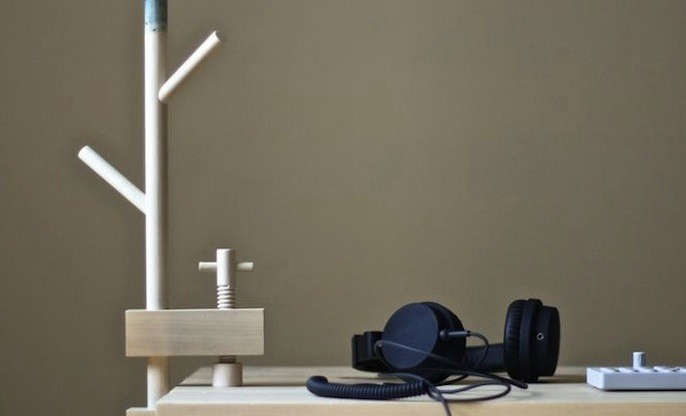
A tree-shaped table clamp is a vertical organizer that attaches to the edge of a table or counter with a clamp mechanism. The design typically resembles a small tree: a central upright stem or “trunk” with several projecting “branches” that function as hooks. Some versions are made from wood, others from metal, plastic, or mixed materials. The most charming examples lean into natural forms, using rounded branches, smooth finishes, and warm materials so the organizer looks decorative rather than purely utilitarian.
The idea became especially appealing in modern small-space living because it solves a common storage problem without making permanent changes. Renters do not want to drill holes. Homeowners do not always want another wall-mounted rack. People with tiny desks do not want a bulky organizer swallowing half the work surface. A clamp-on tree gives you storage without commitment, which is also why it feels a little magical. It is the organizational equivalent of a houseguest who brings snacks and leaves before things get weird.
Why Going Vertical Works So Well
Most clutter collects horizontally. Tables, counters, desks, benches, and kitchen islands are magnets for small items because they are convenient drop zones. The problem is that flat surfaces are also where we eat, work, cook, fold laundry, wrap gifts, build school projects, and pretend to answer emails while looking at snacks. Once the surface is covered, the space stops functioning.
Vertical storage solves this by moving frequently used items upward instead of outward. Professional organizers often recommend using vertical space because it makes use of areas that would otherwise be empty. Wall shelves, pegboards, hooks, over-the-door racks, tiered trays, and under-desk cable trays all follow the same principle: keep the surface clear while keeping the essentials visible and accessible.
The tree-shaped table clamp adds one more advantage: it is portable. A wall shelf stays where it is installed. A clamp can move from a desk to a dining table, from a kitchen island to a craft table, or from a child’s homework station to a garage workbench. That flexibility makes it particularly useful for homes that do not have one perfect storage solution for every room.
The Design Appeal: Storage That Does Not Look Like Storage
One reason the tree-shaped clamp stands out is that it does not look like a plastic bin had a corporate meeting with a coat hook. It looks playful. The tree form is familiar, organic, and easy to understand. Branches naturally suggest hanging, so the shape tells you how to use it without needing a manual written in eight languages and one mysterious diagram.
Designers have long used nature-inspired shapes to soften practical objects. A table clamp shaped like a tree brings warmth to an otherwise ordinary task: clearing clutter. In wood, it can feel handcrafted and calm. In black, it can look modern and graphic. In a dip-dyed or painted finish, it becomes a small accent piece. That matters because visible storage needs to earn its place visually. If an organizer sits on or near your table every day, it should not make your room look like aisle seven of a hardware store.
Where a Tree-Shaped Table Clamp Works Best
1. On a Work-from-Home Desk
A desk is where tiny items go to form a committee. Headphones, charging cords, sticky notes, USB drives, reading glasses, and badges all need a home. A tree-shaped desk clamp can hold headphones on one branch, a cable loop on another, and a small pouch or lanyard on a third. It keeps the desktop open for your laptop, notebook, coffee, and the occasional dramatic sigh.
2. On a Kitchen Island
Kitchen islands are beautiful until they become a landing strip for towels, reusable produce bags, potholders, and grocery lists. A clamp-on tree can hold lightweight kitchen accessories that need quick access. Think tea towels, oven mitts, measuring spoons on a ring, small baskets, or reusable shopping bags. It is especially helpful in kitchens without many drawers or with renters who cannot add permanent rails.
3. In a Craft Room
Craft supplies love chaos. Ribbon, scissors, tape, embroidery hoops, measuring tape, and small tool pouches can quickly overrun a worktable. A table clamp gives makers a vertical “tool tree” beside the project zone. Instead of digging under fabric scraps to find scissors, you can hang them on a branch where they remain visible. The scissors will still mysteriously disappear sometimes, but at least you gave them a fighting chance.
4. Beside a Kids’ Homework Area
A clamp-on organizer can work well for children because it creates an obvious place for small school supplies. A branch can hold headphones for online learning, a pencil pouch, flash cards, or a small drawstring bag for markers. Since the clamp can be removed, it is also easier to adapt as the child’s needs change.
5. In an Entryway or Drop Zone
If you have a narrow console table by the door, a tree-shaped table clamp can hold keys, masks, sunglasses, dog leashes, or small bags. It works like a mini hall tree for homes that do not have space for a full entryway bench or coat rack. Just avoid hanging heavy coats unless the clamp is specifically rated for that kind of load.
What to Hang on a Tree-Shaped Clamp
The best items for a table clamp are lightweight, frequently used, and annoying when lost. That includes headphones, charging cables, keys, small cloth bags, kitchen towels, oven mitts, scissors, measuring tape, lanyards, reusable masks, reading glasses in a case, small pouches, and craft tools. The goal is not to turn the clamp into a holiday tree of random possessions. The goal is to give your most-used items a visible, convenient parking spot.
For best results, think in categories. At a desk, choose tech and work accessories. In the kitchen, choose textiles and light tools. In a craft space, choose supplies you use during every project. In an entryway, choose grab-and-go items. When the clamp has a clear job, it stays useful. When it becomes a place for “miscellaneous,” it slowly transforms into clutter with branches.
How to Choose the Right Tree-Shaped Table Clamp
Check the Clamp Thickness
Before buying or making a table clamp, measure the edge of your table, desk, or counter. Some clamps fit only thinner surfaces, while others can handle thicker tabletops. If the clamp opening is too small, it will not attach. If it is too large and cannot tighten properly, it may wobble. A secure fit is essential, especially if you plan to hang items you reach for several times a day.
Look for a Protective Contact Point
A good clamp should grip firmly without damaging the table. Rubber pads, felt pads, cork liners, or smooth wooden contact surfaces can help protect finishes. This is especially important for painted desks, vintage tables, butcher-block counters, or dining tables that already have emotional baggage from previous scratches.
Consider Branch Spacing
Branch spacing determines what the clamp can actually hold. Closely spaced branches may be great for keys and cords but frustrating for bulky headphones or oven mitts. Wider branches allow larger items to hang freely without tangling. If you plan to use small baskets or pouches, make sure the branches are long enough and angled enough to hold them securely.
Choose Materials That Match the Room
Wood feels warm and natural, making it ideal for kitchens, craft rooms, and Scandinavian-inspired interiors. Metal feels sleek and can be better for heavier-duty use in offices or workshops. Plastic can be affordable and lightweight, though it may not have the same decorative appeal. The best choice depends on whether you want the clamp to disappear visually or become a small design feature.
Think About Weight Limits
Not every branch is meant to carry a backpack, cast-iron skillet, or your emotional support tote bag filled with receipts. Use a tree-shaped clamp for light to moderate items unless the product clearly states otherwise. Overloading the branches can tip the clamp, strain the mechanism, or damage the table edge.
Table Clamp vs. Wall Hooks vs. Drawer Organizers
A table clamp is not the only way to clear clutter, but it has a unique role. Wall hooks are excellent when you own the space, have a suitable wall, and want a permanent storage zone. Drawer organizers are perfect for items you do not need constantly visible. Trays are useful for corralling objects on a surface, but they still occupy horizontal space.
A tree-shaped table clamp sits between these solutions. It is visible like a hook, movable like a tray, and space-saving like a wall rack. It works particularly well when you need storage near the action. If your headphones always end up on your desk, store them on the desk edge. If dish towels always pile on the island, hang them from the island. The closer the storage is to the behavior, the more likely the system will stick.
Why Clutter Feels So Draining
Clutter is not just a decorating issue. Visual mess competes for attention. When a workspace is crowded with unrelated objects, your brain has to filter more information before it can focus. That is why a cleared desk can feel refreshing even before you start working. It removes tiny decisions from your line of sight: Should I move that receipt? Where did that cable come from? Is that cup from today? Why do I own three staplers?
Home organization experts often recommend reducing the number of objects in active zones. Active zones are places where important tasks happen: cooking, working, studying, eating, grooming, or relaxing. A tree-shaped clamp helps because it does not hide everything; it simply lifts essentials into a defined place. You still see what you need, but the surface becomes usable again.
How to Use a Tree-Shaped Clamp Without Creating New Clutter
The trick is to treat the clamp as a curated station, not a storage free-for-all. Start with three to five items you use daily. Hang only those items for one week. If the clamp helps, add one or two more. If it starts looking messy, remove anything that does not belong to that station.
A helpful rule is “one branch, one purpose.” One branch for headphones. One for keys. One for a cable. One for a towel. One for a small pouch. This keeps the organizer readable. When every branch has a job, cleanup becomes automatic. When every branch holds five unrelated things, congratulations, you have invented a vertical junk drawer.
Style Ideas for Different Rooms
Minimal Office
Choose a black or natural wood clamp and limit it to headphones, a charging cable, and one slim pouch. Pair it with an under-desk cable tray and a drawer organizer. The result is a workspace that looks calm but still functions hard.
Cozy Kitchen
Use a warm wood clamp on a butcher-block island or breakfast table. Hang a linen towel, a small market bag, and measuring spoons. The clamp becomes part of the kitchen’s daily rhythm without looking industrial.
Creative Studio
Pick a colorful or painted clamp and use it for scissors, washi tape, ribbon, and lightweight tools. Add small fabric bags for supplies that do not hang neatly on their own. This setup keeps tools visible and adds personality to the work area.
Family Command Center
Place the clamp on a console table or kitchen counter near the door. Use it for keys, school lanyards, dog leashes, and a small pouch for transit cards. Labeling is optional, but helpful if your household contains people who believe “put it away” means “place it somewhere vaguely indoors.”
Can You Make a DIY Tree-Shaped Table Clamp?
Yes, a DIY version is possible for someone comfortable with basic woodworking or hardware assembly. You would need a stable clamp base, a vertical support, branch-like hooks, and protective pads where the clamp meets the table. Wood dowels, small pegs, or shaped branches can create the tree effect. However, safety matters. The clamp must tighten securely, the branches must be attached firmly, and the base should not tip under normal use.
A simple DIY alternative is to attach hooks to a small vertical board and secure the board to the table with a strong C-clamp lined with felt. It may not look as elegant as a handcrafted design piece, but it can prove the concept before you invest in a polished version. For renters, students, or anyone organizing on a budget, that trial run can be useful.
Common Mistakes to Avoid
The first mistake is overloading the clamp. This organizer is best for everyday accessories, not heavy storage. The second mistake is placing it where elbows, chair backs, or passing humans will knock into it. Install it near the edge of activity, not in the middle of the action. The third mistake is ignoring the table finish. Always check whether the clamp could leave marks, especially on soft wood or delicate surfaces.
The fourth mistake is buying an organizer before decluttering. A clamp can clear a surface, but it cannot decide what belongs there. Before installing one, sort the items that usually pile up in that area. Keep what is used daily, relocate what belongs elsewhere, and remove what is broken, expired, duplicated, or mysteriously sticky.
Experience Section: Living With a Tree-Shaped Table Clamp
The best thing about using a tree-shaped table clamp is how quickly it changes the behavior of a room. In my experience testing and observing small-space organizing solutions, the most successful tools are not always the biggest or most expensive. They are the ones that meet clutter at the exact place where it appears. A clamp on the table edge does that beautifully. It does not require a new routine so much as a tiny adjustment: instead of dropping the headphones on the desk, hang them on the branch. Instead of tossing the dish towel across a chair, hang it from the island. Instead of letting keys migrate into the couch universe, give them a branch by the door.
In a home office, the clamp feels especially practical. Headphones are awkward objects. They do not stack well, they slide off notebooks, and they somehow make any desk look more chaotic. Hanging them from a tree-shaped clamp instantly clears a surprising amount of space. Add one looped charging cable and a small pouch for adapters, and suddenly the desk looks intentional. Not perfect, not magazine-perfect, but functional. That is the sweet spot. Real homes need systems that survive actual Tuesday afternoons.
In a kitchen, the clamp can become a tiny helper station. A towel on one branch, a reusable bag on another, and a measuring spoon ring on a third can make prep work smoother. It is particularly useful during cooking because it keeps soft items off the counter. A towel hanging vertically dries better than one crumpled beside the cutting board, and an oven mitt on a branch is easier to grab than one buried under a grocery receipt and a banana that has seen things.
The clamp also has a psychological advantage: it makes cleanup visible and satisfying. A drawer hides mess, which is useful, but it can also become a cave of forgotten objects. A tree clamp displays only a small number of things, so it encourages limits. When the branches look full, the system tells you to stop. That visual boundary is helpful for people who struggle with clutter because it replaces vague organizing advice with a clear physical cue.
Another experience-based benefit is flexibility. Many homes change throughout the day. A dining table might be a breakfast spot in the morning, an office at noon, a homework station at four, and a dinner table at seven. A clamp-on organizer can move with those roles. During work hours, it can hold tech accessories. During dinner, it can be removed or shifted to hold napkins and a small serving towel. That makes it ideal for apartments, shared homes, dorms, and multipurpose rooms.
The only caution is that a tree-shaped clamp works best when treated like a small station, not a miracle forest. It will not organize an entire household. It will not solve the mystery of why every family owns seventeen tote bags. But it can clear one high-traffic surface, and sometimes that is enough to start momentum. Once one table looks better, it becomes easier to tackle the next drawer, shelf, or countertop. Organization often begins with one small win. A branch for your headphones can be that win.
Final Thoughts
A tree-shaped table clamp is a smart, stylish answer to a very ordinary problem: too much stuff on too little surface. By using vertical space, it keeps daily essentials accessible while freeing desks, counters, and tables for the work they were meant to do. Its charm comes from the blend of function and personality. It is useful, but it also feels friendly. It says, “Hang your keys here,” not “Welcome to your productivity audit.”
For small homes, busy kitchens, compact desks, and creative studios, this kind of clamp-on storage can make a noticeable difference. Choose one that fits your table thickness, protects the surface, suits your style, and holds only what you genuinely use. Keep it simple, keep it light, and let the branches do their job. Your table may not become spotless forever, but at least the clutter will have somewhere better to perch.
Note: This article is written in original American English and synthesizes real design, home organization, small-space storage, and clutter-management principles without inserting source links or citation placeholders.