Your couch has seen things. Movie-night popcorn avalanches. Coffee splashes that arrived with confidence. Mystery smudges created by children, pets, guests, or perhaps a tiny ghost with greasy fingers. Before you panic-buy an expensive upholstery cleaner, good news: many everyday fabric stains and odors can be handled with simple ingredients already sitting in your kitchen or laundry area.
These DIY upholstery cleaner recipes cost pennies to make, require no advanced chemistry degree, and can help freshen sofas, dining chairs, ottomans, car seats, headboards, and fabric-covered benches. The secret is not using the strongest cleaner possible. The secret is using the gentlest effective cleaner, applying it carefully, and not turning your cushion into a wet sponge wearing fabric.
Below, you will find three practical homemade upholstery cleaner recipes: a gentle soap foam for everyday grime, a vinegar spot spray for food and drink stains, and a dry baking soda deodorizer for odors. You will also learn when not to use them, how to read upholstery cleaning codes, and how to avoid the rookie mistakes that make furniture look worse than before.
Before You Mix Anything: Check the Upholstery Cleaning Code
The most important upholstery cleaning tip is also the least glamorous: look for the care tag. It is usually tucked under a cushion, along a seam, or beneath the furniture frame. That little tag can save you from turning a cute beige chair into a blotchy modern art project.
What Upholstery Cleaning Codes Mean
Most upholstered furniture uses one of these common cleaning codes:
- W: Use water-based cleaners. Most of the DIY recipes below are designed for this type of fabric.
- S: Use solvent-based cleaners only. Avoid water-based DIY sprays unless the manufacturer says otherwise.
- WS or SW: Water-based or solvent-based cleaners may be safe, but you should still test first.
- X: Vacuum only or call a professional. Do not use liquid cleaners.
If there is no tag, treat the fabric like it is delicate. Test first, use very little moisture, and stop immediately if the color transfers, the texture changes, or a water ring appears.
Basic Supplies You Will Need
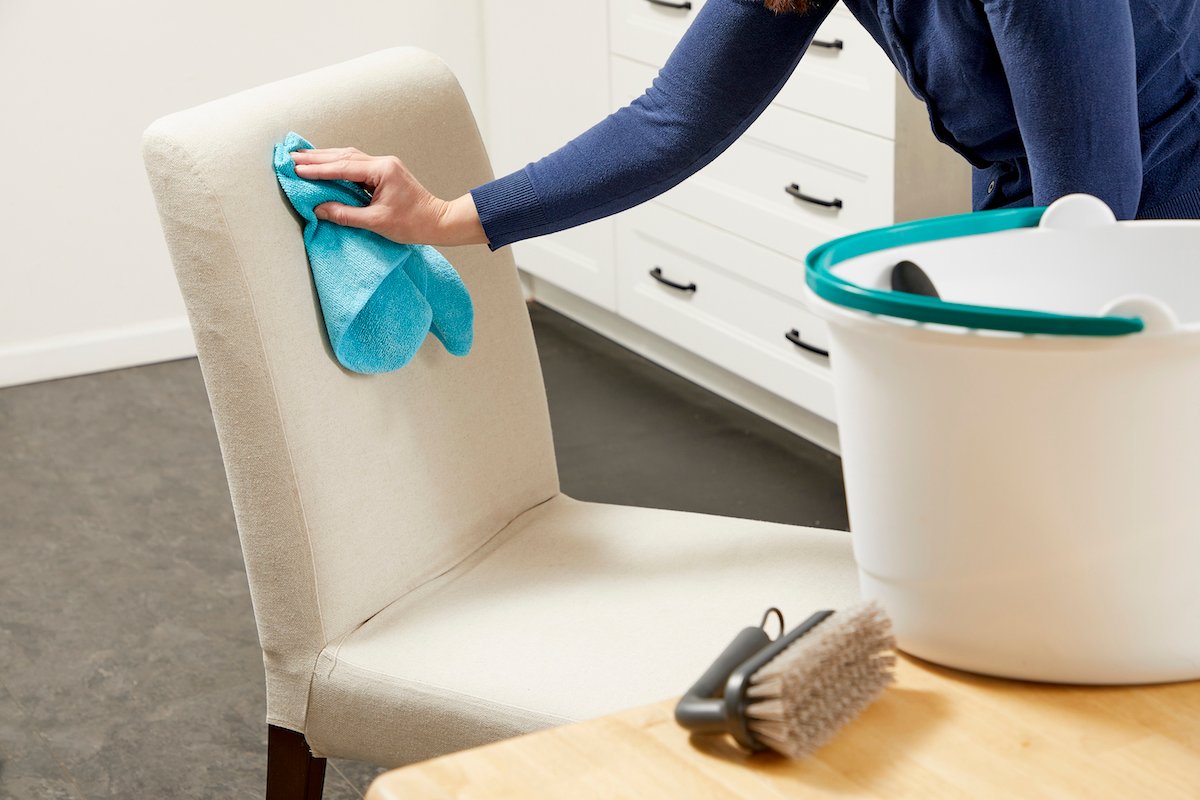
You do not need a cleaning closet that looks like a hardware store aisle. For these homemade upholstery cleaner recipes, gather a few simple tools:
- Vacuum with upholstery attachment
- Microfiber cloths
- Soft-bristled brush
- Spray bottle
- Small bowl or mixing cup
- Measuring spoons
- Clean white towel
- Distilled water, if possible
White cloths are best because dyed towels can transfer color to damp upholstery. Distilled water is helpful because tap water can leave mineral rings on some fabrics. That is the kind of tiny detail that sounds fussy until your couch develops a halo around one cleaned spot.
Recipe 1: Gentle Dish Soap Foam for Everyday Grime
This is the best DIY upholstery cleaner for general cleaning on water-safe fabric. It works well on light surface dirt, body oil, dusty armrests, and the suspicious gray film that appears on favorite seats after months of use.
Ingredients
- 2 cups warm distilled water
- 1 teaspoon clear mild dish soap
- 1 teaspoon white vinegar, optional
How to Make It
Add the warm water and dish soap to a bowl. Whisk until suds form. If the fabric is water-safe and you are dealing with mild odor or food residue, add the teaspoon of white vinegar. Do not dump in extra soap because “more” is not better. More soap usually means more residue, and residue attracts dirt like a sofa-shaped magnet.
How to Use It
- Vacuum the upholstery thoroughly to remove crumbs, dust, and pet hair.
- Dip a microfiber cloth into the foam only, not the liquid at the bottom.
- Blot or gently wipe the dirty area in small sections.
- Use a second cloth dampened with plain water to remove soap residue.
- Blot with a dry towel.
- Let the upholstery air-dry completely. Use a fan if needed.
Best For
This homemade upholstery cleaner is ideal for fabric sofas, dining chairs, padded benches, and upholstered headboards with a W or WS cleaning code. It is especially useful for areas that look dull rather than deeply stained.
What It Costs
A teaspoon of dish soap and a splash of vinegar usually cost only a few cents. Compared with store-bought upholstery sprays, this recipe is practically pocket lint with a cleaning hobby.
Recipe 2: Vinegar Spot Spray for Food and Drink Stains
This DIY upholstery spot cleaner is designed for fresh stains from coffee, tea, soda, juice, light sauces, and everyday spills. It is not magic, but if you act quickly, it can help lift stains before they settle in and start paying rent.
Ingredients
- 1 cup cool distilled water
- 1/2 cup distilled white vinegar
- 1/2 teaspoon clear mild dish soap
How to Make It
Pour the water, white vinegar, and dish soap into a spray bottle. Shake gently. Label the bottle so nobody mistakes it for plant mist, facial toner, or a questionable homemade perfume.
How to Use It
- Blot the spill immediately with a clean white towel. Do not rub.
- Spray the cleaner onto a cloth, not directly onto the upholstery.
- Blot the stained area from the outside toward the center.
- Repeat with a fresh section of cloth as the stain transfers.
- Blot with a cloth dampened with plain water.
- Press with a dry towel to remove moisture.
- Allow the area to dry fully before sitting on it.
Best For
This recipe works best on water-safe synthetic upholstery and durable fabric blends. It is useful for small stains rather than cleaning an entire sofa. If the stain is oily, old, or deeply set, you may need repeated gentle treatments or a professional upholstery cleaner.
Important Warning
Do not use vinegar on leather, suede, silk, velvet without testing, antique fabrics, or any upholstery labeled S or X. Also, never mix vinegar with bleach. That combination does not create “extra cleaning power.” It creates a safety problem, and your couch does not need a chemistry incident.
Recipe 3: Baking Soda Dry Deodorizer for Odors
Sometimes your furniture is not stained. It just smells like life happened on it. Pet naps, sweaty movie marathons, takeout nights, and humid rooms can leave upholstery smelling less than fresh. This baking soda upholstery deodorizer helps absorb odors without soaking the fabric.
Ingredients
- 1/2 cup baking soda
- 1/2 cup cornstarch
- 3 to 5 drops essential oil, optional
How to Make It
Mix the baking soda and cornstarch in a bowl. Add essential oil only if your household tolerates it well. Skip fragrance if you have pets, babies, allergies, asthma concerns, or sensitive skin. A “fresh lavender cloud” is less charming when everyone starts sneezing.
How to Use It
- Vacuum the upholstery first.
- Sprinkle a light, even layer over the fabric.
- Let it sit for 20 to 30 minutes. For stronger odors, wait up to one hour.
- Vacuum slowly and thoroughly using the upholstery attachment.
- Brush the fabric gently if needed to restore texture.
Best For
This dry upholstery cleaner is best for deodorizing fabric couches, chairs, cushions, and car upholstery. It is especially helpful between deeper cleanings. It will not remove sticky residue or greasy stains, but it can make furniture smell noticeably fresher.
What It Costs
Baking soda and cornstarch are inexpensive pantry staples. One batch can treat multiple cushions, making this one of the cheapest ways to freshen upholstery without buying a commercial fabric spray.
How to Clean Upholstery Without Damaging It
Homemade upholstery cleaner works best when paired with smart technique. The goal is to remove soil, not punish the fabric for its crimes.
Always Vacuum First
Vacuuming removes dry dirt before you introduce moisture. If you skip this step, you may turn dust into muddy streaks. Use the crevice tool around seams, buttons, cushion edges, and the dark snack caves where crackers go to retire.
Blot, Do Not Scrub
Scrubbing can push stains deeper, rough up fibers, and create fuzzy patches. Blotting lifts the stain into the cloth. For liquid spills, apply pressure and rotate to a clean area of the towel often.
Use Less Moisture Than You Think
Too much water can cause rings, shrinkage, dye bleeding, mildew odors, or cushion filling that stays damp for too long. Apply cleaner to the cloth first, then work gently on the fabric. Upholstery is not a bathtub. It should never squish.
Dry Quickly
After cleaning, press with a dry towel and improve airflow. Open a window, turn on a fan, or run a dehumidifier if the room is humid. Fast drying helps prevent musty smells and moisture-related problems.
Common Upholstery Stains and Which Recipe to Use
Different stains need different strategies. Here is a simple guide:
- Dusty or dull fabric: Use Recipe 1, the gentle dish soap foam.
- Coffee or tea: Blot first, then use Recipe 2 sparingly.
- Juice or soda: Use Recipe 2, working from the outside of the stain inward.
- Body oil on armrests: Try Recipe 1 and repeat gently if needed.
- Pet odor: Use Recipe 3 after removing any solid mess and confirming the fabric is dry.
- Musty smell: Use Recipe 3, improve ventilation, and check for moisture issues.
- Ink, paint, nail polish, or dye: Do not experiment wildly. These often need specialized treatment.
What Not to Use on Upholstery
Some household cleaning ideas are popular online because they look dramatic in a 12-second video. That does not mean your furniture wants to participate.
Avoid Too Much Soap
Soap residue can make upholstery feel sticky and attract more dirt. If the cleaned spot gets dirty faster than the rest of the couch, leftover detergent may be the reason.
Avoid Bleach
Bleach can discolor fabric, weaken fibers, and react dangerously with other cleaners. It is not a casual couch cleaner. Keep it away from upholstery unless the manufacturer specifically says otherwise, which is rare.
Avoid Hot Water on Unknown Fabric
Hot water can set certain stains and affect dyes. Cool or lukewarm water is safer for most spot cleaning.
Avoid Cleaning the Whole Sofa Without Testing
A hidden spot test is not optional. Apply a small amount of cleaner to a concealed area, wait until dry, and check for color change, texture change, rings, or stiffness.
When DIY Upholstery Cleaner Is Not Enough
DIY cleaners are great for routine maintenance, mild stains, and odors. They are not the answer to every furniture emergency. Call a professional or use a manufacturer-approved cleaner if you are dealing with:
- Large stains
- Set-in oil or grease
- Blood or biological stains
- Mold growth
- Expensive, antique, silk, wool, leather, or suede upholstery
- Furniture labeled S or X
- Strong odors that return after cleaning
If a cushion has been soaked by flooding, pet urine, or a major spill, surface cleaning may not reach the padding underneath. In that case, the smell can return like a villain in a sequel.
How Often Should You Clean Upholstery?
For most homes, vacuum upholstery weekly or every other week. Spot-clean spills immediately. Use the baking soda deodorizer monthly if needed. Deep clean water-safe fabric a few times a year, depending on use.
Homes with pets, kids, frequent guests, or snack-based lifestyles may need more frequent cleaning. Homes where the sofa is mostly decorative and nobody is allowed to breathe near it can probably clean less often.
Money-Saving Tips for Homemade Upholstery Cleaning
The recipes above are already cheap, but a few habits make them even more budget-friendly:
- Buy baking soda in larger boxes if you clean often.
- Use plain white vinegar instead of specialty “cleaning vinegar” unless needed.
- Choose clear, unscented dish soap to reduce dye and fragrance issues.
- Reuse clean spray bottles, but wash and label them carefully.
- Keep microfiber cloths dedicated to furniture cleaning.
- Clean spills immediately so you need less product later.
Prevention is the cheapest upholstery cleaner of all. Use washable throws on high-traffic seats, rotate cushions when possible, keep food on plates, and enforce a gentle but firm “no spaghetti on the sofa” policy.
Real-Life Experience: What Actually Works When Cleaning Upholstery at Home
After testing homemade upholstery cleaners in real homes, one lesson becomes obvious fast: patience beats power. The biggest mistake people make is attacking a stain like they are trying to erase a bad memory. They spray too much, scrub too hard, and then wonder why the fabric looks tired, wet, and slightly offended.
The dish soap foam method is the most reliable for general sofa cleaning because it gives you control. Foam sits on the surface better than liquid, so you are less likely to soak the cushion. It is especially helpful on armrests and headrests, where body oils collect slowly. Those areas often do not look “stained” at first. They just look darker and duller. A light pass with soap foam, followed by a plain-water wipe and towel blotting, can make the fabric look brighter without making the whole couch damp.
The vinegar spray is best when speed matters. For example, if someone spills iced coffee on a fabric chair, the first move is not spraying cleaner. The first move is blotting with a dry towel until no more liquid transfers. Only then should you use the vinegar solution, and even then, spray the cloth instead of the furniture. This small habit prevents overwetting and gives you better control over the stain. It also keeps the vinegar smell from taking over the room like it owns the lease.
The baking soda deodorizer is the easiest recipe to love because it requires almost no effort. It works well after guests leave, after a pet claims the couch as a personal kingdom, or after a humid week when the living room smells a little stale. The trick is to sprinkle lightly. More powder does not always mean better odor removal. Too much baking soda can settle into seams and become annoying to vacuum. A thin layer, slow vacuuming, and a little airflow usually do the job.
One practical experience worth remembering: drying time matters as much as cleaning time. A couch may look clean after five minutes, but if the cushion stays damp underneath, odor can return. Use a fan. Lift removable cushions. Keep people off the cleaned area until it is fully dry. Sitting on damp upholstery can press moisture deeper and create new wrinkles, rings, or smells.
Another lesson is that not all “natural” ingredients are automatically safe for all furniture. Vinegar is useful, but it is acidic. Baking soda is gentle, but it is still a fine powder that must be vacuumed completely. Dish soap cuts grease, but too much leaves residue. Homemade cleaners work best when used like seasoning: enough to help, not so much that the whole dish is ruined.
For families, pet owners, renters, and anyone trying to avoid unnecessary cleaning costs, these penny-priced recipes are genuinely useful. They will not replace professional cleaning for serious problems, but they can keep everyday upholstery fresher, cleaner, and less embarrassing when guests sit down. And honestly, any cleaner that rescues a couch from snack dust, dog smell, and coffee drama for a few cents deserves a small round of applause.
Conclusion
DIY upholstery cleaner recipes can be cheap, effective, and surprisingly satisfying when used correctly. The gentle dish soap foam handles everyday grime, the vinegar spot spray helps with fresh food and drink stains, and the baking soda deodorizer freshens fabric without soaking it. The key is to check the cleaning code, test first, use minimal moisture, blot instead of scrub, and dry the fabric quickly.
Your furniture does not need a luxury spa day every time life leaves a mark. Sometimes it just needs a teaspoon of dish soap, a little baking soda, a clean cloth, and a person willing to vacuum the crumbs before they become part of the upholstery’s permanent personality.
Note: This article is based on real upholstery-care, fabric-cleaning, and household-cleaning safety guidance. Always follow your furniture manufacturer’s care label before using any homemade upholstery cleaner.