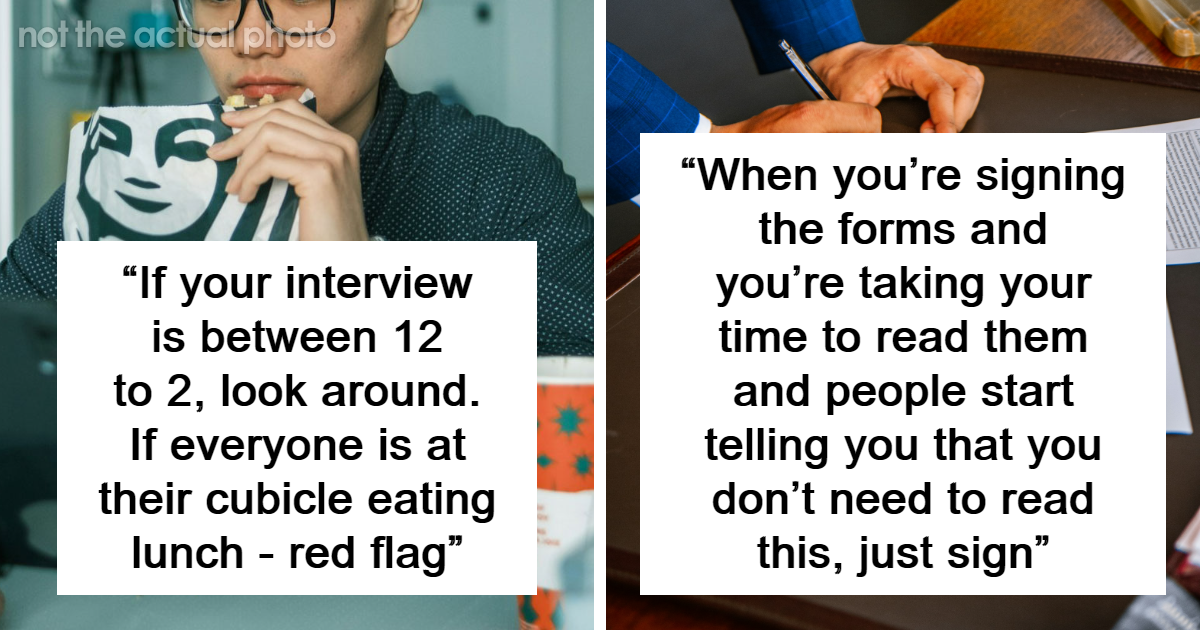
A job interview is supposed to feel like a professional conversation, not the opening scene of a workplace horror movie. Yet plenty of job seekers have walked into interviews and left with one clear thought: “I should have worn running shoes.” From vague job descriptions to managers who brag about burnout like it is an Olympic sport, interview red flags can appear faster than a recruiter saying, “We’re like a family here.”
The smartest candidates know that interviews are not just about impressing employers. They are also about gathering evidence. Is the role clear? Are people respectful? Does the company discuss pay honestly? Do they treat your time like it matters? If the answer is “absolutely not,” congratulations: the interview has still been useful. It may have saved you six months of stress, three Sunday-night panic sessions, and one very dramatic resignation email.
Below are 30 job interview red flags netizens, career experts, and workplace observers often warn candidates to watch for. Some are awkward. Some are illegal-adjacent. Some are so loud they should come with flashing lights and a tiny siren. Use them as a practical checklist before accepting an offer that looks shiny on paper but smells suspiciously like unpaid overtime.
Why Job Interview Red Flags Matter
A bad interview process often reflects a bad workplace system. Of course, one clumsy interviewer does not automatically mean the company is a disaster. People have off days. Calendars explode. Zoom decides to become abstract art. But when multiple warning signs appear together, candidates should pay attention.
Interview red flags help reveal what the polished careers page may hide: weak leadership, chaotic communication, unrealistic expectations, high turnover, poor pay practices, or a culture that confuses “fast-paced” with “we forgot how staffing works.” The goal is not to become paranoid. The goal is to become observant.
30 Red Flags To Watch For During A Job Interview
1. The interviewer is rude, dismissive, or distracted
If the person interviewing you barely looks up, interrupts constantly, checks their phone, or treats your questions like mosquito bites, take note. Interviews show you how the company behaves when it is trying to impress you. If this is the charming version, imagine the Tuesday-after-a-deadline version.
2. The job description keeps changing
You applied for a marketing coordinator role. Suddenly, it includes sales calls, customer support, weekend events, and “light accounting.” That is not a job description; that is a junk drawer. A changing role may signal disorganization, hidden workload, or a team trying to hire one person to replace three.
3. They cannot explain what success looks like
A healthy employer should be able to describe goals for the first 30, 60, and 90 days. If the answer is vague“Just jump in and make an impact”ask for specifics. If there are no specifics, the performance review later may be based on vibes, moon phases, and whether someone liked your spreadsheet font.
4. They avoid discussing salary
Pay transparency matters. If a company refuses to discuss compensation until the very end, gives a huge salary range with no explanation, or says, “We’ll see what you’re worth,” proceed carefully. Professional employers understand that candidates need real numbers to make real decisions.
5. They pressure you to accept quickly
Urgency can be normal when a role is important. Pressure is different. If you are told to accept immediately, skip reviewing the offer, or “trust us,” slow down. A legitimate employer should give you reasonable time to evaluate pay, benefits, responsibilities, and contract terms.
6. The interview starts late with no apology
Delays happen. But if interviewers are late, unprepared, and unapologetic, they may be showing you how they value employees’ time. One reschedule is life. Four reschedules and a forgotten calendar invite is a personality test you did not sign up for.
7. Everyone seems exhausted
If every employee you meet has the facial expression of a printer jam, pay attention. Tired teams happen during busy periods, but constant visible burnout can point to chronic understaffing, poor leadership, or a culture where “work-life balance” is printed on the wall and ignored in the inbox.
8. They brag about long hours
“We work hard and play hard” can mean many things. Sometimes it means ambitious teamwork. Sometimes it means answering Slack at 11:47 p.m. while eating cereal over the sink. Ask what typical hours look like, how overtime is handled, and how the team manages peak workloads.
9. They call the workplace “a family” too often
A supportive team is wonderful. A workplace “family” can also become code for weak boundaries, guilt-based loyalty, and unpaid emotional labor. A company is not your family. It is an organization that should pay you correctly, respect your time, and not ask you to sacrifice Thanksgiving for a dashboard.
10. They badmouth the person who left
If the interviewer spends five minutes criticizing the previous employee, imagine what they will say about you after you leave. A professional employer can explain turnover without turning the interview into a courtroom drama.
11. Turnover sounds suspiciously high
Ask why the position is open. If the role has been filled three times in a year, that is not a chair; that is an ejector seat. High turnover may indicate poor management, unclear expectations, low pay, impossible workload, or a culture that chews people like office granola.
12. The team cannot agree on the role
If HR, the hiring manager, and the department head all describe different responsibilities, you may be walking into confusion. Misalignment during interviews often becomes conflict after hiring. Ask which responsibilities are essential and who will set priorities.
13. They ask inappropriate personal questions
Questions about your age, religion, pregnancy plans, marital status, disability, or other protected personal details can be serious warning signs. Employers should focus on your qualifications and ability to perform job-related duties, not your private life.
14. They ask you to work for free
A reasonable skills test can make sense. A full marketing strategy, unpaid design project, detailed consulting plan, or weekend-long assignment is another story. If the task looks like usable work, ask about scope, time expectations, compensation, and how your ideas will be protected.
15. The interview process is wildly disorganized
One confusing email is human. A process full of missing links, repeated questions, forgotten resumes, and surprise interview panels may reveal deeper operational problems. Hiring is a company’s front door. If the front door falls off, inspect the house.
16. The benefits are vague
“Great benefits” should not mean “we have coffee and a chair.” Ask about health insurance, paid time off, retirement plans, parental leave, remote-work policies, and any waiting periods. If they dodge details, the benefits may look better in the job posting than in real life.
17. They cannot explain career growth
If you ask about advancement and hear only “There’s lots of opportunity,” ask for examples. How have people moved up? What skills are rewarded? How are promotions decided? A company without a growth path may expect ambition but offer only motivational posters.
18. They talk about “wearing many hats” without boundaries
Small companies often need flexible people. That is normal. The red flag is when “many hats” means no job boundaries, no support, and no extra pay. Nobody wants to be hired as a content specialist and become the office plumber by Thursday.
19. They seem offended by your questions
Strong candidates ask thoughtful questions. If an employer reacts badly when you ask about expectations, management style, pay range, or turnover, that may signal defensiveness. A good company does not fear informed candidates.
20. They describe conflict as normal chaos
Every workplace has conflict. Healthy teams address it. Unhealthy teams normalize it. If you hear “People here need thick skin,” “We’re brutally honest,” or “Drama happens everywhere,” translate carefully. Sometimes “thick skin” means “we do not manage bad behavior.”
21. The manager takes credit for everything
Listen to how leaders talk about teams. Do they say “I built,” “I saved,” and “I fixed” constantly? Or do they recognize contributions from others? A credit-hoarding manager can make your achievements disappear faster than snacks in a break room.
22. They blame employees for burnout
If the company says people burn out because they “cannot handle pressure,” be careful. Burnout is often linked to workload, lack of autonomy, poor support, unclear expectations, or unfair systems. A company that blames individuals may not be interested in fixing the environment.
23. The company has no clear onboarding plan
Good onboarding helps new employees succeed. If the answer to “How will I be trained?” is “You’ll figure it out,” prepare for chaos. Independence is valuable. Abandonment with a laptop is not a management philosophy.
24. They dodge questions about the manager’s style
Your direct manager can shape your entire work experience. Ask how they give feedback, set priorities, handle mistakes, and communicate. If the answers are evasive or overly polished, ask current team members for examples.
25. They use fear as motivation
Statements like “People who can’t keep up don’t last long” or “We only want winners” may sound intense, but they often point to insecurity disguised as excellence. Real high-performance cultures have standards, support, and accountabilitynot motivational bullying in a blazer.
26. The workplace looks tense
If you interview in person, notice the environment. Are people friendly? Do employees seem comfortable speaking? Is the office silent in a strange way? You are not judging decor. You are reading the emotional weather report.
27. They ask for sensitive information too early
Be cautious if a company asks for bank details, Social Security information, copies of identification, or payment before you have a verified offer and legitimate onboarding process. Job scams often move quickly and ask for personal or financial information before trust is earned.
28. The “recruiter” uses suspicious communication channels
Many legitimate recruiters use email, phone, and professional platforms. But if a job appears out of nowhere, moves immediately to text-only interviews, uses a strange email domain, or offers unusually high pay for vague tasks, verify the employer through the official company website.
29. They require you to buy equipment from them
A classic employment scam asks candidates to deposit a check, buy equipment, or pay for training before starting. Real employers generally do not ask applicants to send money to receive money. If your “new job” begins with your wallet, let your suspicion clock in first.
30. Your gut says something is wrong
Instinct is not evidence, but it is a useful alarm. If the conversation feels manipulative, confusing, rushed, or strangely secretive, pause. Ask more questions. Do more research. A good opportunity should become clearer as you learn more, not foggier.
Smart Questions To Ask When You Spot A Red Flag
Red flags do not always mean “run immediately.” Sometimes they mean “ask better questions.” A company may have a reasonable explanation. A team may be rebuilding after growth. A manager may be new and still improving the process. The key is to investigate before signing.
- “Why is this role open?” This reveals turnover, growth, restructuring, or replacement history.
- “What would success look like after 90 days?” This tests whether expectations are realistic.
- “How does the team handle urgent work?” This uncovers workload norms and after-hours expectations.
- “How is feedback usually given?” This reveals management style and communication culture.
- “What do people find challenging about this role?” This invites honesty and exposes hidden pain points.
- “Can you walk me through the onboarding process?” This shows whether the company supports new hires.
- “How is compensation structured?” This clarifies salary, bonuses, commissions, overtime, and benefits.
Listen not only to the answers, but also to the tone. A thoughtful employer will usually appreciate thoughtful questions. A shaky employer may act like you just asked to inspect the royal vault.
When You Should Actually Leave Immediately
Some red flags deserve a polite follow-up. Others deserve your best “Thank you for your time” and a quick exit. Leave immediately, or at least end the process, if the employer asks you to pay money to get hired, pressures you to share sensitive financial information, makes discriminatory or inappropriate comments, refuses to clarify basic job details, or becomes hostile when you ask reasonable questions.
You should also be careful when an employer asks you to ignore written agreements and rely on verbal promises. “We’ll put that in later” is not a benefits package. “Trust me” is not a compensation plan. If a promise matters, it belongs in writing.
Experience Section: Realistic Lessons From Interview Red Flags
Many job seekers learn interview red flags the hard way. The first lesson is that desperation can make any offer look better than it is. When rent is due, a vague job with a smiling manager can feel like a lifeboat. But sometimes the lifeboat has a hole and a motivational quote painted on the side. One of the most useful habits is to separate excitement from evidence. Excitement says, “They liked me.” Evidence asks, “Did they explain the role, pay, manager, schedule, and expectations?”
A common experience is the “bait-and-switch” interview. The posting promises remote work, but during the final round the manager says, “We prefer people in the office most days.” The listing says content strategy, but the interview reveals cold calling. The salary range looks comfortable, but the offer lands at the bottom with a vague promise of “future review.” These moments are not tiny details. They show whether the company communicates honestly before you are dependent on the paycheck.
Another lesson: watch how people talk about absent employees. If everyone who left was “lazy,” “not a culture fit,” or “unable to handle pressure,” the problem may not be the former employees. Good leaders can discuss challenges without humiliating people. They can say, “The role evolved,” “We needed different skills,” or “We learned our onboarding needed improvement.” Blame-heavy explanations often reveal blame-heavy management.
Job seekers also learn to notice speed. A fast process can be efficient, but a rushed process can be dangerous. If a company wants you to accept before meeting your manager, reviewing benefits, or receiving a written offer, ask why. Professional urgency should still include clarity. Scam urgency, on the other hand, often includes secrecy, pressure, and requests for money or personal data.
Pay attention to the small courtesies. Did they send the interview details on time? Did they know your name? Did they read your resume? Did they explain next steps? Courtesy is not decorative. It is a preview of operations. A company that cannot manage a 30-minute interview may struggle to manage performance reviews, raises, workload, and deadlines.
Finally, candidates should remember that rejecting a bad opportunity is not failure. It is career hygiene. You do not need to collect every offer like rare coins. A job should provide compensation, stability, growth, and basic respect. If the interview gives you anxiety, confusion, and a suspicious unpaid assignment, the best professional move may be to leave immediatelywith your dignity, your resume, and your bank account intact.
Conclusion
Job interview red flags are not about being negative. They are about being awake. A polished job posting can hide a messy workplace, and a friendly recruiter can unintentionally gloss over serious problems. The best candidates treat interviews as two-way evaluations. They answer questions well, but they also observe behavior, test clarity, and protect their time.
If an employer is transparent, respectful, prepared, and willing to answer reasonable questions, that is a good sign. If the process feels chaotic, secretive, hostile, or suspiciously urgent, slow down. Ask for details. Verify information. Read the written offer carefully. And if the red flags start waving like a parade, do not ignore them just because the job title looks nice on LinkedIn.
The right job should not require you to silence every alarm bell in your head. Sometimes the smartest career decision is not getting hired. Sometimes it is recognizing the warning signs early and walking away before the workplace becomes your next cautionary tale.