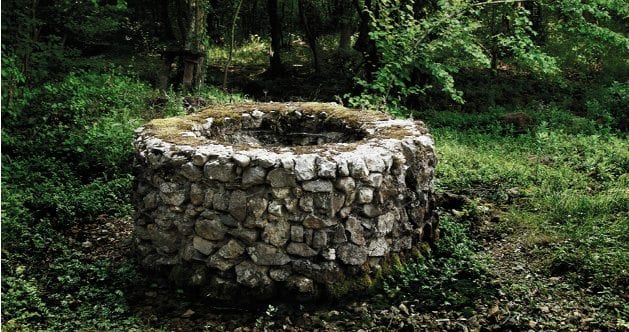
Wells are supposed to represent life: water, farms, settlements, and the stubborn human decision to build a home where plumbing has not yet received the memo. In criminal history, however, abandoned wells have sometimes been used for a much darker purpose.
The cases below span more than two centuries of American crime. Some ended in convictions, others remain unresolved, and several demonstrate how modern forensic science can bring a victim’s name back into the light decades after a killer tried to erase it.
Why Have Murder Victims Been Hidden in Wells?
An abandoned well can appear attractive to someone trying to conceal a crime. It may be deep, isolated, overgrown, structurally unstable, and located on private rural property. A killer may assume that water, mud, distance, or a concrete covering will permanently destroy evidence.
That assumption is often wrong. Wells can preserve clothing, bones, personal belongings, tool marks, bullets, and other evidence. Even badly degraded remains may later be identified through dental records, mitochondrial DNA, forensic anthropology, genetic genealogy, or comparison with relatives of missing people.
Recovering remains from a well is rarely simple. Investigators may need confined-space teams, pumps, excavation equipment, structural engineers, forensic anthropologists, and crime-scene specialists. A well is not merely a deep hole with terrible contents. It is a vertical crime scene in which every layer can matter.
Ten Real Cases Involving Bodies Found in Wells
1. Gulielma “Elma” Sands and the Manhattan Well Murder
One of America’s earliest sensational murder cases began when Elma Sands disappeared from her New York boardinghouse on December 22, 1799. She reportedly told a relative that she planned to meet Levi Weeks, a carpenter who had been courting her, and that the two intended to marry secretly.
Personal belongings connected to Sands were discovered near the Manhattan Well in what is now SoHo. On January 2, 1800, her body was recovered from the water. Weeks was accused of murdering her and became the defendant in one of the first American murder trials preserved in a detailed transcript.
The legal cast was extraordinary. Weeks was represented by prominent attorneys including Alexander Hamilton and Aaron Burrtwo men who would later become considerably less cooperative with each other. The jury acquitted Weeks after a brief deliberation.
The acquittal left the central question unanswered: who killed Elma Sands? More than two centuries later, the Manhattan Well Murder remains an enduring example of how publicity, social status, circumstantial evidence, and courtroom strategy can collide without producing certainty.
2. Amanda Belon Simpson-Deane
Amanda Belon Simpson-Deane was 16 when she disappeared after attending her first class at Cary High School in North Carolina on September 19, 2000. Her disappearance generated an extensive investigation, but months passed without a confirmed sighting.
In February 2002, investigators followed information to an abandoned well on rural property in Nash County. Recovery crews removed human remains from the bottom, and medical examiners later identified them as Amanda’s. Police treated her death as a homicide.
Two men were eventually charged in connection with her death and with a burglary at her father’s home. The case became legally complicated, but the discovery established that Amanda had not simply run away, as missing teenagers are too often assumed to have done.
Her case underscores an important principle in missing-child investigations: adolescent independence should never be confused with immunity from danger. Early assumptions can influence which leads receive attention, how quickly agencies share information, and whether a disappearance is treated with the urgency it deserves.
3. Fred Wilkerson
Truck driver Fred Wilkerson disappeared in November 1987 after becoming involved in a property dispute with Connie Quedens, a former companion with whom he had purchased land. His car later appeared at an Atlanta airport, but uncashed payroll checks remained insidean odd detail for a man supposedly starting a new life.
The investigation went cold until previously overlooked witness information was reexamined. In 2003, authorities searched an old well on Quedens’ property and discovered human skeletal remains.
Forensic examination indicated that the victim had suffered a gunshot wound to the head. Although the prosecution lacked a conventional DNA identification, anthropological findings, personal circumstances, witness testimony, and the location of the remains supported the conclusion that the body was Wilkerson’s.
Quedens denied killing him, but a jury found her guilty and she received a life sentence. The case is a textbook example of why cold-case investigators revisit old statements. A forgotten interview can become powerful when combined with a new search warrant and improved forensic analysis.
4. Rachel Jones
In April 2016, the body of 28-year-old Rachel Jones was found at the bottom of a well in the Jonesville community near Monticello, Kentucky. Authorities arrested her husband, Joseph Jones, on charges including murder involving domestic violence and tampering with physical evidence.
The initial public reports did not disclose every detail concerning Rachel’s cause of death or how long she had been in the well. That restraint is common during an active homicide investigation. Detectives frequently withhold specific facts so they can distinguish genuine witness knowledge from rumor, repetition, and social-media invention.
Rachel’s death also belongs to the broader pattern of intimate-partner homicide. When a person vanishes, investigators usually examine recent conflicts, previous threats, financial pressures, separation plans, phone records, and the timeline supplied by those closest to the missing person.
Statistics may describe domestic violence as a pattern, but each case represents an individual whose plans, relationships, and future were taken away. Rachel Jones should be remembered as more than the location where she was found.
5. Harold Jones
Harold Jones, 41, of Broken Bow, Oklahoma, was reported missing in July 2017 along with his pickup truck. The truck was found several days later in Texas, while Jones remained missing.
His body was subsequently recovered from a well near Idabel in southeastern Oklahoma. State investigators arrested Heather Melancon, Bo Greenwood, and Marvin Earl Baty on second-degree murder charges.
Investigators alleged that Jones had been killed during the theft of his vehicle. The discovery of the pickup in another state expanded the case beyond a single rural location and required authorities to reconstruct movements across jurisdictional lines.
Vehicle evidence can be crucial in this type of investigation. Registration records, surveillance cameras, license-plate readers, fuel purchases, phone-location data, fingerprints, and biological material may reveal where a vehicle traveled and who controlled it after its owner disappeared.
The well may have hidden Jones from casual observation, but it could not erase the trail created by the movement of his truck.
6. James Edmund Clarke
James Edmund Clarke, a 72-year-old resident of Valley, Alabama, had not been seen for weeks when he was reported missing in December 2019. During the investigation, authorities executed a search warrant and found his body inside a well.
Retrieving Clarke’s remains required assistance from several agencies and took approximately two and a half hours. A forensic examination determined that he had been stabbed and shot before being placed in the well. His death was officially ruled a homicide.
Investigators arrested Hubert Timothy Sprayberry, an acquaintance of Clarke, on a murder charge. The relationship between victim and suspect was significant because many killings are committed not by mysterious strangers but by people already within the victim’s social orbit.
The case illustrates the practical difficulty of processing a well. Recovery personnel must protect themselves while preserving evidence that may be submerged, fragile, contaminated, or embedded in sediment. Speed matters, but careless speed can destroy the very proof needed in court.
7. Dylan Groves
Dylan Groves was only two months old when he was killed in Ohio in March 2019. He had tested positive for methamphetamine at birth and was already involved with the child-welfare system, which had established rules concerning his care and his mother’s access to him.
Authorities began investigating after Dylan’s parents missed a custody hearing, failed to attend medical appointments, and prevented a caseworker from completing a home visit. His father eventually directed investigators to a well, where Dylan’s body had been placed inside a makeshift container.
Medical testimony described extensive injuries. A jury convicted Dylan’s mother, Jessica Groves, of aggravated murder and other offenses. His father, Daniel Groves, was convicted of murder, abuse of a corpse, and additional charges. Both received life sentences under different parole conditions.
Dylan’s case led to scrutiny of how local child-protection procedures had been handled. It is not enough for a system to create safeguards on paper. Agencies must document visits, enforce custody restrictions, respond to missed appointments, and escalate concerns when an infant becomes inaccessible.
8. Willoe Watkins
Willoe Watkins was 20 when she was beaten and strangled in Alabama in 2019. Her body was wrapped in bags and dropped into a well. The people responsible then covered the well with concrete, apparently believing that a construction material could double as a permanent eraser.
It did not. Investigators recovered Watkins’ remains, and the criminal case ultimately produced multiple convictions and guilty pleas. Tyler Battles was convicted of murder and sentenced to life in prison. Two other men pleaded guilty and received lengthy prison sentences.
A separate murder charge against another defendant was later dismissed when a key witness refused to testify. That development demonstrates why multi-defendant prosecutions can be difficult. A case that appears unified in headlines may depend on separate statements, plea agreements, credibility assessments, and rules governing admissible evidence.
The concrete covering did not prevent recovery, identification, or prosecution. Instead, it became evidence of deliberate concealmentan action capable of showing planning and consciousness of guilt.
9. Cheyenne Johnson
Cheyenne Johnson was killed in West Virginia in May 2021. Investigators said she was shot and then thrown into a well in the Sissonville area.
Virginia Smith later pleaded guilty to first-degree murder, concealment of a deceased person, and use of a firearm during the commission of a felony. During the plea hearing, Smith admitted that she had shot Johnson in the head. Her agreement required her to testify against a co-defendant.
A guilty plea does more than save the court the time of a trial. It can provide a formal account of responsibility, establish facts on the record, and assist prosecutors in pursuing other participants. It can also spare a victim’s family from sitting through weeks of disputed testimony, although it cannot remove the loss that brought them to court.
Cheyenne Johnson’s case shows that hiding a victim does not necessarily conceal the chain of responsibility. Physical evidence, statements, relationships among suspects, and cooperation agreements can reconstruct what happened even when the original crime scene has been altered.
10. Lester Rome
Lester Rome owned a lounge on Grand Isle, Louisiana, and disappeared in January 1984. He was 57. His skeletal remains were discovered in a well on farmland near Many, Louisiana, in 1986, but they remained unidentified for approximately 35 years.
Modern forensic work finally connected the remains to Rome in 2021. Investigators then returned to the circumstances of his disappearance and focused on Patricia Tito, who had been a teenager and Rome’s live-in girlfriend when he vanished.
Tito had continued operating Rome’s business, living in his home, and using his vehicle after telling others that he had left the area. She was indicted for second-degree murder in 2023 and entered an Alford guilty plea in November 2024, accepting conviction while maintaining that the plea was in her best interest. She received a mandatory life sentence without parole.
Rome’s identification demonstrates why unidentified remains must never be treated as permanently anonymous. DNA databases, renewed family-reference testing, digitized missing-person records, and cooperation between agencies can reopen a case long after witnesses have aged and physical files have begun collecting dust.
Experiences and Lessons Connected to Well-Recovery Murder Cases
The recurring experiences surrounding these cases extend far beyond the moment a body is discovered. They affect families, investigators, recovery crews, rural property owners, prosecutors, journalists, and communities that may have lived beside an unnoticed crime scene for years.
The Family’s Experience: Uncertainty Is Its Own Form of Trauma
When someone disappears, relatives often move between hope and dread. A ringing phone can feel like salvation or catastrophe. Birthdays pass, rumors spread, and ordinary questionswhere to search, whether to hold a memorial, what to tell childrenbecome nearly impossible.
Recovery brings answers, but “closure” is an imperfect word. Identifying remains may end uncertainty without ending grief. Families can feel relief that their loved one has been found while simultaneously experiencing the full reality of the death for the first time.
The Investigator’s Experience: A Well Changes the Entire Search
Detectives cannot simply climb down with a flashlight and an optimistic attitude. Old wells may collapse, contain toxic gases, hide sharp debris, or be contaminated by biological and chemical hazards. Specialists may need to drain water slowly, stabilize the opening, photograph each stage, screen sediment, and map the exact position of every recovered item.
The process can be physically exhausting and emotionally difficult. Recovery personnel are not collecting anonymous objects; they are bringing a person back to a family. Careful documentation is therefore both a scientific responsibility and an act of respect.
The Forensic Experience: Water Damages Evidence but May Also Preserve It
Submersion can accelerate some types of decomposition, move small objects, and complicate estimates of the postmortem interval. Yet a well may also shield remains from sunlight, scavenging animals, landscaping, construction, and seasonal surface disturbance.
Bones and teeth can retain identifying information long after soft tissue is gone. Laboratories may obtain DNA from dense skeletal material, compare dental work with records, examine healed injuries, study clothing, or use isotope and anthropological analysis to estimate a victim’s background.
When traditional DNA profiling fails, newer methods may target shorter genetic markers that survive degradation more successfully. Investigative genetic genealogy can then connect an unknown profile to relatives in public genealogy databases, subject to applicable laws and agency policies.
The Cold-Case Experience: Old Evidence Can Acquire New Meaning
An item collected decades ago may have seemed useless at the time. Years later, improved testing can reveal a DNA profile, identify a fiber, recover information from a damaged document, or connect remains with a missing-person report filed in another jurisdiction.
Cold-case work is rarely a single dramatic breakthrough accompanied by perfectly timed television music. It is usually slow comparison: names, dates, property records, old interviews, medical files, family trees, maps, and evidence logs. Persistence is less cinematic than genius, but it solves more cases.
The Property Owner’s Experience: Abandoned Wells Are Serious Hazards
Most abandoned wells have no connection to crime, but they can still threaten people, animals, and groundwater. Owners should not enter, disturb, or attempt to inspect a deteriorated well alone. A suspicious odor, unusual covering, exposed bones, clothing, or personal property should be reported without touching or moving anything.
Unused wells should be properly retired according to local environmental and construction requirements. Filling the top with random debris is not professional closure; it is merely hiding a dangerous hole from the next person who walks across it.
The Reader’s Experience: True Crime Requires Ethical Attention
Readers are naturally drawn to mysteries, forensic discoveries, and courtroom reversals. Responsible interest, however, begins by remembering that a victim was a person before becoming a case name.
A respectful true-crime article avoids glamorizing offenders, publishing unsupported accusations, or describing suffering merely for shock value. It distinguishes allegations from convictions and acknowledges uncertainty when a case remains unresolved.
The most meaningful question is not simply, “How did the killer hide the body?” It is, “How was the victim identified, what allowed justice to move forward, and what can prevent another family from experiencing the same loss?”
Conclusion
These ten murder cases reveal a recurring failure in criminal thinking: concealment is not the same as disappearance. Water, darkness, distance, concrete, and time may delay discovery, but they do not guarantee silence.
A forgotten well can preserve the physical evidence that defeats the person who chose it. A missing-person report can be matched to unidentified remains decades later. An overlooked witness can become central to a renewed investigation. A bone fragment can produce DNA that did not exist as usable evidence when the crime was first examined.
Most importantly, every recovery restores something a killer attempted to take awaythe victim’s identity, history, and place within a family. Wells may be deep, but modern forensic science and persistent investigative work can reach deeper.