Twice a year, millio and wonder why the car is still living an hour in the past. Fire-safety organizations have attached one more task to that ritual: checking smoke alarms.
The connection is not electrical, mechanical, or mysterious. Daylight saving time does not drain smoke alarm batteries, confuse their sensors, or make them suddenly forget how smoke works. The time change simply creates a dependable reminder to inspect devices that are easy to ignore when they are quietly doing their job.
That reminder matters because a smoke alarm may sit unnoticed for years yet be expected to respond instantly during a fire. When you “spring forward” or “fall back,” take a few minutes to confirm that your home’s early-warning system is ready.
The Real Link Between Smoke Alarms and Daylight Saving Time
Smoke alarms and the time change became linked through public-safety campaigns. The twice-yearly clock adjustment is memorable, widely discussed, and already causes people to walk around the house checking devices. That makes it a convenient moment to test smoke alarms, inspect carbon monoxide alarms, review battery needs, and look for expired units.
The clock change is a behavioral cue. It can reveal a weak battery, an expired unit, dust buildup, or a battery removed after a nuisance alarm and never reinstalled.
Why Not Rely Only on Memory?
Because memory can preserve an embarrassing conversation from 2009 while forgetting the age of a white plastic disc on the ceiling. The clock change gives homeowners and renters a predictable prompt.
Still, the time-change reminder does not replace regular maintenance. National fire-safety guidance commonly recommends testing smoke alarms every month. The spring and fall clock changes are better viewed as deeper inspection daystimes to test every unit, check dates, confirm placement, clean around alarms, and review the household escape plan.
Research support: NFPA, U.S. Fire Administration, and American Red Cross guidance. n>
Should You Change Every Smoke Alarm Battery When the Clocks Change?
Not necessarily. The old slogan “change your clocks, change your batteries” was easy to remember, but modern homes may contain several types of alarms. What you should do depends on the power source and the manufacturer’s instructions.
Alarms With Replaceable Batteries
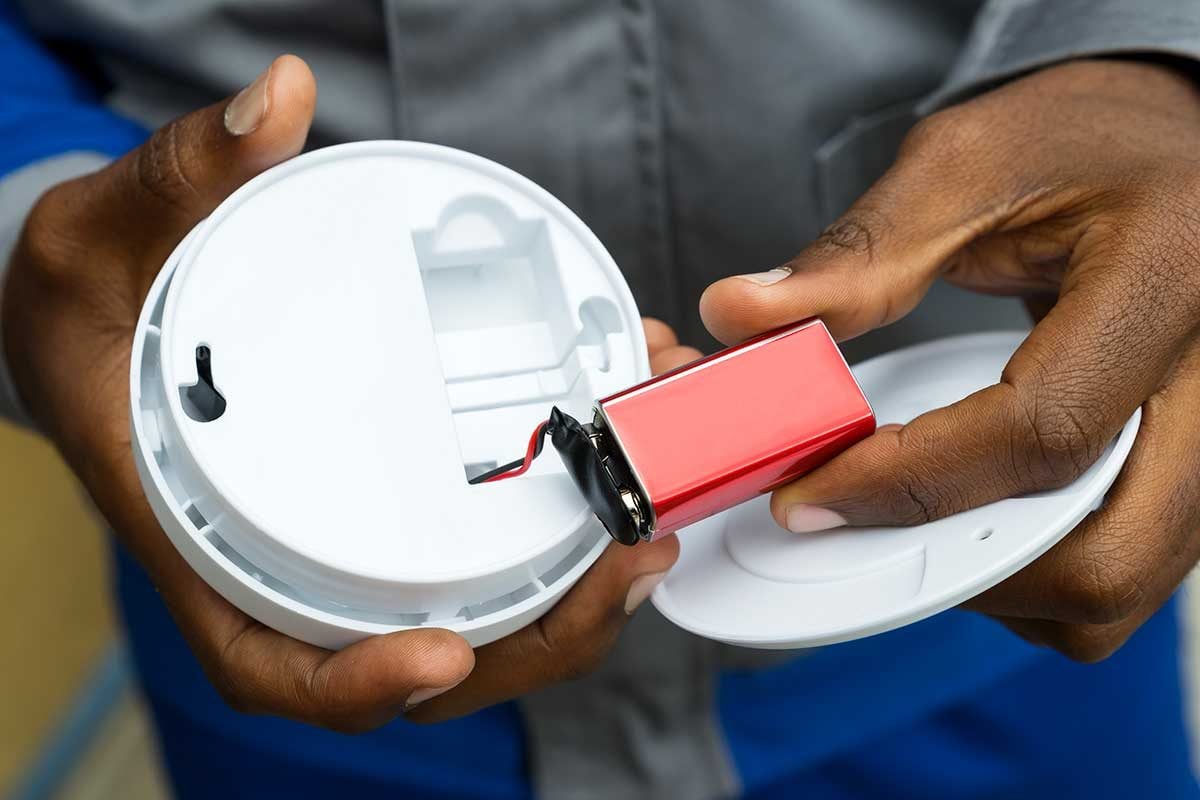
If a smoke alarm uses replaceable alkaline batteries, the time change is a practical opportunity to install fresh batteries if the manufacturer or local fire authority recommends it. Many safety agencies advise replacing these batteries at least once a year. Some local campaigns use both annual time changes as reminders, especially in homes where battery condition is uncertain.
Always use the battery type listed on the alarm. A battery that physically fits is not automatically the correct battery. After replacement, press and hold the test button according to the manufacturer’s directions. A battery swap without a test is like putting gas in a car and never checking whether it starts.
Sealed 10-Year Battery Alarms
Many newer smoke alarms contain sealed, nonreplaceable batteries designed to power the unit for its useful life. Do not pry open the alarm or attempt to replace the sealed battery. Test the alarm, check its manufacture date, listen for an end-of-life signal, and replace the entire unit when requiredgenerally at 10 years or earlier if the instructions specify.
A “10-year battery” does not mean “ignore for 10 years.” The alarm still needs regular testing. It can be damaged, contaminated, improperly mounted, recalled, or simply fail before its expected replacement date.
Hardwired Smoke Alarms
Hardwired alarms receive power from the home’s electrical system, but many also contain backup batteries. That backup matters during a power outage, which is not exactly the moment you want your fire-warning system to take a personal day. Test hardwired alarms during the time change, check the backup battery if it is replaceable, and replace the entire alarm when it reaches the end of its rated life.
Research support: CPSC, UL Solutions, and Massachusetts fire-safety guidance. n>
What a Proper Time-Change Smoke Alarm Check Includes
A complete check takes more than poking one test button near the kitchen and declaring the entire house victorious. Use the clock change as a structured safety inspection.
1. Test Every Alarm
Press the test button on each smoke alarm. You should hear the alarm’s full warning pattern, not a weak chirp or a reluctant squeak. In an interconnected system, activating one unit should cause the connected alarms to sound. Warn everyone in the home first, especially children, pets, shift workers, and anyone currently holding a full cup of coffee.
2. Check the Manufacture Date
Remove or twist the alarm from its mounting base as directed and look for the manufacture date on the back. Smoke alarms are generally replaced 10 years after manufacture, not 10 years after someone vaguely remembers buying them. If the date is missing, unreadable, or older than the recommended service life, replacement is the safer choice.
3. Inspect the Battery and Power Status
For replaceable-battery models, look for corrosion, leakage, an improperly seated battery, or an open battery drawer. For hardwired alarms, confirm that the power indicator behaves as described in the manual. Never remove a battery simply to stop a nuisance sound. Fix the cause, clean or relocate the alarm when appropriate, or replace the device.
4. Remove Dust Carefully
Dust, cobwebs, insects, and renovation debris can interfere with an alarm or cause unwanted activations. Use a soft brush attachment or follow the manufacturer’s cleaning instructions. Do not paint the alarm, spray household cleaner into it, or test it with an open flame. A lighter is not a diagnostic tool; it is a plot twist.
5. Confirm That You Have Enough Alarms
Fire-safety guidance generally calls for smoke alarms on every level of the home, inside each bedroom, and outside each separate sleeping area. Basements count as a level. Large homes, split-level homes, additions, finished attics, and converted rooms may require more alarms than the original layout provided.
6. Review Special Accessibility Needs
People who are deaf or hard of hearing may need alarms with strobe lights, low-frequency sound, bed shakers, or other alerting equipment. Older adults, children, heavy sleepers, and people taking medications that affect sleep may also need a more carefully designed warning system.
Research support: U.S. Fire Administration, Ready.gov, and CPSC placement guidance. n>
Do Not Forget Carbon Monoxide Alarms
The time change is also an ideal moment to test carbon monoxide alarms. Smoke alarms warn about particles produced by fire; carbon monoxide alarms detect a colorless, odorless gas that may come from malfunctioning fuel-burning appliances, fireplaces, generators, or vehicles running in attached spaces.
The two devices solve different problems, although combination smoke-and-CO alarms can provide both forms of protection. Check the label so you know what each unit detects. A smoke alarm is not automatically a carbon monoxide alarm, and a CO alarm is not a smoke alarm wearing a different badge.
CO replacement schedules vary by model, so follow the printed instructions. Learn each device’s alarm pattern because smoke, carbon monoxide, low battery, malfunction, and end-of-life signals may sound different.
Research support: CPSC, New York State Department of Health, and Texas Department of Insurance. n>
Why Working Smoke Alarms Matter So Much
Working smoke alarms provide early warning, and early warning creates escape time. Modern home fires can spread quickly through rooms filled with synthetic furnishings and open layouts. An alarm does not extinguish the fire; it alerts people soon enough to act.
Research and national fire data consistently show a sharply lower risk of dying in a reported home fire when working smoke alarms are present. The benefit depends on the word working. An expired alarm, a missing battery, or a unit buried in a drawer offers roughly the same protection as a motivational poster.
Interconnected alarms offer an additional advantage. If a fire starts in a basement or distant bedroom, every connected unit can sound, alerting people who might not hear the alarm nearest the fire. Interconnection may be hardwired, wireless, or built into a compatible smart-alarm system.
Research support: NFPA research, CDC findings, and Illinois State Fire Marshal guidance. n>
Turn the Alarm Test Into a Home Fire Drill
Testing the alarm confirms that it can make noise. A fire drill confirms that the people in the home know what to do next. Pair the time-change check with a short escape-plan review.
Identify two ways out of each room when possible. Confirm that doors and windows open, choose an outdoor meeting place, and teach everyone to get out, stay out, and call 911 from outside. No one should reenter for belongings or the heroic rescue of a half-finished snack.
Practice at night as well as during the day. Plan assistance for infants, older adults, people with mobility limitations, and anyone who may not hear a standard alarm.
Research support: Ready.gov and American Red Cross home-fire planning guidance. n>
Experiences That Show Why the Time-Change Habit Works
These composite household experiences show how ordinary, quiet alarm problems can remain hidden until a routine check reveals them.
The Mysterious 2 A.M. Chirp
A familiar experience begins in darkness with one chirp. Everyone wakes, waits, and hears another. Soon the family is conducting an exhausted acoustic investigation with flashlights and strong opinions.
A time-change inspection can prevent this comedy. Check removable batteries, end-of-life dates, and which alarms use sealed batteries. Learn the difference between a low-battery chirp, an end-of-life signal, and a full alarmknowledge best absorbed before 2:17 a.m. and a chair in pajamas.
The Date-Stamp Surprise
Another common experience occurs when a homeowner removes an alarm to check the back and discovers a manufacture date from a previous decade. The device may look clean and may even sound when the button is pressed, so replacing it feels unnecessary. Yet the sensor has a limited service life, and the test button mainly checks power and alarm circuitry; it does not prove that an aging sensor will respond correctly to every real fire condition.
This is common after moving into an older home or renting a property with an unknown maintenance history. Record replacement dates on a label or in a home-maintenance app. A visible record also helps future owners, tenants, caregivers, and property managers avoid guessing. The goal is not paperwork for its own sake; it is making the next safety decision obvious before the alarm becomes a ceiling-mounted mystery.
The One-Alarm Domino Effect
A family in a two-story home may test the upstairs alarm and assume the system is fine. During a more thorough time-change check, they test the basement unit and discover that it sounds locally but does not trigger the upstairs alarms. Perhaps the devices were never interconnected, a wireless link was lost, or an older unit was replaced with an incompatible model.
That finding matters because closed doors, fans, and deep sleep can make a distant alarm hard to hear. Restoring interconnection spreads the warning throughout the house.
The Cooking-Alarm Problem
Some alarms sound whenever dinner gets ambitious. After enough nuisance alarms, someone removes the battery “temporarily,” and temporary becomes six months. A time-change inspection exposes the disabled unit and prompts a real fix: better placement, cleaning, ventilation, or replacement.
Correcting nuisance alarms is safer than silencing them.
The Drill Nobody Thought They Needed
During a test, families may discover that children cover their ears instead of moving toward an exit, guests do not know the meeting place, or a bedroom window is stuck. The alarm works, but the response plan does not.
That is the larger value of the time-change habit. It begins with a button on the ceiling and expands into a review of batteries, dates, placement, accessibility, escape routes, and family behavior. The clock adjustment lasts seconds; the protection can last far longer.
Conclusion
Smoke alarms have nothing magical to do with daylight saving time. The clock change is simply a memorable prompt to care for safety equipment that is otherwise easy to overlook. Use it to test every alarm, check dates, replace batteries when appropriate, inspect hardwired backup power, confirm adequate placement, test carbon monoxide alarms, and practice a home fire escape plan.
The best habit combines two schedules: test alarms monthly, then perform a more complete inspection when the clocks change. Whether your home uses replaceable batteries, sealed 10-year alarms, hardwired units, or interconnected smart devices, follow the manufacturer’s instructions and local requirements. A few planned minutes are far better than discovering a problem through a midnight chirpor during a fire.
Note: This article provides general U.S. home-safety information. Always follow the instructions printed on your alarm and applicable local fire-code requirements.