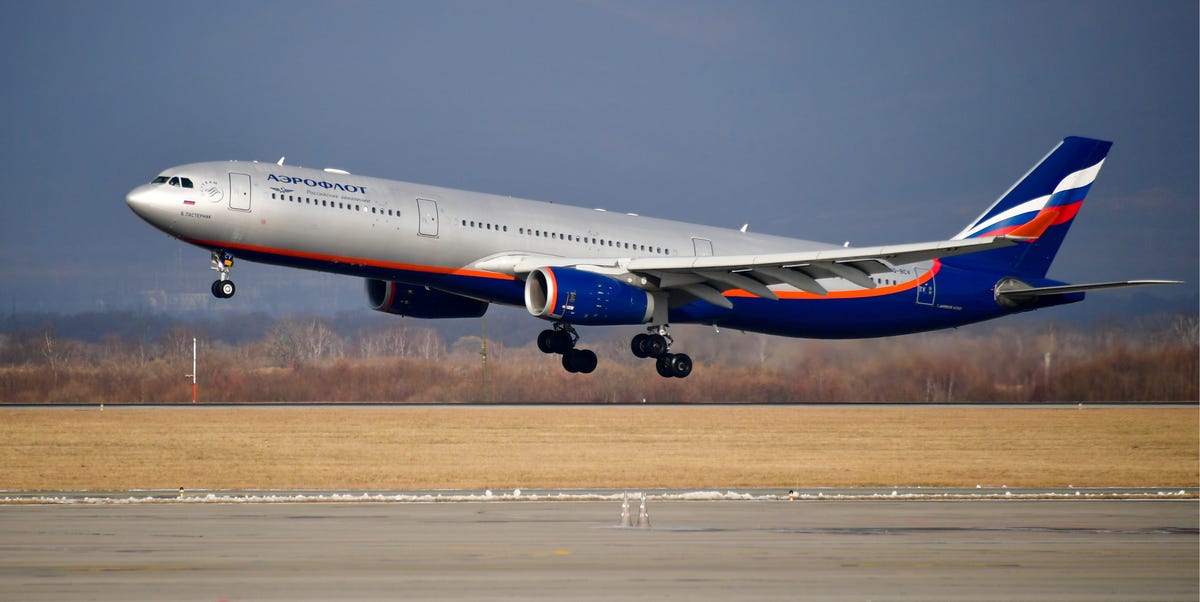
A routine Aeroflot flight from Siberia to Moscow suddenly reversed course after a passenger claimed to be armed and demanded a trip to Afghanistan. What followed was a tense but remarkably controlled emergency landing, a clever refueling ruse, and an arrest that ended without injuries. The strange story of Flight SU1515 offers more than an irresistible headline: It demonstrates how cockpit security, calm decision-making, trained crews, and coordinated law enforcement can prevent an airborne threat from becoming a catastrophe.
Editorial note: Initial news reports and statements from Russian authorities described the passenger as intoxicated, which explains the wording of the widely circulated headline. Investigators later reported that laboratory testing found no alcohol, narcotics, or psychotropic substances in his system. The incident is therefore more accurately described as an attempted hijacking involving a severely disruptive passenger whose mental condition later became central to the legal case.
A Routine Flight Takes a Sudden Turn
On January 22, 2019, Aeroflot Flight SU1515 departed Surgut, a major city in western Siberia, for Moscow. The domestic journey should have been ordinary: passengers settling into their seats, overhead bins stuffed with winter coats, and someone almost certainly discovering that the person in front had reclined before cruising altitude.
Instead, roughly 15 minutes after takeoff, the Boeing 737-800 changed course. A 41-year-old passenger, later identified as Pavel Shapovalov, had reportedly demanded that the crew divert the aircraft to Afghanistan. Investigators said he claimed to possess a weapon and attempted to reach or break into the cockpit. Aeroflot reported that 69 passengers and seven crew members were aboard, although some early reports gave slightly different passenger totals.
Demanding an international destination from the middle of a domestic Siberian flight presented several practical problems. Afghanistan was far beyond the aircraft’s planned route, the crew had not filed a flight plan for it, and commercial aviation does not generally allow passengers to update the itinerary by threatening the cockpit. This was not a rideshare with an unusually ambitious destination change.
The Refueling Ruse That Helped End the Crisis
The flight crew did not attempt to argue the finer points of geography with the passenger. Instead, reports indicated that the pilots convinced him the aircraft needed to stop for fuel before continuing. They diverted to Khanty-Mansiysk, another western Siberian city located roughly 145 miles west of Surgut.
This was a tactically intelligent response. By appearing to cooperate, the crew avoided escalating the confrontation while moving the airplane toward an airport where police, emergency personnel, and security teams could prepare. The aircraft landed safely at approximately 2:18 p.m. Moscow time, a little more than an hour after its scheduled departure.
Once the plane was on the ground, law enforcement officers detained Shapovalov. Contemporary reports described masked officers boarding the aircraft, while other accounts said personnel used the appearance of routine airport workers to preserve the crew’s refueling story. No passengers or crew members were injured.
Authorities searched both the suspect and the aircraft but found no weapon or explosives. In other words, the threat was apparently a bluff, but it was a bluff that aviation professionals had no responsible choice but to treat as real. A false claim about a weapon inside a pressurized aircraft is not harmless theater. It changes the crew’s priorities, disrupts air traffic, mobilizes emergency resources, and places everyone aboard in danger.
Was Flight SU1515 Actually Hijacked?
The headline says the Siberian man “hijacks” the plane, while many later reports use the phrase “attempted hijacking.” The difference is worth explaining.
The passenger did succeed in forcing a change to the aircraft’s original route. Flight SU1515 did not continue directly to Moscow as planned; it diverted and landed in Khanty-Mansiysk. In that broad sense, his threats interfered with the operation and movement of the aircraft.
However, he did not gain access to the cockpit, take physical control of the airplane, or reach his demanded destination. The crew remained in command throughout the incident and selected the diversion airport as part of its security response. That makes “attempted hijacking” the clearer everyday description, even though Russian authorities opened a criminal case involving the hijacking of an aircraft through threats of violence.
The distinction is more than wordplay. Aviation law often focuses on coercion, interference, threats, and attempts to seize control, not merely whether a suspect personally touches the controls. A person does not need to know how to fly a Boeing 737 to create a hijacking-level emergency. Sometimes the most dangerous object aboard is a credible threat delivered at exactly the wrong altitude.
Why the Incident Ended Without Injuries
The Cockpit Remained Secure
Modern cockpit security is designed to prevent unauthorized entry during flight. Although reports said Shapovalov tried to reach the cockpit, there was no indication that he breached it. Keeping the flight deck secure allowed the pilots to communicate, assess the threat, coordinate with air traffic control, and continue operating the aircraft.
Had the suspect gained access to the controls, the emergency would have become dramatically more dangerous. The locked cockpit door was therefore not just a physical barrier. It preserved the crew’s decision-making space at a moment when every calm second mattered.
The Crew Used De-Escalation Instead of Drama
The pilots’ reported refueling explanation gave the passenger a reason to accept a nearby landing without openly challenging him. That approach reflects a basic principle of crisis management: The safest solution is often the one that reduces confrontation while quietly improving the defenders’ position.
There was no need for an action-movie speech, a midair wrestling tournament, or a passenger announcing that he had watched three aviation documentaries and was ready to assist. The crew needed time, distance from the threat, and a controlled place to land. The ruse helped provide all three.
Ground Authorities Were Ready
A diversion does not end when the landing gear touches the runway. Police must determine whether the threat is genuine, whether accomplices are present, and whether passengers can safely leave the aircraft. Emergency medical teams may also be placed on standby in case the confrontation turns violent.
Reports said multiple police units and ambulances were dispatched to Khanty-Mansiysk Airport. Security was tightened while authorities prepared to detain the suspect. The coordinated response helped transform an uncertain airborne emergency into a controlled arrest.
Passengers Did Not Create a Second Emergency
Available accounts do not indicate widespread panic or a chaotic rush through the cabin. Passengers apparently remained aboard until law enforcement resolved the situation. Some were understandably angry after the suspect’s arrest, particularly because the incident delayed their journey to Moscow.
Annoyance may sound like an oddly ordinary reaction to an attempted hijacking, but it also reflects how effectively the danger was contained. Once the threat was removed, the passengers’ immediate concern became the timeless air-travel question: “So, when are we finally getting there?”
The Investigation Complicated the Early “Drunken” Narrative
Early reporting repeatedly described Shapovalov as drunk. A local law-enforcement source reportedly told the Russian news agency TASS that preliminary information suggested intoxication, and the Russian Investigative Committee initially used similar language.
Later forensic findings complicated that account. Reports published the following day stated that investigators detected no alcohol, illegal drugs, or psychotropic substances in biological samples. No weapon or explosives were discovered either. Because of his behavior and the seriousness of the alleged offense, authorities ordered a psychological and psychiatric evaluation.
This correction matters. Breaking-news coverage often relies on preliminary statements delivered while events are still developing. Those statements can explain why an aircraft turned around or why police are surrounding an airport, but they should not automatically be treated as the final forensic record.
The more accurate conclusion is that authorities initially believed the passenger was intoxicated, while subsequent testing reportedly failed to confirm that belief. A responsible retelling should preserve both stages of the story rather than quietly choosing whichever version produces the livelier headline.
What Happened to Pavel Shapovalov?
Shapovalov was formally detained and charged in connection with the attempted seizure of the aircraft through threats of violence. A court initially placed him in custody while investigators questioned passengers and crew members, examined surveillance material, searched his residence, and evaluated his mental health.
In August 2019, a court reportedly released him from criminal responsibility and ordered compulsory psychiatric treatment. That outcome suggests the legal process ultimately regarded his mental condition as more important than the early theory that alcohol had driven the incident.
The decision does not make the onboard threat less serious. Mental illness, intoxication, criminal intent, and deliberate deception are different legal and medical questions, but pilots cannot diagnose those distinctions at 30,000 feet. A person claiming to be armed and demanding a diversion must be treated as an immediate security threat until authorities establish otherwise.
Aeroflot’s Response and the Journey to Moscow
After the arrest, Aeroflot arranged a reserve aircraft to transport the delayed passengers from Khanty-Mansiysk to Moscow. The airline also emphasized that its employees received training for security incidents and said additional aircraft checks would be performed.
The replacement flight was an important part of the operational response. Airlines must investigate the affected aircraft, cooperate with authorities, reposition crews, assist passengers, and rebuild the disrupted schedule. Even when nobody is hurt, an attempted hijacking produces a long administrative tail involving interviews, inspections, reports, missed connections, and very unhappy people standing near a gate display.
Flight SU1515 therefore ended with two very different results. The suspect’s journey stopped in police custody, while the other passengers eventually continued to Moscow aboard another aircraft.
What the Incident Reveals About Aviation Security
The safe conclusion of the Aeroflot hijacking attempt was not simply good luck. Several layers of aviation security worked together: a protected cockpit, trained flight attendants, pilots capable of de-escalation, communication with controllers, a suitable diversion airport, and law enforcement prepared to board the aircraft.
This layered approach is important because no single measure is perfect. Airport screening reduces the chance that a weapon reaches the cabin, but a passenger can still make a false threat. A reinforced cockpit door limits access, but cabin crew must still manage the disruptive person. Police can make an arrest, but only after pilots get the aircraft safely onto the ground.
The incident also shows why unruly-passenger behavior is treated as a security matter rather than merely bad manners. Interfering with crew members distracts them from safety duties and may force a diversion. In the United States, the Federal Aviation Administration warns that threatening, intimidating, assaulting, or interfering with a crew member can lead to enforcement action and criminal consequences. FAA rules also prohibit passengers from drinking alcohol onboard unless it is served by the airline.
Passenger Experience: What a Midair Security Crisis Can Feel Like
Most travelers imagine that an attempted hijacking would begin with a dramatic announcement. In reality, passengers may initially receive very little information. The first clues could be subtle: flight attendants stop the beverage service, the seatbelt sign remains illuminated, the aircraft banks unexpectedly, or the crew begins moving through the cabin with unusual urgency.
That uncertainty can be one of the hardest parts of the experience. A passenger looking at a flight-tracking app may see the plane turn away from its destination without knowing whether the cause is weather, a mechanical problem, a medical emergency, or a security threat. Meanwhile, rumors can travel through an airplane faster than the snack cart and with considerably less accuracy.
Follow the Crew’s Instructions Immediately
The most useful passenger response is usually the least cinematic one: stay seated, keep the aisle clear, fasten the seatbelt, and listen. Flight attendants are safety professionals. During a disturbance, they may be communicating with the cockpit, assessing the suspect, relocating passengers, securing equipment, or preparing the cabin for an unscheduled landing.
Ignoring instructions because you want a better view can interfere with that work. Standing in the aisle may block crew movement or prevent another passenger from being relocated. Opening an overhead compartment can create loose objects just as the aircraft begins a rapid descent. This is not the moment to retrieve a laptop because the delay has given you time to answer email.
Do Not Escalate a Contained Situation
Passengers sometimes feel pressure to confront a disruptive person. Physical intervention may become necessary when there is an immediate danger to life, but charging into a situation without understanding it can make the threat harder for trained crew members to control.
A suspect may have a concealed weapon, an accomplice, or a medical condition that is not obvious. The crew may also be deliberately allowing the person to believe that demands are being followed. On Flight SU1515, the reported refueling ruse depended on maintaining that illusion until the aircraft reached a secure airport. An enthusiastic passenger shouting, “We are obviously landing so the police can arrest you,” would not have improved the strategy.
Expect a Long Wait After Landing
Passengers often assume that touching down ends the emergency. It may actually begin a second phase. Police might surround the aircraft, negotiate with the suspect, board in protective equipment, search the cabin, and interview witnesses. Travelers may be told to leave bags behind or remain seated even after the engines stop.
After evacuation or deplaning, authorities may separate witnesses and request statements. The airline may inspect the aircraft before returning it to service. Connections will be missed, checked baggage may be delayed, and replacement transportation may take hours. Carrying essential medication, identification, a charged phone, and basic contact information in a small personal item can make an unexpected diversion easier to manage.
Record Details Only When It Is Safe
Video can later help investigators, but filming should never take priority over crew instructions or personal safety. A phone held above a seat can reveal law-enforcement positions, provoke the disruptive passenger, or obstruct evacuation. Passengers who observe important details can instead remember the person’s location, statements, movements, clothing, and interactions with the crew.
Once safely off the aircraft, writing down those observations may produce a more useful witness account than a shaky clip accompanied by whispered speculation. Investigators need accurate information, not a vertical video titled “Craziest Flight Ever” uploaded before anyone knows what happened.
Be Prepared for an Emotional Aftereffect
Even when an incident ends without physical injuries, passengers may experience anxiety, irritability, difficulty sleeping, or fear of flying afterward. Those reactions are understandable. The body can remain in a heightened state long after the aircraft is parked and the suspect is gone.
Travelers may benefit from speaking with family members, documenting the event, contacting the airline for support information, or consulting a qualified health professional if distress persists. The absence of injuries does not mean the experience felt harmless to the people who spent the flight wondering whether the threat was real.
The broader lesson from Flight SU1515 is reassuring: calm passengers and trained professionals can sharply reduce the damage caused by one person’s dangerous behavior. The passengers did not need to fly the plane, negotiate the diversion, or direct the arrest. Their most valuable contribution was allowing the crew to do those jobs.
Conclusion
The attempted hijacking of Aeroflot Flight SU1515 began with a frightening demand and ended with a safe landing, an arrest, and no reported injuries. A passenger claimed to be armed, demanded a diversion toward Afghanistan, and caused a Moscow-bound commercial aircraft to reverse course. Yet he never breached the cockpit, never reached the requested destination, and was detained after the crew used a reported refueling ruse to land at Khanty-Mansiysk.
The case also demonstrates why early breaking-news labels require caution. Although the suspect was initially described as drunk, later laboratory testing reportedly found no alcohol or drugs, and the legal proceedings ultimately led to compulsory psychiatric care.
Above all, the incident is a case study in layered aviation security. The reinforced cockpit protected the pilots. Crew training limited escalation. Air traffic control and ground authorities supported the diversion. Police completed the arrest. Passengers avoided turning one dangerous situation into several more. It was an alarming day in Siberian aviation, but also a strong example of what happens when preparation, restraint, and professional judgment all arrive on the same flight.