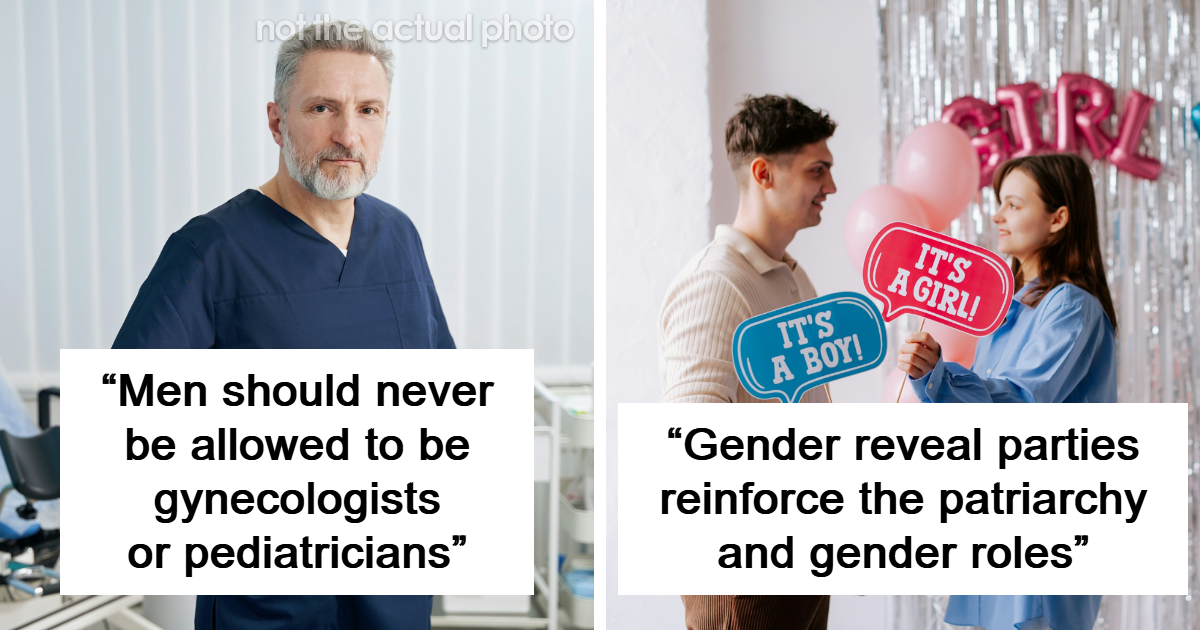
Few phrases can end a peaceful conversation faster than, “This may be too woke, but…” It is the verbal equivalent of setting a casserole on the table and quietly announcing that it may contain fireworks.
The word “woke” originally developed in African American English as a call to remain alert to racial and social injustice. Over time, it became a much broaderand far more argumentativelabel. Today, people use it to describe everything from inclusive language and environmental policy to a movie character wearing sensible shoes.
A viral collection published by Bored Panda, inspired by a TikTok discussion, invited people to share beliefs they considered unusually progressive or socially unacceptable. The answers covered politics, religion, education, relationships and daily life, demonstrating that one person’s outrageous radicalism is often another person’s extremely normal Tuesday.
The 76 opinions below are original paraphrases and thematic expansions rather than copied social-media posts. Some may sound progressive, some merely practical and others suspiciously like common sense wearing a protest button.
Why Unpopular Opinions Feel So Dangerous
Disagreement is not physically dangerous in most ordinary conversations, yet the brain can treat social rejection like a flashing emergency sign. The American Psychological Association defines conformity as adjusting opinions, judgments or behavior to match other people or the expectations of a group. That adjustment may involve sincere agreement, but it can also mean smiling politely while your inner monologue is throwing furniture.
Classic conformity research showed how group pressure could influence people even when the group’s answer appeared clearly wrong. A modern replication found that social influence remained powerful and could extend beyond visual judgments to political opinions. At the same time, research on minority influence suggests that consistent dissent can encourage reflection, innovation and genuine changes of mind.
Social media adds an audience, a permanent record and a scoreboard. Pew Research Center has found deep partisan divisions over whether online callouts create accountability or unfair punishment. Research from Brookings also suggests that technology platforms are not the sole cause of American polarization, although their design can intensify existing divisions.
76 Opinions That Could Start a Very Long Comment Thread
Government, Politics and Public Life
- Serious criminal convictions should carry consequences for political eligibility. Running a country should involve stricter screening than renting a carpet cleaner.
- Election Day should be a federal holiday. Democracy works better when voting does not require negotiating with a shift manager.
- Eligible citizens should be registered to vote automatically. Participation should be the default, not an administrative obstacle course.
- Political donations should never purchase greater access to government. A large check should not function like a backstage pass.
- Public libraries are essential infrastructure. They provide books, internet access, community services and one of the last indoor spaces where nobody expects you to buy a muffin.
- Housing should be treated as a basic need before it is treated as an investment. A home is shelter first and a portfolio item second.
- Helping unhoused people secure stable housing should come before demanding perfect behavior. It is difficult to rebuild a life while carrying it in a shopping cart.
- Prisons should prioritize rehabilitation whenever public safety allows. Releasing people with fewer skills and more trauma is not an impressive long-term strategy.
- Police officers should face strong independent oversight. Public trust requires accountability that is visible, consistent and more substantial than an internal memo.
- Taxes are not automatically theft. They can also be the group subscription fee for roads, emergency services, schools and water that should not sparkle ominously.
- Basic healthcare should not depend entirely on employment. Losing a job is stressful enough without losing access to medication at the same time.
- Every student should be able to receive school meals without stigma. Children cannot concentrate on algebra while their stomachs are composing protest music.
- Human dignity should not depend on nationality, paperwork or birthplace. A border can define jurisdiction without defining a person’s worth.
Work, Money and Economic Fairness
- A full-time job should provide enough income for a basic, stable life. Employment should not be an elaborate side quest undertaken between financial emergencies.
- Unpaid internships should be rare. “Exposure” is useful for photography, but it does not pay rent.
- Salary ranges should appear in job advertisements. Applicants should not complete five interviews to discover that the compensation package is mostly enthusiasm.
- A four-day workweek deserves broader experimentation. Productivity is not measured by how convincingly someone stares at a spreadsheet on Friday afternoon.
- Philanthropy is not a substitute for fair taxation. Public priorities should not depend on which billionaire wakes up feeling generous.
- Restaurant workers should receive reliable wages without depending primarily on tips. Customers should reward good service, not operate an unofficial payroll department.
- Essential workers deserve essential-worker pay. Applause is lovely, but grocery stores rarely accept it at checkout.
- Property ownership does not eliminate business risk. Landlords should not expect tenants to absorb every financial surprise automatically.
- Debt is not proof of bad character. Medical emergencies, tuition, low wages and predatory lending cannot be corrected with a motivational quote.
- College is not the only respectable path to adulthood. Skilled trades, caregiving, entrepreneurship and technical training are not consolation prizes.
- Productivity is not a measurement of human worth. People remain valuable while sleeping, recovering, grieving or achieving absolutely nothing before lunch.
- Paid parental and family leave should be normal. Newborns and sick relatives have a stubborn habit of ignoring quarterly deadlines.
- Burnout should not be worn as a status symbol. Exhaustion is a warning light, not an employee-of-the-month badge.
Identity, Equality and Inclusive Language
- Using someone’s requested pronouns is ordinary courtesy. Most people already adjust their language when someone says, “Actually, I go by Sam.”
- Learning to pronounce a person’s name correctly matters. “It is too difficult” becomes less convincing after everyone successfully learns the names of fantasy dragons.
- Accessibility improvements usually help more people than expected. Captions, ramps, clear signs and flexible systems benefit parents, travelers, older adults and anyone temporarily injured.
- Diverse casting is not automatically forced. The real world has contained many kinds of people for quite some time.
- Representation matters, but shallow tokenism is not enough. Adding one diverse character without depth is inclusion by decorative houseplant.
- Body neutrality can be healthier than demanding constant body positivity. Nobody must adore every inch of themselves before being allowed to enjoy breakfast.
- Fat people deserve respectful healthcare and ordinary dignity. A person’s size does not turn every conversation into an invitation for medical commentary.
- Disabled people are not motivational props. Their lives include work, boredom, romance, irritation and bad television choicesnot merely inspirational background music.
- Gender-neutral restrooms are practical. A private toilet does not need a philosophical identity crisis.
- Consent is ongoing and can be withdrawn. Yesterday’s yes is not a permanent membership agreement.
- Men should be allowed to cry without ridicule. Emotional suppression is not masculinity; it is pressure-cooking with fewer safety instructions.
- Women do not owe strangers cheerfulness. A neutral facial expression is not a public emergency.
- Claiming not to “see color” can overlook real inequality. Fairness sometimes requires recognizing different experiences rather than pretending everyone encountered the same road.
Education, Parenting and Social Expectations
- Sex education should be factual, age-appropriate and comprehensive. Silence does not prevent curiosity; it merely gives misinformation an excellent internship.
- Religion may be studied academically without being imposed devotionally. Students can learn about beliefs without a public school selecting one for them.
- Children deserve reasonable privacy. Parenting does not require publishing every embarrassing moment to an audience of former classmates.
- Parents can be wrong. Producing a child does not install automatic expertise in history, medicine, technology or matching socks.
- Household chores should not be assigned by gender. Laundry remains equally washable regardless of who loads the machine.
- Labels such as “gifted” should be used carefully. They can create pressure, rigid identities and adults who panic when something is not immediately easy.
- Children may benefit from less repetitive homework. Six hours of school followed by three hours of worksheets is not balance; it is a franchise expansion.
- Grades do not perfectly measure intelligence. They often measure memory, compliance, available support and the ability to function at 8 a.m.
- Removing books should require stronger justification than discomfort. A challenging idea does not become harmless when adults hide the cover.
- History classes should include painful and complicated truths. Patriotism that collapses after one honest chapter was built from very delicate materials.
- Teachers are often expected to solve social problems without adequate resources. Appreciation weeks cannot replace staffing, planning time and competitive pay.
- School uniforms do not automatically create equality. Students can detect class differences through shoes, phones, vacations and approximately four seconds of conversation.
- Adults should apologize sincerely to children. Respect is not weakened when authority admits a mistake; it is demonstrated.
Technology, Consumption and the Environment
- Fast fashion is not truly cheap when its wider costs are considered. A bargain price can hide waste, unsafe labor and clothing designed to retire after two washes.
- Manufacturers should make products easier to repair. A broken battery should not require replacing an entire device and holding a small electronic funeral.
- Social-media platforms are not neutral bulletin boards. Their rules, recommendations and incentives influence what receives attention.
- Algorithms shape behavior even when users feel fully independent. The machine does not need mind control when it can simply recommend seventeen more videos.
- Privacy should not be a luxury product. People should not need advanced technical knowledge to avoid being tracked while buying toothpaste.
- Artificial intelligence should support human judgment rather than replace it blindly. Fast answers are not necessarily wise, fair or even attached to reality.
- Influencers are advertisers when they are paid to promote something. A softly lit kitchen does not transform a commercial into a friendship.
- Eating less meat can be worthwhile even without becoming perfectly vegan. Partial improvement still counts outside the internet’s Olympic purity trials.
- Individual recycling cannot solve a system built around disposable products. Consumers matter, but producers and policymakers also need responsibilities.
- Single-use plastic should be reduced when practical alternatives exist. A fork used for seven minutes should not remain on Earth long enough to become an archaeological discovery.
- Cities should be designed for pedestrians, cyclists and transit users as well as drivers. Streets are public spaces, not rivers where automobiles are the only recognized fish.
- Owning fewer things can feel more luxurious than managing endless clutter. Sometimes the most premium storage solution is not purchasing the object.
Relationships, Community and Everyday Life
- Marriage is not a graduation ceremony for adulthood. A wedding can be meaningful without turning unmarried people into students who failed the final exam.
- Single people can have complete and joyful lives. A romantic partner is a relationship, not the missing half of a human starter kit.
- Friendships can be as life-defining as romances. Some friends provide decades of loyalty without demanding coordinated engagement photos.
- Chosen family can be real family. Care, consistency and safety may matter more than shared DNA.
- Setting boundaries is not automatically selfish. Saying no can prevent the resentment created by repeatedly saying yes through clenched teeth.
- Forgiveness does not always require reconciliation. Someone may release anger without reopening the door.
- Ghosting is understandable in unsafe situations but should not become routine conflict avoidance. Most uncomfortable conversations are survivable without vanishing into fog.
- An apology without changed behavior is merely a recurring announcement. “Sorry” should eventually be followed by a different episode.
- People should help strangers when they can do so safely. A functioning community requires occasional acts that cannot be converted into personal branding.
- Knowing one’s neighbors is useful. Community begins with names, small favors and discovering who has been receiving your packages.
- Joy does not need to become income. A hobby can remain delightfully inefficient without becoming a brand, store or content strategy.
- Changing your mind is a sign of growth, not weakness. Refusing to update an opinion despite better evidence is consistency’s less charming cousin.
When “Woke” Becomes a Shortcut Instead of an Argument
Many disagreements become unproductive because people debate the label rather than the underlying proposal. Calling an idea “woke” may communicate approval, mockery, suspicion or almost nothing at all. The word has become roomy enough to contain corporate diversity seminars, accessible bathrooms, climate-conscious menus, casting decisions and whichever advertisement caused the internet to shout before breakfast.
That ambiguity is politically useful. A vague label allows people to reject a collection of ideas without examining each one separately. The reverse problem also occurs: supporters may assume that anything criticized as “woke” must therefore be compassionate or correct. Neither shortcut requires much thought, which explains its popularity.
Americans also disagree sharply about the balance between protecting expression and reducing harm. Pew surveys have documented major ideological gaps over offensive speech, while campus research shows that many students value open discussion but also report self-censoring on sensitive subjects. The result is not a simple battle between brave truth-tellers and fragile censors. It is a continuing negotiation over context, power, consequences and whose discomfort receives attention.
Free expression also does not mean freedom from criticism. The First Amendment restricts government action; it does not force friends, employers, customers or online communities to applaud every statement. Yet social punishment can become disproportionate, especially when thousands of strangers flatten a complicated situation into a single screenshot. Organizations including the ACLU, Knight Foundation and FIRE have repeatedly examined the tension between protecting expression, limiting harassment and preventing fear-driven self-censorship.
Experiences From the Uncomfortable Art of Disagreeing
The Family Dinner Test
A controversial opinion often sounds reasonable while it lives quietly inside your head. Then someone brings up politics over dinner, and suddenly the sentence must travel through a room containing your parents, an uncle who forwards twelve messages before sunrise and a cousin who believes every disagreement requires a podcast.
The first experience is usually physical. Your shoulders tighten. You rehearse the opening sentence. You consider saying nothing and concentrating intensely on the potatoes. This is conformity in its everyday form: not necessarily changing your belief, but deciding that social peace may be worth temporary silence.
Speaking calmly often works better than announcing that everyone else has been brainwashed. A question such as, “What consequence do you think that policy would have?” invites conversation. A declaration such as, “Only a monster could disagree,” invites dessert to be served in complete silence.
The Workplace Meeting Test
Disagreement at work carries different risks because the audience may influence your paycheck. Imagine a meeting where everyone enthusiastically supports a new policy. You notice that it may disadvantage hourly employees, people with disabilities or parents with limited flexibility. Nobody else mentions the problem.
The temptation is to wait for a braver person. Unfortunately, every person may be conducting the same private audition for the role of “silent background coworker.” A useful approach is to criticize the outcome rather than accuse the people involved: “Could we test how this affects employees on different schedules?” That sentence creates room for evidence without opening with a flamethrower.
Sometimes the objection changes the plan. Sometimes it is ignored. Occasionally someone contacts you afterward to say, “I agreed but did not want to speak.” That moment reveals how apparent consensus can be assembled from several private disagreements wearing business-casual clothing.
The Group Chat Test
Text-based conversations remove tone, facial expression and the helpful ability to notice that everyone is tired. A mildly controversial statement can therefore arrive sounding like a manifesto carved into stone.
Consider a friend who says an offensive joke was harmless. You believe it reinforced a stereotype. Replying with a public accusation may trigger defensiveness, while saying nothing may feel dishonest. A private message can preserve both honesty and dignity: “I know you may not have meant harm, but here is why it bothered me.” Intent and effect can then be discussed without requiring a courtroom, jury and commemorative hashtag.
The Public Post Test
Posting an unpopular opinion online is different from sharing it with people who know your history. Strangers encounter a few sentences, not your entire character. They may interpret ambiguity in the least generous way because outrage is more entertaining than clarification.
One practical lesson is to decide what kind of conversation you are willing to host. You may welcome disagreement while deleting threats, slurs or repetitive harassment. Boundaries are not proof that you fear debate. A restaurant can welcome customers without allowing someone to throw soup at the ceiling.
Another lesson is that not every reply deserves a response. Some people ask questions because they are curious. Others ask questions because they would like to keep you typing until the sun burns out. Learning the difference protects both time and sanity.
The Experience of Changing Your Mind
The strangest experience may occur when criticism is correct. Perhaps an example was inaccurate, a joke caused more harm than expected or a policy had consequences you had never considered. Online culture often treats changing one’s mind as surrender, but genuine discussion becomes impossible when every position must be defended forever.
A thoughtful correction can be simple: “I had not considered that. I need to revise my view.” No dramatic self-destruction is required. Growth is not humiliation. It is what happens when curiosity defeats the need to win.
The goal of expressing an unpopular opinion should not be universal agreement. That is an ambitious target for a species that cannot agree on pineapple pizza. A better goal is to make the disagreement clearer, more informed and less cruel than it was before.
Conclusion: Disagreement Is Not a Design Flaw
The 76 unpopular opinions above will not receive equal applause. Some readers may nod enthusiastically, some may object and others may discover that their supposedly radical belief is shared by half the room.
That is the useful part. Social progress rarely begins with unanimous approval, but disagreement alone is not automatically courageous or intelligent. The quality of an unpopular opinion depends on its evidence, consequences and willingness to recognize other people as human beings rather than obstacles with profile pictures.
We do not need fewer difficult conversations. We need better onesconversations where people ask what a proposal actually means, identify who may be affected and remain capable of learning something. Being “woke,” “anti-woke” or proudly label-free matters less than staying awake to evidence, context and the possibility that none of us has achieved permanent intellectual perfection.