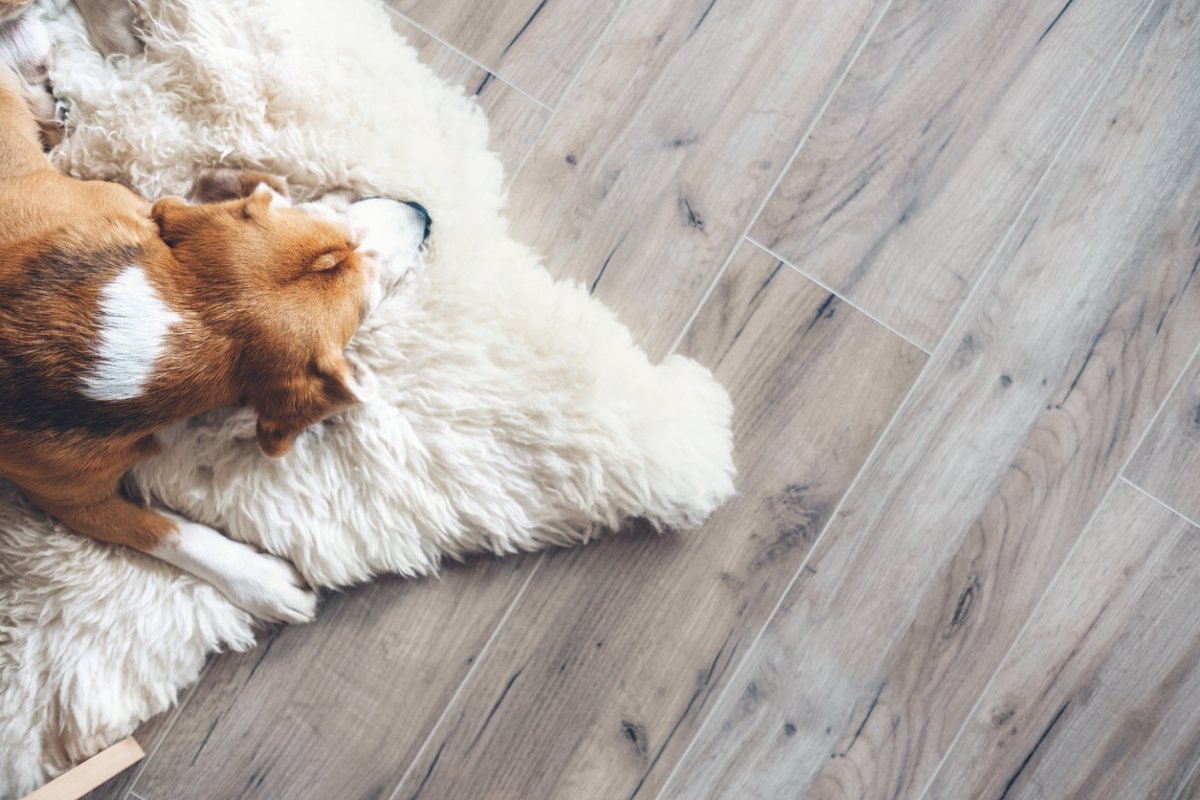
Flooring occupies more visual space than almost anything else in a room, yet it is often the last surface homeowners consider updating. Walls get painted. Pillows get replaced. A heroic new houseplant arrives and immediately begins demanding emotional support. Meanwhile, the scratched, dated, or mismatched floor remains exactly where it has always beenunderfoot and impossible to ignore.
Fortunately, changing your flooring does not always require demolition, professional installers, or a renovation budget large enough to frighten your checking account. Decorative decals, floor paint, rugs, carpet tiles, floating planks, carpet remnants, and outdoor deck tiles can all produce noticeable results with far less disruption than a traditional replacement.
The best method depends on whether you rent or own, how much moisture and foot traffic the room receives, and whether the existing surface is flat, dry, stable, and safe to cover. The following seven easy flooring ideas can help refresh a tired room without turning your home into a month-long construction zone.
Before Changing Your Flooring, Inspect What Is Underfoot
An easy flooring makeover still needs a sensible foundation. Begin by cleaning the existing surface and checking for loose boards, cracked tiles, moisture damage, soft spots, uneven areas, or peeling adhesive. Covering a structural or moisture problem does not solve it; it merely gives the problem a nicer outfit.
Room conditions also matter. A dry bedroom has different requirements from a steamy bathroom, a muddy entryway, or a basement with occasional dampness. Flooring guidance from major home-improvement and industry organizations consistently emphasizes room use, moisture exposure, maintenance needs, subfloor condition, and installation requirements when selecting a material.
Take extra care in older homes
Do not sand, scrape, cut, or pull up unidentified old flooring simply because a social-media video made the job look satisfying. Some older floor tiles, sheet flooring, adhesives, and painted surfaces may contain hazardous materials. The Environmental Protection Agency recommends professional evaluation when suspected asbestos-containing material will be disturbed, and it advises lead-safe practices for renovation work in homes built before 1978.
Confirm that the makeover is allowed
Renters should obtain written permission before painting, gluing, fastening, or permanently covering a floor. Even products marketed as removable should be tested in a hidden area. Adhesive behavior can vary according to the flooring finish, room temperature, humidity, installation time, and how long the product remains in place.
1. Transform Plain Floors With Vinyl Decals
Peel-and-stick vinyl decals are among the quickest ways to change a floor’s appearance. They are available in geometric patterns, faux encaustic designs, checkerboards, terrazzo looks, and other styles that can make basic tile or smooth vinyl appear far more interesting.
This option works especially well in a small bathroom, laundry area, kitchen nook, or rental entryway. Because the pieces are installed individually, you can create a full-room pattern, a border, or a rug-like focal point without purchasing permanent tile.
How to get a cleaner result
Vacuum and degrease the floor thoroughly, then allow it to dry. Lay out several decals before removing the backing so the pattern does not gradually wander sideways like a shopping cart with one defective wheel. Begin from a straight reference line rather than assuming the wall is perfectly square.
Press each piece from the center toward the edges to remove trapped air. Avoid installing decals across deep grout joints, loose tiles, highly textured surfaces, or areas that regularly hold standing water. Test removability first, particularly on natural wood, delicate finishes, or recently sealed flooring.
2. Paint a Worn Wood, Concrete, or Vinyl Floor
Floor paint can create one of the most dramatic transformations for the money. A damaged wood floor that is not worth fully refinishing may look intentional again in deep charcoal, warm white, navy, sage, or another color that complements the room.
Paint can also produce decorative effects. Consider a checkerboard in a mudroom, a simple border around a bedroom, wide stripes on a porch, or a stenciled pattern that resembles tile. The design can be subtle or theatrical, depending on whether you want “quiet cottage” or “the floor has entered the conversation.”
Preparation matters more than artistic confidence
Use a coating specifically approved for the flooring material and location. Clean away wax, oil, grease, and residue. Repair defects, dull glossy finishes as directed, and apply the recommended primer. Thin, even coats generally produce a better finish than one heroic layer of paint.
Respect the manufacturer’s drying and curing times before replacing furniture or allowing heavy traffic. A painted floor may feel dry before it is ready for chair legs, pet claws, or the household member who suddenly decides to move a bookcase across it. Professional refinishing guidance likewise stresses surface preparation, compatible finishes, thin applications, and adequate drying between coats.
3. Use an Area Rug for an Instant Flooring Makeover
An area rug is the easiest option because it requires no adhesive, demolition, curing, or advanced relationship with a power saw. It can conceal worn flooring, soften sound, add warmth, introduce color, and visually define separate zones in an open room.
In a living room, choose a rug large enough to connect the main seating pieces. At minimum, the front legs of the sofa and chairs should generally rest on it. In a dining room, allow enough material beyond the table for chairs to remain on the rug when pulled out. Runners can improve hallways, kitchens, and narrow entry spaces.
Do not create a stylish tripping hazard
Use a rug pad that is compatible with both the rug and the existing floor. A pad can reduce movement, add cushioning, and help prevent rough backing from scratching the surface below. Keep corners flat and avoid placing thick rugs where they interfere with doors, walkers, or normal traffic paths.
Rugs should also be selected and maintained with safety in mind. The Consumer Product Safety Commission identifies loose or bunching rugs as potential fall hazards, while carpets and rugs sold in the United States are subject to federal flammability requirements.
4. Build a Custom Surface With Carpet Tiles
Carpet tiles provide the softness of carpet without forcing you to wrestle an enormous roll through a doorway. They are useful in bedrooms, playrooms, home offices, finished basements, closets, and other spaces where comfort and sound absorption are priorities.
The modular format is particularly practical in busy households. When one tile becomes stained or damaged, you can replace that section rather than negotiating with an entire room of carpet. Buy a few extra pieces from the same production run and store them flat for future repairs.
Plan the pattern before sticking anything down
Mark perpendicular reference lines and dry-lay the tiles to check the arrangement. Depending on the product, tiles may be installed in the same direction, quarter-turned, or arranged in an ashlar pattern. Directional arrows on the backing are not decorative suggestions; they help control how the finished surface looks.
The floor should be clean, flat, and compatible with the specified adhesive. Follow the manufacturer’s installation instructions rather than improvising with random glue. Carpet-industry standards emphasize accurate planning, subfloor preparation, layout lines, approved adhesives, and product-specific directions.
5. Install Floating Vinyl or Laminate Planks
Click-lock vinyl and laminate planks offer a larger transformation while remaining accessible to careful DIYers. The planks connect to one another instead of being fastened across the entire subfloor, creating what is commonly called a floating floor.
Modern products can imitate oak, walnut, stone, concrete, or patterned tile. Luxury vinyl is frequently chosen for moisture-prone spaces, while laminate can be an affordable option for bedrooms, living rooms, offices, and hallways. Always verify the manufacturer’s approved locations because water resistance and installation requirements vary by product.
A floating floor still needs a solid foundation
Do not assume that click-lock means “click now, investigate later.” The existing surface must be sufficiently flat, stable, dry, and clean. Some installations require underlayment or a vapor barrier, while other planks include an attached backing. Moisture testing and manufacturer-approved underlayment are especially important over concrete or in below-grade rooms.
Acclimate the flooring when directed, stagger the end joints, and maintain the required expansion space around walls and fixed objects. Baseboards or quarter-round should conceal the perimeter gap without pinning down the floating surface. This allows the flooring to move as conditions change.
6. Turn a Carpet Remnant Into an Affordable Floor Covering
A carpet remnant is material left near the end of a larger roll. Retailers often sell these pieces at reduced prices, making them worth considering for a small bedroom, closet, reading corner, nursery, or home office.
Measure carefully before shopping. A bargain is not a bargain when the remnant stops six inches short of the wall. Check the piece for fading, stains, edge damage, inconsistent pile, and enough extra material for trimming. Ask whether binding is available if you plan to use the remnant as an oversized area rug.
Choose between loose-lay and permanent installation
A bound remnant with a suitable rug pad can function as a removable floor covering. Wall-to-wall installation, however, may require cushion, tack strips, seams, stretching equipment, and professional skills. The Carpet and Rug Institute recommends qualified installation for conventional residential carpet because installation quality affects appearance and long-term performance.
Avoid relying on furniture alone to secure unfinished carpet edges. Loose edges can curl, fray, or create a trip hazard. When in doubt, have the remnant cut and bound or professionally fitted.
7. Refresh an Outdoor Surface With Interlocking Deck Tiles
Interlocking deck tiles can update a balcony, patio, porch, or other firm outdoor surface without building a traditional deck. Available in composite, wood, stone-look, and plastic designs, the tiles connect to create a removable surface over compatible concrete, tile, or another stable base.
This approach can conceal cosmetic discoloration and minor visual imperfections while adding texture and warmth. It is also potentially useful for renters because many systems can be lifted and relocated, provided the lease and building rules permit their use.
Drainage is not optional
The surface below must direct water away from the building. Deck tiles should not trap moisture against rotten wood, unstable concrete, blocked drains, or a failed waterproof membrane. Check door clearance, railing height, transitions, and the finished floor elevation before ordering.
Choose a product specifically rated for outdoor exposure and follow its requirements for spacing, edge pieces, cutting, temperature, and substructure. Interlocking does not make a product universally suitable for every balcony or patio.
How to Choose the Best Easy Flooring Update
Choose decals when you want pattern without major construction
Vinyl decals are best for a quick cosmetic update on a smooth, sound surface. They are especially attractive for small rooms where a bold pattern will not require hundreds of individual pieces.
Choose paint when the existing floor is structurally sound but unattractive
Painting takes more preparation and downtime than placing a rug, but it can transform an entire room at a relatively modest material cost. It is better suited to owners or renters with explicit permission.
Choose rugs, carpet tiles, or remnants for warmth
Soft flooring options reduce the visual impact of worn surfaces and can make bedrooms, offices, and living areas feel more comfortable. Rugs provide the simplest removal, while carpet tiles make future spot replacement easier.
Choose floating planks for the most complete indoor transformation
Vinyl or laminate planks can make the room feel genuinely remodeled. They require more measuring, cutting, subfloor evaluation, and attention to expansion requirements, but the result can be more cohesive than a purely decorative cover.
Choose outdoor deck tiles only for a stable, well-drained base
They are a cosmetic surface system, not a repair for rot, structural movement, serious cracks, or drainage failure.
Common Flooring Makeover Mistakes
- Skipping surface preparation: Dirt, wax, grease, moisture, and loose material can undermine paint, decals, adhesive tiles, and planks.
- Ignoring floor height: Added layers can prevent doors from opening, create awkward transitions, or interfere with appliances.
- Buying exactly the measured square footage: Cuts, pattern matching, defects, and future repairs usually justify ordering extra material.
- Covering active damage: Water intrusion, rot, mold, loose tile, and weak subfloors require investigation before decoration.
- Using indoor materials outside: Sunlight, standing water, temperature swings, and freezing conditions can quickly damage unsuitable products.
- Forgetting the exit route: Paint yourself toward the doorway, not into a corner. This lesson has been learned by many DIYers wearing only one useful sock.
Real-World Experiences From Easy Flooring Makeovers
The most useful lesson from small flooring projects is that preparation almost always takes longer than installation. A homeowner may imagine spending Saturday clicking planks together, only to discover that Friday night must be devoted to moving furniture, removing trim, pulling old fasteners, repairing low spots, and cleaning dust from places dust apparently purchased years ago.
That preparation is not wasted time. A carefully prepared floor usually looks more professional and performs better. Decals adhere more consistently. Painted surfaces resist premature peeling. Carpet tiles form straighter lines. Floating planks sit more securely and are less likely to separate or flex underfoot.
Start with a small room before tackling the whole house
A powder room, closet, laundry nook, or home office is a practical testing ground. Small spaces reveal how a material cuts, whether the adhesive behaves as expected, and how the color looks under actual household lighting. They also limit the consequences of a beginner mistake. Discovering that a bold black-and-white pattern makes you dizzy is far less dramatic in a six-foot laundry room than across an entire open-plan living area.
Order samples and observe them for several days
Floor colors change with daylight, lamps, wall paint, cabinetry, and nearby fabrics. A gray plank may appear brown in warm evening light, while a cream carpet can suddenly reveal an enthusiastic yellow undertone. Place samples in several parts of the room and look at them in the morning, afternoon, and evening before ordering.
Do not underestimate transitions and edges
The center of a floor is usually the easy part. Doorways, vents, pipes, cabinets, stairs, curved walls, and connections to neighboring flooring consume the most time. Measure those details early and confirm that suitable transition strips, reducers, thresholds, edge trims, or binding options are available in compatible sizes.
Keep spare material after installation
Extra decals, carpet tiles, planks, paint, and deck tiles are valuable because colors and patterns can change between production runs or disappear from stores. Label leftovers with the brand, style, color, lot number, and room. Future you will be grateful when one plank is damaged and does not require replacing the entire floor with “something almost identical.” Almost identical is flooring language for “noticeable every day forever.”
Know when an easy project has stopped being easy
Professional help is sensible when the floor has major movement, persistent moisture, suspected hazardous materials, extensive rot, complex tile removal, structural damage, or installation requirements beyond your tools and experience. Hiring an expert for the difficult portion can still preserve much of the project’s budget. You might handle furniture removal, cleanup, painting, or trim while leaving moisture diagnosis, subfloor repair, stretching, sanding, or precision installation to a qualified contractor.
The most successful flooring makeover is not necessarily the most expensive one. It is the solution that matches the room, respects the existing surface, fits the household’s maintenance habits, and remains safe after the dramatic reveal has been photographed. A well-placed rug may be smarter than a rushed replacement, while a carefully installed floating floor may provide years of value. The goal is not simply to make the floor different. It is to make the room work better.