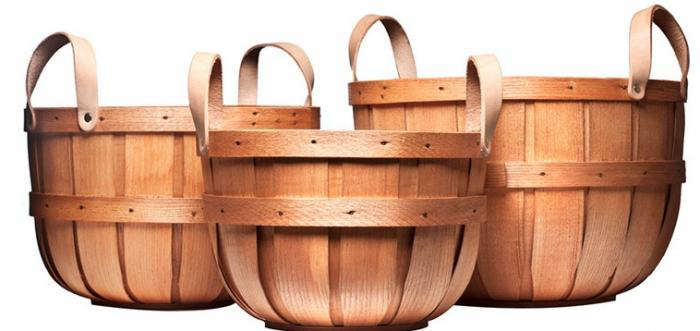
A New Hampshire bushel basket does not need an app, a charging cable, or a 47-page instruction manual. It simply waits by the orchard gate, ready to carry apples, potatoes, flowers, kindling, or whatever else the day happens to produce. That quiet usefulness is precisely what makes it so appealing.
Traditional bushel baskets combine agricultural practicality with New England craftsmanship. Their open wooden construction allows air to move around freshly picked produce, their broad shape makes loading easy, and a strong handle turns a pile of apples into something one person can carry without attempting an improvised fruit avalanche.
A 2013 Gardenista feature brought renewed attention to handmade picking baskets from New Hampshire’s apple-growing country. The featured designs came in several sizes and used planed ash with riveted leather handlesdetails that transformed an ordinary farm container into a handsome object suitable for orchards, farmers markets, mudrooms, and kitchens.
What Is a Bushel Basket?
The word bushel sounds pleasantly old-fashioned, but it represents a specific unit of dry volume. In the United States, a Winchester bushel contains 2,150.42 cubic inches, equivalent to 32 dry quarts. It measures capacity rather than a universal weight. A bushel of apples does not weigh the same as a bushel of wheat, just as a suitcase full of sweaters does not weigh the same as one full of bowling balls.
Historically, a true bushel basket was designed around that capacity. Modern products may borrow the name for decorative purposes, so buyers should not assume every rustic wooden container sold as a “bushel basket” is an accurate commercial measure. A basket intended for décor can be approximate. One used to sell produce by volume must comply with applicable measurement and labeling rules.
A Shape Designed for Work
The familiar bushel-basket silhouette is wider at the top than at the bottom. That shape makes the basket easy to fill, stack, display, and empty. Wooden splints or slats create ventilation, while a reinforced rim helps the container keep its shape under a heavy load.
A good picking basket balances strength and flexibility. It must be rigid enough to hold firm apples or winter squash but forgiving enough to survive being set down in a wagon, dragged across a market table, or bumped against an orchard ladder. Farm tools live active lives. A basket that cannot tolerate a little indignity is really just a centerpiece with career ambitions.
Why New Hampshire Became Basket Country
New Hampshire’s connection to basketmaking grew from the same conditions that shaped much of rural New England: forests supplied workable wood, farms needed durable containers, and local craftspeople developed practical methods that could be repeated generation after generation.
Peterborough became one of the state’s best-known basketmaking centers. The history of the Peterboro Basket Company traces commercial production in the town to 1854, when Amzi Childs began weaving baskets in a former wheelwright shop. The company later became nationally recognized for hardwood baskets made in New Hampshire.
Commercial factories were only one part of the story. Independent craftspeople continued making baskets by hand, often using wooden forms to maintain consistent dimensions. New Hampshire basketmaker Alice Ogden has described weaving bushel and bushel-and-a-half baskets over antique molds. When the wood has already been harvested and prepared, one large basket may still require about a week of weaving, drying, fitting rims, and attaching handles.
Ogden’s work also demonstrates how much skill hides beneath a seemingly simple form. Black ash must remain damp enough to bend during weaving, then dry thoroughly before rims and handles are fitted. She is known for processing much of her own material and finishing baskets with hand-whittled white-oak rims and handles.
The Indigenous Roots of New England Basketmaking
Any account of regional basketmaking should recognize the deep influence of Indigenous knowledge. Abenaki, Wabanaki, Mohawk, Nipmuc, and other Native communities developed sophisticated techniques for turning ash into strong, flexible splints. These skills supported households, trade, cultural continuity, and artistic expression long before rustic baskets became fashionable accessories.
Traditional black-ash preparation is labor-intensive. A suitable log is pounded so its annual growth rings separate. The resulting strips are bundled and split into thinner splints for weaving. Black ash has been prized because those growth layers can produce material that is both thin and remarkably strong. Basketmaking remains an important cultural practice taught across generations in Native communities.
Historical records show that baskets were among the most common containers in New England homes. Families used clothes baskets, fruit baskets, corn baskets, cheese baskets, workbaskets, and bushel baskets. Indigenous craftspeople traveled considerable distances to sell these goods, repair chair seats, and trade their work for household necessities.
The story is not merely decorative or nostalgic. Basket sales were an important source of income, sometimes earned under difficult social conditions. Newt Washburn, who came from an extended Abenaki basketmaking family, recalled producing bushel, laundry, berry, egg, pack, and other specialized baskets. Basketmaking could be a communal winter occupation, with families gathering to work together.
From Wooden Baskets to Metal Pails and Plastic Bins
Wooden baskets once served as universal containers. They carried produce, tools, laundry, feathers, firewood, and countless other goods. Their open weave encouraged ventilation, an advantage when harvesting and temporarily storing apples or vegetables.
During the 1930s, machine-made galvanized containers became increasingly common. Plastic bins and molded crates later took over many agricultural and household jobs because they were inexpensive, uniform, washable, and easy to mass-produce. Traditional basketmaking declined as a result.
Yet the wooden basket never disappeared completely. It retained several qualities industrial containers struggled to imitate: warmth, repairability, regional identity, and visual character. A plastic tote performs its duty without making friends. A handmade ash basket can work all morning and still look handsome beside the fireplace that evening.
The vulnerability of the material supply has become a serious concern. In 2022, Peterboro Basket Company announced that it would stop factory production after 168 years, citing factors that included labor difficulties, supply-chain problems, and destruction of ash trees by the emerald ash borer.
That closure illustrated why surviving baskets and living craft traditions deserve attention. A handmade basket is not simply a rustic product. It is the visible result of forest management, material knowledge, specialized tools, skilled labor, and a market willing to pay for durability rather than disposability.
At Home in New Hampshire’s Apple Orchards
The bushel basket looks especially natural in an apple orchard, and New Hampshire offers a long harvest window. Depending on the variety, locally grown apples are generally available from August through October, while many pick-your-own orchards open during September.
The state’s familiar varieties give the basket plenty to do. McIntosh apples provide tender, tart fruit for cider and applesauce. Cortlands are juicy, slightly sweeter, and slow to brown after slicing. Roxbury Russets bring historic character and balanced flavor, while Baldwins offer crisp flesh with a mildly spicy note.
A ventilated basket is useful during picking because it allows heat and moisture to escape more readily than a sealed container. Its broad opening also reduces the temptation to drop fruit from a height. Apples may look tough, but bruises develop easily, especially when enthusiastic pickers begin treating the basket like a basketball hoop.
For best results, line the bottom with a clean cloth or purpose-made produce liner, place fruit gently, and avoid overfilling. Transfer apples to appropriate cool storage after returning home rather than leaving a full basket in direct sun or a warm car.
Why Bushel Baskets Work at Farmers Markets
A farmers-market display must accomplish several jobs quickly. It should keep produce organized, elevate it from the ground, communicate abundance, and allow shoppers to see what is available without conducting an archaeological excavation.
UNH Cooperative Extension recommends using sturdy equipment such as boards, crates, tables, and bushel baskets to raise products at least six inches from the ground. It also advises tilting containers so shoppers can see the produce, replenishing displays as inventory decreases, and using contrasting shapes and colors to create visual interest.
Bushel baskets are particularly effective because their circular shape softens the straight lines created by tables and boxes. One can hold red apples, another can display yellow onions, and a smaller basket can contain garlic or herbs. The arrangement looks generous without becoming chaotic.
That presentation matters in a state where direct relationships between growers and buyers remain important. A New Hampshire survey of 513 residents found that approximately 84 percent had shopped at a farmers market. Supporting local agriculture and obtaining high-quality products were the leading reasons respondents gave for attending.
New Hampshire agriculture has also relied heavily on farm stands, pick-your-own operations, markets, and other direct-sales channels. Agritourism allows visitors to purchase food while experiencing orchards, farms, festivals, tastings, and rural landscapes.
How to Recognize a Quality Bushel Basket
Examine the Wood
The splints or slats should feel smooth enough to handle without catching clothing or skin. Minor variations are normal in handmade work, but widespread cracking, severe warping, or brittle wood may shorten the basket’s life.
Inspect the Rim
The rim carries much of the structural load. Look for a firmly fitted band without large gaps or loose fasteners. A strong rim keeps the basket round and prevents the woven body from spreading under pressure.
Test the Handle
Lift the empty basket and apply gentle downward pressure. The handle should feel secure and comfortable. Leather grips, wooden swing handles, and reinforced side handles can all work well when properly attached.
Ask Whether It Is Functional or Decorative
Some modern bushel-style baskets are designed only for displays, gift hampers, or home organization. Before hauling 40 pounds of produce, confirm that the basket was built for carrying weight. This is a useful moment to remember that gingham fabric does not provide structural engineering.
Consider the Maker
Information about the craftsperson, materials, production process, and place of origin adds value. When buying Indigenous-made work, purchase from accurately represented Native artists or reputable sellers rather than relying on vague descriptions such as “tribal inspired.”
Caring for a Wooden Picking Basket
Remove loose soil and plant debris after each use with a soft brush or dry cloth. For a more thorough cleaning, wipe the basket lightly with a damp cloth and mild soap, but do not soak it. Prolonged water exposure can swell wood, weaken joints, distort the weave, or damage the finish.
Allow the basket to dry completely in a ventilated, shaded location. Avoid placing wet wood directly beside intense heat, which may cause rapid shrinking or cracking. Store the basket above a damp basement floor and keep it away from standing water.
Use a washable liner when carrying berries, leafy vegetables, or soil-covered root crops. Inspect leather handles periodically for dryness or loose rivets. Small problems are easier to repair before the handle separates in the middle of the driveway and sends a bushel of apples exploring the neighborhood.
Useful Long After Harvest
Once orchard season ends, a bushel basket can remain useful throughout the house. It can hold rolled blankets, children’s outdoor gear, garden gloves, kindling, reusable shopping bags, or seasonal decorations. In a pantry, it can organize onions or other produce that benefits from airflow, provided storage conditions are appropriate.
The basket can also become a gift container. Fill it with preserves, maple products, cider doughnuts, kitchen towels, and local apples for a New Hampshire-themed present. Unlike a disposable gift box, the packaging becomes part of the gift.
For businesses, bushel baskets can support seasonal displays in bakeries, farm shops, garden centers, and restaurants. The key is restraint. One basket filled with apples suggests autumn abundance. Twenty empty baskets suspended from the ceiling may suggest the decorating committee experienced a cider-related emergency.
Experience Notes: A Market Day with a New Hampshire Bushel Basket
The best way to understand a picking basket is to use one from early morning until the last crate leaves the market. At dawn, the empty basket feels almost weightless. Its wooden sides are cool, the handle settles naturally into the palm, and the open weave carries the scent of dry grass and timber.
In the orchard, the wide opening immediately proves its value. There is no narrow mouth to aim for and no lid to move each time an apple is picked. The basket can rest on the ground between rows, and its rigid rim remains easy to find among low branches. Each apple is lowered rather than tossed, creating a quiet rhythm: twist, lift, inspect, place.
As the basket fills, its personality changes. What began as a charming accessory becomes serious farm equipment. A full load reminds the carrier that “bushel” is not a poetic synonym for “a few.” The handle must be strong, the bottom must remain firm, and the load should be divided when it becomes uncomfortable. Traditional tools reward practical judgment and punish unnecessary heroics.
At the market, the same basket takes on a new role. A folded cloth is placed inside, and polished apples are arranged with their best sides facing outward. The warm wood makes red and green fruit appear brighter than it would in a gray plastic tote. Customers can see the shape of the apples from several feet away, and the display feels connected to the orchard rather than unpacked from a warehouse.
The basket also creates conversation. One shopper asks whether it is antique. Another remembers a grandparent storing potatoes in a similar container. A child counts the wooden slats. Those small exchanges give the object commercial value beyond its capacity. It helps turn a transaction into a story about where the food came from and how it was handled.
As the supply decreases, the apples are moved into a smaller basket so the table still looks abundant. The nearly empty bushel basket goes beneath the table to hold paper bags and extra linens. Nothing about it is especially complicated, which is the point. Its design adapts without requiring adjustment knobs, replacement parts, or technical support.
Back at home, the basket receives a quick brushing and rests in the mudroom. A few days later, it holds squash. In November, it carries kindling. During the holidays, it becomes a container for wrapped gifts. By spring, it is back in the garden shed waiting for lettuce, peas, and the first herbs.
That repeated use produces the kind of wear many owners appreciate. The handle darkens where hands grip it. Small scratches record trips through orchard rows. The wood develops a softer surface and a deeper color. Rather than becoming obsolete, the basket becomes more personal.
The experience explains why handmade bushel baskets continue to attract attention. They offer practical capacity, regional history, visual warmth, and a direct connection between craft and agriculture. They are not flawless, waterproof, or indestructible. They are simply durable tools made from natural materialsand sometimes “simply useful” is the highest compliment an object can earn.
Conclusion
Bushel baskets from New Hampshire represent far more than country-style décor. Their form developed around the daily needs of growers, market sellers, households, and craftspeople. The strongest examples combine carefully prepared wood, sound construction, comfortable handles, generous capacity, and enough ventilation for freshly harvested produce.
They also carry a layered regional history shaped by Indigenous basketmaking knowledge, independent artisans, family workshops, commercial manufacturers, orchards, and direct agricultural markets. Buying or preserving a well-made basket supports more than storage. It helps keep material knowledge and practical design in circulation.
A New Hampshire bushel basket may spend one month carrying apples and the next holding blankets, potatoes, or firewood. That versatility is not an accidental bonus. It is the reason the form survived. Long after the orchard closes and the farm stand packs away its signs, the basket continues workingquietly, attractively, and without once demanding a software update.