Floors work hard. They take muddy shoes, coffee spills, chair legs, pet zoomies, and that one mysterious scratch nobody in the house will admit to making. Replacing flooring can be expensive, dusty, and dramatic enough to make you consider simply dimming the lights forever. Luckily, paint can give tired floors a fresh personality without a full remodel.
Whether you have worn wood, dull concrete, outdated tile, plain plywood, or a porch that looks like it has survived three generations of barbecue season, painted floors can be a smart, stylish, budget-friendly update. The secret is not magic. It is preparation, the right product, patience between coats, and a design plan that makes your room look intentional instead of “I found leftover paint in the garage.”
This guide covers 11 practical ways to update your floors with paint, from classic checkerboards to stenciled faux tile, bold solid colors, painted runners, porch makeovers, and creative borders. You will also find prep tips, design examples, and real-world experience notes to help your project last longer and look better.
Before You Paint: The Floor-Painting Rules You Should Not Skip
Before we get to the fun part, let’s talk about the part everyone wants to skip: prep. Paint does not hide dirt, grease, dust, wax, loose finish, or old adhesive. It merely traps them under a fresh coat and then peels later in protest.
Clean, Sand, Repair, Prime
For most floors, the basic process is simple: clean thoroughly, dull glossy surfaces, patch cracks or holes, vacuum dust, prime if needed, paint thin coats, and protect with a compatible topcoat. Wood floors usually need sanding or scuff-sanding so paint can grip. Tile often needs heavy cleaning, light sanding, and a bonding primer. Concrete must be dry, clean, and free from curing compounds, grease, or old loose coating.
Use paint made for floors, porches, patios, concrete, tile, or garage surfaces. Wall paint belongs on walls. It is not emotionally prepared for chair legs.
A Safety Note for Older Homes
If your home was built before 1978, be careful before sanding old painted floors. Older paint may contain lead, and sanding can create hazardous dust. Test first or hire a certified professional if there is any doubt. A beautiful floor is not worth a cloud of dangerous dust.
1. Paint a Classic Checkerboard Floor
A checkerboard floor is the little black dress of painted floors: timeless, graphic, and surprisingly flexible. It works in kitchens, entryways, laundry rooms, sunrooms, mudrooms, and even bedrooms when the colors are softened.
Black and white is the traditional choice, but you can also try cream and sage, charcoal and warm beige, navy and white, or terracotta and blush. The pattern adds structure to plain floors and can make a narrow room feel more designed.
How to Make It Work
Paint the entire floor in the lighter base color first. Once it cures enough for taping, measure and mark your squares with a chalk line and painter’s tape. Paint the darker squares in thin coats, remove tape carefully, and seal the surface after the pattern has dried.
For a softer look, turn the checkerboard diagonally. It feels more like a charming old European kitchen and less like a giant chess tournament is about to begin.
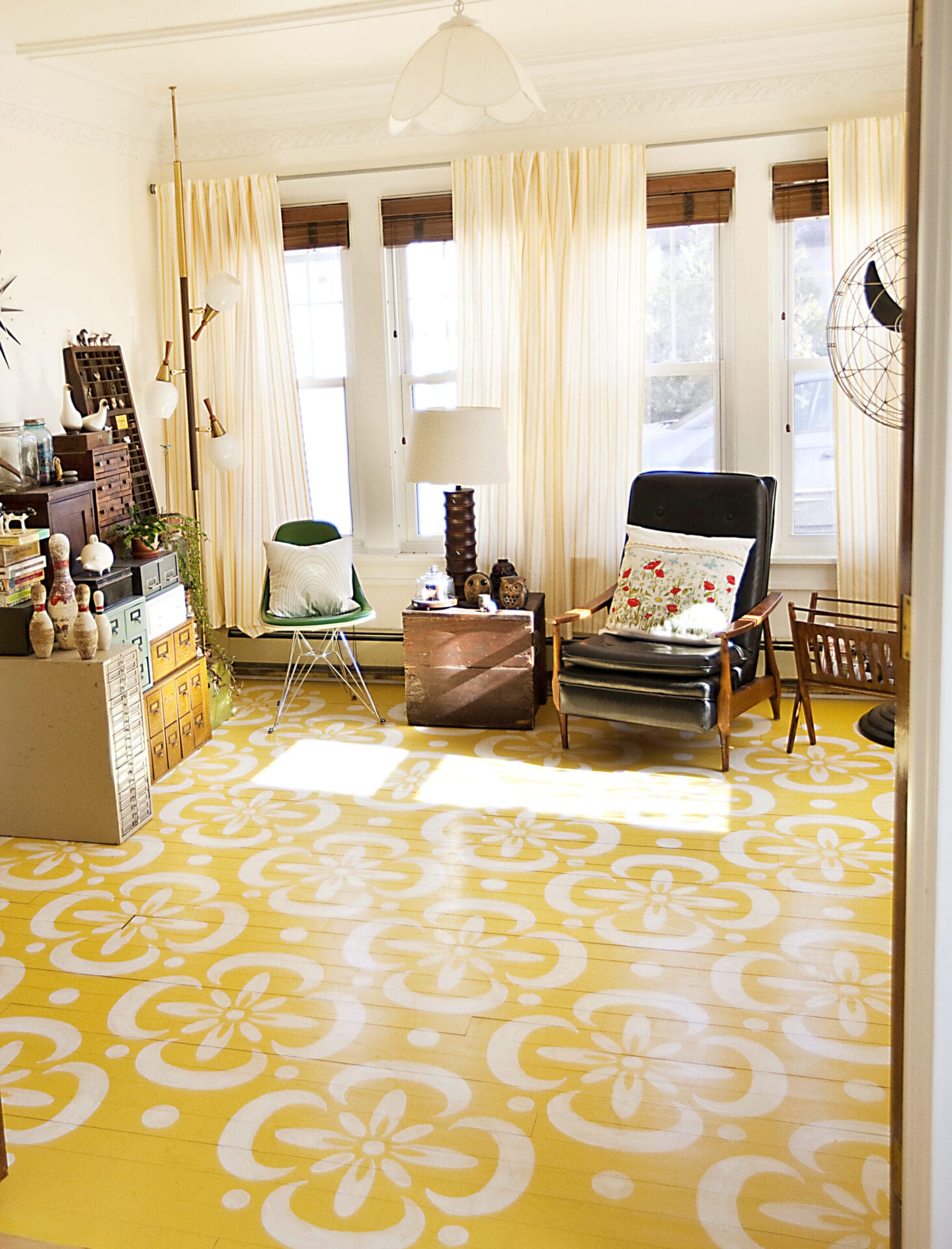
2. Use a Stencil to Fake Expensive Tile
Stenciled floors are one of the best ways to make a low-budget update look custom. A stencil can turn plain concrete, plywood, vinyl, or old tile into something that resembles encaustic cement tile or patterned ceramic.
This approach is especially useful in small rooms where real tile would be costly or messy to install. Powder rooms, mudrooms, laundry rooms, and small entryways are perfect candidates because the square footage is manageable.
Best Design Tip
Choose a stencil scale that fits your room. Oversized patterns can look dramatic in a larger space, while smaller repeating motifs feel more traditional. Test the stencil on cardboard first so you know how the colors and spacing look before committing to the floor.
Use a stencil brush or dense foam roller with very little paint. Too much paint causes bleeding under the stencil, and then your crisp Moroccan pattern starts looking like it had a rough weekend.
3. Go Bold With a Solid Painted Floor
Sometimes the best floor update is also the simplest: one strong color across the entire surface. A solid painted floor can modernize a room quickly and make old materials feel intentional.
White painted floors brighten dark rooms and create a clean cottage, coastal, Scandinavian, or gallery-like effect. Black floors add drama. Soft gray feels calm and practical. Deep green, navy, or clay red can make a room feel layered and historic.
Where It Works Best
Solid painted floors shine in bedrooms, screened porches, studios, laundry rooms, and older homes where the floors are too worn to refinish beautifully. If your boards are patched, stained, or mismatched, paint can unify everything into one clean visual field.
For high-traffic areas, choose a floor enamel, porch and patio paint, or appropriate coating system. Add a clear protective topcoat if the product instructions recommend it.
4. Paint a Faux Runner on Stairs or Hallways
A painted runner gives you the look of a rug without the vacuuming, slipping, or mysterious crumbs hiding in fibers. It is a clever choice for stairs, hallways, and narrow entry paths.
You can paint a simple stripe down the center, add a border, or create a patterned runner with stencils. On stairs, paint the treads in a durable floor paint and consider a slightly textured topcoat or anti-slip additive for safety.
Design Example
Try warm white stairs with a charcoal painted runner and a thin tan border. The effect is tailored, classic, and much easier to clean than a fabric runner after a dog discovers a puddle.
5. Create a Painted Border Around the Room
If a full pattern feels overwhelming, paint a border instead. A border frames the room, adds detail, and makes the floor feel finished. It is also easier than painting an allover pattern because you are working mostly around the edges.
Painted borders work beautifully on wood floors, concrete floors, and painted porches. You can create a simple stripe, a double-line frame, a Greek key pattern, or a soft scalloped edge for a playful cottage feel.
Proportion Matters
Keep the border size in proportion to the room. A small bedroom might need only a 4-inch to 6-inch border, while a larger dining room can handle something wider and more decorative.
6. Paint Concrete Floors for an Industrial-Chic Upgrade
Concrete floors are sturdy, but plain gray concrete can make a basement or garage feel like it is waiting for a detective scene. Paint can warm it up, brighten it, and protect the surface when you use the correct product.
For interior concrete, choose concrete floor paint, epoxy coating, acrylic concrete stain, or a garage floor coating depending on the room and traffic level. Basements, workshops, utility rooms, and garages all have different moisture and durability needs.
Do a Moisture Check
Concrete can hold moisture, and coatings may fail if moisture vapor is pushing through the slab. Before painting, check the manufacturer’s instructions for moisture testing, curing requirements, cleaning, etching, priming, and dry times. New concrete usually needs time to cure before coating.
For garages, epoxy and garage floor coating systems can resist stains better than ordinary paint. Add decorative flakes if you want texture, slip resistance, and a finish that hides small imperfections.
7. Refresh a Porch or Patio Floor With Paint
A painted porch floor can change the entire mood of your home’s exterior. It can make the entry feel cleaner, brighter, and more welcoming before guests even reach the doorbell.
Porch and patio floor paint is designed for high-traffic indoor and outdoor surfaces such as wood and concrete. It is a smart choice for covered porches, steps, patios, and breezeways. Classic colors include slate gray, deep green, warm brown, black, and soft blue-gray.
Outdoor Prep Is Everything
Outdoor floors collect pollen, mildew, dust, old stain, peeling paint, and weather damage. Scrub or pressure wash carefully, remove loose coating, repair cracks, let the surface dry completely, and paint only in suitable weather. Painting a damp porch is like putting socks on wet feet: technically possible, deeply regrettable.
8. Paint Plywood Floors for a Budget Makeover
Plywood floors can be surprisingly good candidates for paint, especially in studios, cabins, workshops, attic rooms, playrooms, and budget renovations. When replacement flooring is not in the plan, paint can make plywood look clean, intentional, and even stylish.
Fill gaps and screw holes, sand rough spots, vacuum well, prime the surface, and apply floor paint in thin coats. For extra character, paint wide stripes, a checkerboard, or a faux rug pattern.
Best Finish Idea
A satin or low-lustre finish often works well because it is easier to clean than flat paint but less slippery-looking than high gloss. Add a clear floor-safe topcoat for extra durability if recommended by the paint system.
9. Add Stripes for Movement and Energy
Stripes are simple, but they have design superpowers. Long stripes can make a narrow hallway feel longer. Wide stripes can make a room feel relaxed and coastal. Thin pinstripes add tailored detail.
Use two low-contrast colors for a subtle effect or high-contrast colors for drama. In a beach house, white and pale blue stripes feel breezy. In a mudroom, charcoal and gray stripes hide dirt better than pure white.
Painting Tip
Measure carefully and use high-quality painter’s tape. Seal the tape edge with a thin coat of the base color before painting the stripe color. This helps reduce bleeding and creates a cleaner line.
10. Paint Tile Floors Carefully and Realistically
Painting tile floors can be beautiful, but it is not the right choice for every situation. Tile is slick, grout lines collect grime, and high-moisture areas can be tough on coatings. Bathrooms, kitchens, and laundry rooms require extra care.
If your tile is structurally sound but visually outdated, paint may buy you time before a full renovation. Clean the tile aggressively, repair chips, sand glossy surfaces, use a bonding primer or tile-compatible coating system, and apply a durable topcoat if required.
Set Expectations
Painted tile may eventually chip, especially in high-traffic or wet areas. Use mats in splash zones, avoid harsh cleaners, and treat it as a stylish refresh rather than a forever floor. In other words, it is a makeover, not a miracle wearing knee pads.
11. Paint a Faux Rug for a Custom Look
A painted rug is a charming way to define a sitting area, breakfast nook, porch zone, or entryway. Unlike a real rug, it will not slide, bunch, collect pet hair, or become a snack graveyard under the coffee table.
Paint a rectangle, add a border, then build a pattern inside. You can use stripes, diamonds, medallions, florals, or a simple two-color stencil. A painted rug works especially well on concrete patios, wood porches, and old plank floors.
Where to Try It
Try a painted rug under a dining table in a cottage kitchen, centered on a porch swing, or inside a mudroom entry. It gives the floor a focal point while leaving the rest of the surface simple.
Best Paint Types for Floor Projects
Not all floor paints are the same. The best product depends on the surface and location.
Wood Floors
Use porch and floor enamel, interior floor paint, or a durable coating recommended for wood floors. Sand glossy finishes and prime bare wood when needed.
Concrete Floors
Use concrete floor paint, acrylic concrete stain, epoxy, or garage coating systems. Make sure the concrete is clean, dry, repaired, and properly prepared.
Tile Floors
Use a tile-compatible floor coating system or bonding primer plus durable floor paint. Follow all cure times before heavy use.
Outdoor Floors
Use exterior-rated porch and patio floor paint or coatings made for weather exposure. Check temperature, humidity, and drying conditions before starting.
Floor Painting Mistakes to Avoid
First, do not paint over dirt. Clean twice if necessary. Floors are horizontal surfaces, which means dust settles on them like it pays rent.
Second, do not rush dry times. Paint may feel dry to the touch before it has cured enough for furniture, rugs, shoes, or pets. Follow the product label for recoating, light foot traffic, and full cure times.
Third, do not use the wrong paint. Wall paint can scuff, peel, or wear quickly on floors. Choose a coating designed for the surface and the traffic level.
Fourth, do not skip a test patch. This is especially important on tile, sealed concrete, glossy wood, or unknown old coatings. A test patch tells you whether the coating bonds before you commit your entire Saturday and your lower back.
How to Maintain Painted Floors
Painted floors need gentle care. Sweep or dust frequently so grit does not scratch the finish. Use a microfiber mop, mild cleaner, and soft furniture pads under chairs and table legs. Avoid abrasive scrubbers unless the paint manufacturer says they are safe.
Area rugs can protect high-traffic zones, but wait until the paint has fully cured before placing rugs back on the floor. Use breathable rug pads that will not stick to or discolor the finish.
Experience Notes: What It Is Really Like to Update Floors With Paint
Painting floors is one of those DIY projects that looks easy online because the photos skip the part where you are crawling around with tape stuck to your elbow. The result can be fantastic, but the process rewards patience more than enthusiasm. Enthusiasm gets you started. Patience keeps you from stepping into wet paint while holding a coffee.
The biggest lesson is that the prep day matters more than the paint day. When people are unhappy with painted floors, the problem is often not the color. It is usually poor adhesion caused by leftover dust, wax, gloss, grease, or moisture. A floor can look clean and still have a film that paint hates. Spend real time washing, sanding, vacuuming, and wiping. If the floor squeaks, flakes, crumbles, or has loose tiles, fix those issues first. Paint is decorative; it is not a structural therapist.
Another important experience is to plan your exit. This sounds silly until you are standing in the center of a freshly painted room wondering whether you can levitate. Always start at the farthest point and work toward the door. If you are painting stairs, plan whether you need access during drying. Some homeowners paint every other step first so they can still move through the house. It is not glamorous, but neither is sleeping downstairs because your staircase is tacky.
Color also behaves differently on floors than it does on walls. A color that looks calm on a sample card can feel intense when spread across an entire room underfoot. Dark floors show dust, pet hair, and crumbs. White floors brighten a room beautifully but show scuffs faster. Mid-tone colors such as warm gray, mushroom, olive, denim blue, and clay are forgiving choices because they hide daily life better.
Patterns require extra patience, but they are worth it in small spaces. A stencil in a powder room or laundry room can deliver a huge style payoff without requiring weeks of work. The trick is to use very little paint on the roller or brush. Offload excess paint onto a paper towel before touching the stencil. Thin, dry coats keep edges sharp. If a little paint bleeds, do not panic. Touch-ups are part of the ritual. Consider them tiny negotiations with gravity.
Furniture protection is another lesson learned the hard way. Painted floors can be durable, but chair legs are relentless little villains. Add felt pads to furniture, lift heavy pieces instead of dragging them, and avoid rolling office chairs directly on painted surfaces unless the coating is designed for that level of abuse. In dining areas, use rugs after the floor has fully cured.
Finally, expect painted floors to age. That is not necessarily bad. A lightly worn painted floor can look charming, especially in cottages, porches, studios, and older homes. The goal is not always perfection. Sometimes the goal is character, brightness, and a floor that no longer makes you whisper “sorry” when guests take off their shoes.
Conclusion
Paint can update your floors in more ways than most people realize. You can create a bold checkerboard, fake expensive tile with a stencil, refresh a porch, brighten concrete, frame a room with a border, add stripes, paint a faux rug, or give tired wood a completely new identity. The best results come from matching the paint to the surface, preparing carefully, applying thin coats, respecting cure times, and protecting the finish once the room is back in use.
If your floor is structurally sound but visually exhausted, painting may be the practical makeover it deserves. It is affordable, flexible, creative, and just risky enough to make the weekend interesting. Your floors have been supporting you for years. Maybe it is time to support them with a fresh coat of personality.