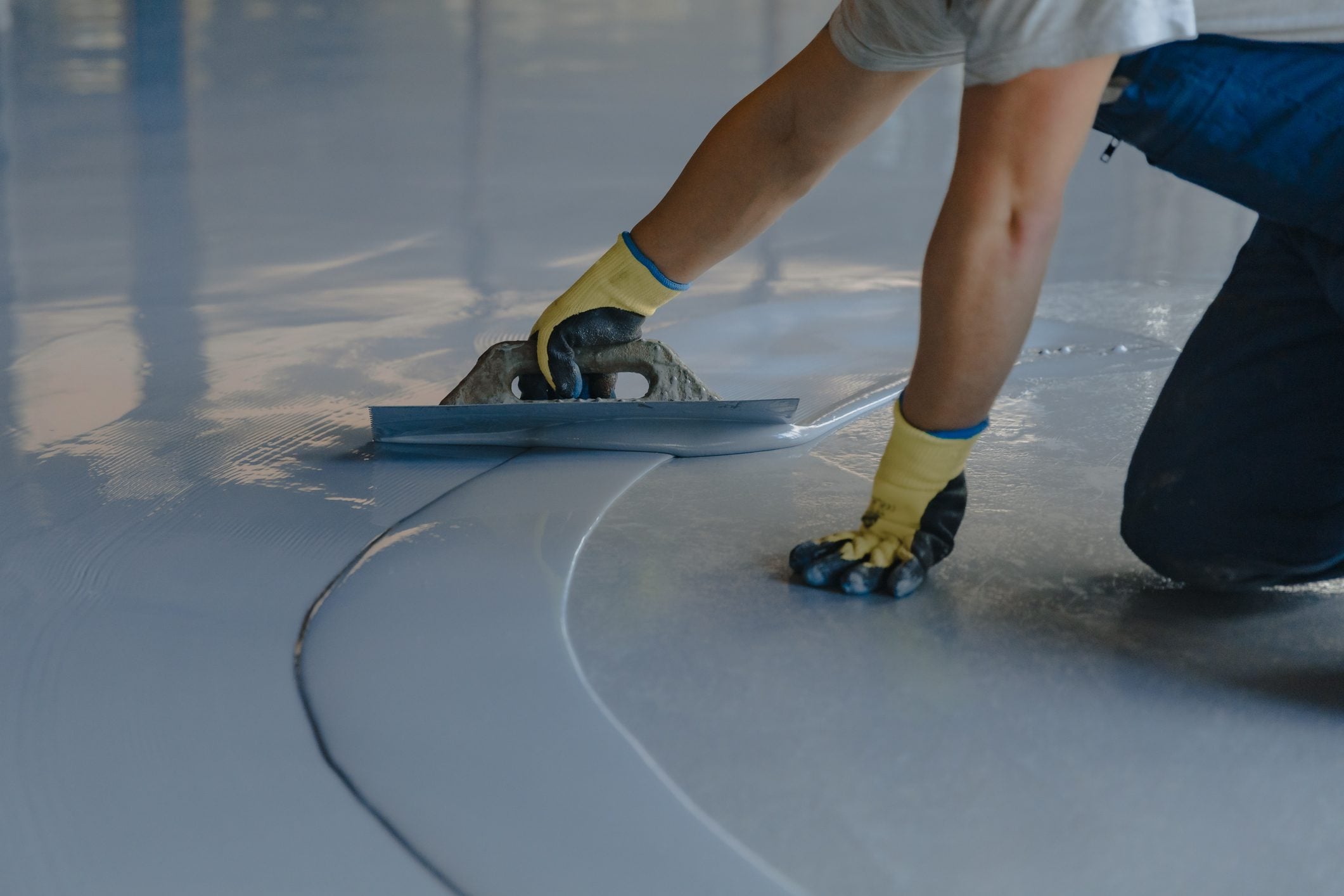
A bare concrete garage floor may be perfectly functional, but it rarely wins any beauty contests. Oilery dropped wrench adds another mark to the collection. An epoxy coating can transform that tired slab into a glossy, durable, easier-to-clean surfacebut how much does an epoxy garage floor cost?
In the United States, professionally installed epoxy garage flooring generally costs $4 to $12 per square foot. Most homeowners spend approximately $1,600 to $5,800 for a two-car garage, although elaborate finishes, extensive concrete repairs, and premium coating systems can push the total higher.
A basic do-it-yourself project may cost around $2 to $5 per square foot after materials, preparation supplies, equipment rentals, and tools are included. The giant price gap between a bargain kit and a professional quote is not just contractor wizardry. Professional pricing usually includes mechanical surface preparation, crack repair, multiple coating layers, commercial-grade materials, and a warranty.
Average Epoxy Garage Floor Cost
The table below provides practical national price ranges. Local labor rates, concrete condition, garage accessibility, and the coating system selected will affect the actual quote.
| Garage Size | Approximate Area | Professional Installation | Realistic DIY Budget |
|---|---|---|---|
| One-car garage | 200–300 square feet | $750–$3,000 | $500–$1,500 |
| Two-car garage | 400–500 square feet | $1,600–$5,800 | $900–$2,500 |
| Three-car garage | 600–750 square feet | $2,400–$9,000 | $1,400–$3,700 |
| Oversized garage or workshop | 800–1,000 square feet | $3,200–$12,000+ | $1,800–$5,000+ |
Smaller garages do not always receive the lowest price per square foot. Contractors may have minimum project charges because they still need to transport grinders, vacuums, mixing equipment, materials, and an installation crew. Coating 220 square feet involves fewer gallons of epoxy than coating 500 square feet, but it does not require only half the setup work.
Epoxy Garage Floor Cost per Square Foot
Basic water-based epoxy: $3 to $6 per square foot
Water-based products are usually the least expensive option. They are relatively easy to apply, produce less odor than many solvent-based products, and work well in garages with light residential use.
The trade-off is thickness and longevity. Water-based coatings may require future recoating sooner than a high-solids system, especially when exposed to hot tires, heavy tools, winter road salt, or frequent vehicle traffic.
Standard professional epoxy system: $5 to $9 per square foot
This is the sweet spot for many residential garages. A typical system may include concrete grinding, crack repair, a pigmented epoxy base coat, decorative vinyl flakes, and a protective clear topcoat.
The result is thicker, more attractive, and more resistant to abrasion and chemicals than ordinary concrete paint. It is also the finish most people picture when they hear “epoxy garage floor”: glossy, speckled, and suspiciously cleaner than the rest of the garage.
Premium or decorative system: $8 to $12 or more per square foot
Premium installations may use 100% solids epoxy, multiple broadcast layers, metallic pigments, custom colors, moisture-control primers, urethane topcoats, or specialty slip-resistant additives.
Metallic floors are often the most expensive because installers must manipulate the pigments while the coating is wet to produce swirls, clouds, or marble-like movement. A metallic floor can look spectacular, but it is not the budget choice for someone who simply wants to stop motor oil from autographing the concrete.
What Is Included in a Professional Epoxy Quote?
Two quotes may both say “garage floor coating” while describing very different jobs. A complete professional proposal should explain the preparation method, number of coating layers, product chemistry, repairs, decorative treatment, topcoat, cure time, and warranty.
Concrete inspection and moisture testing
Before coating begins, the installer should inspect the slab for moisture, sealers, contamination, weak concrete, previous coatings, and structural cracking. Moisture vapor moving through the concrete can interfere with adhesion and create bubbles, peeling, or delamination.
A floor that looks dry from above may still transmit moisture from below. Testing is particularly important in humid regions, older homes, and garages built without an effective vapor barrier.
Surface preparation
Preparation is often the most important part of the entire project. Professional installers commonly use diamond grinding or shot blasting to remove contamination and create a surface profile that gives the coating something to grip.
Acid etching may be used with some DIY products, but it does not always remove existing sealers, thick oil contamination, or weak surface material. Skipping proper preparation is how a shiny new floor becomes a peeling new floor with surprising speed.
Crack and damage repair
Small cracks, pits, spalled areas, and control joints may require filling or patching before the coating is installed. Minor repairs might add only a few hundred dollars. Extensive damage, active movement, slab settlement, or widespread deterioration can add substantially more.
Epoxy can hide discoloration and small cosmetic defects, but it does not magically rebuild a failing slab. If the concrete moves or cracks beneath the coating, the finished surface may eventually reflect that movement.
Base coat, flakes, and topcoat
A basic professional system usually contains at least one epoxy base coat. Decorative flakes may then be scattered lightly or broadcast until the wet coating is completely covered. After curing, loose flakes are scraped and vacuumed away before a clear protective topcoat is applied.
Full-flake systems typically cost more because they use additional material and labor. They also hide imperfections effectively, improve traction, and produce a more consistent decorative finish.
Factors That Affect Epoxy Garage Flooring Prices
Garage square footage
Floor area is the obvious cost factor because larger garages require more coating and labor. Measure the full floor, including storage alcoves, steps, utility areas, and space beneath cabinets if those areas will also be coated.
Condition of the concrete
A clean, sound slab is cheaper to coat than one covered in oil, adhesive, paint, rust, and the archaeological remains of several home-improvement projects. Heavy contamination may require repeated degreasing or more aggressive grinding.
Previous coatings or sealers
Existing paint, epoxy, curing compounds, or concrete sealer may need to be removed. Coating directly over an incompatible finish can cause adhesion failure, so removal is rarely the place to become creatively economical.
Number of coating layers
A one-coat system costs less than a primer, base coat, full flake broadcast, and two topcoats. Additional layers generally improve thickness, appearance, chemical resistance, and durability, but each layer adds material, labor, and curing time.
Decorative options
Standard gray or tan epoxy is normally more affordable than custom colors, logos, metallic effects, quartz aggregate, or carefully blended flake combinations. Decorative borders and vertical coatings on stem walls also increase the price.
Slip-resistant additives
Glossy epoxy can become slippery when wet. Fine aggregate, aluminum oxide, polymer beads, or another traction additive can be mixed into the topcoat. The upgrade is usually modest compared with the overall project price and may be worthwhile in snowy, rainy, or pool-adjacent environments.
Location and labor rates
Installation costs are generally higher in major metropolitan areas and regions with expensive labor. Climate matters as well. High humidity, cold temperatures, and moisture-prone slabs may require specialized primers, additional testing, or a longer installation schedule.
DIY vs. Professional Epoxy Garage Floor Installation
How much does a DIY epoxy garage floor cost?
A realistic DIY budget is approximately $2 to $5 per square foot. For a 480-square-foot two-car garage, that equals roughly $960 to $2,400.
The coating kit itself may appear inexpensive, but the complete shopping list can include:
- One or more epoxy kits
- Concrete degreaser and cleaning supplies
- Crack filler and patching compound
- Diamond grinder or floor-preparation rental
- Industrial vacuum rental
- Rollers, squeegees, mixing buckets, and brushes
- Protective clothing, gloves, eye protection, and respirators where required
- Decorative flakes and traction additives
- A clear protective topcoat
Product coverage figures are normally based on smooth concrete. Rough, porous, or heavily profiled floors may absorb more coating, so purchasing exactly the advertised coverage can leave a bare strip near the garage doorthe flooring equivalent of running out of wrapping paper on Christmas Eve.
When professional installation makes sense
Hiring a contractor is usually the safer choice when the floor has moisture problems, widespread cracks, existing coatings, severe oil contamination, uneven areas, or structural damage. Professional installation is also valuable when a consistent decorative finish and long-term warranty are priorities.
Epoxy has a limited working time after the resin and hardener are mixed. A professional crew can divide the garage into sections, maintain a wet edge, spread flakes evenly, and complete the application before the material begins curing in the bucket.
Sample Cost Estimate for a Two-Car Garage
Consider a 24-by-20-foot garage measuring 480 square feet. The concrete has several small cracks but no major moisture issue. The homeowner chooses a full-flake epoxy system with a clear abrasion-resistant topcoat.
| Project Component | Illustrative Cost |
|---|---|
| Diamond grinding and cleaning | $700 |
| Crack and pit repairs | $300 |
| Epoxy base coat | $1,100 |
| Full decorative flake broadcast | $550 |
| Clear protective topcoat | $750 |
| Estimated total | $3,400 |
This example equals about $7.08 per square foot, placing it near the center of the common professional range. Some contractors bundle every component into one square-foot price rather than listing each item separately.
Epoxy Compared With Other Garage Floor Options
| Flooring Option | Typical Installed Cost | General Characteristics |
|---|---|---|
| Garage floor paint | $2–$4 per square foot | Affordable but thinner and generally less durable |
| Epoxy coating | $4–$12 per square foot | Durable, customizable, and chemical resistant |
| Polyurea coating | $5–$10 per square foot | Fast curing and flexible |
| Polyaspartic coating | $5–$12 per square foot | Fast curing with strong UV and abrasion resistance |
| Interlocking garage tiles | $2–$8 per square foot | DIY-friendly and easy to replace individually |
Some companies casually call every resinous garage coating “epoxy,” even when the system uses polyurea or polyaspartic chemistry. Ask for the technical product names and data sheets so you know what you are buying.
How Long Does an Epoxy Garage Floor Last?
A professionally installed, high-quality epoxy system may last 10 to 20 years in a residential garage when the concrete is properly prepared and the floor receives reasonable care. Thin water-based systems may need recoating sooner, particularly under heavy traffic.
Longevity depends on surface preparation, product quality, coating thickness, sunlight, moisture, tire heat, chemical exposure, and maintenance. Epoxy can yellow when exposed to strong ultraviolet light, which is one reason some systems use a UV-resistant urethane or polyaspartic topcoat near garage entrances.
Routine care is simple: sweep away abrasive dirt, wipe up spills, and mop with water and a suitable neutral cleaner. Avoid dragging sharp metal objects across the surface unless your design theme is “forklift testing facility.”
Is an Epoxy Garage Floor Worth the Cost?
Epoxy is often worth the investment for homeowners who use the garage regularly, maintain vehicles, operate a workshop, exercise in the space, or simply want the floor to look finished. It protects the concrete from stains, makes cleaning easier, brightens the room by reflecting light, and can improve the garage’s appeal to future buyers.
However, the cheapest coating is not automatically the best value. A low-cost application that peels after two winters may cost more over time than a professionally prepared system. Focus on the complete installation method, not just the price of the liquid in the bucket.
Conclusion
So, how much does an epoxy garage floor cost? Most professionally installed projects fall between $4 and $12 per square foot. A typical two-car garage generally costs around $1,600 to $5,800, while a realistic DIY project costs approximately $960 to $2,400.
The final bill depends heavily on concrete preparation, repairs, moisture conditions, coating quality, decorative features, and the number of layers. Before choosing a contractor, compare at least three detailed proposals and confirm that each quote includes the same preparation method and coating system. A bargain quote that excludes grinding and crack repair is not really a bargain; it is merely a future peeling problem wearing a lower price tag.
Real-World Experiences and Lessons From Epoxy Garage Floor Projects
One of the most common homeowner experiences is surprise at how much the condition of the concrete affects the quote. A garage may look acceptable while cars, shelves, and storage bins are covering most of it. Once everything is removed, the slab can reveal oil saturation, hairline cracks, old paint, tire marks, and patches from previous repairs. Homeowners who budget only for the coating often discover that preparation accounts for a meaningful portion of the final price.
A representative example is a homeowner with a 450-square-foot two-car garage who receives one quote for $1,800 and another for $3,600. The first proposal includes pressure washing and one epoxy layer. The second includes diamond grinding, crack repair, a moisture-blocking primer, a full-flake broadcast, and a clear topcoat. At first glance, the cheaper contractor appears to offer the same floor for half the cost. After comparing the scope, however, the two proposals are not selling the same product at all.
DIY installers often report a similar lesson about product coverage. A kit advertised for 500 square feet may cover close to that amount on dense, smooth concrete, but a porous or aggressively prepared slab can consume more material. Experienced DIYers commonly purchase additional coating or reduce the planned coverage rather than risk running out halfway through the application. Matching batches also matters because separate kits can produce slight color differences.
Another recurring experience involves scheduling. Epoxy installation is not limited to the hours spent rolling the coating. The garage must first be emptied, cleaned, prepared, coated, and allowed to cure. Depending on the system and weather, vehicles may need to remain outside for several days. Homeowners who plan the project immediately before a storm, family event, or neighborhood parking restriction quickly learn that cure time deserves a place in the budgeteven though it does not appear as a line item.
Moisture is another source of expensive lessons. A coating may look perfect for several months before bubbles or peeling appear where vapor is moving through the slab. Reputable installers test questionable floors before choosing the primer and coating system. Paying for moisture testing can feel unnecessary when the concrete looks dry, but removing a failed coating and starting again is considerably less charming.
Homeowners also learn that maximum gloss and maximum traction are not the same goal. A smooth, glass-like topcoat is easy to clean and visually dramatic, but wet tires, melting snow, and spilled water can make it slippery. Adding a fine traction material to the topcoat may slightly change the feel and shine while making the garage safer.
Finally, successful projects usually share one habit: the homeowner compares specifications instead of comparing totals alone. They ask how the slab will be prepared, which products will be used, how many layers will be applied, whether repairs are included, when vehicles can return, and what the warranty excludes. The best epoxy garage floor experience begins before anyone opens a bucket. It begins with a detailed proposal, realistic expectations, and the understanding that the glamorous topcoat is supported by a lot of unglamorous preparation underneath.