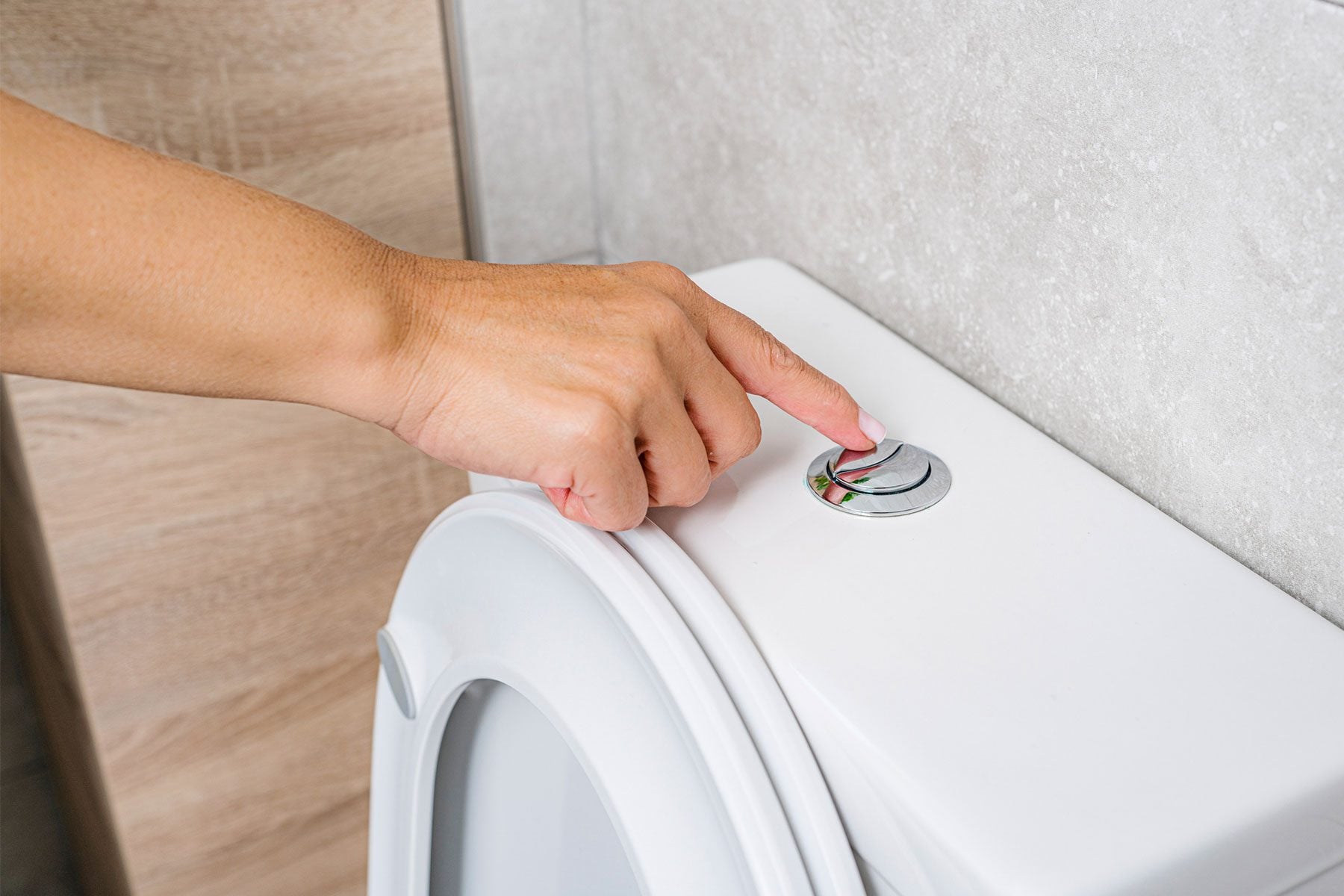
A toilet may look like a convenient porcelain escape hatch, but it is not a trash can with indoor plumbing. Every day, Americans flush products that were designed to clean floors, absorb spills, hold liquids, catch pet waste, prevent pregnancy, remove makeup, and perform almost every job except traveling safely through a sewer.
Once the handle is pressed, the evidence disappears from the bathroom. That satisfying swirl creates the illusion that the problem has vanished. In reality, the item may be sitting a few feet away in a household pipe, twisting around a pump at a wastewater facility, or joining grease and other debris to form a revolting sewer blockage.
Public utilities across the United States keep repeating the same simple rule: flush human waste and toilet paper. Everything else should face a tougher interview before being admitted to the bowl.
The Toilet Has Somehow Become America’s Second Trash Can
Wastewater systems are built to transport and treat water, human waste, and toilet paper. Toilet paper is engineered to lose strength quickly when soaked and agitated. Many other bathroom products are deliberately manufactured to remain strong when wetwhich is excellent when cleaning a countertop and terrible when passing through a sewage pump.
The Environmental Protection Agency has warned that flushing anything other than toilet paper can damage household plumbing, municipal sewer systems, and septic systems. Utilities often promote the “three Ps” rule: pee, poop, and toilet paper. New York City adds a fourth Ppukebut nobody is printing that slogan on luxury bathroom towels.
Source support: EPA and NYC Department of Environmental Protection.
The Most Commonand Most SurprisingThings Being Flushed
1. “Flushable” Wipes That Are Not Particularly Flushable
Wet wipes are the undisputed celebrities of sewer trouble. Baby wipes, cleaning wipes, makeup-removal wipes, disinfecting wipes, and personal-care wipes are frequently sent down toilets. Some packages even describe the products as flushable, which sounds reassuring until wastewater operators have to cut them away from mechanical equipment.
A product can physically pass through a toilet without being compatible with the entire wastewater system. A golf ball might disappear around the bend, too, but nobody would describe that as a plumbing recommendation.
Unlike toilet paper, many wipes contain long, strong fibers that remain intact in water. They can snag on rough pipe surfaces, combine with other wipes, wrap around pumps, and behave like an unwanted fishing net. The National Association of Clean Water Agencies estimated in 2020 that wipes created approximately $441 million in additional annual operating costs for U.S. clean-water utilities. That estimate did not include every possible environmental, treatment, or overflow-related expense.
Source support: NACWA, DC Water, Seattle Public Utilities, and Austin Water.
2. Paper Towels, Facial Tissues, and Napkins
They are made of paper, so they should behave like toilet paper, right? Unfortunately, the word “paper” is doing too much work in that sentence.
Paper towels are designed to remain strong while soaking up spilled coffee, pasta sauce, or whatever the dog knocked over. Facial tissues and napkins also resist breaking apart more than toilet paper. When flushed, these products can retain their shape long enough to catch on bends, tree roots, grease deposits, or existing debris.
A single tissue may travel without drama. A household that regularly flushes handfuls of tissues or folded paper towels is quietly conducting a plumbing stress testand the final exam may involve a basement floor drain.
3. Tampons, Pads, Applicators, and Other Menstrual Products
Menstrual products are made to absorb liquid and maintain their structure. Those qualities make them useful in the bathroom but highly unsuitable for sewer travel.
Tampons can expand after entering water. Pads, liners, wrappers, and plastic applicators may become lodged in pipes or accumulate at screens and pumps. Even when an item makes it through a home’s plumbing, it does not magically transform into harmless wastewater. Someoneor some expensive machinerymust deal with it farther downstream.
4. Condoms
Condoms are durable, flexible, and designed not to dissolve during use. None of those features suddenly disappear during a toilet flush.
Inside sewer systems, condoms can inflate, stretch, catch on equipment, and become tangled with wipes and floss. The discreet flush intended to avoid embarrassment can therefore lead to a much less discreet conversation with a plumber.
5. Diapers
Flushing a full-size diaper may sound impossible, yet diapers and pieces of diapers still reach wastewater systems. Some people tear them into smaller sections. Others attempt to flush absorbent inserts or training-pants material.
Diapers contain absorbent polymers, plastics, elastic components, and fibers designed to hold a remarkable amount of liquid. Sending one into a pipe is less like flushing paper and more like mailing a rapidly expanding pillow through a drinking straw.
6. Dental Floss, Hair, and Cotton Swabs
Dental floss seems harmless because it is thin. Unfortunately, thin and stringy materials are excellent at wrapping around rotating equipment. Floss can also bind wipes, hair, and other debris into a stronger mass.
Hair behaves similarly. Cotton swabs add rigid little sticks to the mixture, while cotton balls can absorb water and cling to existing blockages. None of these items should be flushed, regardless of how unpleasant they look in the trash.
7. Contact Lenses
A contact lens is tiny enough to disappear instantly, but small does not mean environmentally insignificant. Contact lenses are plastic products, and wastewater treatment plants are not necessarily designed to capture every small plastic fragment entering the system.
Portland’s environmental services department specifically warns residents not to flush contact lenses because treatment systems are intended to remove human waste and bacterianot every piece of plastic or every chemical sent down a household drain.
Source support: Portland Bureau of Environmental Services and Philadelphia Water Department.
8. Cat Litter and Pet-Cleanup Products
Traditional clay cat litter can absorb moisture, swell, settle, and harden. Even products promoted as biodegradable may not be suitable for a particular municipal or septic system. Add a plastic pet-waste bag, and the toilet has been given both a clog and its own waterproof packaging.
Local rules for unbagged pet waste can vary, but plastic bags, litter, and cleaning wipes belong in the trash. When in doubt, follow the disposal instructions from the local utility rather than trusting a hopeful guess made while standing over the toilet.
9. Cigarette Butts
Cigarette filters are small, persistent pieces of waste that do not dissolve like toilet paper. They may carry chemical residues and add plastic-like fibers to wastewater debris. Flushing them also uses a surprisingly complicated public infrastructure system to perform the job of a nearby trash can.
10. Food, Coffee Grounds, and Cooking Grease
Some Americans treat toilets as backup garbage disposals, flushing soup, leftovers, coffee grounds, and cooking grease. Liquid food may seem safe because it pours easily, but fats, oils, and grease can cool and solidify inside pipes.
Hot water and soap do not eliminate grease. They may simply move it farther down the line before it cools, sticks to a pipe wall, and begins collecting wipes and other solids. This partnership creates the sewer system’s least appetizing construction material: the fatberg.
Fatbergs are hardened masses of grease and non-dispersible materials. They restrict flow, contribute to blockages, damage equipment, and can trigger backups or overflows. In other words, last night’s bacon grease can eventually become part of a municipal geology project.
Source support: NYC DEP, Milwaukee Metropolitan Sewerage District, Phoenix Water Services, and Austin Water.
11. Medications
Unused medicines require more careful handling than ordinary bathroom trash. For most expired or unwanted prescription and over-the-counter medications, the Food and Drug Administration recommends using a drug take-back location or mail-back option.
There is an important exception. The FDA maintains a limited flush list for certain potentially dangerous medicines when a take-back option is not readily available. These products may present serious risks if accidentally taken by a child, pet, or another person. Consumers should therefore check the official instructions for the specific medicine rather than following a blanket “never flush medication” rule.
Unless the label, medication guide, pharmacist, or FDA flush list specifically instructs otherwise, do not send unused pills or liquid medicines into the wastewater system.
Source support: U.S. Food and Drug Administration.
12. Needles, Syringes, Paint, Motor Oil, and Household Chemicals
Needles and syringes can injure sanitation workers and should be placed in an approved sharps container according to local disposal rules. Paint, pesticides, solvents, automotive fluids, and concentrated cleaning chemicals can disrupt treatment processes or carry harmful substances into the environment.
A wastewater plant is not a magical chemical eraser. It performs a highly engineered biological and mechanical treatment process. Pouring hazardous products into a toilet merely transfers the disposal problem to workers, infrastructure, and waterways.
What Happens After Something Is Flushed?
The first destination is the building’s internal plumbing. The item must pass through a trap and continue into the sewer lateralthe pipe connecting the property to the public sewer. A blockage in this privately maintained section may leave the property owner responsible for inspection, cleaning, excavation, or replacement.
If the object reaches the public system, it travels through pipes of different ages, sizes, and conditions. Tree roots, grease, cracks, and rough joints can provide perfect snagging points. Wipes and stringy products accumulate, narrowing the available space until wastewater can no longer pass freely.
Pump stations create another danger zone. Rotating equipment can catch wipes, rags, floss, and plastic materials. Workers may have to shut equipment down and manually remove dense, rope-like masses. Treatment plants also use screens to capture large debris before it damages pumps or interferes with downstream processes.
The material removed from those screens does not vanish. It must be collected, handled, transported, and disposed of as solid wasteafter everyone has already paid to move it through part of the sewer system.
Source support: Water Environment Federation and Philadelphia Water Department.
Why One Bad Flush Can Affect an Entire Neighborhood
A clogged household toilet is inconvenient. A blocked sewer line can be a public-health problem. Wastewater may back up into tubs, toilets, sinks, basements, streets, or nearby properties. In some circumstances, an overflow can release untreated sewage into local waterways.
Crews must locate the obstruction, control the affected area, remove the debris, clean equipment, and restore normal flow. Emergency repairs consume labor and money that could otherwise support maintenance, upgrades, and water-quality projects.
Residents ultimately share many of these expenses through utility rates, municipal budgets, insurance costs, repair bills, or property damage. That “free” flush is not always free. It may simply send the invoice on a scenic tour before bringing it home.
Why Do People Keep Flushing the Wrong Things?
The most obvious reason is convenience. A toilet immediately removes an unpleasant object from sight. A trash can leaves it in the room, where it may create odor, embarrassment, or an additional chore.
Product labeling also creates confusion. Many consumers reasonably assume that anything labeled flushable has been proven safe for every toilet, household pipe, pump station, sewer network, treatment plant, and septic system. In practice, the ability to clear the toilet bowl is not the same as rapid disintegration throughout the wastewater journey.
Finally, people rarely see the consequences. The homeowner who flushes one wipe does not watch it join hundreds of others at a pump. The distance between action and outcome makes the behavior feel harmless.
How to Stop Treating the Toilet Like a Garbage Disposal
- Keep a covered trash can beside every toilet. Convenience works both ways. Make proper disposal easier than flushing.
- Flush only human waste and toilet paper. Do not make exceptions for wipes, tissues, napkins, or paper towels.
- Place menstrual products and condoms in the trash. Wrap them in toilet paper or disposal bags when desired.
- Allow grease to cool. Pour it into a sealable container, scrape food into the trash, and wipe greasy cookware before washing.
- Use medicine take-back programs. Check FDA instructions when immediate disposal is necessary and no take-back option is available.
- Use approved sharps containers. Never flush needles, lancets, or syringes.
- Follow local hazardous-waste rules. Paint, chemicals, pesticides, and automotive fluids need specialized disposal.
Real-World Experiences: When a Small Flush Becomes a Big Story
The following composite experiences reflect situations repeatedly described by plumbers and public wastewater utilities. They show why an ordinary bathroom shortcut can create an extraordinary amount of trouble.
The Homeowner With the Mysteriously Slow Toilet
At first, the toilet still works. The bowl drains a little more slowly than usual, and the homeowner responds with an extra flush. A plunger provides temporary improvement, so the warning is forgotten. Over the next several days, the shower begins to gurgle whenever the toilet is used. Then water appears around a basement floor drain.
A plumber’s camera reveals a dense blockage in the sewer lateral. Wipes have caught on a rough section of pipe and collected hair, floss, paper towels, and grease. The homeowner remembers flushing only a few wipes at a time. The pipe, unfortunately, has been keeping a complete attendance record.
The line must be mechanically cleaned. If the pipe is damaged or inaccessible, excavation may be necessary. A habit that saved seconds at the trash can now requires appointments, cleanup, and a repair bill large enough to inspire lifelong respect for toilet paper.
The Apartment Building Where Nobody Did It
In a multiunit building, a shared drain begins backing up. Residents blame one another, the property manager blames the old plumbing, and the plumbing has no spokesperson.
When the obstruction is removed, it contains wipes, tampons, floss, cotton swabs, and paper towels. No single resident believes their contribution caused the problemand individually, they may be correct. Shared sewer blockages are often group projects completed by people who never meet.
The cleanup affects apartments far from the original flushes. Ground-floor residents may experience the worst backup because wastewater follows gravity and seeks the lowest available opening. The experience demonstrates an uncomfortable truth: what leaves one bathroom can become someone else’s emergency.
The Wastewater Operator and the Rope Made of Wipes
At a pump station, monitoring equipment indicates that a pump is working harder while moving less wastewater. Operators shut down the unit and discover fibrous material wrapped around internal components.
The mass is not one identifiable object. It is a twisted combination of wipes, rags, floss, sanitary products, plastic, and grease. Removing it can require protective equipment, specialized tools, and hands-on labor in an environment nobody would select for a company retreat.
Once the obstruction is cleared, the crew still must inspect the equipment for damage, dispose of the debris, document the incident, and return the station to service. The public rarely sees this work because successful wastewater operations are almost invisible. The toilet flushes, the street remains clean, and the river does not receive an overflow. That quiet success often depends on workers performing very unglamorous maintenance.
The Holiday Grease-and-Wipes Reunion
Large meals generate cooking fat, oily sauces, meat drippings, and plenty of cleanup. Someone pours warm grease into a drain because it is still liquid. Elsewhere in the same neighborhood, guests flush wipes and paper towels because the bathroom trash can is full.
Farther downstream, the grease cools and adheres to the pipe. Wipes provide structure, while food particles and additional debris fill the gaps. The resulting blockage grows gradually until heavy household water use pushes the system beyond its remaining capacity.
The timing feels sudden, but the obstruction has been under construction for weeks or months. By the time sewage backs up, the final flush is merely the unlucky ribbon-cutting ceremony.
Conclusion: The Bowl Is Not a Portal to Another Dimension
Americans are flushing wipes, paper towels, tampons, condoms, diapers, dental floss, cotton swabs, contact lenses, cigarette butts, cat litter, grease, food, medicines, and household chemicals. Some items clog household pipes almost immediately. Others travel farther before damaging pumps, increasing treatment costs, contributing to overflows, or adding plastic and chemical pollution to the wastewater stream.
The solution requires no advanced plumbing degree. Keep a trash can in the bathroom, use medication take-back programs, dispose of grease and chemicals properly, and reserve the toilet for human waste and toilet paper. Your pipes will be happier, wastewater workers will be grateful, and nobody will have to excavate your yard because a package made an optimistic claim about a wet wipe.
Note: Disposal requirements can vary by location and product. Follow instructions from your local wastewater utility, pharmacy, household hazardous-waste program, septic professional, and the FDA when handling medicines or potentially dangerous materials.
Research note: This article synthesizes public guidance and technical information from 12 reputable U.S. sources: the EPA, FDA, NYC DEP, DC Water, Seattle Public Utilities, Portland Bureau of Environmental Services, Philadelphia Water Department, Phoenix Water Services, Austin Water, Milwaukee Metropolitan Sewerage District, National Association of Clean Water Agencies, and Water Environment Federation.