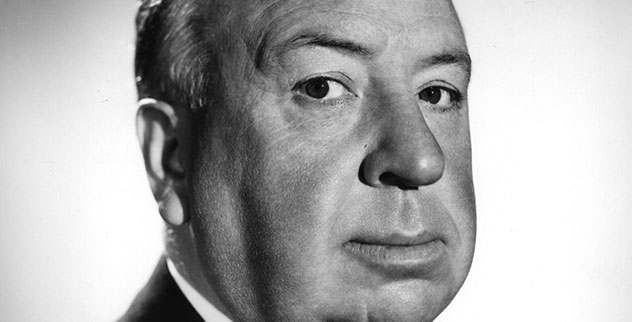
Alfred Hitchcock could turn an apartment window, a glass of milk, a flock of birds, or an innocent train conversation into a reason to reconsider leaving the house. Known as the Master of Suspense, he did more than make audiences nervous. He transformed nervousness into an art form, carefully controlling what viewers knew, what they feared, and how long they had to wait before something terribleor darkly funnyhappened.
Choosing the top 10 Hitchcock movies is therefore a wonderfully unfair assignment. Hitchcock directed more than 50 feature films across roughly five decades, moving from British silent cinema to Hollywood thrillers, psychological dramas, spy adventures, and landmark horror movies. This ranking weighs cinematic influence, storytelling innovation, performances, visual design, suspense, emotional complexity, and rewatchability. Cultural familiarity matters, but famous shower curtains do not automatically receive first place.
The American Film Institute includes Vertigo, Psycho, Rear Window, and North by Northwest among its greatest American movies, while film institutions continue to preserve, restore, screen, and analyze Hitchcock’s work. His films remain relevant because they are not merely puzzles about catching killers. They explore obsession, guilt, voyeurism, romantic control, mistaken identity, and the alarming possibility that evil may have excellent manners.
10. Rebecca (1940)
A Gothic romance haunted by an absent woman
Hitchcock’s first American feature is a grand Gothic drama in which the most powerful character never appears alive. Joan Fontaine plays a shy young woman who marries wealthy widower Maxim de Winter, portrayed by Laurence Olivier, and moves into his enormous estate, Manderley. Unfortunately, the house seems emotionally occupied by Maxim’s late wife, Rebecca. Her memory lingers in every room, every object, and every icy glance from the terrifying housekeeper Mrs. Danvers.
Rebecca is less playful than many later Hitchcock movies, but its oppressive atmosphere is magnificent. The unnamed heroine is made to feel like a visitor in her own marriage, while Manderley becomes a physical representation of insecurity and buried secrets. Hitchcock fills hallways, staircases, and bedrooms with psychological menace long before the plot reveals its darkest information.
The movie received 11 Academy Award nominations and won for Outstanding Production, the category now called Best Picture, as well as black-and-white cinematography. It remains the only Hitchcock-directed film to win the Academy’s top prize.
9. The 39 Steps (1935)
The blueprint for the modern chase thriller
Before James Bond packed his passport, Alfred Hitchcock sent an ordinary man racing through Britain with police officers and foreign agents close behind. Robert Donat stars as Richard Hannay, a Canadian visitor in London who becomes entangled in an espionage conspiracy after a mysterious woman is murdered in his apartment.
The 39 Steps helped define the Hitchcock “wrong man” formula: an innocent protagonist is falsely accused, forced to flee, and required to solve the crime himself. Along the way, he encounters coded messages, dangerous strangers, Scottish landscapes, romantic friction, and a pair of handcuffs that produces considerably more chemistry than most candlelit dinners.
The film moves at a brisk pace and balances suspense with witty character comedy. Its influence can be felt in Hitchcock’s own North by Northwest and in decades of spy adventures that followed. Criterion has described it as the film in which Hitchcock fully became the filmmaker audiences would recognize as the Master of Suspense.
8. The Birds (1963)
Nature attacks, declines to explain itself
The Birds begins like an elegant romantic comedy. Wealthy socialite Melanie Daniels, played by Tippi Hedren, follows attorney Mitch Brenner to the coastal community of Bodega Bay. Their flirtation is interrupted when birds begin attacking people. At first, the incidents appear isolated. Soon, gulls, crows, and other feathered citizens organize what seems to be the most hostile neighborhood association in movie history.
Hitchcock’s decision not to provide a clear explanation makes the film especially disturbing. There is no scientist delivering a convenient lecture, no villain controlling the animals, and no tidy solution. The attacks simply happen, disrupting domestic routines and exposing how quickly civilized confidence can collapse.
The film also uses sound brilliantly. Rather than relying on a conventional musical score, it creates tension through electronic bird noises, wingbeats, screams, and stretches of uneasy quiet. The Library of Congress added The Birds to the National Film Registry in recognition of its cultural and aesthetic importance.
7. Strangers on a Train (1951)
A casual conversation becomes a murderous contract
Two men meet on a train. One is tennis player Guy Haines, played by Farley Granger. The other is Bruno Antony, portrayed with smiling menace by Robert Walker. Bruno proposes that they “exchange” murders: Bruno will eliminate Guy’s unwanted wife, while Guy will kill Bruno’s father. Because the men have no obvious connection, Bruno argues, neither crime could be traced back to its beneficiary.
Guy treats the idea as the rambling fantasy of an eccentric stranger. Bruno does not. That difference in interpretation fuels one of Hitchcock’s sharpest studies of guilt, psychological doubles, and unwanted obligation.
Robert Walker’s performance is the film’s dangerous engine. Bruno can appear charming, childish, wounded, and predatory within a single conversation. Hitchcock surrounds him with memorable visual ideas, including crossed train tracks, a murder reflected in eyeglasses, and a climactic carousel sequence that treats amusement-park safety regulations as optional reading. The film entered the National Film Registry in 2021.
6. Shadow of a Doubt (1943)
Evil arrives in a pleasant American town
Young Charlie Newton, played by Teresa Wright, is delighted when her sophisticated Uncle Charlie comes to visit her family in Santa Rosa, California. He brings stories, gifts, and excitement into a household that has become predictable. He may also be a serial killer.
Shadow of a Doubt is frightening because Hitchcock places danger in bright daylight. The Newton home is busy and affectionate, the neighborhood is friendly, and Uncle Charlie looks perfectly respectable. The movie gradually corrupts that comfort, suggesting that violence does not always arrive wearing a dramatic cape. Sometimes it enters through the front door, compliments the cooking, and remembers everyone’s birthday.
Joseph Cotten gives Uncle Charlie a chilling mixture of elegance and contempt, while Teresa Wright makes young Charlie’s awakening emotionally painful rather than merely suspenseful. Hitchcock identified the film in published interviews as a favorite among his own work, and its portrait of darkness beneath small-town normality influenced generations of American thrillers.
5. Notorious (1946)
Espionage, poisoned romance, and one very important key
Ingrid Bergman stars as Alicia Huberman, the daughter of a convicted Nazi spy. American agent T.R. Devlin, played by Cary Grant, recruits her for an undercover mission in Brazil. Alicia must marry Alexander Sebastian, a former admirer associated with a group of Nazi conspirators. The assignment becomes increasingly dangerous because Alicia and Devlin have fallen in love, although Devlin hides his feelings behind professional coldness and an Olympic-level refusal to communicate.
Notorious works equally well as a spy thriller and a bruising romantic drama. Its real conflict is not simply whether Alicia will expose the conspiracy. It is whether Devlin can overcome his jealousy and recognize the sacrifices she is making.
Hitchcock transforms ordinary objects into suspense devices: a wine bottle, a coffee cup, and a small key become sources of enormous anxiety. One celebrated crane shot begins above a crowded party and descends toward the key hidden in Alicia’s hand, visually compressing an international conspiracy into one tiny object.
4. North by Northwest (1959)
The most entertaining wrong-man adventure
Cary Grant plays advertising executive Roger Thornhill, who is mistaken for a secret agent who does not actually exist. Kidnapped by spies and framed for murder, Thornhill runs across the country while attempting to understand why everyone seems so committed to ruining his schedule.
North by Northwest may be Hitchcock’s most purely entertaining movie. It combines romantic comedy, espionage, mistaken identity, glamorous travel, sophisticated villains, and enormous action sequences without losing its light touch. Eva Marie Saint gives the mysterious Eve Kendall intelligence and emotional depth, while James Mason delivers threats with the calm courtesy of a man discussing table reservations.
The crop-duster attack is a master class in visual suspense. Hitchcock places Thornhill in an open landscape with nowhere to hide, removing the shadows, alleys, and dark rooms normally associated with danger. The Mount Rushmore climax then turns a national monument into the world’s least practical escape route. The Academy highlights the film as Hitchcock’s most elaborate variation on his recurring wrong-man story.
3. Rear Window (1954)
A murder mystery about the uncomfortable pleasure of watching
Photojournalist L.B. “Jeff” Jefferies, played by James Stewart, is confined to his apartment with a broken leg. Bored and overheated, he begins observing his neighbors through their windows. When he suspects that one man has murdered his wife, casual curiosity becomes an investigation involving Jeff’s elegant girlfriend Lisa Fremont, played by Grace Kelly, and his wonderfully practical nurse Stella, played by Thelma Ritter.
The brilliance of Rear Window lies in its restricted viewpoint. Viewers rarely know more than Jeff knows. We scan windows with him, interpret gestures, invent stories about strangers, and become increasingly invested in private lives that are none of our business. Hitchcock turns the audience into Jeff’s accomplice, then makes that complicity feel both thrilling and morally questionable.
The courtyard set functions like a collection of miniature movies, with each apartment presenting a different story about loneliness, marriage, desire, or disappointment. The Library of Congress describes the film as a study in voyeurism, while Roger Ebert emphasized how Hitchcock uses Jeff’s physical limitations to control our experience.
2. Psycho (1960)
The horror landmark that breaks its own rules
Psycho begins with Marion Crane, played by Janet Leigh, stealing money and fleeing Phoenix. After driving through a storm, she stops at the isolated Bates Motel, where she meets the shy, nervous Norman Bates. Played by Anthony Perkins, Norman appears sympathetic, awkward, and dominated by his unseen mother. Then Hitchcock violently changes the direction of the story.
The famous shower sequence remains one of cinema’s most analyzed scenes, but the entire movie is constructed with extraordinary precision. Bernard Herrmann’s stabbing string score, the stark black-and-white photography, the nervous editing, and Perkins’ delicate performance create a world in which familiar spaces feel contaminated. Bathrooms, roadside motels, staircases, and even sandwiches become suspicious.
Psycho also challenged conventional storytelling by removing the apparent protagonist before the midpoint and forcing viewers to transfer their attention elsewhere. Its advertising campaign protected the film’s surprises and required audiences to arrive before the screening began. The result changed horror, thriller marketing, and popular expectations about what mainstream movies could show.
1. Vertigo (1958)
Hitchcock’s haunting masterpiece of obsession
Former San Francisco detective John “Scottie” Ferguson, played by James Stewart, leaves the police after his fear of heights contributes to a tragedy. An old acquaintance hires him to follow Madeleine Elster, portrayed by Kim Novak, whose strange behavior appears connected to a woman from the past. What begins as an investigation gradually becomes a dreamlike exploration of desire, identity, grief, and control.
Vertigo is not Hitchcock’s fastest or most accessible movie. It is deliberately hypnotic, drawing viewers into Scottie’s unstable perspective through repeated locations, spiraling visual motifs, saturated colors, and Bernard Herrmann’s romantic, unsettling score. San Francisco becomes less a realistic city than an emotional maze in which the past continually reappears.
The film’s greatness also depends on its discomfort. Scottie does not merely love an idealized woman; he attempts to reconstruct that ideal, revealing the controlling impulses hidden inside romantic fantasy. Kim Novak’s performance gives the story a tragic dimension that grows richer on repeat viewings.
Roger Ebert called Vertigo one of Hitchcock’s finest and most personal films, while the Academy notes its landmark collaboration with title designer Saul Bass. Its reputation grew significantly after its original release, and it now stands as one of the most intensely studied works in film history.
Honorable Mentions
Limiting Hitchcock to ten movies means leaving several excellent films outside the locked room. The Lady Vanishes is a funny, fast-moving mystery set largely aboard a train. Rope is a bold technical experiment designed to resemble a nearly continuous shot. Dial M for Murder turns an apartment into a precise theatrical trap, while To Catch a Thief combines romantic glamour, Riviera scenery, and Grace Kelly at her most effortlessly commanding.
The Man Who Knew Too Much, Suspicion, The Lodger, Frenzy, and the psychologically thorny Marnie also reward exploration. Hitchcock’s filmography is not a short hallway leading to ten masterpieces. It is a large, suspiciously quiet mansion full of doors that should probably remain closedwhich naturally means we must open all of them.
The Hitchcock Viewing Experience: What You Notice During a Movie Marathon
A rewarding way to experience the top Hitchcock movies is to watch them chronologically rather than beginning with the most famous titles. Starting with The 39 Steps reveals how early Hitchcock developed ideas he would revisit for decades: the innocent man under suspicion, the emotionally guarded blonde, the charming villain, the dangerous journey, and the mixture of romance with mortal peril. By the time North by Northwest arrives, those ingredients have been polished into deluxe widescreen entertainment.
The first surprise in a Hitchcock marathon is how funny the films are. Modern viewers sometimes approach classic thrillers as serious cultural homework, expecting to sit respectfully while the Master of Suspense administers an educational dose of anxiety. Instead, Hitchcock repeatedly interrupts danger with flirtation, embarrassment, visual jokes, and dry observations about murder. His humor does not weaken the suspense. It relaxes the viewer just enough for the next shock to land more effectively.
The second discovery is that Hitchcock rarely depends on graphic violence. He builds fear by arranging information. In Rear Window, viewers stare across a courtyard and wonder whether a distant gesture means anything. In Notorious, the possibility that someone may notice a missing key becomes almost unbearable. In Strangers on a Train, a dropped object can be more stressful than an explosion. Hitchcock makes the audience understand the danger first, then forces everyone to wait while a character walks directly toward it.
Watching several films close together also makes the recurring theme of spectatorship impossible to miss. Jeff watches his neighbors in Rear Window. Scottie follows Madeleine in Vertigo. Norman observes Marion in Psycho. Audiences watch all of them and may feel innocent because they purchased a ticket or pressed a streaming button. Hitchcock gently removes that innocence. He reminds us that suspense depends on curiosity, and curiosity is not always polite.
The visual experience changes significantly from film to film. The black-and-white shadows of Rebecca make Manderley feel haunted, while the clean open spaces of North by Northwest demonstrate that danger does not require darkness. Vertigo uses green, red, and dreamlike lighting to blur memory and fantasy. The Birds makes ordinary skies threatening. After a marathon, staircases, motel signs, train compartments, and seagulls may all appear to be negotiating against you.
A good viewing order should alternate heavier psychological films with lighter adventures. Watching Vertigo, Psycho, and Shadow of a Doubt consecutively can leave a room feeling emotionally colder than the thermostat suggests. Place The 39 Steps or North by Northwest between darker selections. Snacks are encouraged, although sandwiches should be inspected carefully and coffee cups should never be accepted from suspiciously attentive hosts.
Most importantly, repeat viewings improve these movies. Once the mystery is known, attention shifts toward camera placement, editing, music, performance, and visual clues. Hitchcock’s best work is not preserved by its twists alone. The lasting experience comes from seeing exactly how he guided the audience toward fearand realizing that we followed willingly.
Conclusion
The best Alfred Hitchcock movies demonstrate that suspense is not simply the act of hiding information. It is the art of giving viewers precisely enough knowledge to make waiting painful. From the romantic obsession of Vertigo to the narrative shock of Psycho, the voyeuristic tension of Rear Window, and the elegant adventure of North by Northwest, Hitchcock repeatedly proved that fear can be stylish, intelligent, funny, and deeply revealing.
Vertigo takes the top position because it reaches beyond the mechanics of a thriller and becomes a disturbing examination of fantasy, identity, and possession. Yet every title on this list represents a different doorway into Hitchcock’s cinema. Enter through any one you like. Just do not be surprised when you hear footsteps behind you.