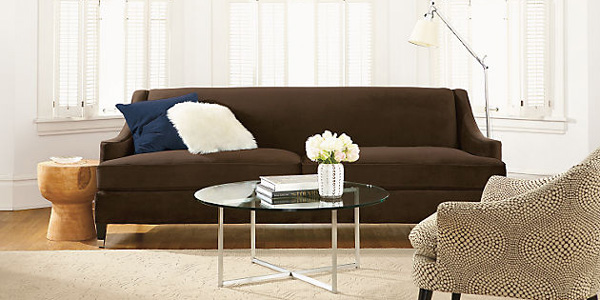
A new sofa looks innocent enough. It sits quietly in a showroom, wearing attractive upholstery and practically whispering, “Go ahead, cancel your plans and lie down.” Then it arrives at your home, blocks the doorway, swallows half the living room, and turns out to be about as comfortable as an airport bench.
Picking out a new sofa is not simply a decorating decision. A sofa is part seating, part nap station, part snack headquarters, and part unofficial guest bed. It may be one of the most frequently used and expensive pieces of furniture in your home, so choosing wisely requires more than spotting a pretty couch online and clicking “Add to Cart.”
This sofa buying guide explains how to compare dimensions, comfort, construction, cushion fill, upholstery, style, delivery requirements, and return policies. The goal is simple: find a sofa that fits your room, supports your body, survives your household, and still looks good after the honeymoon period ends.
Begin With the Sofa’s Actual Job
Before comparing colors or admiring elegantly tapered legs, decide how the sofa will be used. A couch in a formal sitting room has a very different assignment from one expected to withstand children, pets, pizza nights, weekend naps, and relatives who arrive “for two days” with luggage for a month.
Ask who will use the sofa, how often they will sit on it, and what they will do there. Daily lounging usually calls for deeper seats, supportive cushions, durable upholstery, and enough length to stretch out. A conversation-focused room may benefit from a shallower, more upright sofa that makes it easier to sit attentively and stand gracefully.
Additional functions can narrow the field quickly. A sleeper sofa helps a home without a guest room. A reclining sofa supports movie marathons but needs extra clearance. A modular sectional can adapt to changing layouts, while a sofa with built-in storage may rescue a small apartment from blanket-related chaos.
Set a Realistic Budget Before the Cushions Distract You
Sofas are sold at nearly every price level, but the least expensive option is not always the cheapest over time. A bargain couch that loses its shape after two years may cost more per year of use than a sturdier sofa that remains comfortable for a decade.
Set a total budget that includes more than the advertised price. Depending on the retailer and model, you may also pay for delivery, in-room placement, assembly, fabric upgrades, stain protection, old-furniture removal, or return shipping. Customized sofas can require deposits and may be nonreturnable.
Spend according to the sofa’s role and your current circumstances. A permanent living-room centerpiece may justify a larger investment. A temporary sofa for a rental, playroom, or frequently changing household may not. Buy for the life you are livingnot the imaginary life in which nobody spills coffee and every throw pillow remains perfectly positioned.
Measure the Roomand the Entire Delivery Route
One of the most common sofa-shopping mistakes is checking the living-room wall while ignoring everything between the delivery truck and that wall. A sofa must pass through doors, hallways, stairwells, elevators, landings, and tight corners before it can begin looking fabulous.
Map the Sofa’s Footprint
Record the sofa’s overall width, depth, and height. Then use painter’s tape to mark those dimensions on the floor. This simple outline reveals whether the sofa overwhelms the room, interrupts a walkway, blocks a vent, competes with a door, or leaves the coffee table stranded somewhere near another ZIP code.
Leave approximately 30 to 36 inches for important walking routes when the room allows. Around 18 inches between the sofa and coffee table generally provides useful legroom while keeping drinks and remotes within reach.
Consider visual scale as well as physical fit. A large, heavy sofa can dominate a small room, particularly when it has thick arms, a high back, and upholstery that reaches the floor. Slim arms, visible legs, and a lower profile often make a similarly sized sofa appear lighter.
Measure the Path to the Room
Measure the narrowest doorway, hallway, elevator opening, staircase, and turning point. Include door frames, railings, light fixtures, low ceilings, and anything else that might reduce clearance. Check whether the sofa’s legs can be removed and whether the manufacturer provides a diagonal-depth measurement.
Apartment dwellers should confirm elevator reservations, loading-zone rules, and building delivery hours. A beautiful 96-inch sofa is less charming when it spends the afternoon trapped vertically in a stairwell.
Choose the Right Sofa Type
The best couch for a living room is not automatically the largest one that fits. The right format depends on seating needs, traffic flow, room shape, and how often the layout may change.
Standard Sofa or Loveseat
A traditional sofa is versatile, relatively easy to arrange, and compatible with accent chairs. A loveseat can work well in a studio, office, bedroom, or compact living room, although narrow arms are especially valuable when every inch matters.
Sectional Sofa
A sectional can maximize seating and create a natural lounging zone. However, it can also overpower a room or lock you into one arrangement. Confirm whether the chaise is left-facing, right-facing, or reversible. Those words describe the orientation when you are facing the sofa, not while sitting on ita detail responsible for more domestic debates than anyone likes to admit.
Modular Sofa
Modular seating consists of individual pieces that can be rearranged or expanded. It is useful for renters, growing families, and homes with difficult delivery routes. Check how securely the sections connect, because modules that drift apart whenever someone sits down can make relaxation feel oddly nautical.
Sleeper or Reclining Sofa
A sleeper sofa requires enough floor space to open completely. Compare the comfort of both the seat and the mattress, and ask whether standard sheets will fit. Reclining sofas need wall and footrest clearance, access to power when applicable, and enough room for people to walk past while the seats are extended.
Understand Seat Depth, Height, and Comfort
Comfort is personal, which is why a sofa loved by one reviewer may feel terrible to another. Height, posture, leg length, mobility, and preferred sitting position all influence the ideal seat.
Shallow seats encourage upright posture and can be easier for shorter adults or anyone who wants to place both feet flat on the floor. Deep seats are inviting for curling up, lounging sideways, and napping, but shorter users may need extra pillows behind their backs.
Sofa seat heights commonly fall within a range of roughly 15 to 20 inches, with many models near 17 or 18 inches. Lower seats can feel relaxed and modern, while higher seats may be easier to enter and exit. The listed dimensions matter, but a real sit test is better because cushion softness changes how high or deep the seat feels.
When testing a sofa, sit as you normally would at home. Remain there for at least several minutes. Lean back, cross your legs, stretch out, and try standing up. If you frequently nap on the sofa, lie down on it. Showroom dignity is temporary; an uncomfortable sofa can haunt you for years.
Look Beneath the Upholstery
A sofa’s fabric gets the attention, but its internal construction determines whether it stays supportive or develops mysterious valleys. Ask the retailer for clear information about the frame, joinery, suspension system, and cushions.
Frame Construction
Well-built sofas commonly use engineered hardwood or kiln-dried hardwood in important structural areas. Kiln drying helps reduce moisture that can contribute to warping. Avoid relying on vague phrases such as “wood frame” without learning what kind of wood or composite material is being used.
Test a showroom model for movement. Lift one front corner slightly; the other front leg should begin rising without excessive twisting. Sit in different positions and listen for creaks. Push gently on the arms and back. Noticeable wobbling or flexing may indicate weak construction or loose joints.
Suspension Systems
The suspension supports the seat cushions. Common systems include sinuous springs, webbing, pocket springs, and traditional eight-way hand-tied springs. No single label guarantees comfort, but the system should feel evenly supportive without sagging, squeaking, or creating pressure points.
Cushion Fill
Standard polyurethane foam is widely used and comes in different densities and firmness levels. Higher-resilience foam generally offers stronger recovery and durability. Fiber wrapping can soften the feel, while down or feather blends create a plush seat that requires regular fluffing.
A foam core wrapped in down or synthetic fiber often balances support with softness. Fully plush cushions may look wonderfully relaxed, but they will rarely maintain a crisp showroom shape without effort. Decide honestly whether you will fluff cushions every week or simply glare at them as they slowly become pancakes.
Match the Upholstery to Your Household
The most beautiful fabric is not necessarily the best sofa fabric for your life. Consider stains, claws, sunlight, allergies, cleaning habits, and how much maintenance you are realistically willing to perform.
Performance and Synthetic Fabrics
Performance upholstery is designed to resist common problems such as stains, moisture, fading, or abrasion, although capabilities vary. Polyester and blended fabrics are often durable and easier to maintain than delicate natural materials. Microfiber can also perform well in busy households because of its tight construction.
Natural Fibers
Cotton and linen offer appealing texture and breathability but may wrinkle, stain, or fade depending on the weave and treatment. Wool is resilient and naturally handsome, though it may cost more. Always check the exact fiber blend and care instructions instead of judging by the marketing name alone.
Leather
Quality leather can age attractively and may become more comfortable over time. It is generally easy to wipe clean, but it can scratch, fade in strong sunlight, and feel different with temperature changes. Learn whether the upholstery is full-grain, top-grain, corrected leather, bonded leather, or a synthetic alternative, because those materials differ substantially.
Removable Covers
Removable or washable covers are valuable in homes with children and pets. Confirm whether the entire slipcover can be washed, whether only cushion covers are removable, and whether machine washing is permitted. Wash matching covers together when recommended so they age consistently.
Order fabric swatches before buying online. View them during the day and at night, rub them between your fingers, place them beside the rug and curtains, and introduce them to the household pet for a supervised opinion.
Select a Color and Style You Can Live With
Trends are useful for inspiration, but a sofa is more difficult to replace than a lamp or pillow. A clean-lined silhouette in a versatile fabric can adapt as wall colors, rugs, and accessories change. Bold upholstery can be spectacular, but it should reflect a genuine preference rather than a temporary social-media crush.
Neutral does not have to mean dull. Warm gray, oatmeal, camel, olive, navy, charcoal, and textured cream can provide depth without dictating the entire room. Homes with pets may benefit from a midtone fabric that resembles the animal’s fur. It is not surrender; it is strategic camouflage.
Pay attention to arm width. Thick arms consume seating space, while slim arms preserve more usable room. Tight backs appear tailored and require little adjustment. Loose back cushions feel relaxed but need occasional reshaping. A single bench cushion looks sleek and encourages lounging, while separate seat cushions may be easier to rotate and replace.
Shop Online Without Gambling
Buying a sofa online offers greater selection, but photographs cannot communicate firmness, fabric texture, or scale perfectly. Read the full specifications rather than relying on the styled images. Review the seat height, seat depth, arm height, back height, frame materials, suspension, cushion construction, upholstery composition, weight capacity, assembly requirements, and package dimensions.
Customer reviews are most useful when patterns appear. One complaint about firmness may reflect personal preference; dozens of comments about sagging, pilling, uneven cushions, delayed delivery, or color differences deserve attention. Look for reviews written after several months of ownership, not only reactions posted on delivery day while the cardboard is still exciting.
Use augmented-reality tools when available, but treat them as a supplement to physical measurements. Screens can make furniture appear smaller than it is, particularly when product photos are taken in enormous rooms with ceilings apparently borrowed from a train station.
Read the Delivery, Warranty, and Return Terms
Before placing the order, determine whether delivery includes doorstep drop-off, placement inside the home, assembly, packaging removal, or old-sofa removal. Confirm who is responsible if the item does not fit through the door.
Inspect the sofa as soon as it arrives. Photograph damaged packaging before opening it, then check the frame, legs, seams, cushions, reclining mechanisms, and upholstery. Report damage immediately and retain the packaging until you know the sofa is acceptable.
Return policies deserve special attention. Learn the return window, restocking fees, pickup charges, original-delivery refund rules, and whether opened or assembled furniture qualifies. Custom dimensions, made-to-order upholstery, and clearance purchases may be final sale.
A warranty can be valuable, but only when you understand what it covers. Frame, cushion, fabric, spring, and mechanism warranties may have different durations and exclusions. Normal softening, wrinkling, pilling, fading, and pet damage are often treated differently from manufacturing defects.
A Final Sofa-Buying Checklist
- Define how the sofa will be used and by whom.
- Set a total budget that includes delivery and upgrades.
- Measure the room, traffic paths, doors, halls, stairs, and elevator.
- Mark the sofa footprint with painter’s tape.
- Compare seat height, seat depth, back support, and overall comfort.
- Ask about the frame, suspension system, cushion fill, and fabric.
- Choose upholstery that matches your cleaning habits and household.
- Order swatches and inspect them in your home’s lighting.
- Read verified customer reviews for recurring problems.
- Understand delivery, inspection, return, and warranty policies.
Experiences From the Sofa-Shopping Trenches
Picking out a new sofa has a way of exposing the difference between what looks good in a photograph and what works in real life. The first lesson is that showroom scale is deeply deceptive. A sofa surrounded by open floor space, carefully positioned lighting, and one decorative olive tree can appear compact. Place the same sofa in a normal living room beside a bookshelf and suddenly it has its own weather system.
Painter’s tape has repeatedly proven more useful than imagination. Marking the full dimensions on the floor makes the decision physical. You can walk around the outline, place a temporary box where the coffee table sits, and discover whether opening a cabinet requires climbing over an imaginary armrest. It is a cheap test that prevents an expensive return.
The second lesson is that “soft” and “comfortable” are not synonyms. An extremely soft sofa can feel luxurious for the first minute but offer little support during a long movie. Meanwhile, a moderately firm cushion may become more comfortable after regular use. The most successful sit tests involve staying put long enough for the initial impression to fade.
It also helps to test every seat. The center of a three-seat sofa may feel different from the ends because of the suspension and frame structure. Sit upright. Slouch. Lean against the arm. Pretend to read. Pretend to watch television. Lie down when the showroom is quiet enoughor when your commitment to research becomes stronger than your fear of judgment.
Fabric swatches can prevent another common surprise. Beige is apparently not one color but an international coalition of hundreds. A swatch that looks warm and creamy under showroom lighting can turn gray, yellow, or slightly green at home. Texture changes too: a fabric that appears smooth online may feel rough against bare skin or catch pet hair like it is collecting evidence.
One practical test is to place each swatch where the sofa will sit and observe it throughout the day. Spill a few drops of water on a spare portion when permitted. Rub it against dark clothing to check for visible lint. Gently scratch it with a fingernail. These experiments are less glamorous than choosing throw pillows, but far more informative.
Delivery planning produces the most memorable stories, usually because somebody measured the sofa and forgot the staircase. Product width alone does not determine whether a couch can turn through a hallway. Packaging adds bulk, removable legs may change the equation, and a low ceiling over a stair landing can end the journey abruptly. Delivery teams are skilled, but they are not magicians with folding furniture.
Another lesson is to stop expecting one sofa to satisfy completely opposite preferences without compromise. A very deep seat may delight the family lounger and frustrate the upright sitter. A feather-heavy cushion may thrill someone who loves a sink-in feeling while annoying the person responsible for fluffing it. Discuss priorities before shopping so the final selection reflects the household rather than the loudest person in the showroom.
Finally, do not rush because of a countdown timer, a dramatic holiday sale, or a salesperson who says the fabric is “almost gone.” Sofas are too large, too expensive, and too frequently used for panic buying. Take measurements home. Review the care instructions. Sleep on the decisioneven when sleeping on the old sofa is precisely why you need a new one.
Conclusion: Sit First, Celebrate Later
A successful sofa purchase balances comfort, scale, construction, maintenance, style, and cost. The best-looking couch is a poor choice when it blocks the room, hurts your back, or requires a cleaning routine more demanding than owning a small boat.
Start with the way your household actually lives. Measure every relevant space, inspect what is beneath the upholstery, test the seat realistically, and read the retailer’s policies before paying. Once those practical questions are answered, choosing the color and silhouette becomes much more enjoyable.
Get the fundamentals right and your new sofa can become the place where ordinary life happens comfortably: conversations, celebrations, naps, movie nights, quiet mornings, and the occasional search for a missing remote that was under you the entire time.
Note: Sofa dimensions, materials, care requirements, delivery services, warranties, and return policies vary by manufacturer and retailer. Verify the product specifications and current terms before ordering.